


























Views
Downloads

Printable Spongebob Math Exam | Essential Grade 6 Review
Paste this activity's link or code into your existing LMS (Google Classroom, Canvas, Teams, Schoology, Moodle, etc.).
Students can open and work on the activity right away, with no student login required.
You'll still be able to track student progress and results from your teacher account.
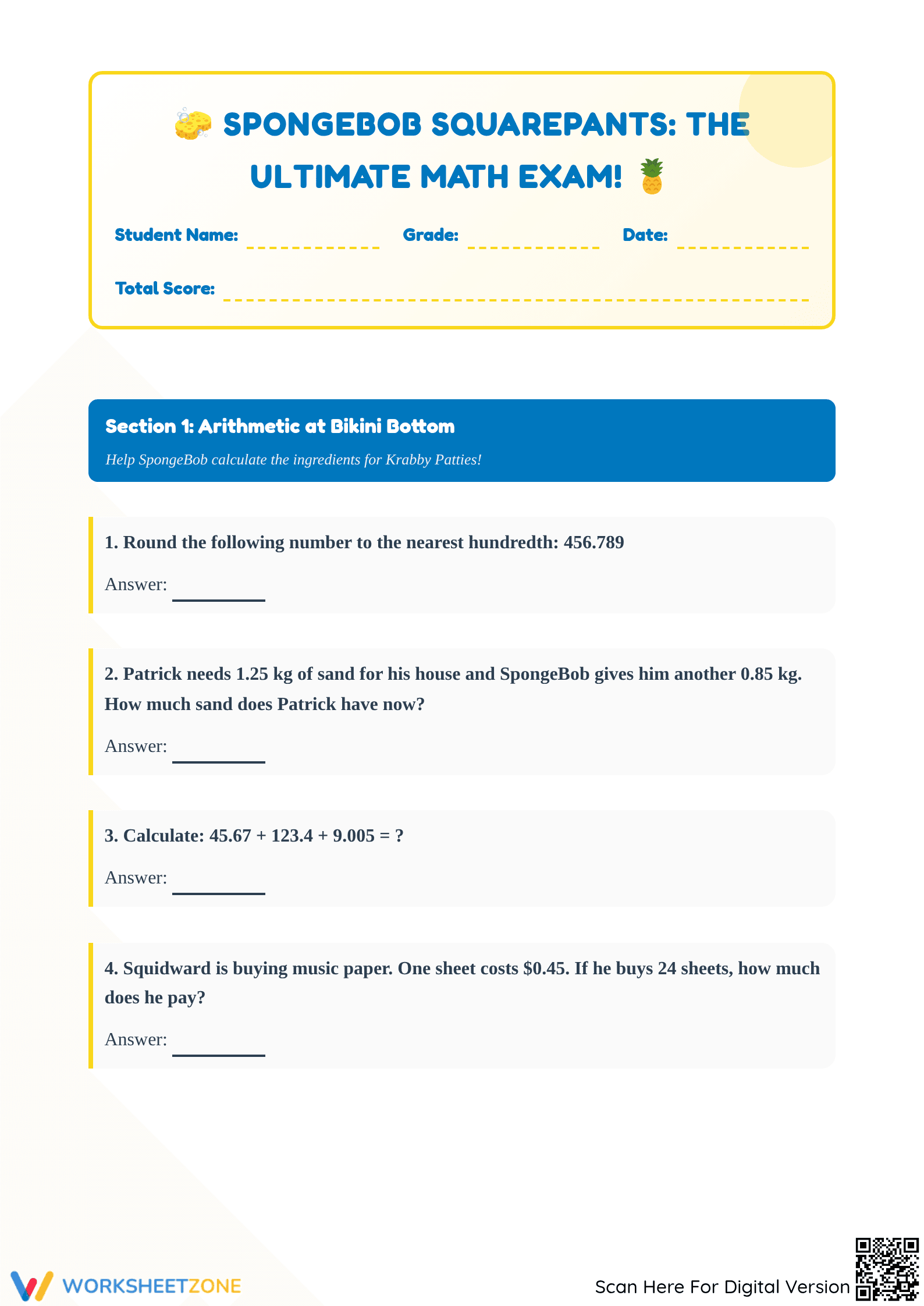
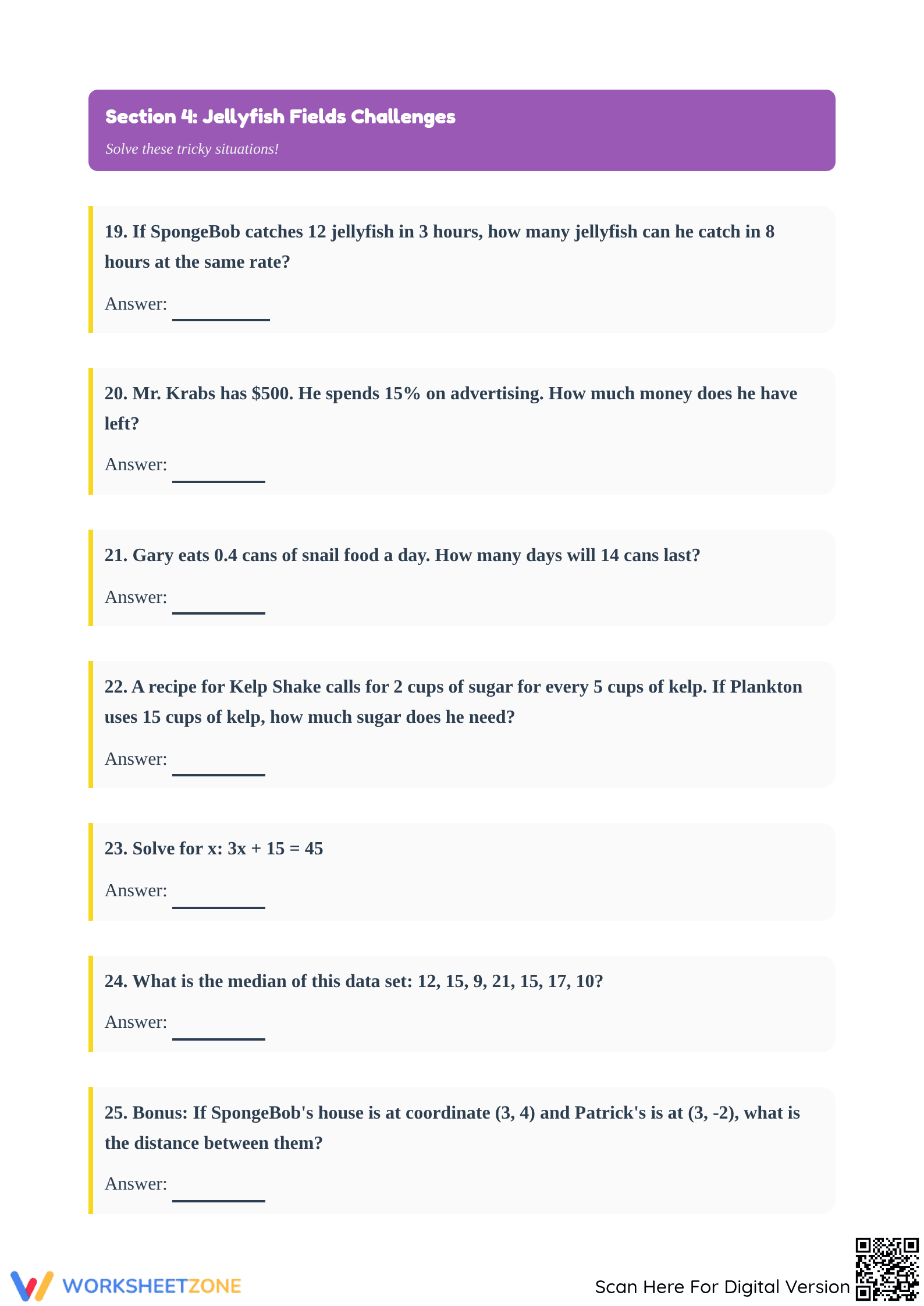
This comprehensive Grade 6 math assessment uses the familiar world of Bikini Bottom to engage students in a rigorous review of essential middle school standards. Students solve 25 diverse problems ranging from decimal arithmetic to geometric calculations, ensuring a broad evaluation of their mathematical proficiency before end-of-year testing or unit transitions.
At a Glance
- Grade: 6 · Subject: Math
- Standard:
CCSS.MATH.CONTENT.6.G.A.1— Find the area of triangles and quadrilaterals by composing into rectangles or decomposing into triangles.- Skill Focus: Comprehensive Mixed Math Review
- Format: 5 pages · 25 problems · Answer key included · PDF
- Best For: End-of-unit assessment or sub plan
- Time: 45–60 minutes
What's Inside
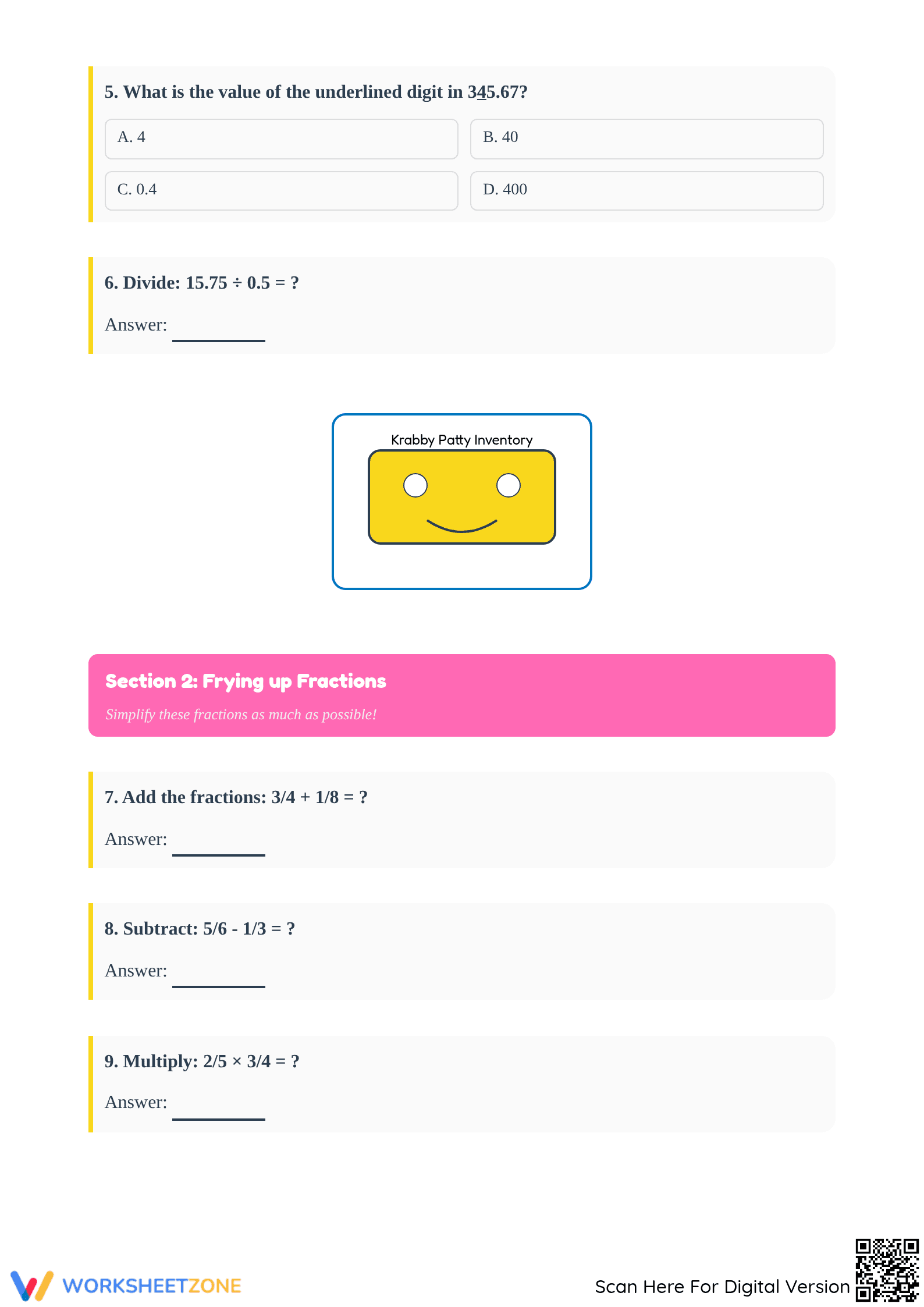
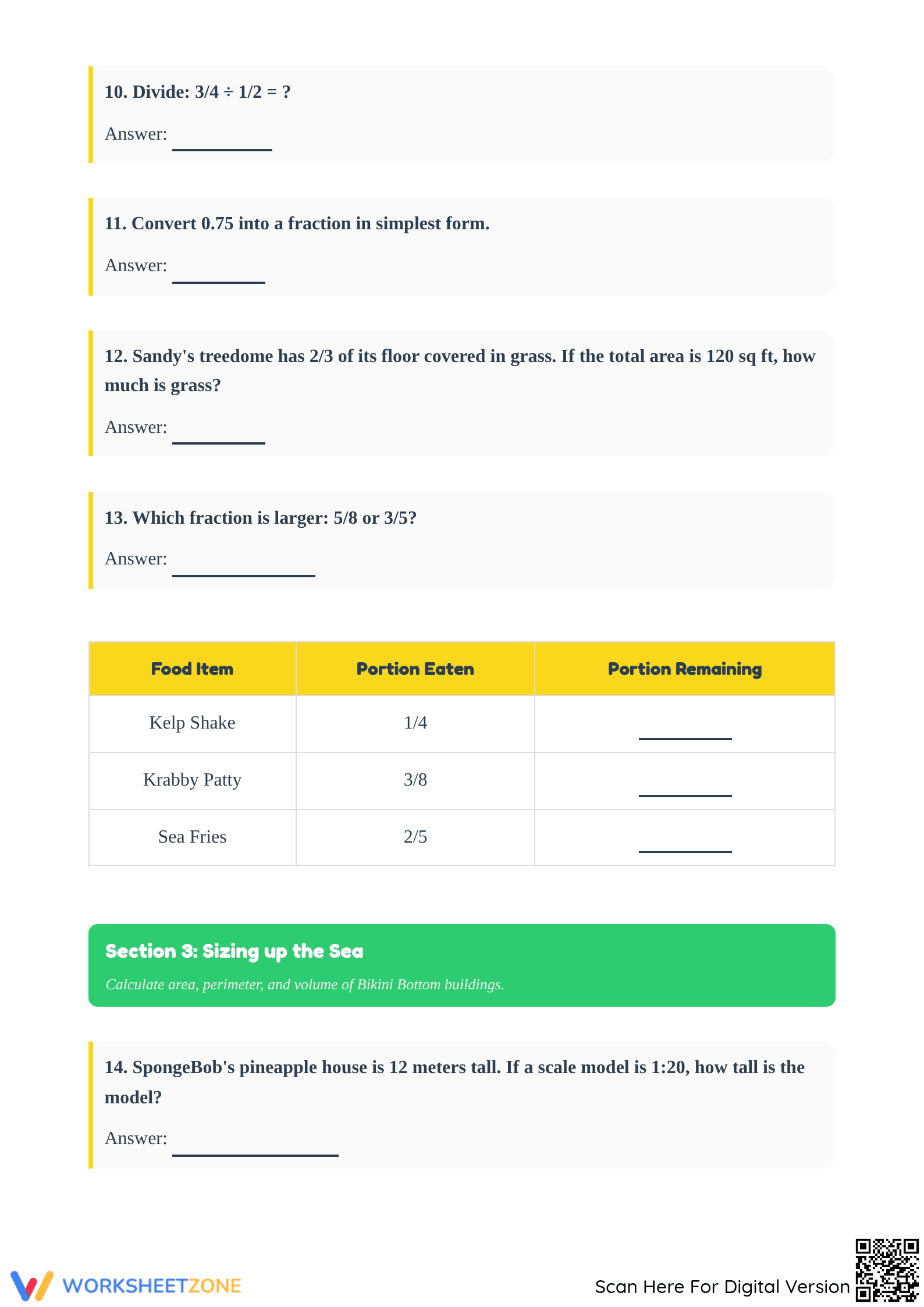
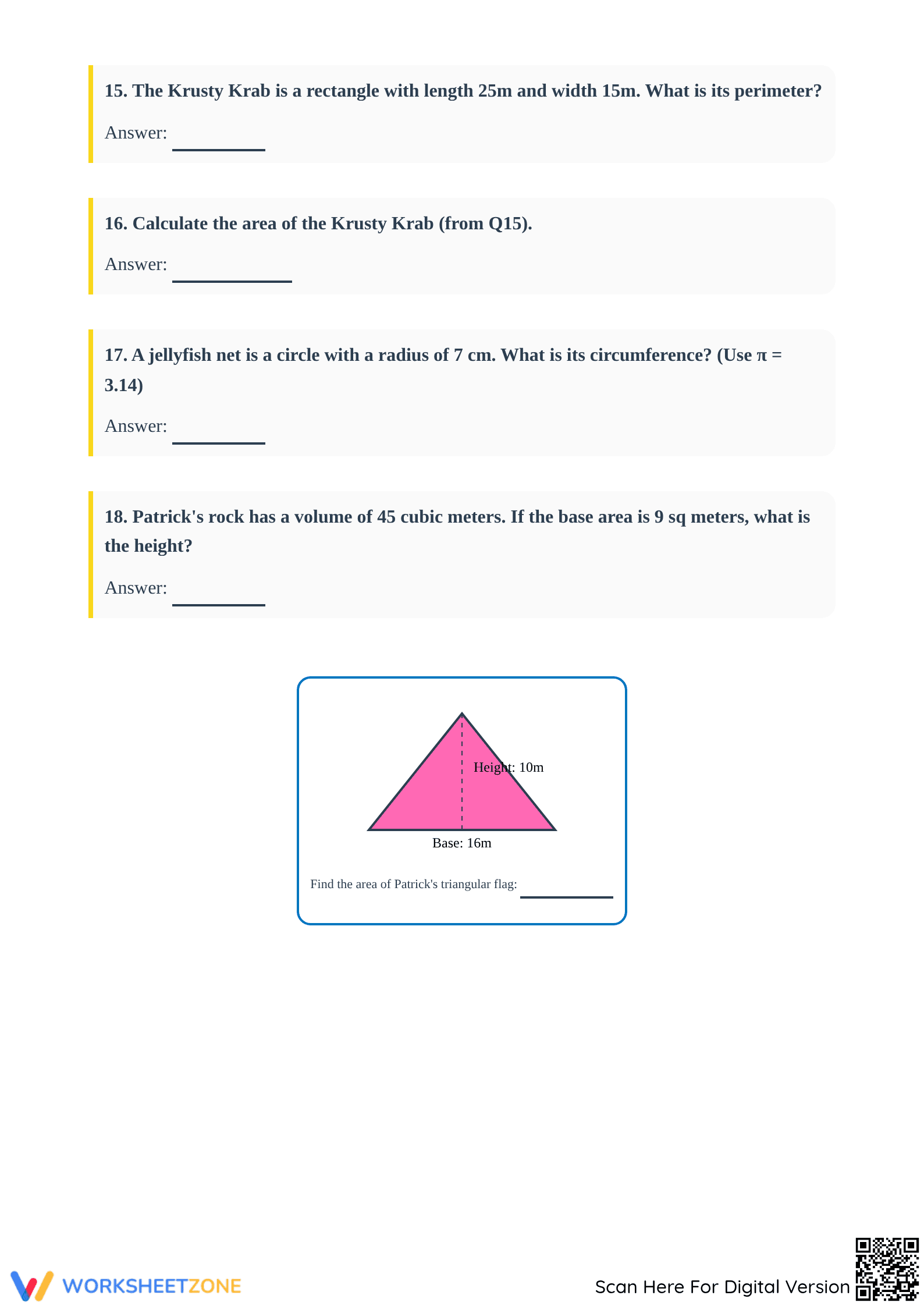
This 5-page printable package features four distinct sections: Arithmetic at Bikini Bottom, Frying up Fractions, Sizing up the Sea, and Jellyfish Fields Challenges. It includes 25 numbered tasks that incorporate multiple-choice questions, word problems, and data tables. A complete answer key is provided to facilitate quick grading and immediate student feedback.
Zero-Prep Workflow
- Print: Generate copies for your class in under 60 seconds using the high-resolution PDF format.
- Distribute: Hand out the 5-page packets with no additional manipulatives or teacher setup required.
- Review: Utilize the included answer key to correct student work in less than 5 minutes per class set.
This streamlined process makes the worksheet ideal for emergency sub plans or last-minute test preparation sessions.
Standards Alignment
The primary focus is `CCSS.MATH.CONTENT.6.G.A.1`: Find the area of right triangles, other triangles, special quadrilaterals, and polygons by composing into rectangles or decomposing into triangles and other shapes. Additionally, it supports `CCSS.MATH.CONTENT.6.NS.B.3` through multi-digit decimal operations. Both standard codes can be copied directly into lesson plans, IEP goals, or district curriculum mapping tools.
How to Use It
Assign this worksheet as a summative assessment at the end of a geometry or rational numbers unit. For formative use, observe students during Section 3 to identify misconceptions regarding area and perimeter formulas. Most students will complete the 25 tasks within a 50-minute class period, though it can be split across two days for focused intervention.
Who It's For
This resource is designed for Grade 6 students but serves as an excellent challenge for Grade 5 or a remedial review for Grades 7 and 8. It pairs naturally with a geometry anchor chart or a short introductory passage about unit rates to provide context for the later sections.
The effectiveness of thematic integration in middle school mathematics is well-documented in the RAND AIRS 2024 study, which highlights how familiar pop-culture contexts like Bikini Bottom reduce math anxiety and increase student persistence during multi-step problem solving. This comprehensive assessment targets CCSS.MATH.CONTENT.6.G.A.1 by requiring students to calculate area, perimeter, and volume within a structured narrative. Research from the NAEP indicates that students often struggle with the transition from arithmetic to geometric application; however, this worksheet bridges that gap through clear visual anchors and scaffolded complexity across 25 distinct tasks. By engaging with variables and unit rates in a relatable format, learners develop the procedural fluency necessary for higher-level algebraic thinking. Educators can utilize this standalone resource to capture high-quality formative data while maintaining high engagement levels, making it an essential tool for diverse classrooms. The inclusion of an answer key ensures immediate feedback loops, further supporting the development of mathematical self-efficacy in Grade 6 learners.


