


























Views
Downloads



Essential I.EFL.4.11.1 Worksheet: Grade 8 English Term Test
Paste this activity's link or code into your existing LMS (Google Classroom, Canvas, Teams, Schoology, Moodle, etc.).
Students can open and work on the activity right away, with no student login required.
You'll still be able to track student progress and results from your teacher account.
This Grade 8 English assessment evaluates proficiency at the end of the first term. Integrating reading comprehension, vocabulary, and listening, it provides a rigorous diagnostic tool to ensure learners meet curriculum benchmarks. Students demonstrate their ability to extract details from informational texts and apply linguistic structures in functional contexts through structured, academic evaluation tasks.
At a Glance
- Grade: 8 · Subject: English Language Arts
- Standard:
I.EFL.4.11.1— Understand main ideas and specific details in short informational and transactional texts.- Skill Focus: Reading, Vocabulary, and Listening
- Format: 6 pages · 43 problems · Answer key included · PDF
- Best For: Term 1 summative assessment and diagnostic review
- Time: 45–60 minutes
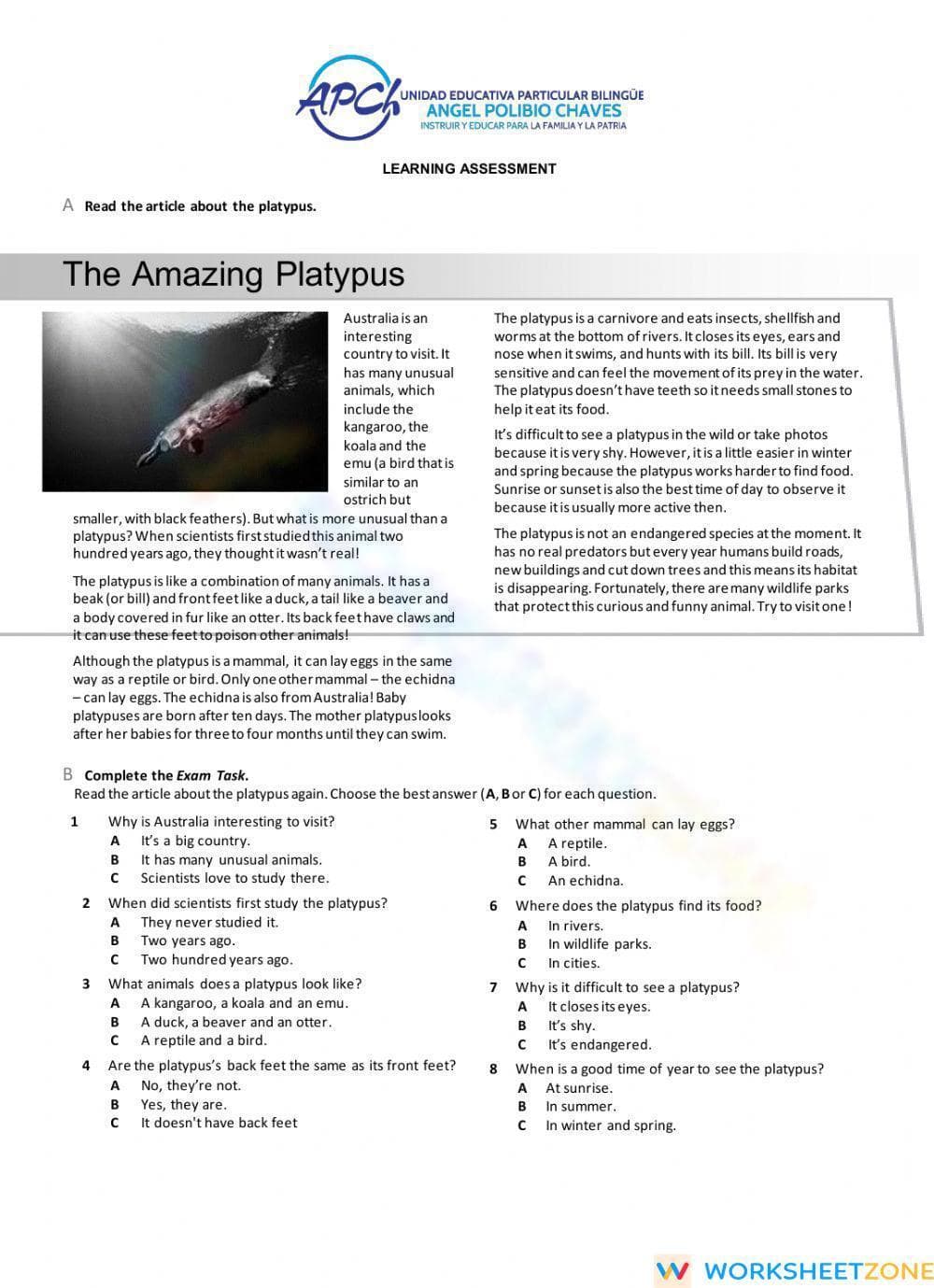
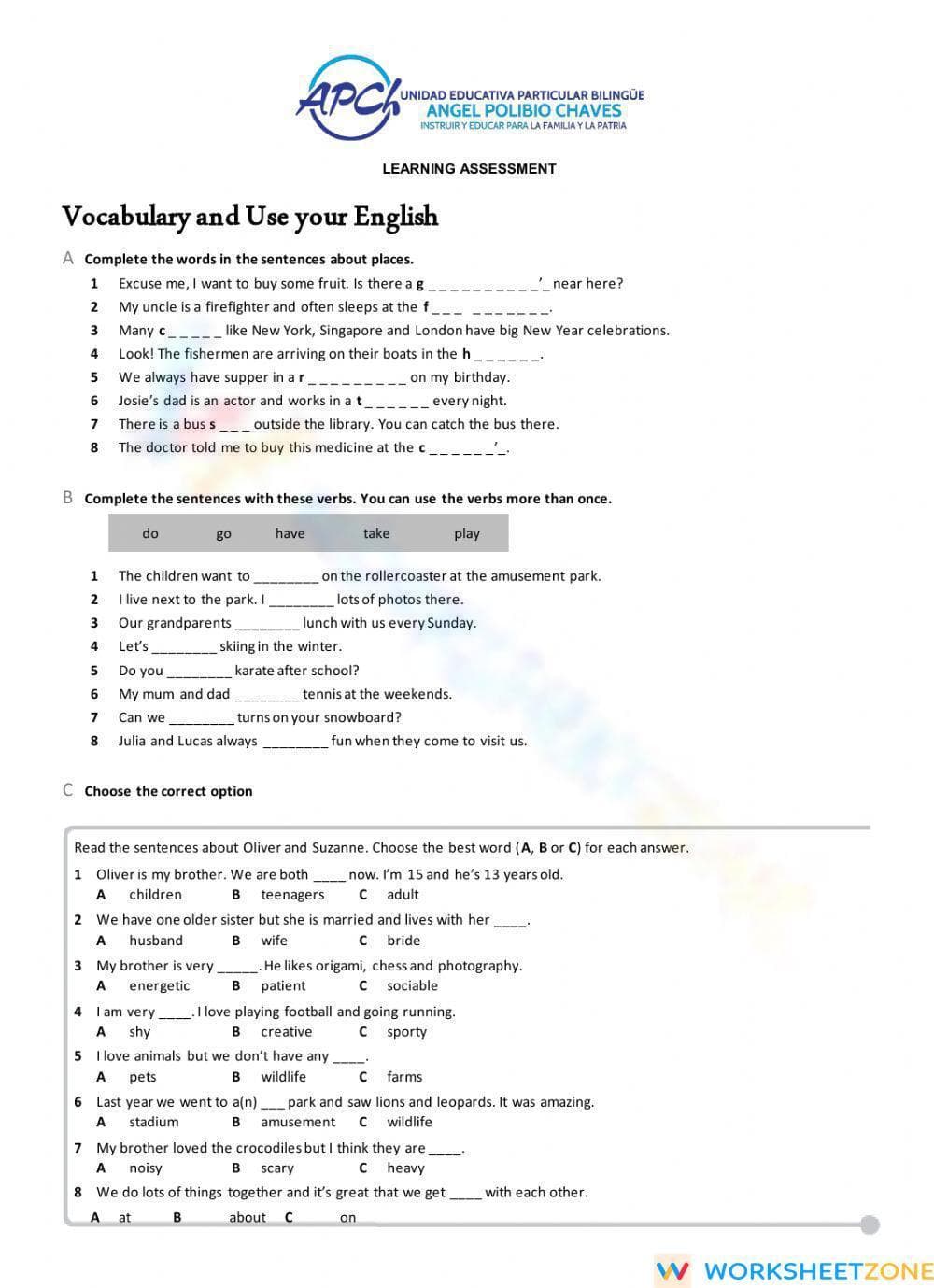
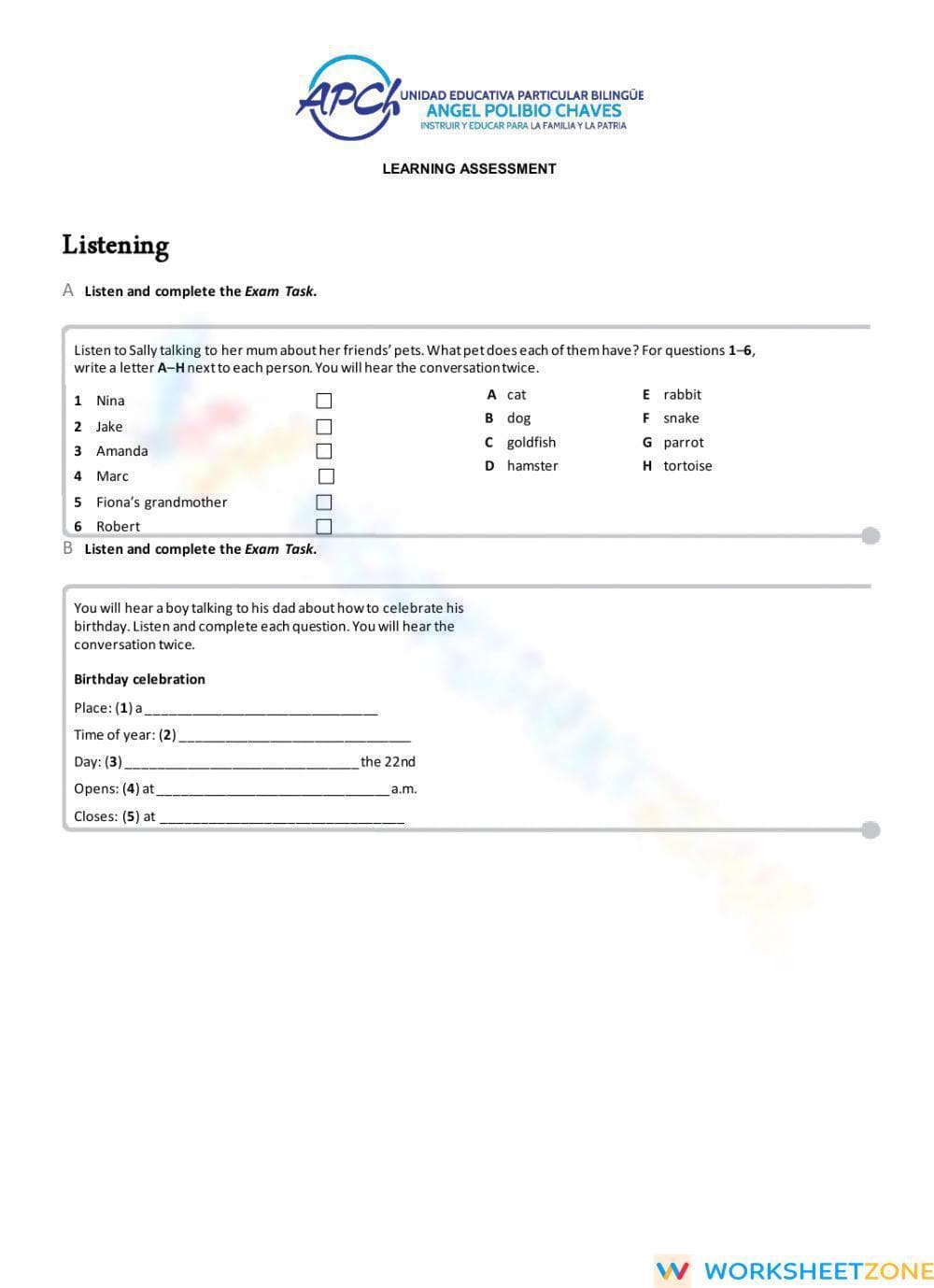
Educators will find a structured exam with six pages and 43 unique tasks. Sections include an informational passage on the "Amazing Platypus" with eight multiple-choice questions, vocabulary exercises on places and verbs, a contextual "Use of English" component, and a two-part listening section. The layout ensures student focus remains on content rather than navigation, providing a professional testing experience for middle school classrooms.
This resource uses a Mastery Evidence approach. The reading section maps to I.EFL.4.11.1, while listening tasks provide evidence for I.EFL.4.7.1. Teachers can easily record scores into gradebooks, as the exam is designed to be graded over 10 marks. Multiple question types—from matching to fill-in-the-blank—provide a nuanced view of student achievement, allowing educators to distinguish between basic recognition and higher-order application of language skills.
The primary standard for this assessment is `I.EFL.4.11.1`: Learners can understand main ideas and details in short simple texts, using contextual clues to identify relevant information. It also supports `I.EFL.4.15.1`, which is focused on conveying ideas in transactional texts. Both standard codes can be copied directly into lesson plans, IEP goals, or district curriculum mapping tools to ensure administrative compliance and instructional alignment.
Use this worksheet as a summative assessment at the end of the first grading period. It also serves as a diagnostic tool to identify gaps in listening comprehension before moving to advanced units. During administration, observe how students transition between informational reading and technical grammar sections. Most 8th-grade learners will complete the 43 tasks within a 60-minute period, allowing for transitions between the written and auditory portions.
This resource is tailored for 8th-grade ELA students and ESL learners at a B1 level. Clear instructions make it accessible for diverse needs, while the "Use of English" section challenges advanced learners with nuanced vocabulary choices. It pairs naturally with wildlife units or lessons on community environments, linking classroom instruction with formal evaluation benchmarks and providing a clear snapshot of student progress for parent-teacher conferences.
Aligned assessments like this Grade 8 term test are critical for measuring progress against the I.EFL.4.11.1 standard. According to EdReports 2024, summative assessments mirroring informational text complexity are essential for high school readiness. By testing 43 distinct skills, this worksheet ensures that the 60 minutes of testing time provides a valid sample of student ability. Research suggests that multi-modal assessments—combining textual and auditory inputs—provide a more accurate representation of a learner's true linguistic ceiling. This integration of vocabulary and context clues supports the development of academic language proficiency foundational for later success in complex literary analysis and real-world communication. Additionally, the structured approach to vocabulary acquisition through contextual usage mirrors the evidence-based practices recommended for secondary language learners to bridge the gap between basic fluency and academic mastery.


