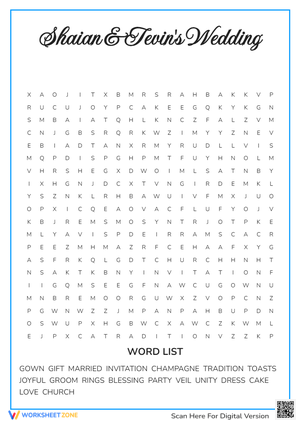
Wedding Word Search For Bridal Showers And Parties
Wedding vocabulary has a charm of its own. Words like bride, groom, bouquet, vows, rings, ceremony, reception, guests, flowers, and celebration all carry meaning, emotion, and tradition. A wedding word search turns that language into a light, enjoyable activity that can be used in classrooms, bridal showers, family gatherings, or themed learning sessions. As students or guests search for each hidden word, they practice spelling, focus, and word recognition while exploring vocabulary connected to one of life’s most memorable events.
For teachers, a wedding word search can be a useful part of lessons about traditions, family events, community celebrations, or descriptive writing. Students can learn words related to roles, places, objects, and emotions, then use those terms in sentences or short paragraphs. For example, “ceremony” can lead to a discussion about formal events, while “bouquet” introduces a more specific noun that strengthens vocabulary range. The theme is familiar enough to feel approachable, but rich enough to support meaningful language practice.
Beyond the classroom, this type of puzzle can also add a fun touch to wedding-related events. Families might use it as a quiet activity for children during a reception, a playful icebreaker at a bridal shower, or a themed game for guests. Because the words are connected to the occasion, the puzzle feels relevant instead of random. It gives participants a simple way to engage with the celebration while keeping the mood relaxed and friendly.
A wedding word search can be adapted for different ages and purposes. Younger learners may search for simple words like ring, cake, dress, love, and dance. Older students or adults can work with longer terms such as invitation, bridesmaid, honeymoon, tradition, commitment, reception, and celebration. The activity can also be extended by asking learners to sort words into categories, write a wedding scene, describe a ceremony, or create their own themed word list.
Whether used for literacy practice, event entertainment, ESL vocabulary learning, or a seasonal classroom theme, a wedding word search offers a pleasant balance of fun and focus. It helps build attention to detail, spelling confidence, and vocabulary familiarity without feeling too formal. With the right follow-up activity, this simple puzzle can become a creative way to explore language around love, family, tradition, and celebration.
Frequently Asked Questions
Question 1: What words are commonly included in a wedding word search?
A wedding word search often includes words such as bride, groom, vows, rings, bouquet, dress, cake, guests, ceremony, reception, music, dance, flowers, love, and celebration. More advanced versions may include words like bridesmaid, groomsman, invitation, honeymoon, commitment, tradition, anniversary, and engagement. These words help learners recognize vocabulary connected to wedding events, roles, objects, and emotions.
Question 2: Who can use a wedding word search?
A wedding word search can be used by students, teachers, parents, event planners, families, and wedding guests. In a classroom, it can support vocabulary, writing, or cultural lessons. At home or during an event, it can serve as a quiet activity, party game, or icebreaker. Because the theme is familiar and positive, it works well for children, teens, adults, and English language learners.
Question 3: How can teachers use a wedding word search in a lesson?
Teachers can use a wedding word search as a vocabulary warm-up, ESL activity, writing prompt starter, or cultural discussion task. After students find the words, they can write sentences, describe a wedding scene, compare wedding traditions, or sort vocabulary into categories such as people, places, objects, and actions. These extensions help students move from recognizing words to using them meaningfully in speaking and writing.
Question 4: How does a wedding word search support vocabulary learning?
A wedding word search supports vocabulary learning by giving learners repeated visual exposure to themed words. As they search through the grid, they notice spelling patterns, word shapes, and letter sequences. This improves word recognition and recall. When paired with follow-up tasks such as sentence writing, discussion, or categorization, the activity becomes even more useful for building practical vocabulary and communication skills.