Kindergarten Leveled Reading Coloring Worksheets That Keep Early Literacy Practice Simple
Why kindergarten leveled reading coloring worksheets fit early literacy blocks
Kindergarten teachers usually need reading practice that is short, visual, and easy to place into the flow of the day. That is why kindergarten leveled reading coloring worksheets printable sets work well in centers, table work, intervention folders, and take-home review. They give students one focused page with a small amount of text, a clear response task, and a built-in way to show understanding without adding extra prep for the teacher.
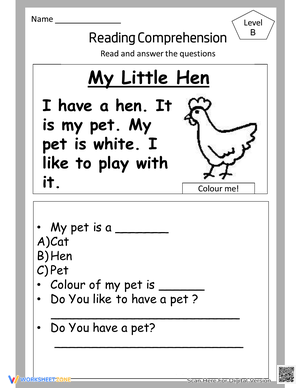
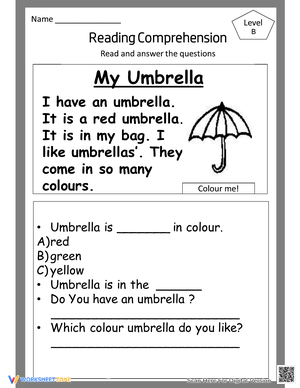
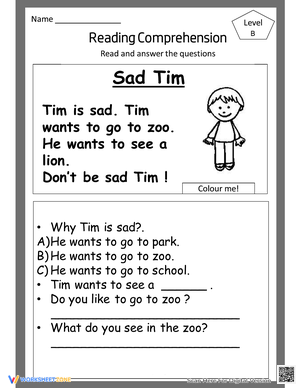
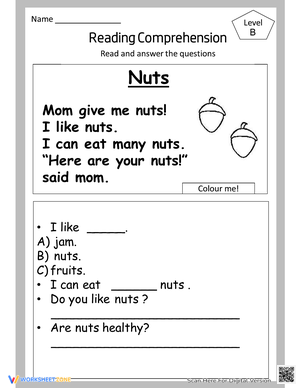
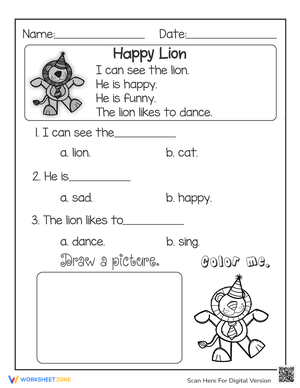
On a kindergarten reading page, the goal is not to overwhelm students with long passages. The better match is a page that asks children to read a very short sentence, track a predictable pattern, identify a known word, or connect meaning to a picture they can color. The Worksheetzone kindergarten reading coloring page sits in a reading path for young learners, so the expectation is beginner-friendly English language arts practice rather than open-ended coloring. For teachers, that makes these printables easier to slot into a sequence that already includes phonics, oral language, and guided reading follow-up.
What skills these worksheets can practice in kindergarten
When teachers choose leveled reading coloring pages for kindergarten, the strongest versions connect to early literacy goals that are already being taught. The task stays manageable, but it still supports meaningful practice.
- Phonological awareness: Students can attend to beginning sounds, rhyming patterns, or oral segmentation before reading the page.
- Phonics: Short text gives children a chance to decode words that match recently taught letter-sound patterns.
- Word recognition: Repeated high-frequency words help students build automaticity.
- Fluency: Predictable sentence frames make rereading realistic for emerging readers.
- Vocabulary and comprehension: Coloring the correct item, scene, or detail gives teachers a quick check on meaning.
These areas align well with the instructional focus described in FCRR Components of Reading, which organizes early reading instruction around multiple connected skill areas rather than one isolated task. A read-and-color worksheet is useful when it reinforces those parts of the reading block instead of replacing them.
That balance matters in kindergarten. Students are still learning how print works, how sounds map to letters, and how to sustain attention on a page. A leveled worksheet should feel like a short success cycle: read, notice, respond, and finish.
What an age-appropriate leveled printable should include
Not every printable labeled for reading is a good kindergarten fit. The most effective pages use controlled demands so students can focus on what has actually been taught. For this age group, leveled reading coloring worksheets should include very short text, familiar vocabulary, and predictable structures that reduce cognitive overload.
Teachers often get better results when the page includes one sentence pattern repeated across the task, one simple direction, and one visual that clearly matches the text. If the worksheet asks students to read a sentence such as a basic describing statement or a short action sentence, the coloring task should confirm meaning in a concrete way. That makes the page useful as independent work because students do not need constant teacher clarification.
Reading Rockets, in its guidance on using decodable books, emphasizes that decodable reading materials should align to phonics patterns students have already learned. That same idea applies to printable worksheet pages. If the worksheet includes untaught spelling patterns, too many irregular words, or dense directions, the page stops functioning as a true level match and starts measuring confusion instead of reading growth.
Why coloring supports follow-through on reading tasks
Coloring does not replace reading instruction, but it can improve engagement and task completion when used with purpose. In kindergarten, a coloring response gives students a physical way to stay with the page after reading a short line of text. That matters in classrooms where attention spans are still developing and independent stamina is uneven across the group.
The visual response also helps teachers see whether students understood what they read. If a child reads a simple sentence and colors the matching picture detail, the worksheet becomes more than handwriting practice. It becomes a quick comprehension check. On days when the class rotates through multiple literacy stations, that kind of clear response helps maintain accountability without requiring lengthy written answers.
Coloring can also lower the entry barrier for hesitant readers. A page that combines reading and coloring feels more approachable than a worksheet filled only with text. For intervention groups, that can be useful because students are more willing to attempt decoding when the page looks manageable.
Classroom Implementation
Teachers can use kindergarten leveled reading coloring worksheets printable sets in several parts of the reading block. The key is to assign them to a clear purpose instead of treating them as extra filler.
- Literacy centers: Place one page in a read-and-color bin after the target phonics pattern has been taught.
- Small-group follow-up: Use the worksheet after guided practice to see who can transfer the pattern independently.
- Intervention review: Keep a short stack for students who need another pass with the same word pattern or sentence frame.
- Take-home practice: Send one page home when families need a simple routine that does not require extensive explanation.
- Morning work or soft start: Use a familiar format so students can begin productively while the teacher handles attendance or check-ins.
A strong routine is to preview one or two key words orally, model the direction once, and then release students to complete the page. Afterward, invite quick partner rereading or a whole-group check of the colored response. That keeps the worksheet tied to instruction rather than turning it into silent busywork.
How to differentiate these printables across kindergarten groups
Differentiation works best when the worksheet changes only one variable at a time. Teachers can hold the page layout steady while adjusting text complexity, the number of words per line, or the level of picture support. That helps students focus on reading instead of learning a new task structure every time.
For an earlier group, choose pages with repeated sentence frames, strong image cues, and a very small set of decodable words. For a more advanced group, use pages that require reading two short sentences, distinguishing between similar words, or coloring based on a simple detail from the text rather than one obvious noun.
One practical pattern is to keep the coloring demand constant while shifting the decoding demand upward in small increments. That allows teachers to see whether errors come from word reading or from task confusion. In kindergarten small groups, that distinction is useful because a student may handle the response format well even when a specific phonics pattern still needs reteaching.
When a worksheet is leveled in this controlled way, teachers can move students from supported reading to independent application with less friction. It also makes data collection cleaner, since the same worksheet routine can be used across groups while the reading load changes.
What to look for before printing a worksheet set
Before adding pages to your reading rotation, it helps to do a fast teacher check. Look at the text first, not the artwork. If the phonics pattern, sentence structure, and vocabulary are not a good match for current instruction, the page will create unnecessary support needs even if it looks appealing.
Reference capsule: FCRR Components of Reading identifies five connected areas in early literacy, and Reading Rockets notes that decodable text works best when it matches taught phonics patterns. Together, those sources support using short read-and-color printables as reinforcement, not as disconnected worksheet practice.
Then review the direction line. Kindergarten pages should use simple wording and avoid multi-step instructions. Finally, check whether the coloring response actually confirms comprehension. If students can finish the page without reading, the worksheet is probably better described as coloring than reading practice.
Worksheetzone pages are most useful when teachers treat them as a targeted tool: a brief printable that reinforces a known skill, fits a specific group, and gives a quick window into whether students can read and respond independently.
Frequently Asked Questions
1. What reading skills do kindergarten leveled coloring worksheets practice?
They can support phonological awareness, phonics, word recognition, fluency, vocabulary, and basic comprehension, especially when the text is short and matched to recently taught instruction. The strongest pages keep the reading target narrow so teachers can tell what students can do on their own.
2. How do teachers use printable read-and-color pages in small groups or centers?
Most teachers use them after direct instruction. A page can serve as follow-up in a teacher table group, independent center task, morning work option, or take-home review. The best routine is quick modeling, independent completion, and a short reread or response check afterward.
3. Are these worksheets better for independent work or guided reading follow-up?
They can work for both, but only after students understand the format and the worksheet text matches taught skills. If the page includes a new pattern or unfamiliar direction, it works better as guided follow-up first and independent practice later.
4. What should a kindergarten leveled reading printable include to stay age-appropriate?
It should include very short text, predictable language, clear picture support, and one simple response task. It should also align to the reading patterns students have already learned, which keeps the page instructional rather than frustrating.
Clear All