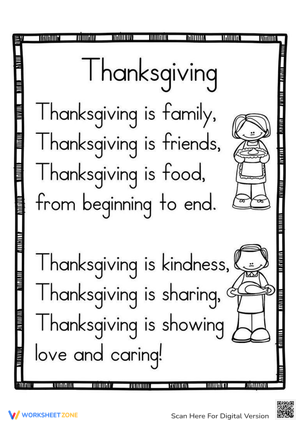
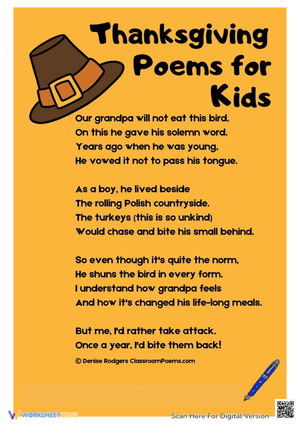
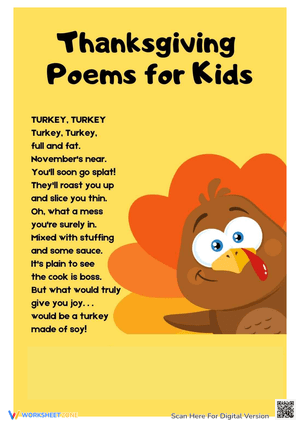
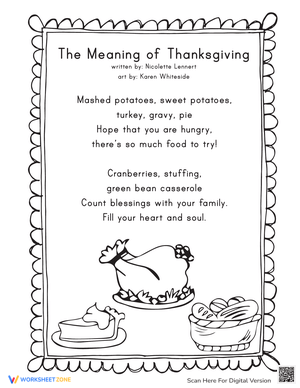
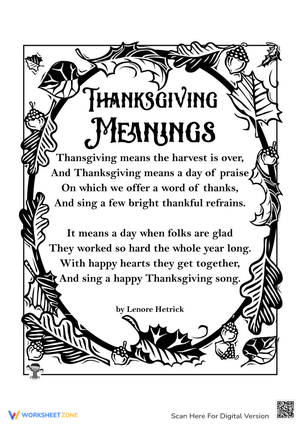
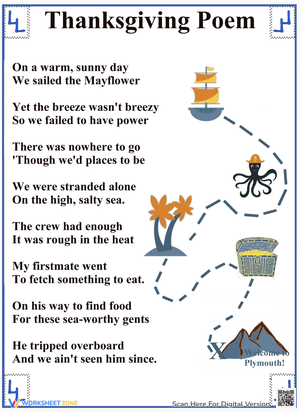
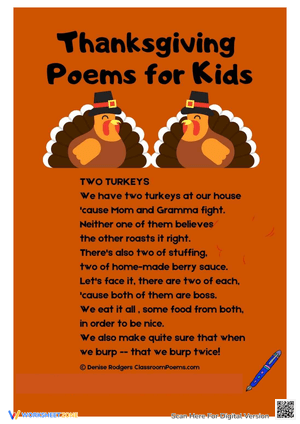
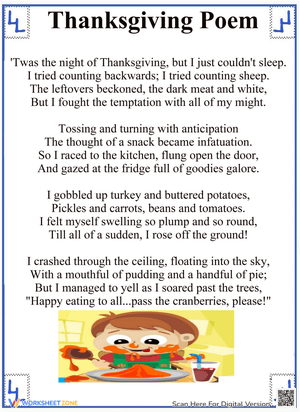
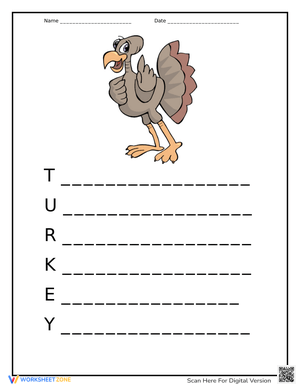
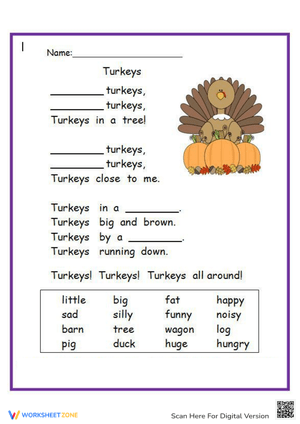
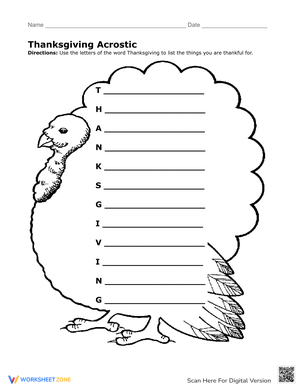
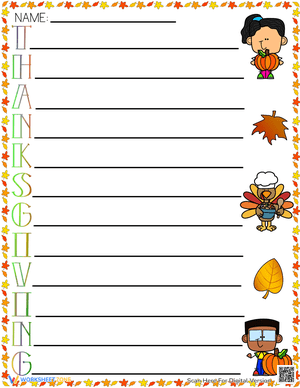
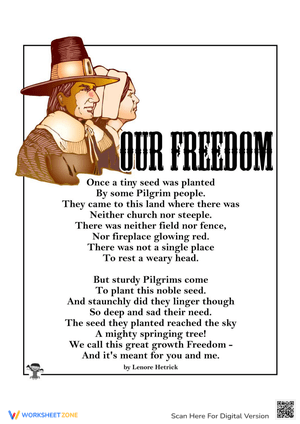
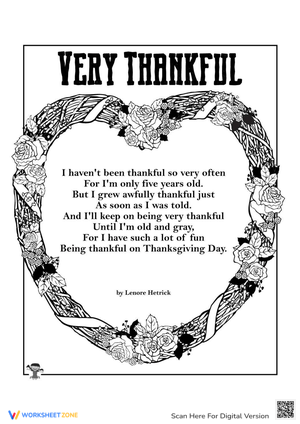
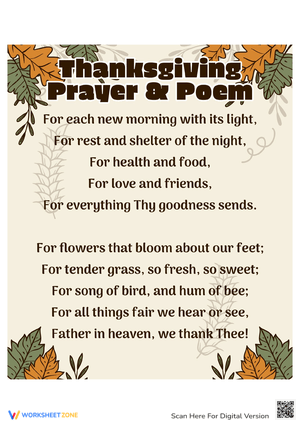
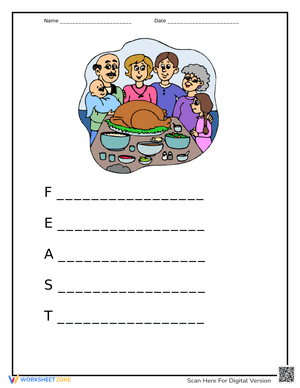
Thanksgiving poems for kids open a wonderful door to holiday learning that feels personal and meaningful. When children read or write poems connected to the season, they are not just practicing language arts - they are building an emotional connection to a tradition that many families hold close. These printable worksheet pages bring that warmth into structured learning, whether a parent is sitting at the table with a child or a teacher is launching a new unit.
Poetry gives young learners a gentle entry point into complex language skills. Through the rhythms and rhymes found in Thanksgiving poems, students practice phonemic awareness, syllable counting, and expressive reading in a context that does not feel like a test. Parents who work through these pages alongside their children often find that the conversation naturally turns to what the family is grateful for, which deepens the learning experience far beyond the worksheet itself.
Worksheetzone has designed these pages with both home and classroom settings in mind. Each PDF is clean and printer-ready, so it works equally well on a busy school morning or a quiet afternoon at home. Teachers can use them as part of a November writing center or as a gentle warm-up during the week leading up to the holiday. Parents will appreciate having a structured activity that sparks reflection without requiring any prep from their side.
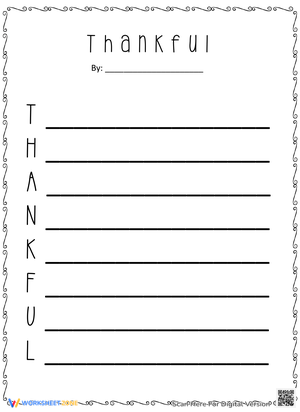
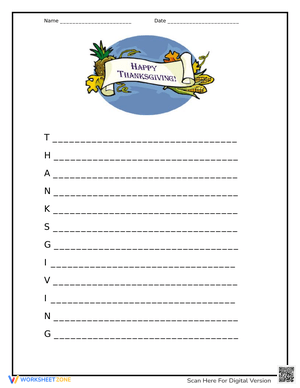
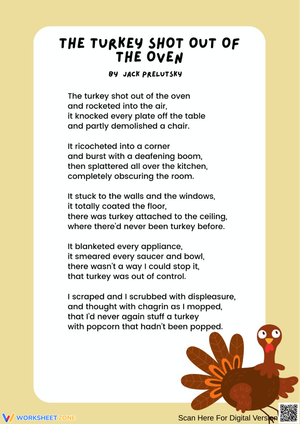
The collection covers a range of difficulty levels, making it easy to find the right page for a kindergartener just learning to read or a third grader ready to fill in missing stanzas. Some pages guide students through a simple rhyming pattern, while others invite them to compose their own short verses about what they are thankful for. If you are looking for ways to extend the learning, pairing these poems with Thanksgiving gratitude worksheets creates a powerful combination that covers both literacy and social-emotional growth.
Bringing Thanksgiving poems for kids into your regular teaching routine is one of the most natural ways to blend creativity and curriculum during the holiday season. Students who read and write poetry regularly develop stronger vocabulary, better reading fluency, and a more confident voice in their written work. For additional ideas on how to incorporate seasonal content into lesson plans, explore Thanksgiving classroom activities that complement these poems across different subject areas.
Frequently Asked Questions
Question 1: What reading levels are these Thanksgiving poems designed for?
The collection includes pages suitable for early readers in kindergarten through grade one as well as more developed readers in grades two through four. Some worksheets feature simple rhyming couplets with guided prompts, while others present longer verses with comprehension questions. Teachers and parents can select the right level based on the child current reading fluency and comfort with rhyme patterns.
Question 2: How can parents use Thanksgiving poem worksheets at home?
Parents can read a poem aloud together with their child, then ask the child to circle rhyming words or illustrate a favorite line. Another approach is to work through a fill-in-the-blank verse together, discussing word choices as you go. These activities take around ten to fifteen minutes and work well as part of an evening routine during the Thanksgiving season, encouraging both literacy practice and family reflection.
Question 3: Can these worksheets be used for a classroom poetry unit?
Yes, they fit naturally into a November poetry unit or a broader language arts curriculum. Teachers can introduce one poem per day as a morning warm-up, use them for partner reading, or incorporate them into a writing center where students compose their own verses. The pages are PDF format, making them easy to print in sets for the entire class without any special formatting required.
Question 4: What skills do children develop by reading and writing Thanksgiving poems?
Children who engage with Thanksgiving poems for kids strengthen phonemic awareness through rhyme and rhythm, build vocabulary through seasonal language, and practice expressive reading aloud. Writing original verses develops creative thinking and sentence construction. Reflecting on gratitude themes also supports social-emotional learning, helping students articulate what they value in a structured, age-appropriate format.












 Interactive Worksheet Maker
 Quiz Maker
 Word Search Maker
 Crossword Puzzle Maker
 Word Scramble Generator
 Sentence Scramble Generator
 Handwriting Worksheet Generator
 Name Tracing Generator
 Fill In The Blank Generator