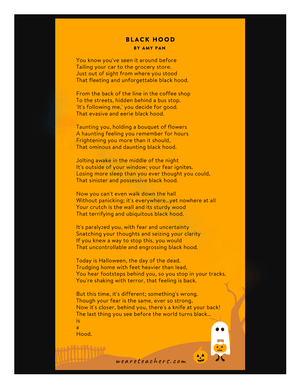
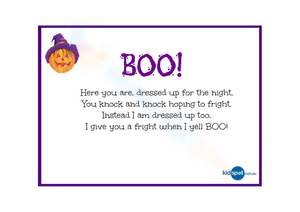
A Halloween poem about a jack-o'-lantern, a black cat, or a creaky old house carries built-in engagement, and it does the quiet work of building reading skills at the same time. For US K-5 teachers, short seasonal poems slot neatly into a warm-up, a literacy center, or the five minutes before dismissal when you still want instruction to count.
Unlike a full picture book, a poem is a complete text a child can read from start to finish in under a minute. That short length is exactly what makes poetry such a dependable tool for emergent readers, English learners, and students who need extra reading support. They get the satisfaction of finishing something whole, and you get a manageable text to teach with all week.
The seasonal hook matters too. When a poem promises something spooky, students lean in before you have said a word about skills or standards. That willing attention is hard to manufacture in March, so it is worth using the October calendar while it works in your favor.
Building Reading Fluency with Short Halloween Poems
Fluency grows through repetition, and poems make repetition painless because kids actually want to reread them. A short Halloween poem invites students to read it again and again, chasing smoother phrasing and better expression on each pass.
The real advantage is emotional cover. A struggling fourth grader who would resist rereading a leveled passage four times will happily perform a creepy poem four times if the goal is to sound scarier each round. The Halloween framing turns repeated reading from remediation into a game, which is why October is a smart month to launch fluency routines you want students to buy into and keep going after the holiday passes.
The Iowa Reading Research Center highlights poetry's short, patterned lines as a natural fit for repeated reading, the routine where students reread one text until it is smooth. A single Halloween poem of eight to twelve lines gives an emergent reader a complete text to master in roughly three focused reads.
Classroom Implementation
Here is a simple week-long routine that fits a single Halloween poem into daily instruction without eating your whole block.
- Monday: Read the poem aloud with full expression while students follow along, then discuss any tricky vocabulary.
- Tuesday: Choral read as a class and run one phonological awareness focus.
- Wednesday: Assign the poem to small groups of three or four students to rehearse for fluency.
- Thursday: Groups add simple actions or props and practice their performance.
- Friday: Groups perform for the class while you listen for a quick, low-stress check of oral reading fluency.
The whole cycle costs about ten to fifteen minutes a day and doubles as a formative assessment. Listening to a Friday performance tells you who reads with phrasing and expression and who is still working word by word, all without the pressure of a formal running record. Jot a quick note on each group so you can plan next week's small-group support.
Setting Up a Halloween Poetry Center
If you run literacy centers, a Halloween poetry station is one of the lowest-prep rotations you can offer. Print two or three poems on card stock, add a pointer, and clip a copy of that week's sound focus to the folder. Students rotate through, read each poem with a partner, and track their rereads on a simple checklist.
Keep the directions visual so early readers can work independently: a picture of two students pointing under words, a small note that says read it three times, and a box to color in after each read. Rotate the poems weekly through October so the center stays fresh and students meet several models of rhythm and rhyme. A recording device or tablet, if you have one, lets pairs listen back to their own reading and hear their progress.
Frequently Asked Questions
1. What grade levels are Halloween poems appropriate for?
Halloween poems work across K-5 when you match the text to the reader. Simple rhyming poems suit kindergarten through grade 2, while narrative and classic poems fit grades 3 through 5. Older students can handle richer language and longer stanzas.
2. How can teachers use Halloween poems to build reading fluency?
Have students reread the same short poem several times across a week, aiming for smoother phrasing and stronger expression each pass. Small-group rehearsal and a final performance provide repeated practice with a built-in reason to reread.
3. What are some classic Halloween-themed poems for kids?
Commonly used picks include David McCord's "Mr. Macklin's Jack O'Lantern," Longfellow's "Haunted Houses," and, for older readers, Poe's "The Raven." Curated collections from the Academy of American Poets and WeAreTeachers offer more options sorted by age.
4. How can Halloween poems support phonological awareness?
Poems are full of rhyme and rhythm, so they are ideal for spotting rhyming pairs, clapping syllables, and segmenting spooky words into sounds. Working with a familiar poem lets young readers focus on sounds rather than decoding.
5. How much class time should a Halloween poetry activity take?
Plan for about ten to fifteen minutes a day. That is enough for a read-aloud, a sound focus, and short group rehearsal, and it keeps the activity fresh across a single October week.












 Interactive Worksheet Maker
 Quiz Maker
 Word Search Maker
 Crossword Puzzle Maker
 Word Scramble Generator
 Sentence Scramble Generator
 Handwriting Worksheet Generator
 Name Tracing Generator
 Fill In The Blank Generator