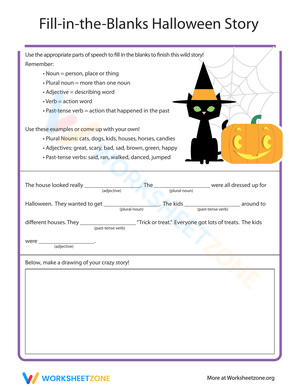
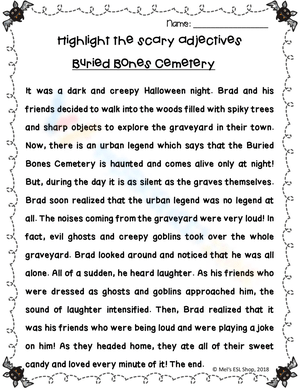
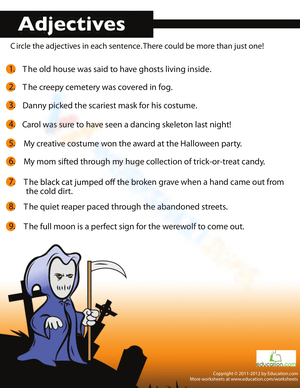
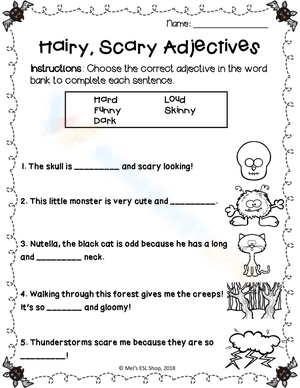
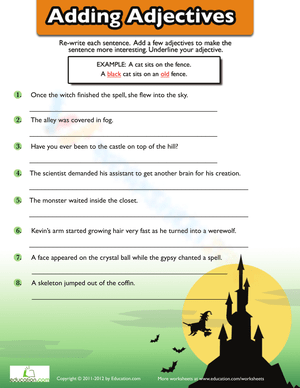
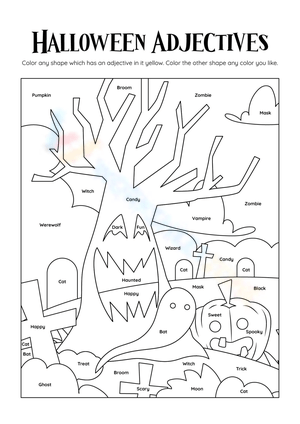
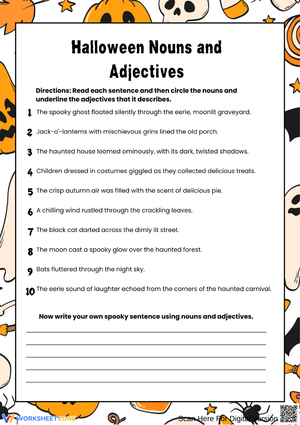
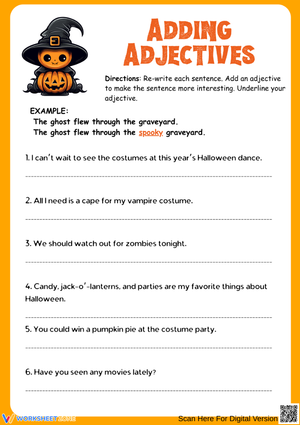
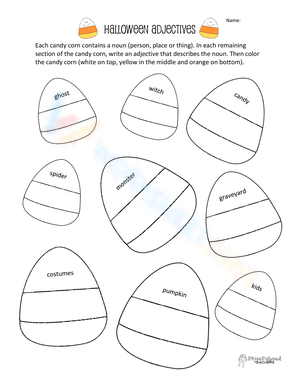
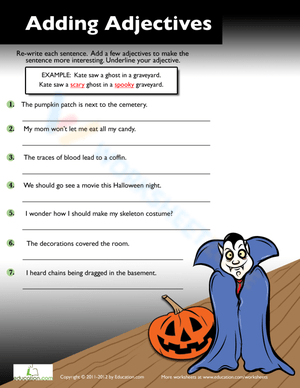
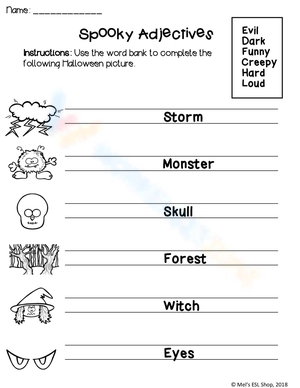
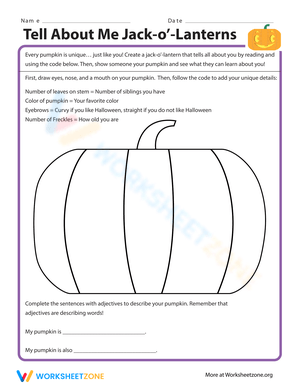
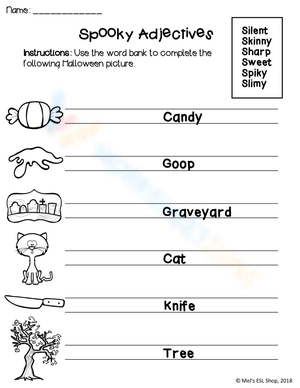
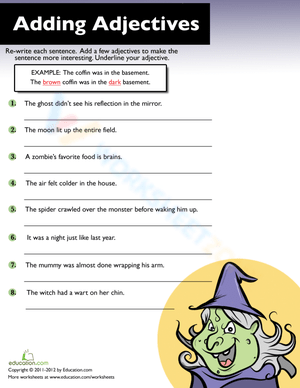
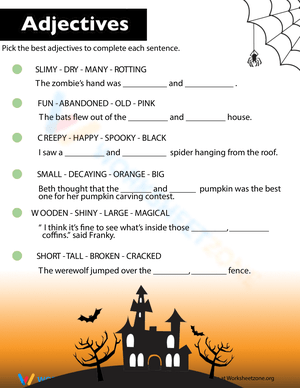
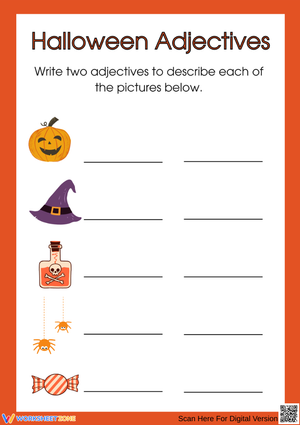
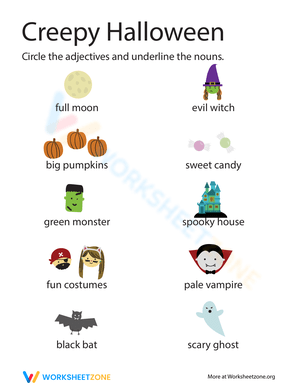
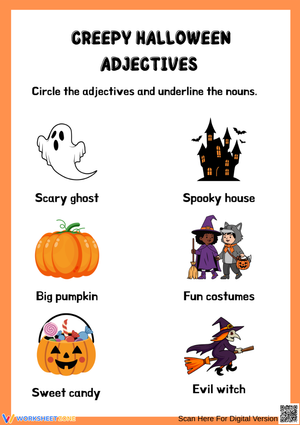
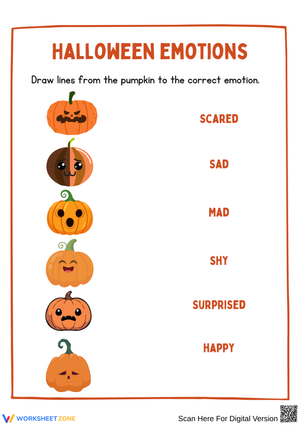
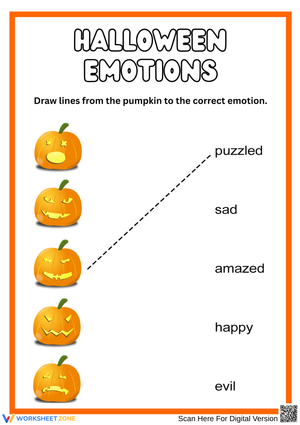
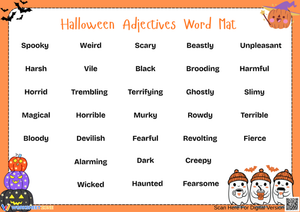
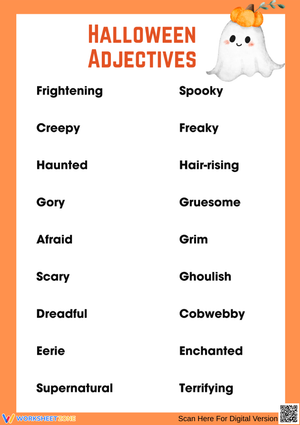
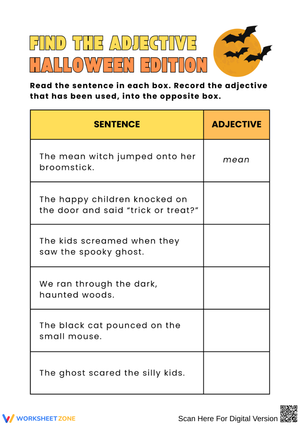
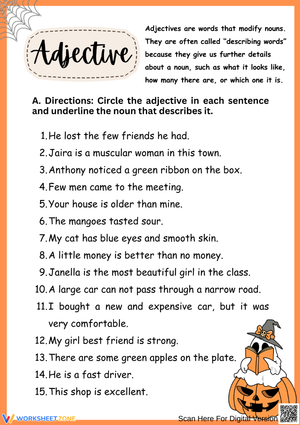
A strong seasonal worksheet does far more than ask students to circle words on a page. A well-built Halloween adjectives worksheet moves through three connected skills: identifying adjectives inside a sentence, choosing the adjective that best fits a noun, and using original describing words to react to a picture or prompt. Each step raises the cognitive demand while keeping the same friendly, spooky context. One page might show a haunted house and ask students to list five words that describe it, then use two of those words in a complete sentence. That climb from recognition to production is what keeps the skill rigorous even when the clip art is cartoonish, and it gives you evidence of what each student can do on their own.
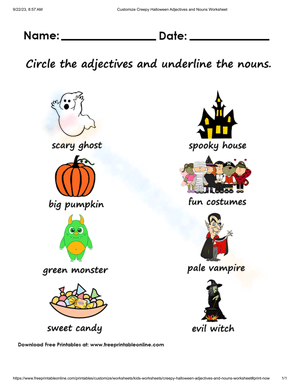
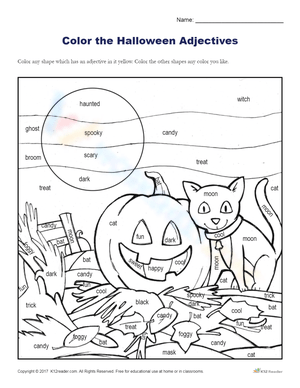
- Identify: find and underline the adjective in a Halloween sentence.
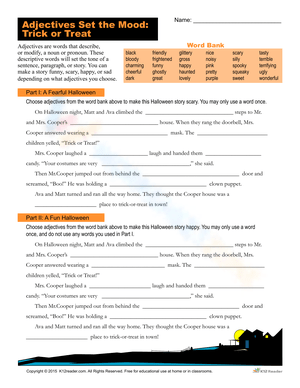
- Choose: pick the adjective that best matches a costume, pumpkin, or ghost.
- Use: write an original describing word for a seasonal image.
Using Spooky Vocabulary to Build Shades of Meaning
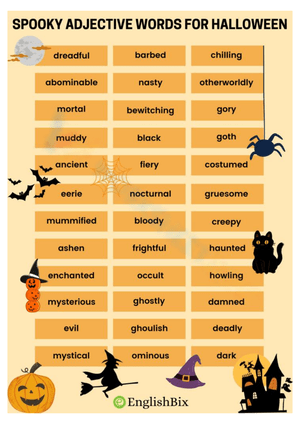
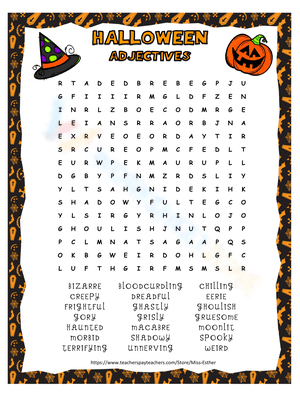
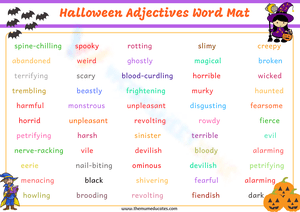
Grade 2 language standards also ask students to distinguish shades of meaning among closely related words, and Halloween vocabulary is a natural fit for that work. Words like creepy, eerie, spooky, and chilling all point toward fear, yet each carries slightly different weight. A worksheet that asks students to rank scary, scarier, and scariest, or to sort creepy, cackling, and gloomy by intensity, pushes them well past their default describing words. You can even turn the ranking into a quick partner talk, where students defend why cackling feels spookier than giggling. That nuanced comparison is precisely the higher-order thinking the standards intend, dressed up in a costume students actually enjoy arguing about.
Classroom Implementation
These worksheets flex to fit almost any part of the instructional day. Use them as morning work during the last two weeks of October, as a literacy center rotation, or as targeted practice inside a small-group intervention block. Because the format stays predictable, students can work independently after a single modeled example, which frees you to pull a group without the room stalling.
- Morning work: one short adjective page to open the day during your October unit.
- Literacy centers: pair the worksheet with picture cards for a describing-word station.
- Small group: use the identify and choose sections to reteach adjectives to students who need it.
- Homework: send the writing extension home for low-stakes seasonal practice.
For intervention, lead with the identify and choose steps, and save open-ended production for once students can reliably spot an adjective in a sentence on their own.
Frequently Asked Questions
1. What grade level are Halloween adjectives worksheets best suited for?
They land most naturally in Grades 2 and 3, though the simplest versions can support Grade 1 or an early introduction. Second graders focus on identifying and using adjectives, while third graders explain how adjectives function in a sentence and practice comparative and superlative forms like scarier and scariest.
2. How do these worksheets align with Common Core language standards?
They line up with CCSS.ELA-LITERACY.L.2.1.e, which asks second graders to use adjectives and adverbs and choose between them, and with CCSS.ELA-LITERACY.L.3.1.a, which asks third graders to explain the function of adjectives in general and in particular sentences during a single grammar unit.
3. How can teachers use these worksheets in a small-group or intervention setting?
Start with the identify and choose sections so students who struggle build confidence spotting adjectives before producing their own. Keep the group short, model one example aloud, then let each student try a parallel Halloween item while you watch for where the skill breaks down.
4. What is the difference between how Grade 2 and Grade 3 standards treat adjectives?
Grade 2 emphasizes using adjectives and choosing between adjectives and adverbs depending on what is modified. Grade 3 shifts toward analysis, asking students to explain an adjective's function in a sentence and to form comparative and superlative adjectives such as scarier and scariest.
5. How can teachers extend a Halloween adjectives worksheet into a writing activity?
Have students turn their collected describing words into two or three complete sentences about a Halloween scene, costume, or piece of candy. This bridges grammar practice and real composition, and it gives you a quick formative read on whether students can place adjectives correctly before a noun.












 Interactive Worksheet Maker
 Quiz Maker
 Word Search Maker
 Crossword Puzzle Maker
 Word Scramble Generator
 Sentence Scramble Generator
 Handwriting Worksheet Generator
 Name Tracing Generator
 Fill In The Blank Generator