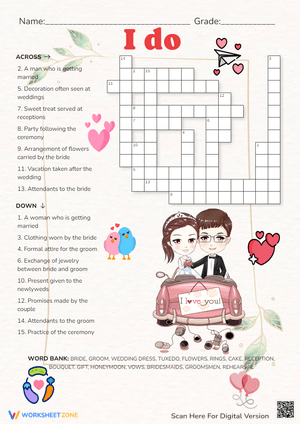
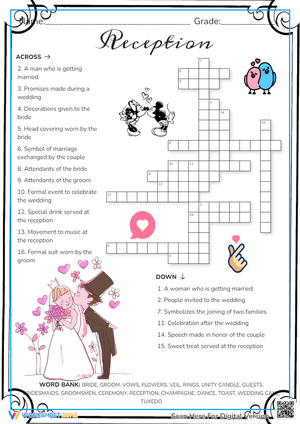
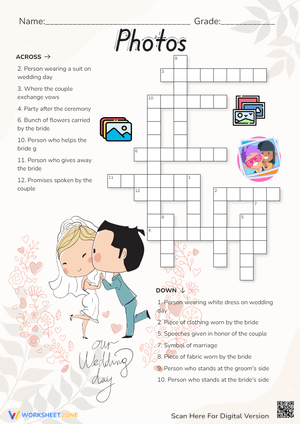
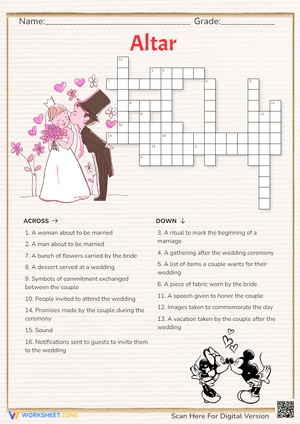
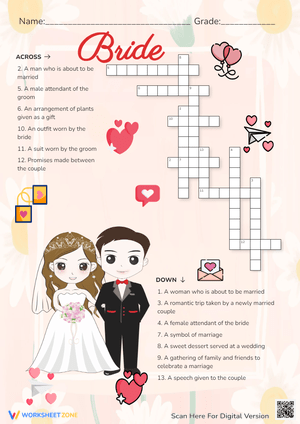
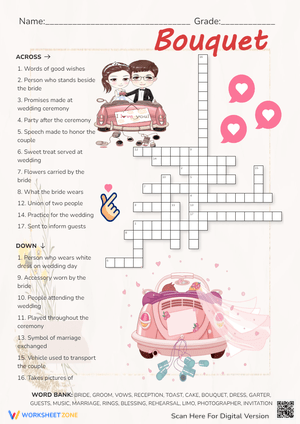
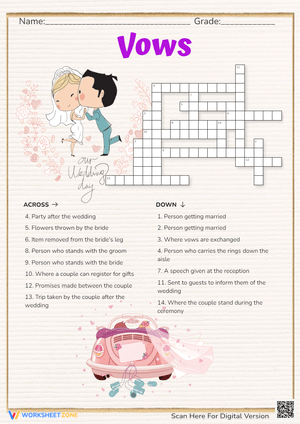
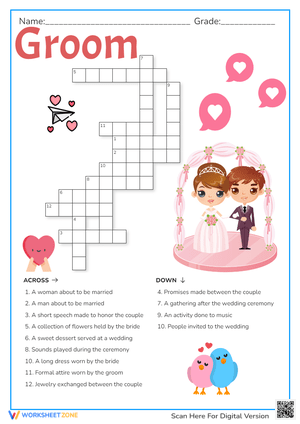
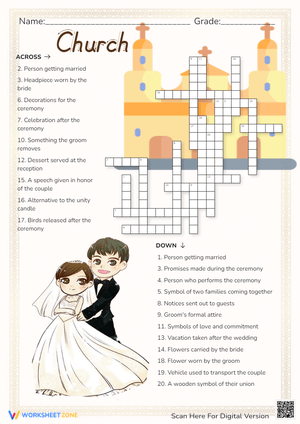
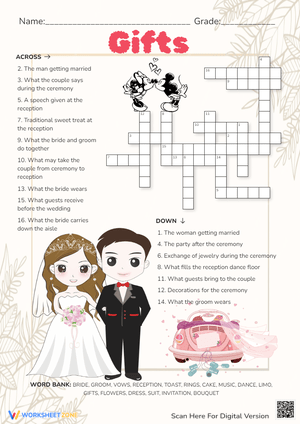
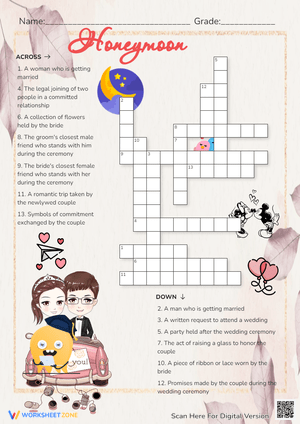
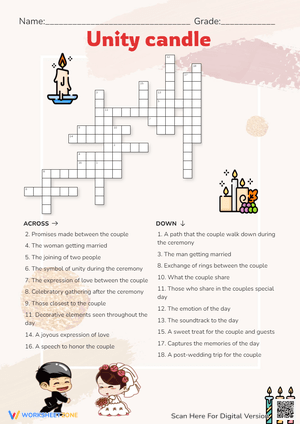
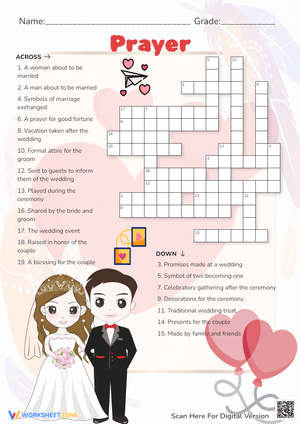
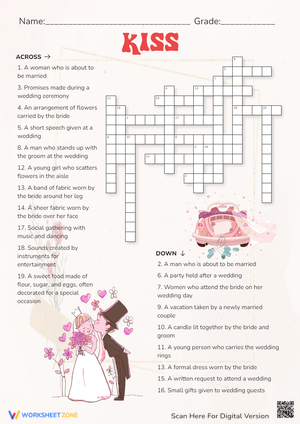
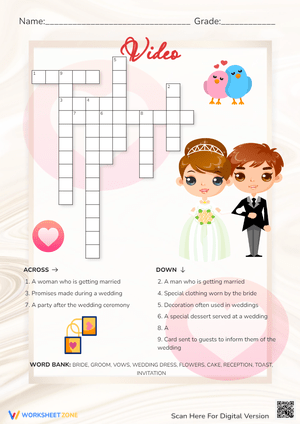
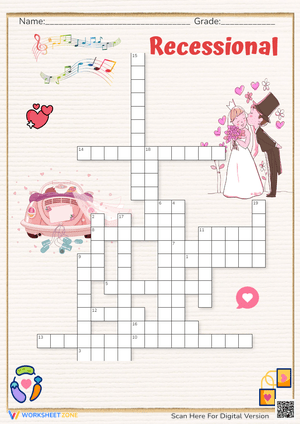
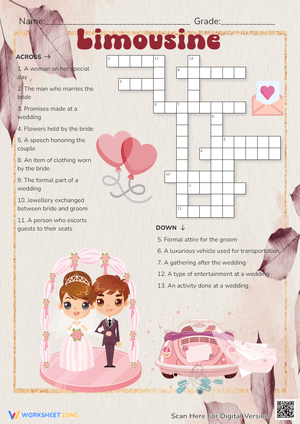
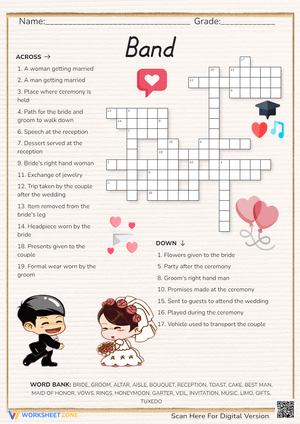
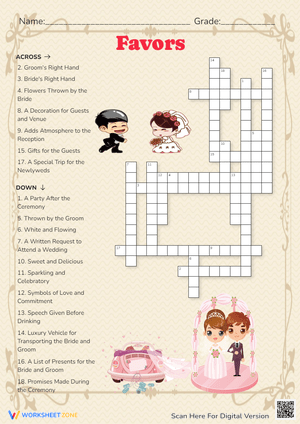
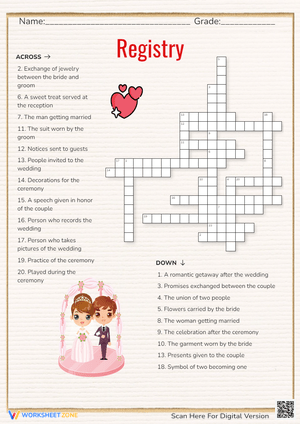
A wedding crossword puzzle adds a thoughtful and entertaining touch to bridal showers, engagement parties, receptions, and anniversary celebrations. Instead of giving guests only a passive activity, a crossword invites them to think, laugh, remember details, and interact with the couple’s story. Words such as bride, groom, vows, bouquet, rings, reception, dance, toast, and honeymoon can turn a simple puzzle into a meaningful keepsake-style activity that fits the wedding theme beautifully.
One reason wedding crossword puzzles work so well is that they can be personalized. A puzzle might include clues about how the couple met, their favorite date spot, the proposal location, shared hobbies, family traditions, or inside jokes. Guests who know the couple well may enjoy solving personal clues, while more general wedding vocabulary can make the puzzle accessible to everyone. This balance keeps the activity fun without making it too difficult for guests who may not know every detail.
Wedding crossword puzzles are also useful for keeping guests engaged during quieter moments. They can be placed at tables during the reception, used as a bridal shower game, added to welcome bags, or included in a cocktail hour activity station. Guests can complete the puzzle individually, work with a partner, or solve it as a table team. This gives people something light and friendly to do while waiting for food, speeches, photos, or the next part of the celebration.
A well-designed wedding crossword puzzle should match the tone of the event. A formal wedding might use elegant clues about love, commitment, family, and tradition, while a casual celebration may include funny questions, playful memories, and lighthearted couple trivia. The puzzle can also support other wedding games, such as “How Well Do You Know the Couple?” or a guest table challenge. When the clues are clear and the answers are familiar enough, the activity feels inclusive rather than frustrating.
Whether used for a bridal shower, wedding reception, engagement party, or anniversary event, a wedding crossword puzzle brings together language, memory, and celebration. It gives guests a chance to connect with the couple’s story while enjoying a relaxed activity. With the right mix of romantic words, personal details, and easy-to-follow clues, the puzzle can become a charming part of the wedding experience.
Frequently Asked Questions
Question 1: How can a wedding crossword puzzle make an event more fun?
A wedding crossword puzzle makes an event more fun by giving guests something interactive to do. It can spark conversations, encourage teamwork, and help guests learn more about the couple. At bridal showers or receptions, the puzzle can also serve as a light icebreaker, especially when guests come from different friend groups or families. Because it is simple and low-pressure, people can join in without needing special instructions.
Question 2: What words can be included in a wedding crossword puzzle?
A wedding crossword puzzle can include general wedding words such as bride, groom, rings, vows, bouquet, venue, reception, cake, dance, toast, guests, love, and honeymoon. For a more personal puzzle, it can also include the couple’s names, proposal location, wedding date, favorite song, pet’s name, travel destination, or shared hobbies. A mix of general and personal clues usually creates the best experience for guests.
Question 3: When should you use a wedding crossword puzzle?
A wedding crossword puzzle can be used during bridal showers, engagement parties, rehearsal dinners, receptions, anniversary parties, or wedding weekend welcome events. It works especially well during moments when guests may be waiting, such as before dinner, during cocktail hour, or between scheduled activities. It can also be used as a table game to encourage guests to interact with one another in a relaxed way.
Question 4: How can you make a wedding crossword puzzle more personal?
You can make a wedding crossword puzzle more personal by adding clues about the couple’s relationship, favorite memories, family traditions, and wedding details. For example, clues might ask where the couple first met, what song they love, where they got engaged, or what dessert they chose for the reception. Personal clues make the puzzle feel more meaningful, while a few easy wedding-themed answers help every guest participate comfortably.












 Interactive Worksheet Maker
 Quiz Maker
 Word Search Maker
 Crossword Puzzle Maker
 Word Scramble Generator
 Sentence Scramble Generator
 Handwriting Worksheet Generator
 Name Tracing Generator
 Fill In The Blank Generator




 BACK TOSCHOOL