


























1 / 5
0
Views
0
Downloads

Save
0 Likes
Share
Which is the Better Buy? Worksheet
0 Views
0 Downloads
Paste this activity's link or code into your existing LMS (Google Classroom, Canvas, Teams, Schoology, Moodle, etc.).
Students can open and work on the activity right away, with no student login required.
You'll still be able to track student progress and results from your teacher account.
Information
Description
What It Is:
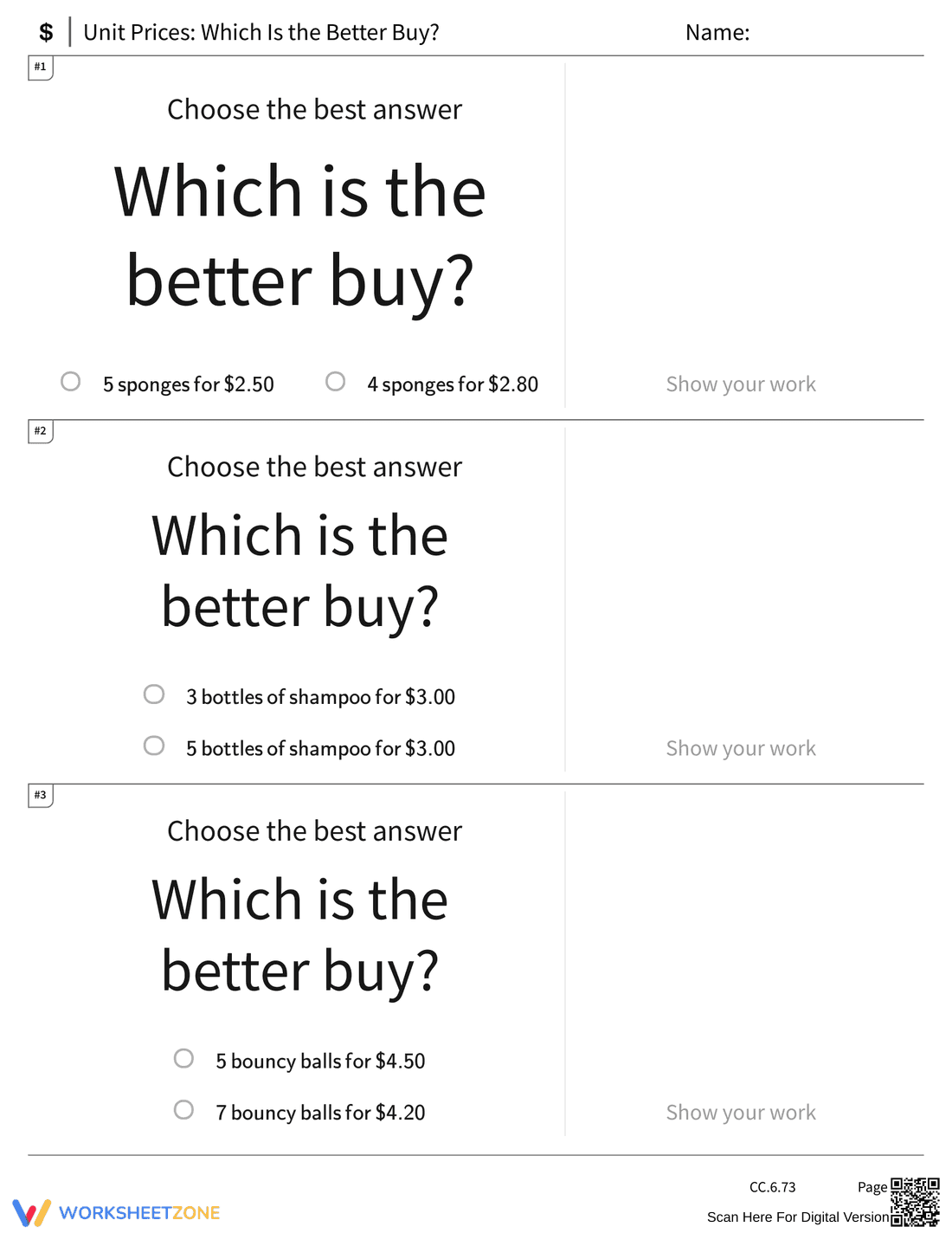
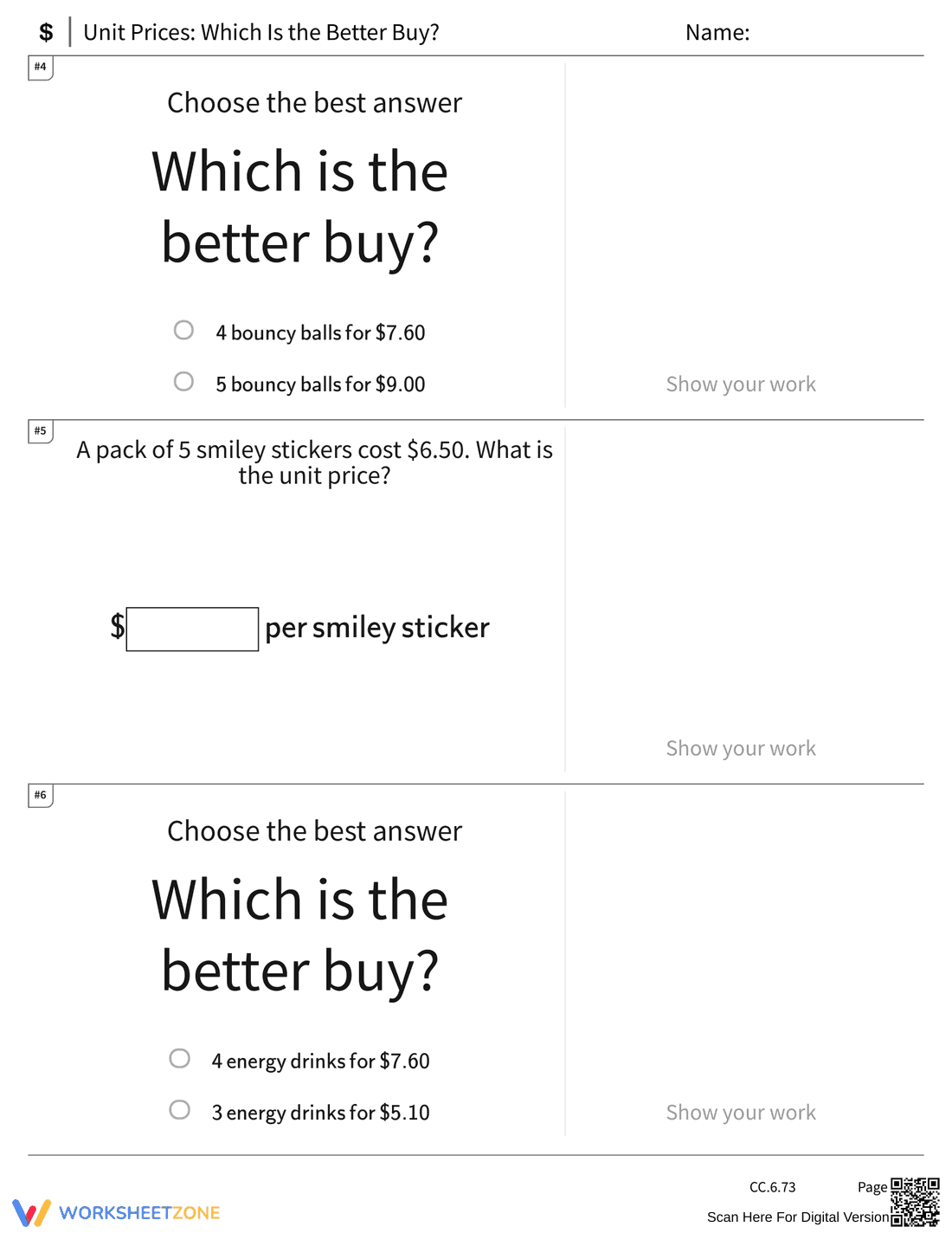
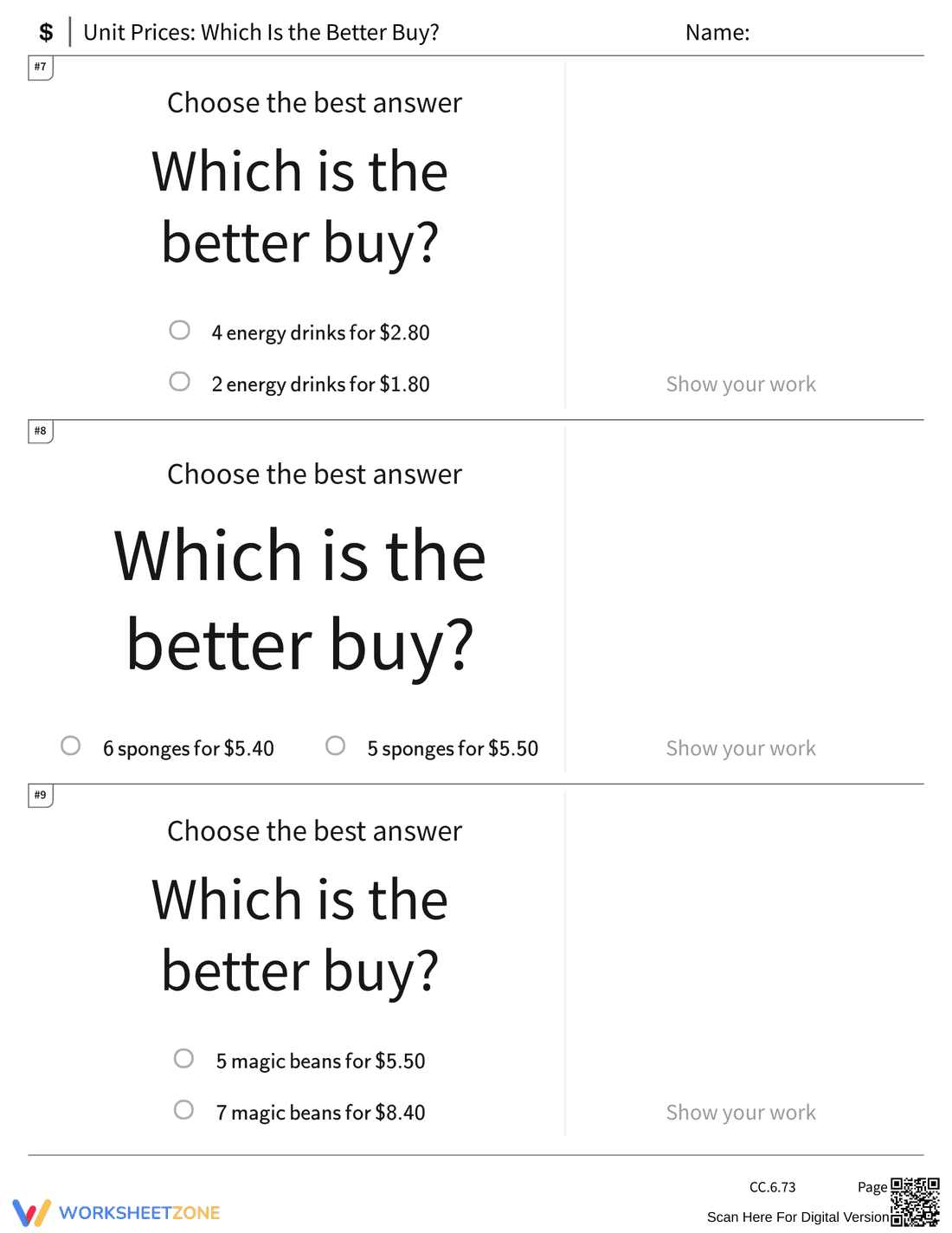
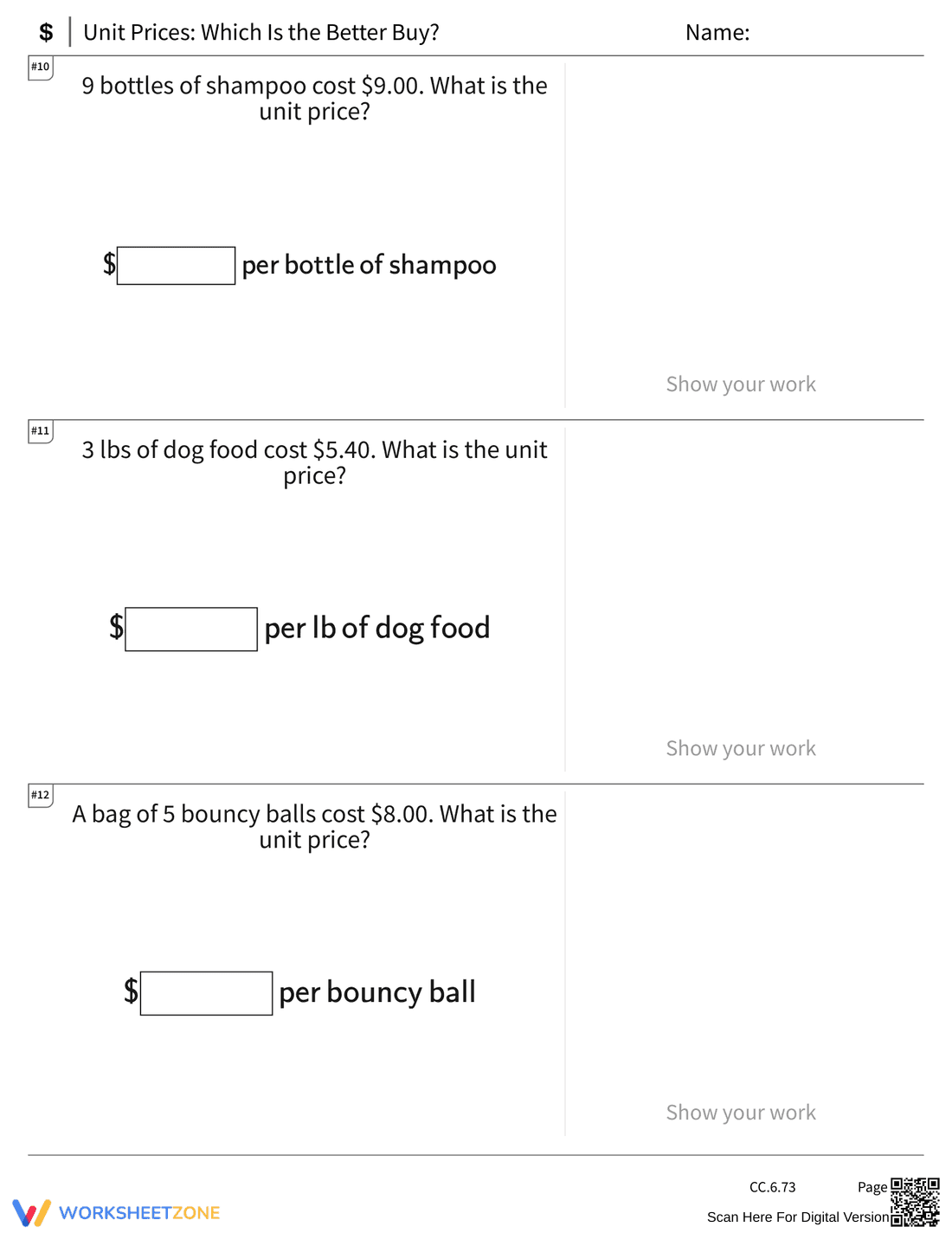
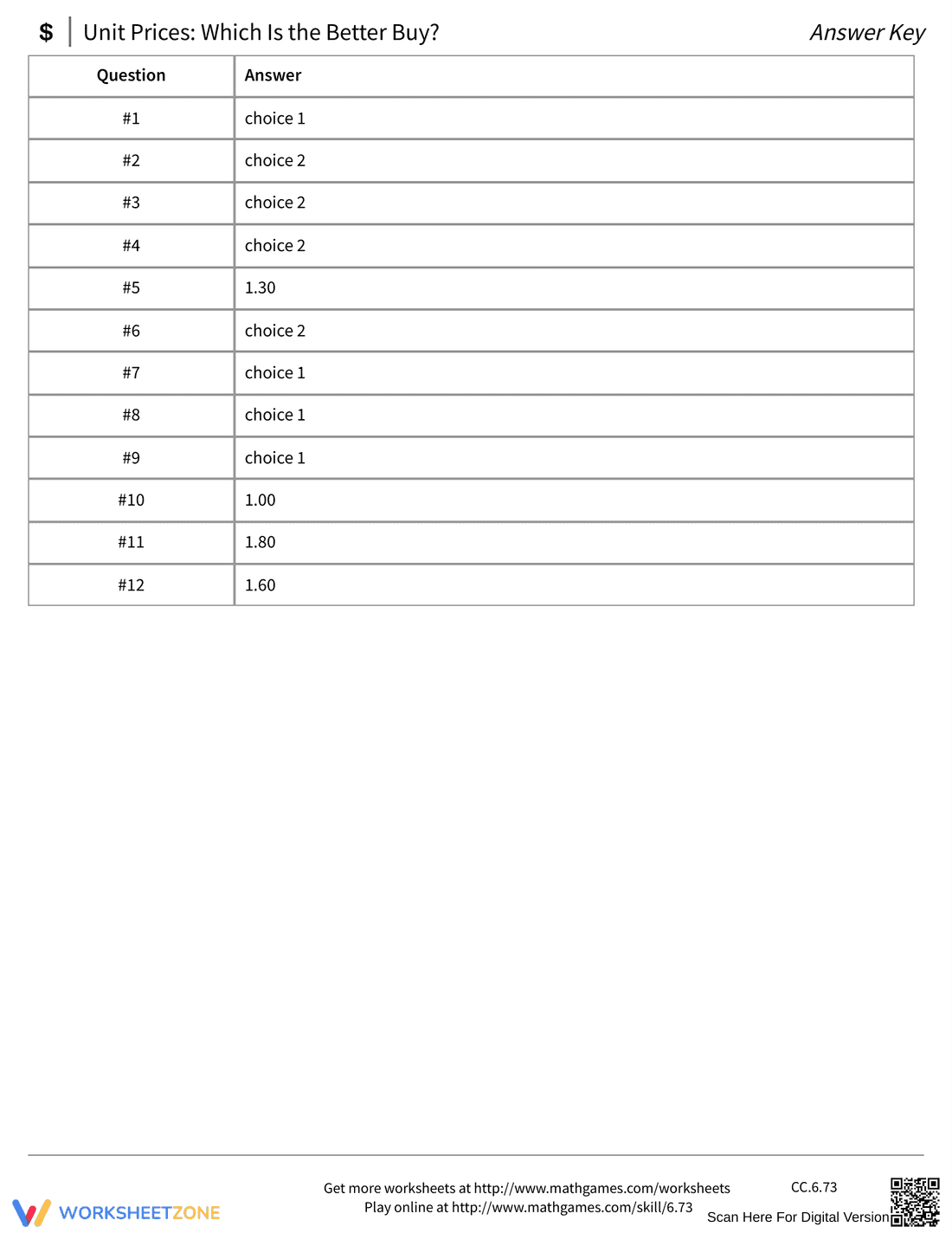
This is an educational worksheet focused on determining the better buy based on unit prices. It presents three multiple-choice questions where students must compare the prices of different quantities of items (sponges, shampoo, bouncy balls) to identify which option offers the lowest price per item. Each question provides space for students to show their work.
Grade Level Suitability:
This worksheet is suitable for grades 5-7. It requires understanding of division and comparing decimals to calculate unit prices, skills typically developed in these grade levels. The concepts of ratios and proportions are also relevant.
Why Use It:
This worksheet helps students develop practical math skills related to real-world shopping scenarios. It reinforces the ability to calculate unit prices and make informed decisions based on cost-effectiveness. It encourages problem-solving and critical thinking.
How to Use It:
Students should first calculate the unit price for each option in a question by dividing the total price by the number of items. They should then compare the unit prices to determine which option is the 'better buy' (lower price per item). The work should be shown in the provided space. Finally, the student should select the best answer.
Target Users:
This worksheet is ideal for students learning about unit prices, ratios, and proportions. It can be used as a classroom activity, homework assignment, or review exercise for students in upper elementary and middle school math classes. It is also useful for students who need extra practice with applying math skills to real-life situations.
This is an educational worksheet focused on determining the better buy based on unit prices. It presents three multiple-choice questions where students must compare the prices of different quantities of items (sponges, shampoo, bouncy balls) to identify which option offers the lowest price per item. Each question provides space for students to show their work.
Grade Level Suitability:
This worksheet is suitable for grades 5-7. It requires understanding of division and comparing decimals to calculate unit prices, skills typically developed in these grade levels. The concepts of ratios and proportions are also relevant.
Why Use It:
This worksheet helps students develop practical math skills related to real-world shopping scenarios. It reinforces the ability to calculate unit prices and make informed decisions based on cost-effectiveness. It encourages problem-solving and critical thinking.
How to Use It:
Students should first calculate the unit price for each option in a question by dividing the total price by the number of items. They should then compare the unit prices to determine which option is the 'better buy' (lower price per item). The work should be shown in the provided space. Finally, the student should select the best answer.
Target Users:
This worksheet is ideal for students learning about unit prices, ratios, and proportions. It can be used as a classroom activity, homework assignment, or review exercise for students in upper elementary and middle school math classes. It is also useful for students who need extra practice with applying math skills to real-life situations.


