


























Views
Downloads

Essential Soil Types Science Worksheet | Grade 5 Aligned
Paste this activity's link or code into your existing LMS (Google Classroom, Canvas, Teams, Schoology, Moodle, etc.).
Students can open and work on the activity right away, with no student login required.
You'll still be able to track student progress and results from your teacher account.
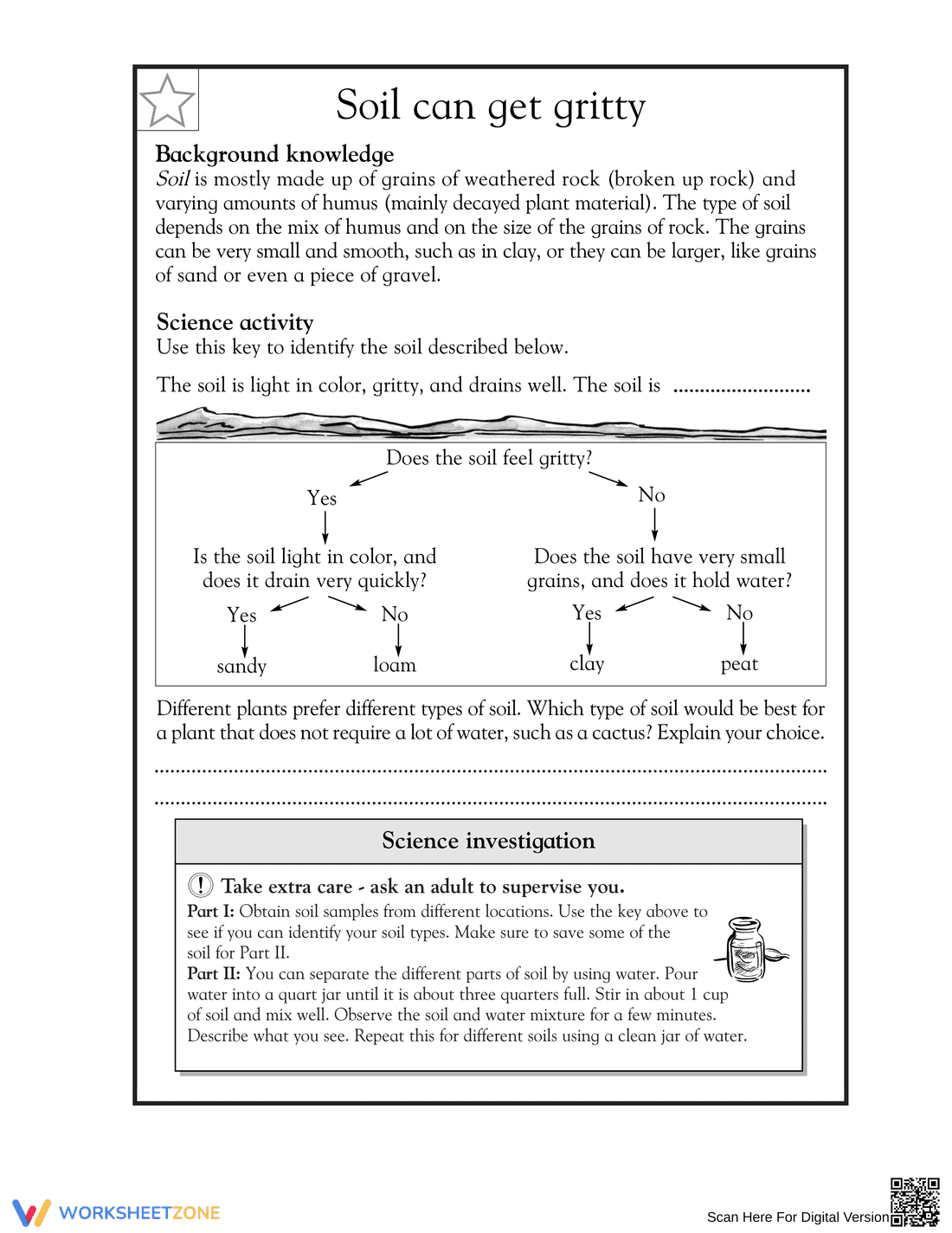
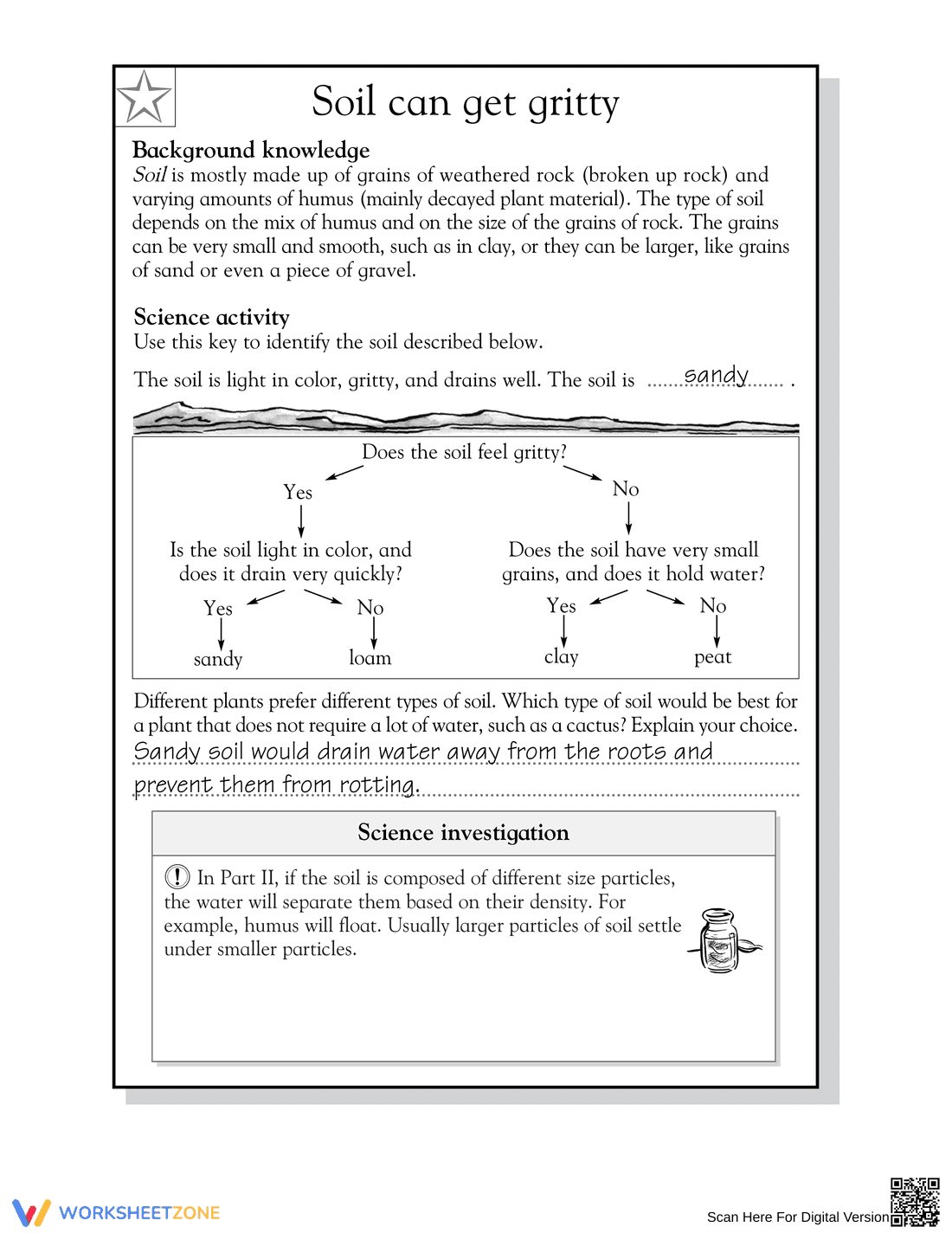
This Grade 5 science worksheet empowers students to identify soil types using a professional dichotomous key. By analyzing physical properties like texture, color, and drainage, learners distinguish between sandy, loam, clay, and peat soils. This activity bridges the gap between theoretical background knowledge and practical science investigation, ensuring students master the composition of the geosphere.
At a Glance
- Grade: 5 · Subject: Science
- Standard:
5-ESS2-1— Develop a model to describe the interaction of Earth systems including soil- Skill Focus: Soil Classification & Drainage Properties
- Format: 1 page · 3 problems · Answer key included · PDF
- Best For: Emergency sub plans or lab prep
- Time: 25–35 minutes
The worksheet includes a structured Background Knowledge section explaining humus and rock grains, followed by a Science Activity featuring a clear visual flow-chart key. Students apply this key to a specific soil scenario and then tackle a critical thinking prompt regarding plant preferences (cactus). Finally, a Science Investigation section provides a step-by-step experiment protocol for separating soil components using water in a quart jar.
This resource is designed for an immediate, zero-prep classroom experience. Teachers can Print (30 seconds) the single-page PDF, Distribute (1 minute) to students as an independent or partner activity, and Review (5 minutes) the results using the included answer key. Total teacher preparation time is under 2 minutes, making it an ideal choice for busy mornings or unexpected sub-plan needs.
Aligned primarily to `5-ESS2-1`, this resource helps students describe the cycling of matter through the geosphere. By observing soil grains and drainage, students also meet `5-PS1-3` criteria for identifying materials based on their properties. Both standard codes can be copied directly into lesson plans, IEP goals, or district curriculum mapping tools.
Use this worksheet as a mid-unit check during a lesson on Earth systems or as a standalone lab guide for a soil-separation experiment. For a formative-assessment observation tip, watch how students navigate the dichotomous key; if they struggle with the Yes/No branches, provide a physical sample of sand and clay for tactile comparison. Expected completion time is 30 minutes.
This guide is tailored for Grade 5 general education students, but the visual nature of the flow chart makes it highly accessible for English Language Learners and students with IEPs requiring visual scaffolds. It pairs naturally with a soil-composition passage or an anchor chart highlighting the difference between humus and weathered rock grains.
Soil classification and the use of dichotomous keys are fundamental pillars of elementary Earth Science curricula. Research from EdReports 2024 emphasizes that providing students with visual models for classification, such as the flow chart used in this `5-ESS2-1` worksheet, significantly increases retention of technical vocabulary like loam and peat. Furthermore, the integration of a hands-on investigation alongside theoretical identification aligns with the NAEP framework for science literacy, which advocates for doing science through observation and component separation. By requiring students to explain why specific soils favor certain plants (like cacti), this resource promotes higher-order thinking skills essential for meeting Grade 5 proficiency standards. The clear separation of background knowledge from active inquiry ensures that students are supported as they move from recognizing facts to applying scientific logic. This structured approach is a proven method for building scientific confidence in diverse learners.


