


























In this lesson, students will learn about the value and significance of prior inventors and their influence on the world. The students will:
- determine the value and significance of prior inventors.
- identify the influence that inventions have on our lives.
- identify a problem to be solved.
- understand that the time needed to address a problem can vary.
- use instructional software and be able to manipulate the keyboard or mouse to perform the requested function.
- Inventor: A person who develops something, previously unknown, that makes work or life easier or safer.
- Invention: A new device, method, or process developed from study and experimentation.
Note: Select information on the following inventors and inventions (Benjamin Franklin/Franklin stove, Thomas Edison/light bulb, Alexander Graham Bell/ telephone, Henry Ford/Model T, Walter Diemer/Double Bubble bubble gum, Eli Whitney/cotton gin, toys (Slinky, Mr. Potato Head, Silly Putty), Velcro, and Post-its glue. Then add other inventors or inventions as time permits.
- Then and Now (Learning Center Emergent Readers) by Samantha Berger. Scholastic, 1998.
- books on inventors, such as:
- The Picture History of Great Inventors by Gillian Clements. Francis Lincoln Children’s Books, 2005.
- Inventors (Library of Congress Classic) by Martin W. Sandler. HarperCollins, 1999.
- Girls Think of Everything: Stories of Ingenious Inventions by Women by Catherine Thimmesh and Melissa Sweet. Sandpiper, 2002.
- African American Inventors (Black Stars) by Otha Richard Sullivan. Wiley, 1998.
- books on inventions, such as
- Imaginative Inventions: The Who, What, Where, When, and Why of Roller Skates, Potato Chips, Marbles, and Pie (and More!) by Charise Mericle Harper. Little Brown Books, 2001.
- Invention (DK Eyewitness Books) by Lionel Bender. DK Children, 2005.
- Mistakes That Worked by Charlotte Jones and John O’Brien. Doubleday, 1994.
- The Kid Who Invented the Popsicle: And Other Surprising Stories about Inventions by Don L. Wulffson. Puffin,, 1999.
- http://www.statemuseumpa.org/teachers-inventions.html
- http://inventors.about.com/od/americaninventors/qt/Pennsylvania.htm
- one blank sheet of paper per student for lesson assessment
- 3"x 3" sticky notes, two per student, for note taking
- What Was Technology like Long Ago? interview form (S-K2-10_Interview Form)
- Observe group discussions to assess students' engagement and ability to compare past and modern technology.
- Assess students’ awareness of a specific inventor or invention’s contribution through a review of their presentations.
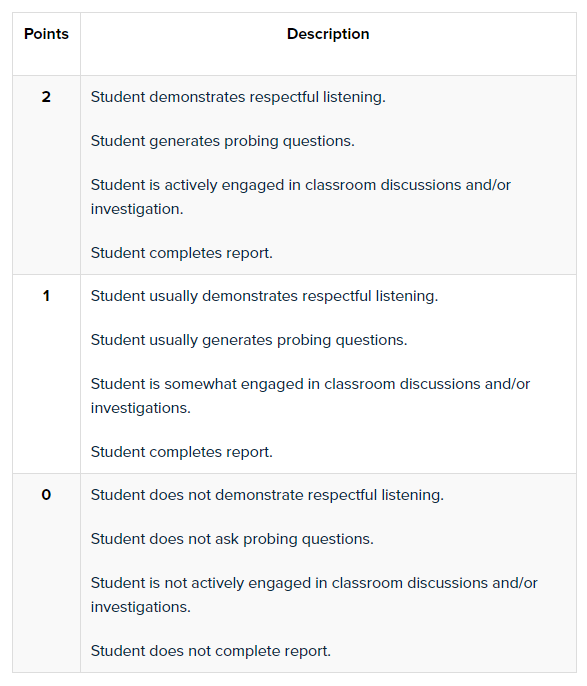
- Collect the "My Life Without a(n) _____" report and use them to assess students' comprehension of the lesson material.
- Check the accuracy of student and partner responses by observing their discussions following read-alouds.
Scaffolding, Active Engagement, Modeling, Explicit Instruction
W: Students will recognize the significance of previous inventors and their impact on the world.
H: In this activity, students will interact with a guest speaker (teacher dressed in pioneer period clothing and portraying a student) from a one-room school house to compare it to students’ modern school.
E: Students will engage in large-group discussions, use a visual organizer to compare and contrast concepts, and conduct a discussion to talk about how technology has improved their lives.
R: Students will discuss the past inventions with partners and reflect on their impact on their lives.
E: Students will share their learning through group discussions, guided questions, and reflection with their partners.
T: Students will engage in a variety of activities that adapt to varied learning styles, including extension activities for customized instruction.
O: Students will progress through concrete observations, teacher-guided activities, and independent applications.
Students will study how previous and present inventors came up with their ideas, how certain techniques were used to bring their ideas to occur, and how their invention impacted our lives.
Teacher may dress in "pioneer period" clothing to greet students at the classroom door at the beginning of your school day. Say, "Greetings, young ladies and gentlemen. Today we will study what life was like during the pioneer period without all of the technological advancements we have now."
Pretend you are a student in a one-room school house during the pioneer era.
Suggested Interactive Script: "Wow! This classroom is very different from where I go to school. Where I go to school my entire school building could take the place of your classroom. I do my lessons using a slate and chalk. What do you use? I was exhausted before I even got to school since I had to finish my morning chores, such as milking and tilling the field or garden. Then I had to walk four miles to school. How do you get to school?" Point at the lights above you. "What are those flickering things above me?" (Students respond: "lights") "We only have natural light from the window or from an oil lamp when it is quite dark outside or while I am studying at night. It is rather warm in here, but where is your stove? During recess, we may have to locate tiny limbs or chop wood to fuel the stove. When recess is ended, the teacher rings the school bell from the top of the schoolhouse. How do you know when to enter? We have the McGuffy Reader, but we need to share it with other students. What materials do you use to read?" (computer websites and software, IPOD, wireless reading devices such as the Kindle, and printed books)
Add any other differences that are specific to your school. Encourage students to consider how limited technology was for students in the past and how that technology has improved over time.
Read aloud to students Samantha Berger's Then & Now (Learning Center Emergent Readers) or another similar topic. Periodically pause and allow students to explore guided questions with a partner to ensure understanding. Choose a few students to provide responses.
Draw a Venn diagram on chart paper and include students' replies regarding how our school day has changed as a result of the invention of modern technology.
Here are some suggestions:

Guide students thinking by asking, "Where did these new ideas come from? Who could have come up with these innovative ideas?"
Give each student a copy of the What Was Technology Like Long Ago? interview form (S-K2-10_Interview Form). Explain to students that they will be interviewing a family member or close family friend about how technology changed their life as they grew up. They will complete the interview form as they do the interview.
Conclude this lesson by asking students to consider what their lives would be like if they did not have one of the listed technical advancements or if that technology had never existed. Distribute a blank sheet of paper and ask them to draw or write about how their lives might be changed. Ask them to title the page "My Life Without a(n) _____."
If time allows, ask students to the meeting room to read another book about inventors and/or interventions, or to share some of the inventions and/or inventors found on one of the websites provided in the Related Resources section.
Day 2
Review with students the Venn diagram that was created the previous day. Discuss with students the changes that they notice have occurred. Ask, "What do you think caused these changes? Why would things need to change?" Encourage students to discuss the fact that someone identified a problem and attempted to address it. Guide students through one example. Say, "Let's look at the candle. Is there a problem with using candles for light all the time?" Students should start discussing the issues associated with constantly using candles, such as fire hazards, inadequate lighting, smells, etc. Students should work in pairs and choose one thing from the Venn diagram that was mentioned a long time ago, then debate the problem and the solution. After a few minutes, let each pair to express their ideas.
Review
Invite students to your classroom's meeting area and have them read one of the suggested books about innovators or inventions. You may want to read a few in the coming days. Periodically pause and ask students questions about what you've read to ensure understanding.
Guide students' thinking by asking, "Why did these people come up with these ideas? What was the invention's purpose?" (improve the quality of life, make something more interesting, and/or make work easier) "Were these inventions needs or wants?"
Create a class chart with inventors and their inventions. Briefly describe the innovators and their inventions.
Allow students to choose an inventor or invention from the given list and write a brief report. Students can collect information from the chosen Web sites during their computer lab session and organize it during their writer's workshop (write a short phrase on each of two sticky notes). Students will create a whole sentence for each phrase on their sticky notes. Once students have completed the information for their report, they can return to the computer lab class and import it into a PowerPoint slide. Then, hold a "Share-a-Thon" day in which students can watch the class PowerPoint slides. If technology is not accessible, students can print an illustration (invention/inventor) from one of the stories read aloud in class or from a website, then write a brief report to be shared and displayed in your classroom. Make sure that students identify the source of their reports.
Scoring Rubric for Report and Presentation:
Extension:
Students who require further learning can choose a book about inventors or inventions from the school or public library to share with the class.
Students who may be above standards may create a futuristic adventure for an invention that will be required in the future and then share it with their peers.

What's the Problem? (S-K/2-10-1)
This is an educational worksheet titled 'What's the Problem?' It focuses on inventors and inventions, outlining objectives such as determining the value of prior inventors, identifying the influence of inventions, and understanding the varying time needed to solve problems. The worksheet provides vocabulary definitions for 'Inventor' and 'Invention.' It also lists materials for an activity involving selecting information about inventors like Benjamin Franklin, Thomas Edison, Alexander Graham Bell, and inventions such as the light bulb, telephone, and toys like Slinky and Mr. Potato Head. The worksheet includes suggested reading materials about inventors.
Grade Level Suitability:
Based on the listed objectives and vocabulary, this worksheet appears suitable for Kindergarten through 2nd grade (S-K/2). The concepts of inventors and inventions are introduced in a simplified manner, and the activities seem appropriate for this age range.
Why Use It:
This worksheet helps students understand the importance and impact of inventors and their inventions. It encourages critical thinking by prompting students to identify problems that inventions solve and consider the time involved in problem-solving. It also introduces basic research skills by asking students to select information about inventors and inventions.
How to Use It:
Begin by reviewing the objectives and vocabulary with students. Then, guide them through the activity of selecting information about the listed inventors and inventions. Encourage them to research other inventors and inventions. The suggested reading materials can be used for further exploration of the topic.
Target Users:
This worksheet is designed for elementary school students, specifically those in Kindergarten through 2nd grade. It is also beneficial for teachers looking for a structured lesson on inventors and inventions, as well as parents who want to supplement their child's learning at home.


