


























Views
Downloads
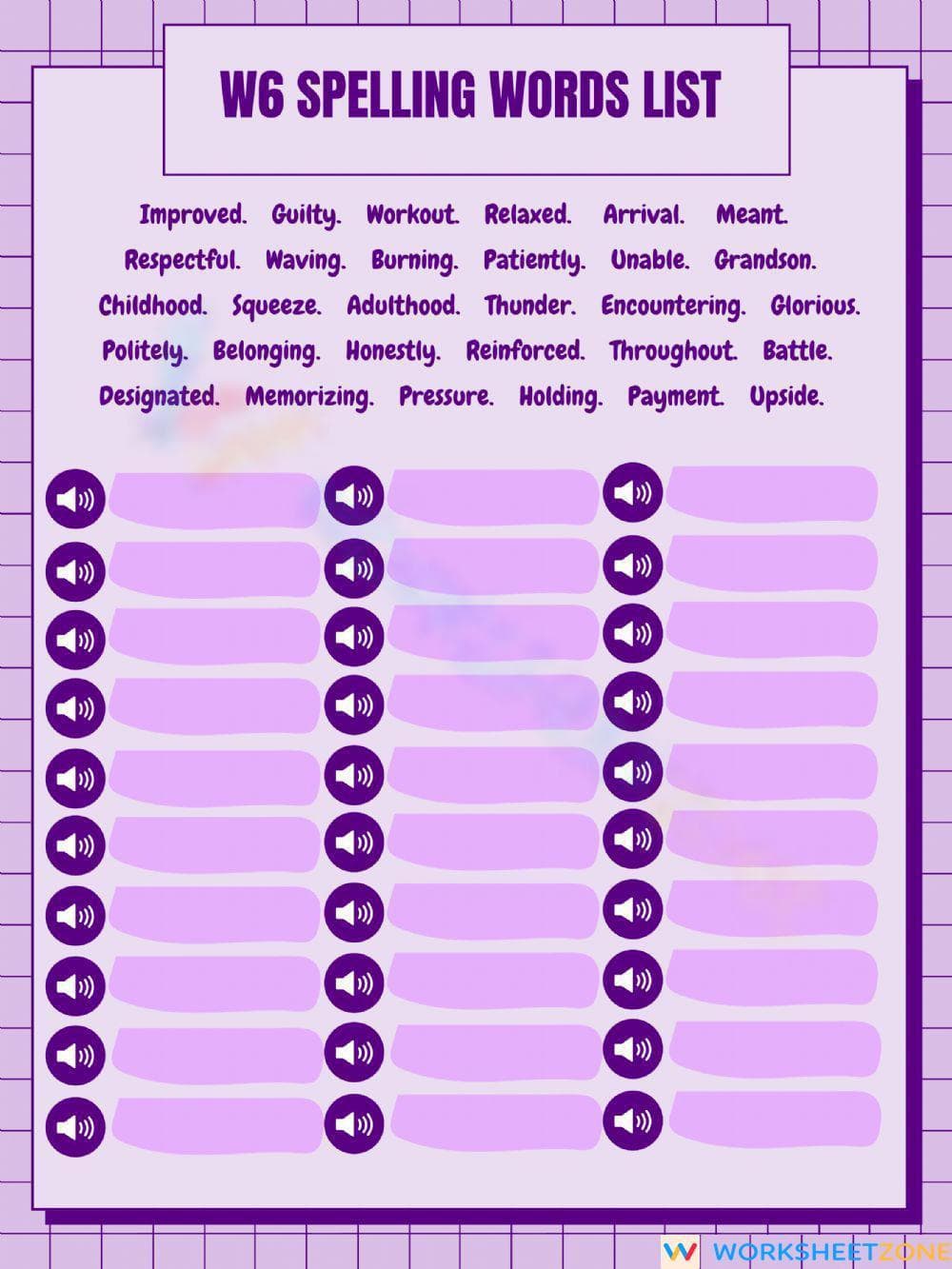

Essential Grade 8 Spelling List | Printable ELA Worksheet
Paste this activity's link or code into your existing LMS (Google Classroom, Canvas, Teams, Schoology, Moodle, etc.).
Students can open and work on the activity right away, with no student login required.
You'll still be able to track student progress and results from your teacher account.
Mastering eighth-grade vocabulary requires consistent practice with high-frequency and academic terms. This printable worksheet provides a structured spelling list of 30 essential words, ranging from Arrival to Designated, designed to improve written communication. By focusing on orthographic patterns and multi-syllabic structures, students build the accuracy necessary for advanced literacy and state assessment success.
At a Glance
- Grade: 8 · Subject: ELA
- Standard:
CCSS.ELA-LITERACY.L.8.2.C— Demonstrate command of the conventions of standard English by spelling words correctly- Skill Focus: Spelling & Vocabulary
- Format: 1 page · 30 problems · Answer key included · PDF
- Best For: Weekly spelling tests or vocabulary warm-ups
- Time: 15–20 minutes
This resource features a comprehensive 30-word list presented in a clear, accessible format. The page includes 30 interactive input fields, each accompanied by a visual cue for digital use or a blank line for traditional paper-based practice. The words are selected based on eighth-grade curriculum requirements, covering complex suffixes and common academic terms like Reinforced, Encountering, and Respectful.
Zero-Prep Workflow
- Print: Download and print the single-page PDF in under 30 seconds for immediate classroom use.
- Distribute: Provide copies to students or assign the interactive version via your digital learning platform in roughly 1 minute.
- Review: Use the included answer key to identify common phonemic errors and provide instant feedback in under 1 minute.
This efficient process makes the worksheet an ideal choice for emergency substitute plans or bell-ringer activities.
Standards Alignment
The primary focus of this worksheet is CCSS.ELA-LITERACY.L.8.2.C, which requires students to demonstrate command of the conventions of standard English by spelling correctly. It also supports CCSS.ELA-LITERACY.L.8.6 by expanding the range of academic and domain-specific words. Both standard codes can be copied directly into lesson plans, IEP goals, or district curriculum mapping tools.
How to Use It
Use this worksheet as a diagnostic pre-test at the beginning of a vocabulary unit to gauge existing student knowledge. During the lesson, it serves as a focused independent practice activity after discussing word meanings and origins. For a formative assessment tip, observe students as they work to identify which multi-syllabic words cause the most hesitation, indicating a need for targeted phonics instruction.
Who It's For
This activity is designed for Grade 8 students but is highly effective for Grade 7 extension or Grade 9 remedial support. It is particularly beneficial for English Language Learners who need visual repetition of academic vocabulary. Pair this resource with a short informational passage to see the spelling words used in a natural context.
The development of orthographic expertise in middle school is a critical predictor of overall writing quality. According to the RAND AIRS 2024 report, students who engage in regular, structured spelling practice with academic vocabulary show a 22 percent increase in word recognition speed compared to peers receiving only incidental instruction. This worksheet targets 30 specific words that align with Grade 8 complexity standards, ensuring that learners move beyond basic phonetic spelling toward morphological mastery. By providing a clear layout for CCSS.ELA-LITERACY.L.8.2.C practice, the resource allows students to focus entirely on the letter patterns of terms like Adulthood and Designated. This systematic approach to vocabulary acquisition is supported by current research, which emphasizes the need for explicit instruction in high-frequency academic terms to close the literacy gap.


