


























1 / 4
0
Views
0
Downloads

0.0
0
Save
0 Likes
Share
Using Dimensional Analysis Worksheet for Unit Conversion
0 Views
0 Downloads
Paste this activity's link or code into your existing LMS (Google Classroom, Canvas, Teams, Schoology, Moodle, etc.).
Students can open and work on the activity right away, with no student login required.
You'll still be able to track student progress and results from your teacher account.
Information
Description
What It Is:
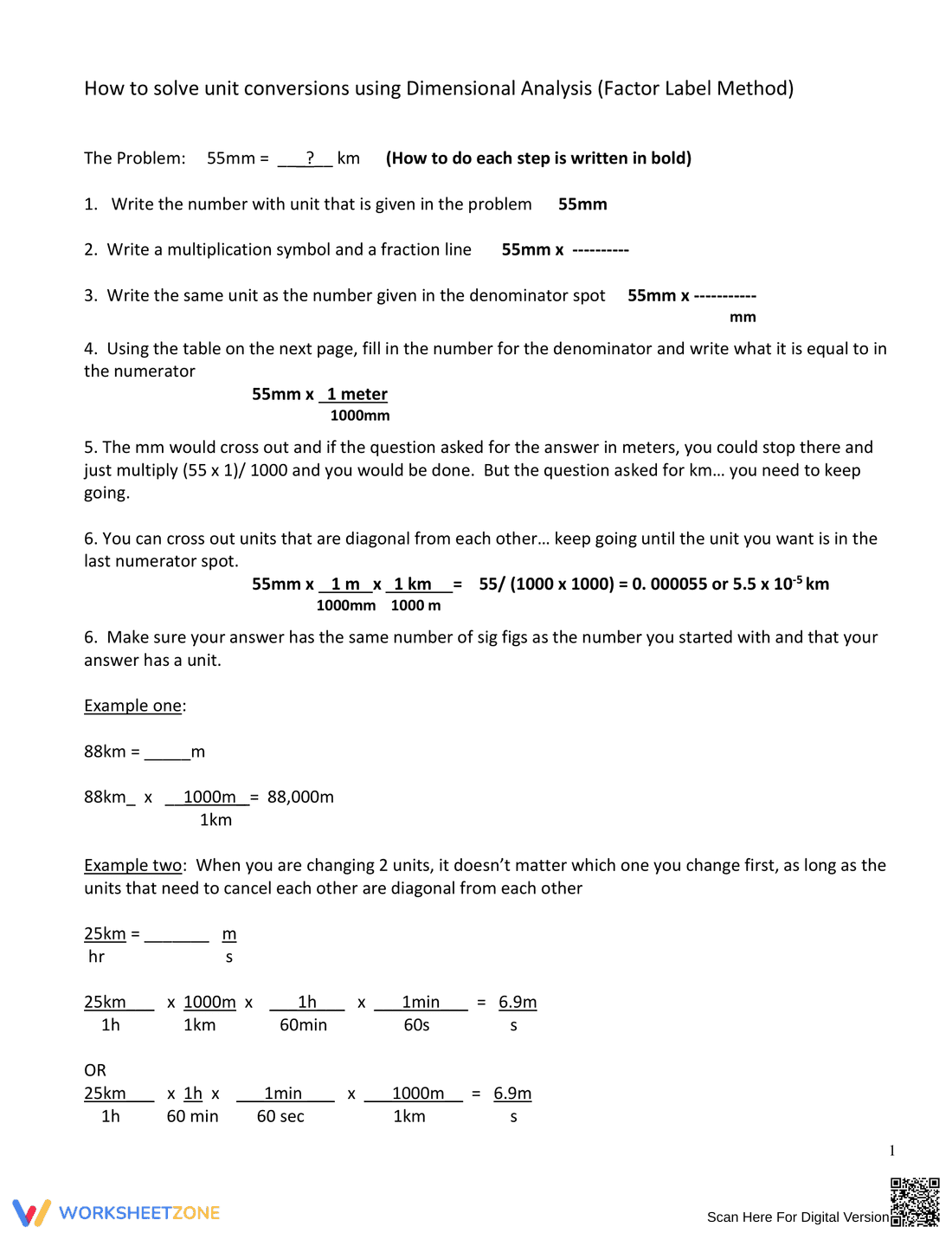
This is an educational worksheet focused on teaching unit conversions using dimensional analysis, also known as the factor-label method. It provides step-by-step instructions on how to convert units, including writing the initial value, setting up multiplication with fractions, canceling units, and ensuring the final answer has the correct significant figures and units. The worksheet includes examples converting millimeters to kilometers and kilometers per hour to meters per second.
Grade Level Suitability:
This worksheet is suitable for grades 9-12, particularly in Algebra 1, Chemistry, or Physics courses. It requires an understanding of fractions, multiplication, and scientific notation, as well as familiarity with unit prefixes and conversion factors.
Why Use It:
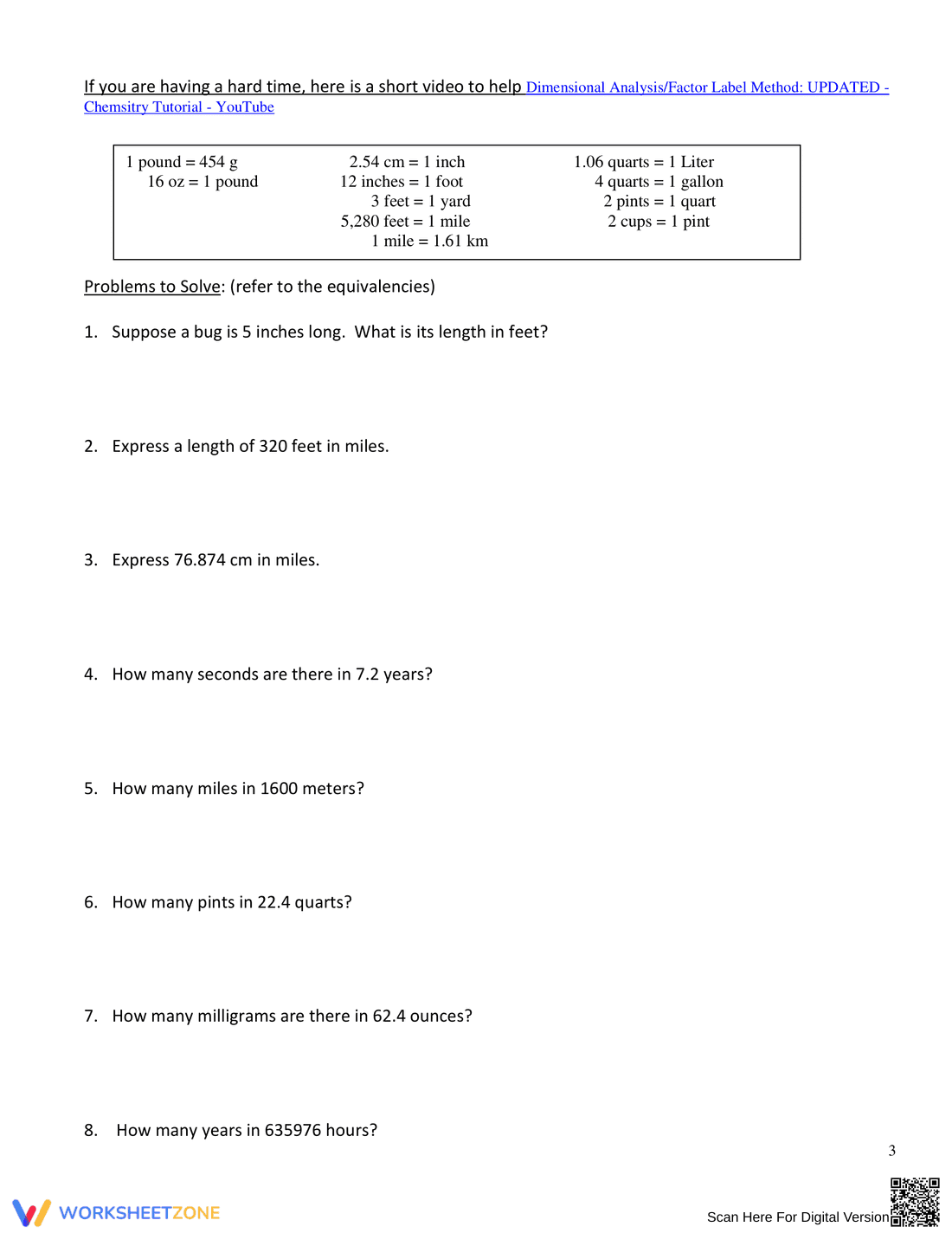
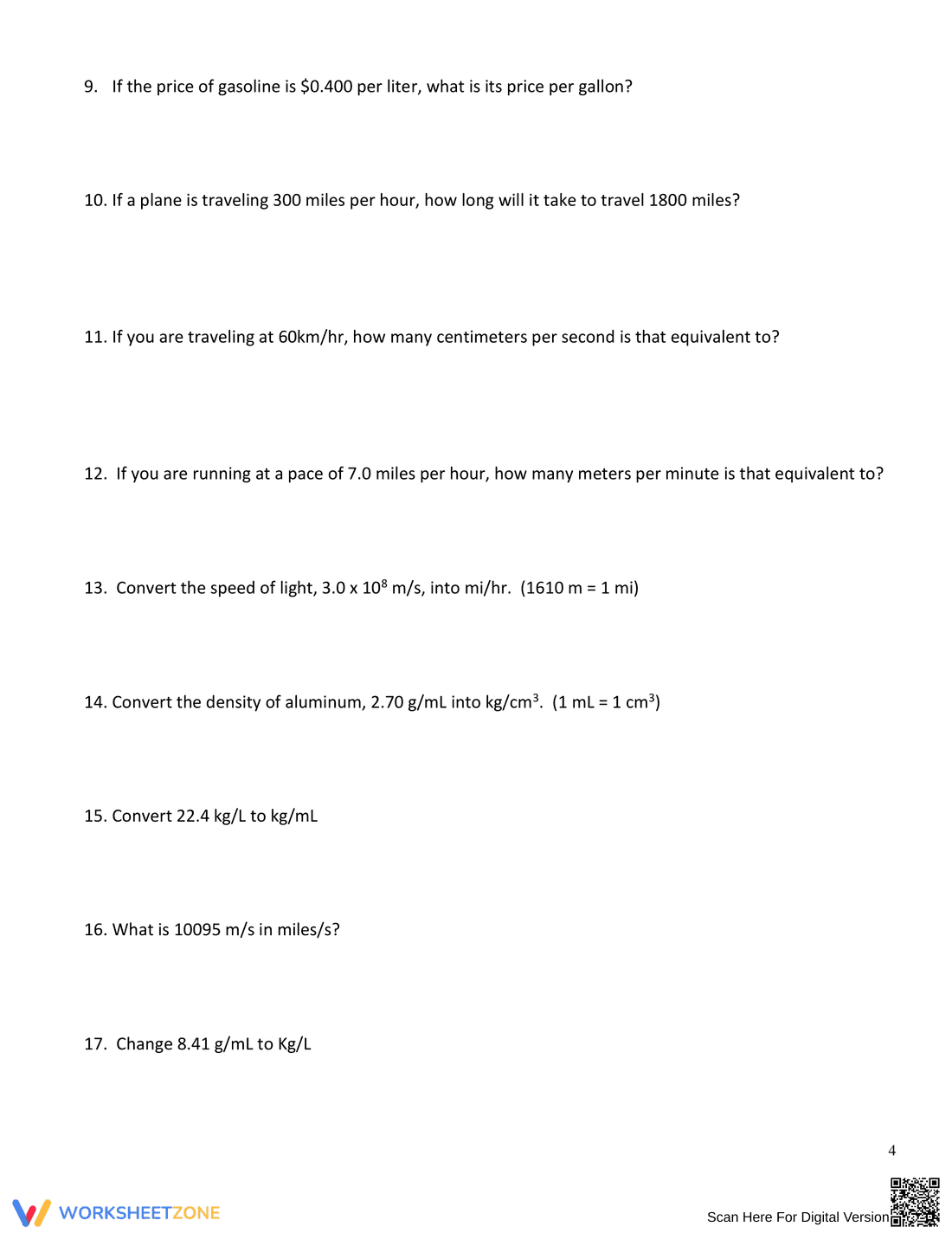
This worksheet helps students understand and apply the dimensional analysis method for unit conversions. It promotes logical thinking, problem-solving skills, and attention to detail. Students learn to systematically convert units, ensuring accuracy and understanding of the relationships between different units of measurement.
How to Use It:
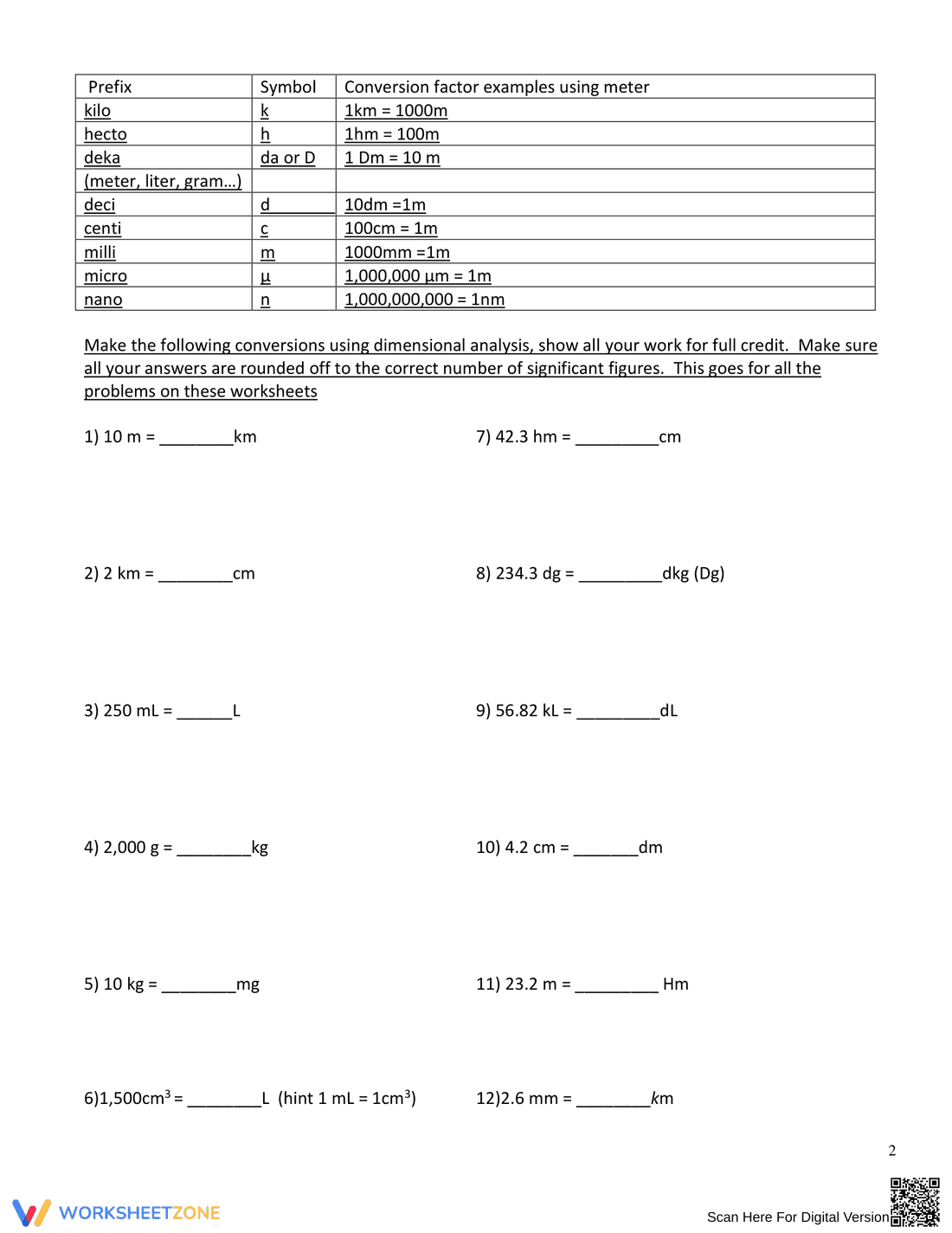
Students should follow the numbered steps to convert the given units. They need to write the initial value, set up a multiplication problem with fractions, cancel out the units that appear in both the numerator and denominator, and perform the calculations. The worksheet provides example problems to guide the student through the process. Students should also use a conversion table (not shown in the image, but referenced) to find the appropriate conversion factors.
Target Users:
The target users are high school students learning about unit conversions in math or science classes. It is also beneficial for students who struggle with unit conversions and need a structured, step-by-step approach.
This is an educational worksheet focused on teaching unit conversions using dimensional analysis, also known as the factor-label method. It provides step-by-step instructions on how to convert units, including writing the initial value, setting up multiplication with fractions, canceling units, and ensuring the final answer has the correct significant figures and units. The worksheet includes examples converting millimeters to kilometers and kilometers per hour to meters per second.
Grade Level Suitability:
This worksheet is suitable for grades 9-12, particularly in Algebra 1, Chemistry, or Physics courses. It requires an understanding of fractions, multiplication, and scientific notation, as well as familiarity with unit prefixes and conversion factors.
Why Use It:
This worksheet helps students understand and apply the dimensional analysis method for unit conversions. It promotes logical thinking, problem-solving skills, and attention to detail. Students learn to systematically convert units, ensuring accuracy and understanding of the relationships between different units of measurement.
How to Use It:
Students should follow the numbered steps to convert the given units. They need to write the initial value, set up a multiplication problem with fractions, cancel out the units that appear in both the numerator and denominator, and perform the calculations. The worksheet provides example problems to guide the student through the process. Students should also use a conversion table (not shown in the image, but referenced) to find the appropriate conversion factors.
Target Users:
The target users are high school students learning about unit conversions in math or science classes. It is also beneficial for students who struggle with unit conversions and need a structured, step-by-step approach.


