


























Views
Downloads
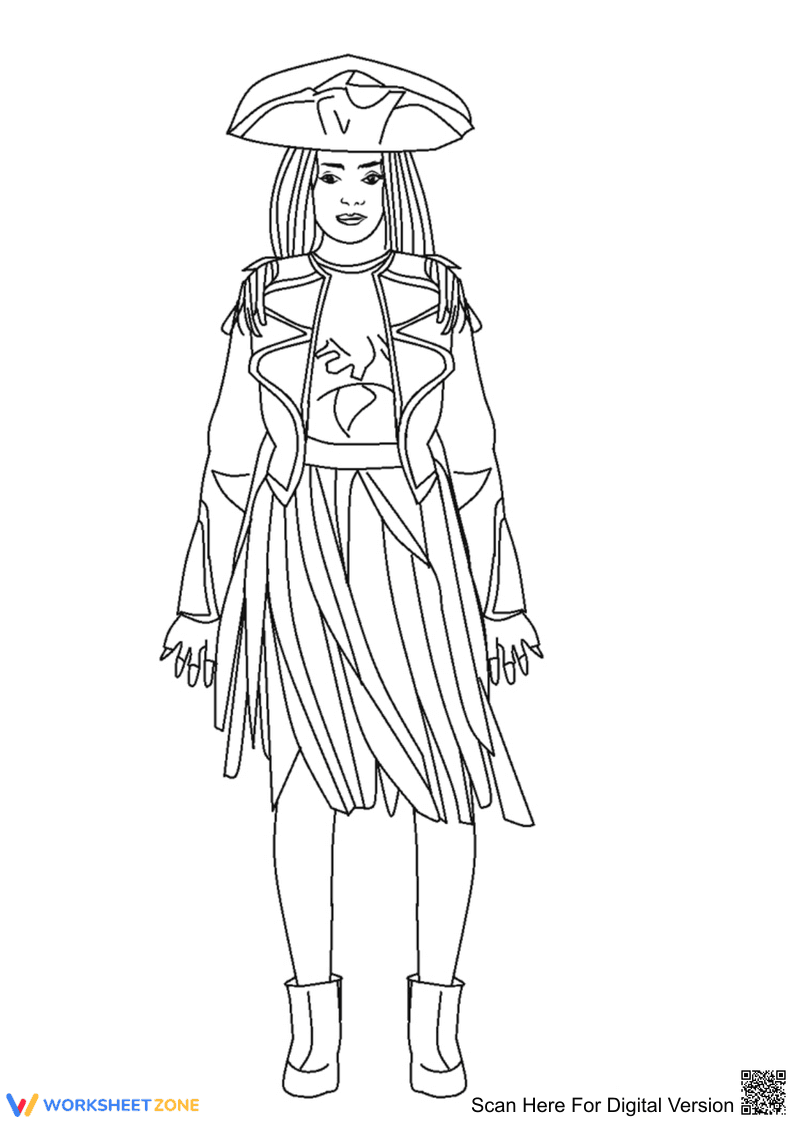

Uma Descendants Coloring Page | Grade 4 Printable
Paste this activity's link or code into your existing LMS (Google Classroom, Canvas, Teams, Schoology, Moodle, etc.).
Students can open and work on the activity right away, with no student login required.
You'll still be able to track student progress and results from your teacher account.
This printable Uma Descendants coloring page engages fourth and fifth-grade students in character visualization and creative expression. By connecting visual art with media character studies, students explore costume design and storytelling elements. This single-page resource provides an immediate creative outlet that reinforces visual literacy and fine motor focus in the elementary classroom.
At a Glance
- Grade: 4 · Subject: English Language Arts
- Standard:
CCSS.ELA-LITERACY.RL.4.7— Connect visual presentations of a character with narrative text descriptions- Skill Focus: Character Visualization
- Format: 1 page · 1 problem · No answer key · PDF
- Best For: Independent practice and sub plans
- Time: 15–20 minutes
This single-page PDF features a crisp line art illustration of Uma from the Descendants series. The design includes detailed costume elements like her pirate hat, braided hair, and fringed skirt, offering students ample opportunity for artistic shading. The clean layout contains no distracting text, allowing students to focus entirely on visual representation. Because this is an open-ended creative activity, no answer key is required.
This resource is designed for immediate classroom deployment with zero teacher preparation required. The workflow operates in three rapid steps:
- Print (30 seconds): Generate copies of the single-page PDF directly from your classroom printer.
- Distribute (30 seconds): Hand out sheets with colored pencils or markers during transition periods.
- Review (1 minute): Observe student color choices and prompt them to explain how their palette reflects Uma's personality.
With total teacher preparation time under two minutes, this worksheet serves as an exceptional emergency sub plan or calming transition activity.
This visual activity aligns directly with primary standard CCSS.ELA-LITERACY.RL.4.7, requiring students to make connections between a written story and its visual presentation. By analyzing Uma's depiction, students practice translating narrative character traits into visual symbols. Additionally, it supports visual arts standards for selecting media to express a mood. Both standard codes can be copied directly into lesson plans, IEP goals, or district curriculum mapping tools.
Teachers can deploy this coloring page across multiple instructional moments. First, it functions perfectly as an independent extension activity after reading character descriptions, allowing students to visually process character traits. Second, it serves as an effective quiet-time activity during morning arrival transitions. As a formative assessment observation tip, teachers can ask students why they chose specific colors for Uma's wardrobe, assessing their understanding of character mood. Expected completion time ranges from 15 to 20 minutes.
This resource is tailored for fourth and fifth-grade students in general education and art classes. The visual nature makes it highly accessible for English Language Learners and students with IEPs who benefit from non-verbal modes of expression. To extend the learning value, teachers can pair this coloring page with a character trait anchor chart, prompting students to write descriptive adjectives around the illustration.
Integrating visual arts activities like character illustration into the upper elementary curriculum provides essential cognitive benefits and supports foundational literacy skills. According to research from Fisher & Frey (2014), providing structured opportunities for visual representation helps students synthesize complex character traits and deepens overall narrative comprehension. When students engage with CCSS.ELA-LITERACY.RL.4.7 through character visualization, they actively connect abstract storytelling concepts with concrete visual evidence. This single-page activity allows learners to explore character identity and artistic expression without the cognitive load of intensive text decoding. Furthermore, incorporating low-barrier creative tasks during instructional transitions improves self-regulation and maintains positive classroom management. By utilizing this zero-prep resource, educators effectively bridge the gap between media literacy and visual arts, fostering an engaging environment where every student demonstrates character comprehension through creative design.


