


























0
Views
0
Downloads

Save
0 Likes
Share
Learning About the Four Seasons
0 Views
0 Downloads
Paste this activity's link or code into your existing LMS (Google Classroom, Canvas, Teams, Schoology, Moodle, etc.).
Students can open and work on the activity right away, with no student login required.
You'll still be able to track student progress and results from your teacher account.
Information
Description
What It Is:
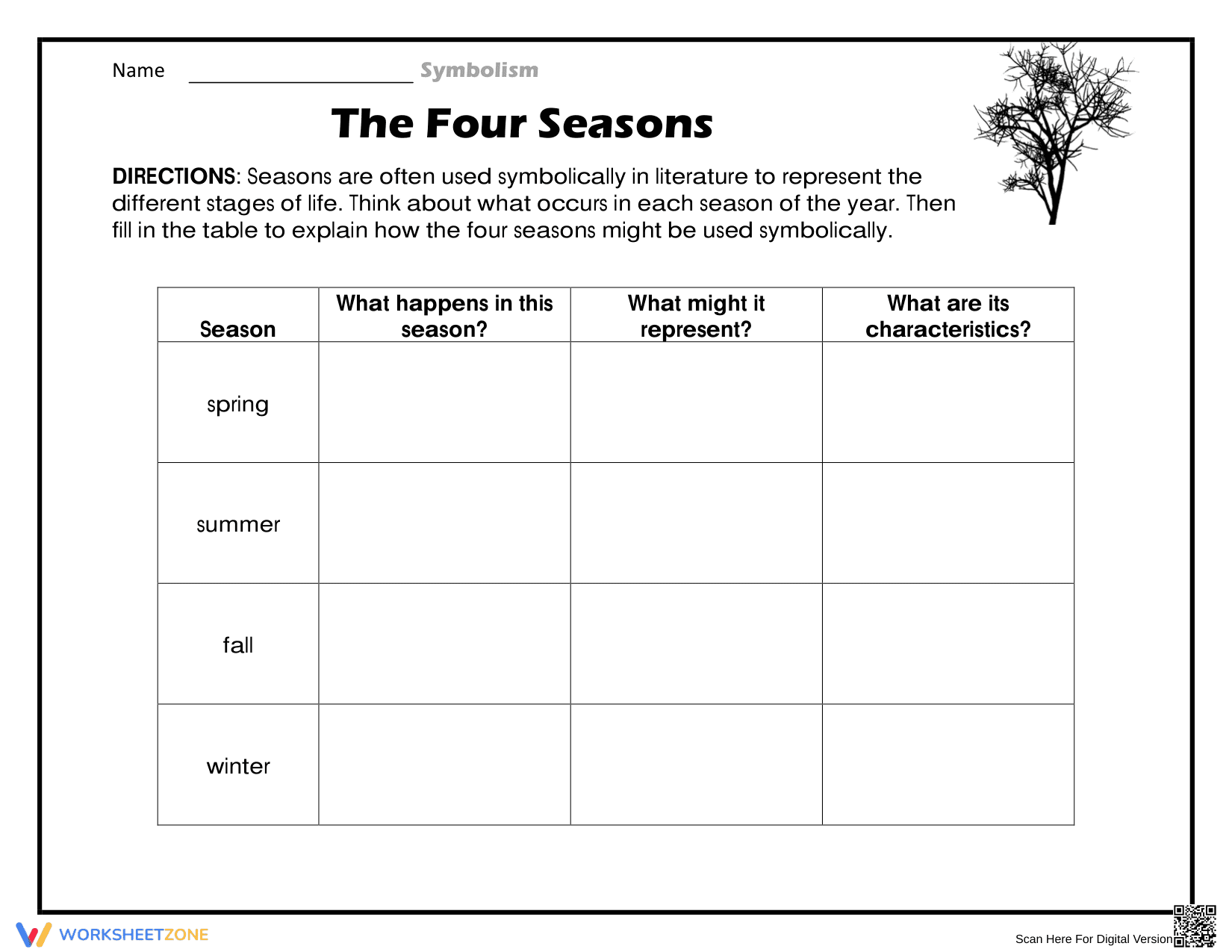
A worksheet titled 'The Four Seasons' focusing on symbolism. It asks students to analyze each season (spring, summer, fall, winter) and describe what happens in each, what it might represent symbolically, and what its characteristics are. The directions explain that seasons are often used symbolically in literature to represent the different stages of life.
Grade Level Suitability:
Grades 4-7. The concepts of symbolism and analyzing characteristics of seasons require a level of reading comprehension and critical thinking generally developed in these grades. The worksheet provides a structured format for organizing thoughts, making it accessible for this age range.
Why Use It:
This worksheet helps students develop critical thinking skills by analyzing the symbolic meaning of the seasons. It enhances reading comprehension by connecting literature to real-world observations. It also encourages students to think creatively and make connections between natural phenomena and abstract concepts.
How to Use It:
Begin by discussing the concept of symbolism with students. Then, have them brainstorm what happens in each season. Next, guide them to consider what each season might represent symbolically (e.g., spring as rebirth). Finally, have them list the characteristics of each season. Students can complete the table individually or in small groups.
Target Users:
Elementary and middle school students learning about symbolism, seasons, and literary analysis. It is also suitable for teachers looking for a supplemental activity to enhance their literature or science curriculum.
A worksheet titled 'The Four Seasons' focusing on symbolism. It asks students to analyze each season (spring, summer, fall, winter) and describe what happens in each, what it might represent symbolically, and what its characteristics are. The directions explain that seasons are often used symbolically in literature to represent the different stages of life.
Grade Level Suitability:
Grades 4-7. The concepts of symbolism and analyzing characteristics of seasons require a level of reading comprehension and critical thinking generally developed in these grades. The worksheet provides a structured format for organizing thoughts, making it accessible for this age range.
Why Use It:
This worksheet helps students develop critical thinking skills by analyzing the symbolic meaning of the seasons. It enhances reading comprehension by connecting literature to real-world observations. It also encourages students to think creatively and make connections between natural phenomena and abstract concepts.
How to Use It:
Begin by discussing the concept of symbolism with students. Then, have them brainstorm what happens in each season. Next, guide them to consider what each season might represent symbolically (e.g., spring as rebirth). Finally, have them list the characteristics of each season. Students can complete the table individually or in small groups.
Target Users:
Elementary and middle school students learning about symbolism, seasons, and literary analysis. It is also suitable for teachers looking for a supplemental activity to enhance their literature or science curriculum.


