


























Views
Downloads

Essential Symbolism Practice Worksheet — Grade 8-9 No-Prep
Paste this activity's link or code into your existing LMS (Google Classroom, Canvas, Teams, Schoology, Moodle, etc.).
Students can open and work on the activity right away, with no student login required.
You'll still be able to track student progress and results from your teacher account.
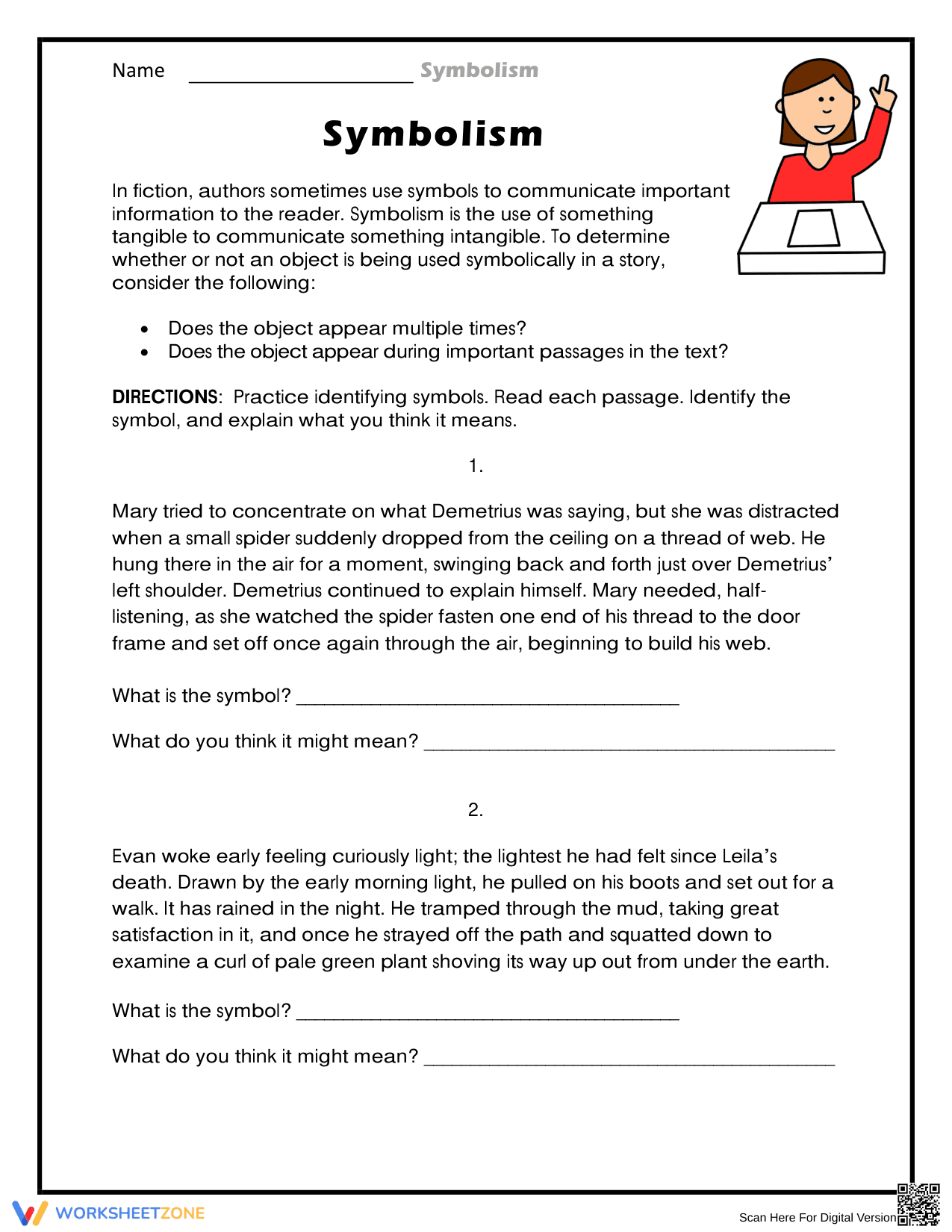
This symbolism practice worksheet helps Grade 8 and 9 students master the art of identifying and interpreting figurative language within literary contexts. By analyzing short, focused passages, learners move beyond literal comprehension to uncover deeper thematic meanings. Students practice recognizing tangible objects used by authors to communicate intangible ideas, ensuring a stronger grasp of complex narrative techniques.
At a Glance
- Grade: 8-9 · Subject: English Language Arts
- Standard:
CCSS.ELA-LITERACY.RL.8.4— Determine the meaning of figurative language and analyze symbols in text- Skill Focus: Symbolism and Interpretation
- Format: 1 page · 4 tasks · Answer key included · PDF
- Best For: Literacy centers and bell-ringer activities
- Time: 15–20 minutes
What's Inside
This practice sheet includes a clear definition of symbolism, providing students with two questions to guide their analysis: frequency and importance. The worksheet features two literary passages. For each scenario—a spider and a plant—students identify the symbol and explain its metaphorical significance. The layout is clean, accommodating student writing on a single page.
Zero-Prep Workflow
Implementing this resource requires minimal effort. 3 steps: 1. Print (30 seconds), 2. Distribute (30 seconds), 3. Review (1 minute). Total teacher prep time is under 2 minutes. This worksheet is also perfect for emergency sub-plans or quick transition activities, allowing instructors to focus on student engagement rather than complex setup.
Standards Alignment
This worksheet is primarily aligned to `CCSS.ELA-LITERACY.RL.8.4`, requiring students to determine the meaning of figurative and connotative phrases. It also supports RL.9-10.4 by challenging students to analyze how word choices shape meaning. Both standard codes can be copied directly into lesson plans, IEP goals, or district curriculum mapping tools.
How to Use It
This resource is best utilized for independent practice. After teaching symbolism, assign this worksheet to assess readiness before novel analysis. A formative-assessment tip is to check if students use the recurrence criteria when justifying their answers. Expect completion within 15 to 20 minutes, making it ideal for sub plans or bell-ringers.
Who It's For
Designed for Grade 8 or 9 students, this worksheet provides scaffolding with definitions to support readers, while open-ended questions allow for high-level thinking. It pairs naturally with any short story collection or as a pre-reading activity for novels rich in imagery. The single-page format ensures students stay focused on the specific skill.
This Grade 8-9 ELA resource provides a structured framework for mastering `CCSS.ELA-LITERACY.RL.8.4` through the lens of symbolism. By requiring students to identify tangible objects and explain their intangible meanings, the worksheet directly addresses the cognitive demands of interpreting figurative language in literature. According to Fisher & Frey (2014) in their research on the gradual release of responsibility, providing students with short, high-interest passages to practice specific literary skills is essential for building the transferrable analytical abilities needed for complex texts. The worksheet’s design facilitates this targeted practice, offering a clear path from literal recognition to thematic interpretation. Educators can utilize this tool to gather formative data on student mastery of connotative meanings and metaphorical reasoning. The inclusion of guided questions ensuring that students consider an object's recurrence and placement reflects evidence-based strategies for improving literary comprehension and critical thinking in the secondary English classroom.


