




























Views
Downloads

Essential Subjects and Predicates Worksheet | Grade 4-5

Paste this activity's link or code into your existing LMS (Google Classroom, Canvas, Teams, Schoology, Moodle, etc.).
Students can open and work on the activity right away, with no student login required.
You'll still be able to track student progress and results from your teacher account.
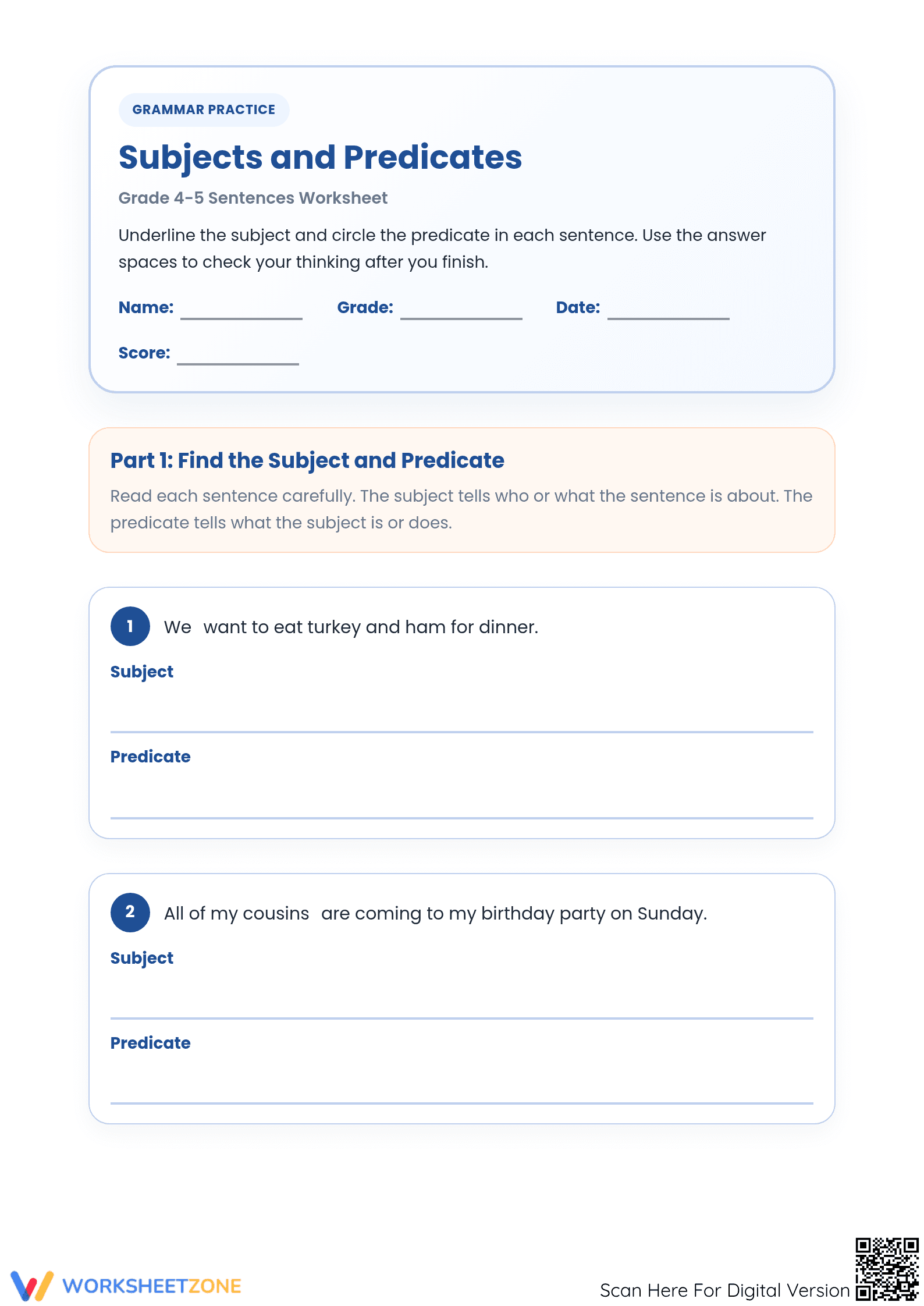
Mastering sentence structure is the foundation of clear writing. This Grade 4-5 English Language Arts worksheet focuses on identifying the two essential components of every complete sentence: the subject and the predicate. By practicing with these ten targeted examples, students will learn to isolate who or what a sentence is about and what they are doing.
At a Glance
- Grade: 4-5 · Subject: ELA
- Standard:
CCSS.ELA-LITERACY.L.4.1— Identify the subject and predicate in complete sentences- Skill Focus: Subjects and Predicates
- Format: 3 pages · 10 problems · Answer key included · PDF
- Best For: Independent grammar practice and formative assessment
- Time: 15–20 minutes
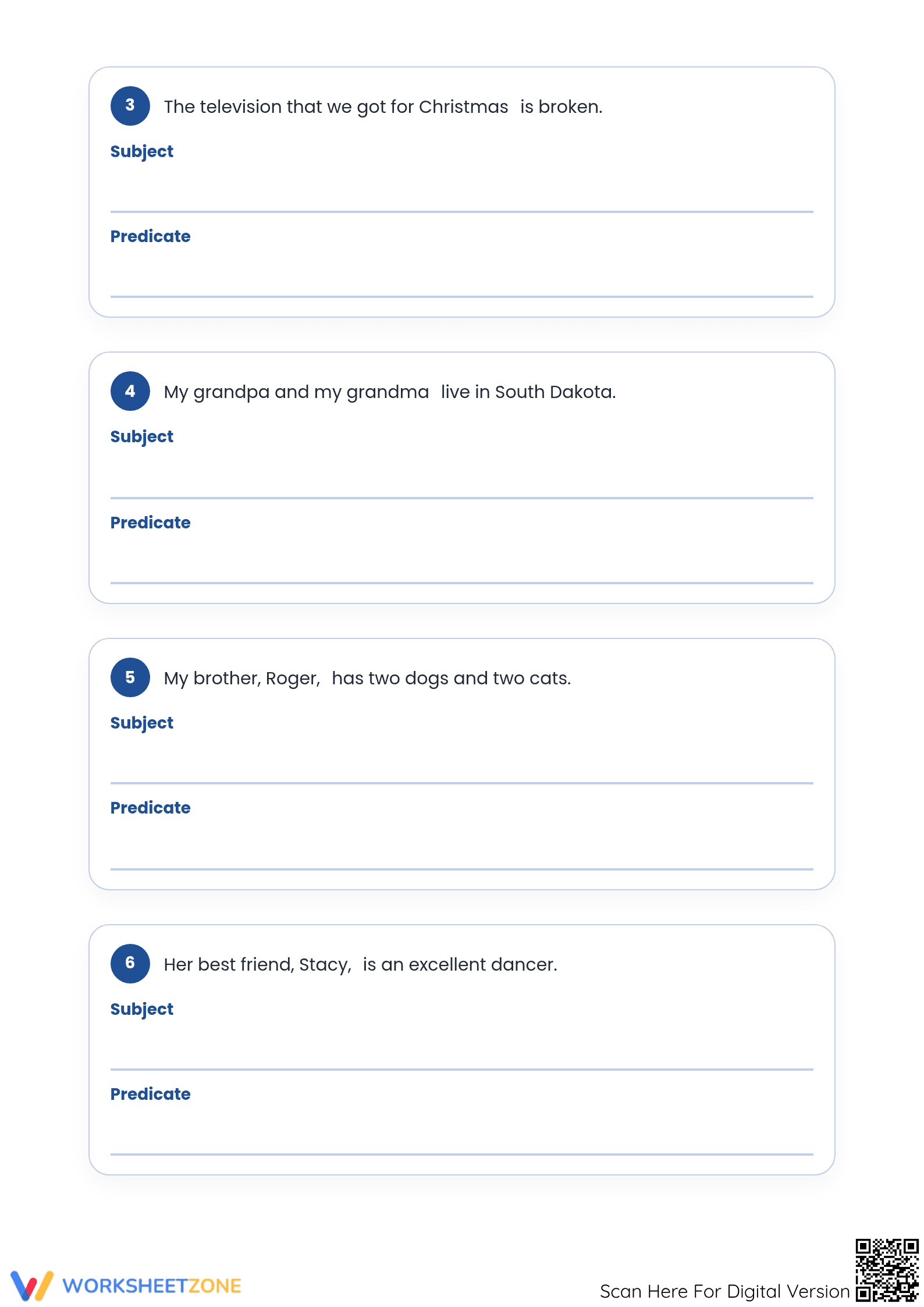
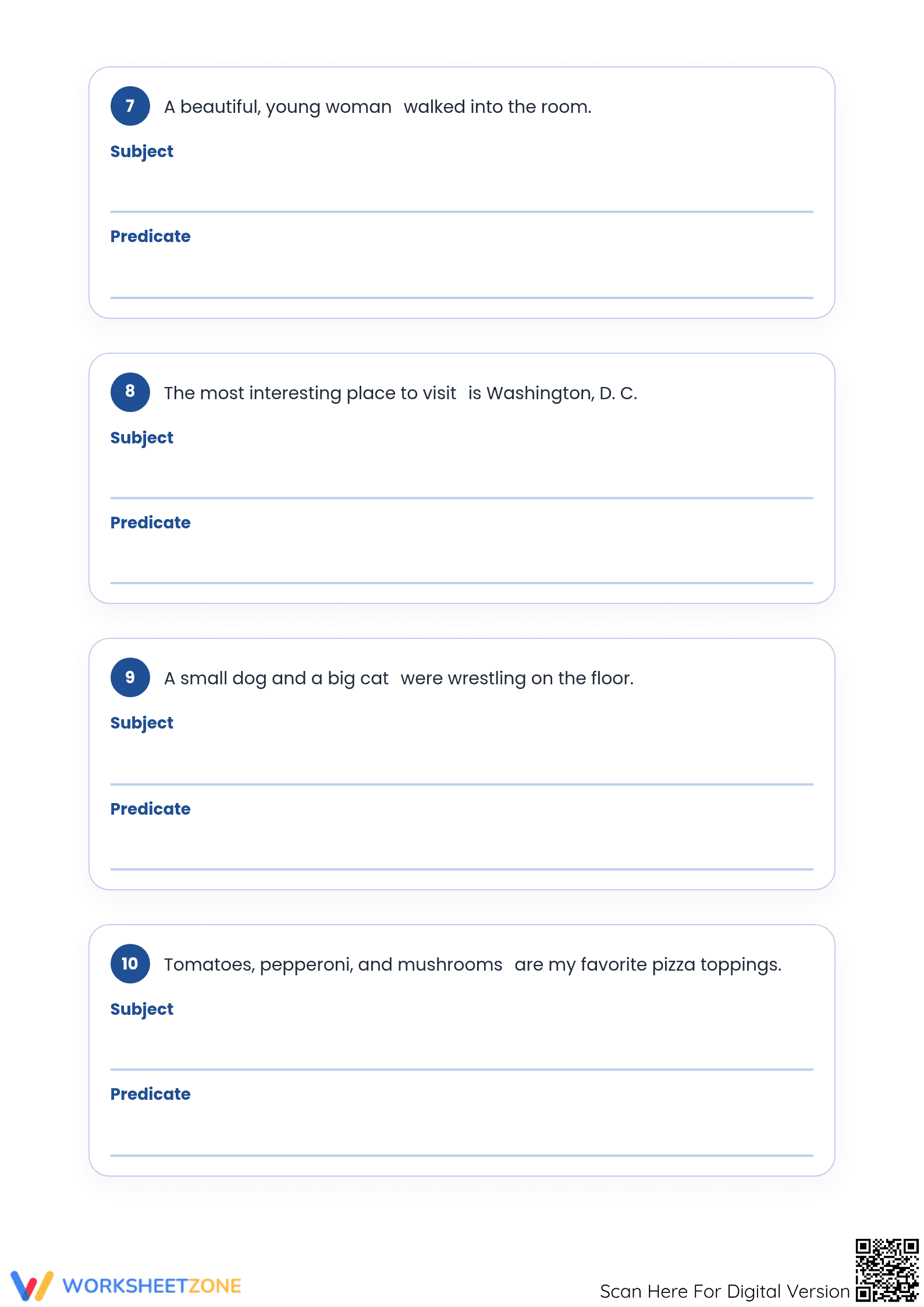
This resource contains a three-page practice set designed to reinforce basic sentence mechanics. Each page presents a clear, numbered sentence followed by designated spaces for students to transcribe the subject and the predicate. The layout is clean and distraction-free, providing ample writing room for students to demonstrate their understanding. A comprehensive answer key is included for immediate feedback or self-grading.
This worksheet is designed for maximum efficiency in the classroom or at home. First, print the document in less than 30 seconds. Next, distribute the pages to your students; the self-explanatory instructions require zero teacher introduction. Finally, review the completed work using the provided answer key in under one minute. This "print-and-go" design makes it an ideal choice for emergency sub plans or last-minute grammar reviews.
This resource is directly aligned to `CCSS.ELA-LITERACY.L.4.1`, which requires students to demonstrate command of the conventions of standard English grammar and usage. Identifying subjects and predicates is a critical sub-skill for meeting `CCSS.ELA-LITERACY.L.4.1.f`, which involves producing complete sentences and recognizing inappropriate fragments. Both standard codes can be copied directly into lesson plans, IEP goals, or district curriculum mapping tools.
Use this worksheet as a formative assessment during or after a direct instruction lesson on sentence parts. Teachers can observe students as they work to identify common misconceptions, such as confusing the object with the subject. It also serves as an excellent "bell ringer" or warm-up activity to start an ELA block. Students should typically complete all ten items within 15 to 20 minutes.
This practice set is perfect for fourth and fifth-grade students who are refining their understanding of syntax. It provides necessary scaffolding for English Language Learners and students with IEPs through a repetitive, structured format. Naturally pair this resource with a short reading passage to have students identify subjects and predicates within an authentic text context.
Research from EdReports 2024 emphasizes that explicit instruction in sentence-level grammar is a key indicator of high-quality ELA curriculum materials. This worksheet supports the 'gradual release of responsibility' model by providing structured opportunities for students to apply knowledge of `CCSS.ELA-LITERACY.L.4.1` in isolation. According to Fisher & Frey (2014), identifying core sentence components like subjects and predicates allows students to build the syntactic awareness necessary for complex reading and writing tasks. By isolating these function-based word classes, the resource ensures that students understand how words work together to convey meaning. This alignment with evidence-based practices in literacy instruction makes the worksheet a reliable tool for classroom teachers looking to bridge the gap between grammar rules and functional application. The focus on identifying who or what the sentence is about and what they are doing directly builds the foundational skills needed for more complex syntactic structures.


