


























Views
Downloads

Essential Grade 5 Spelling Exam | Aligned Assessment
Paste this activity's link or code into your existing LMS (Google Classroom, Canvas, Teams, Schoology, Moodle, etc.).
Students can open and work on the activity right away, with no student login required.
You'll still be able to track student progress and results from your teacher account.
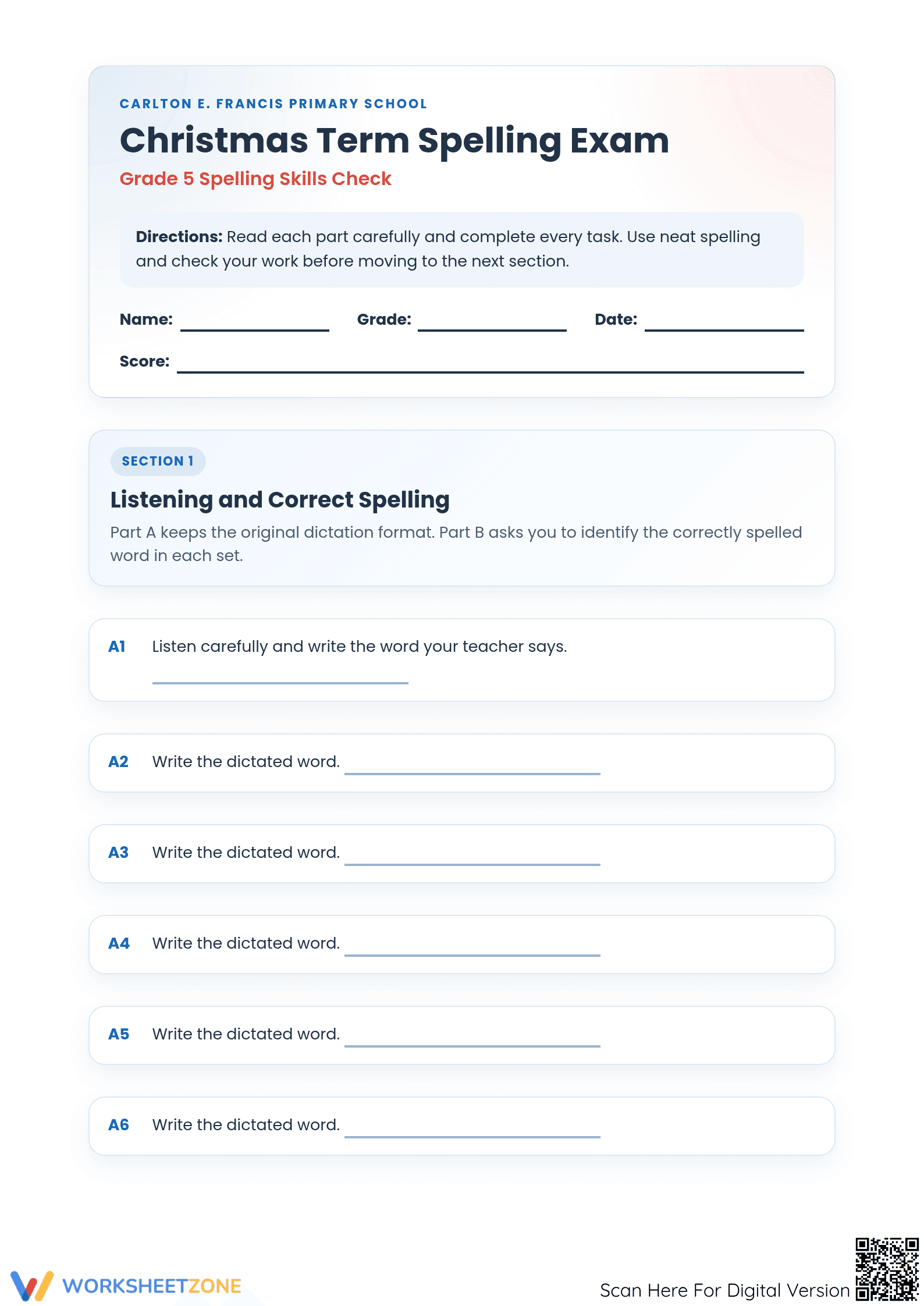
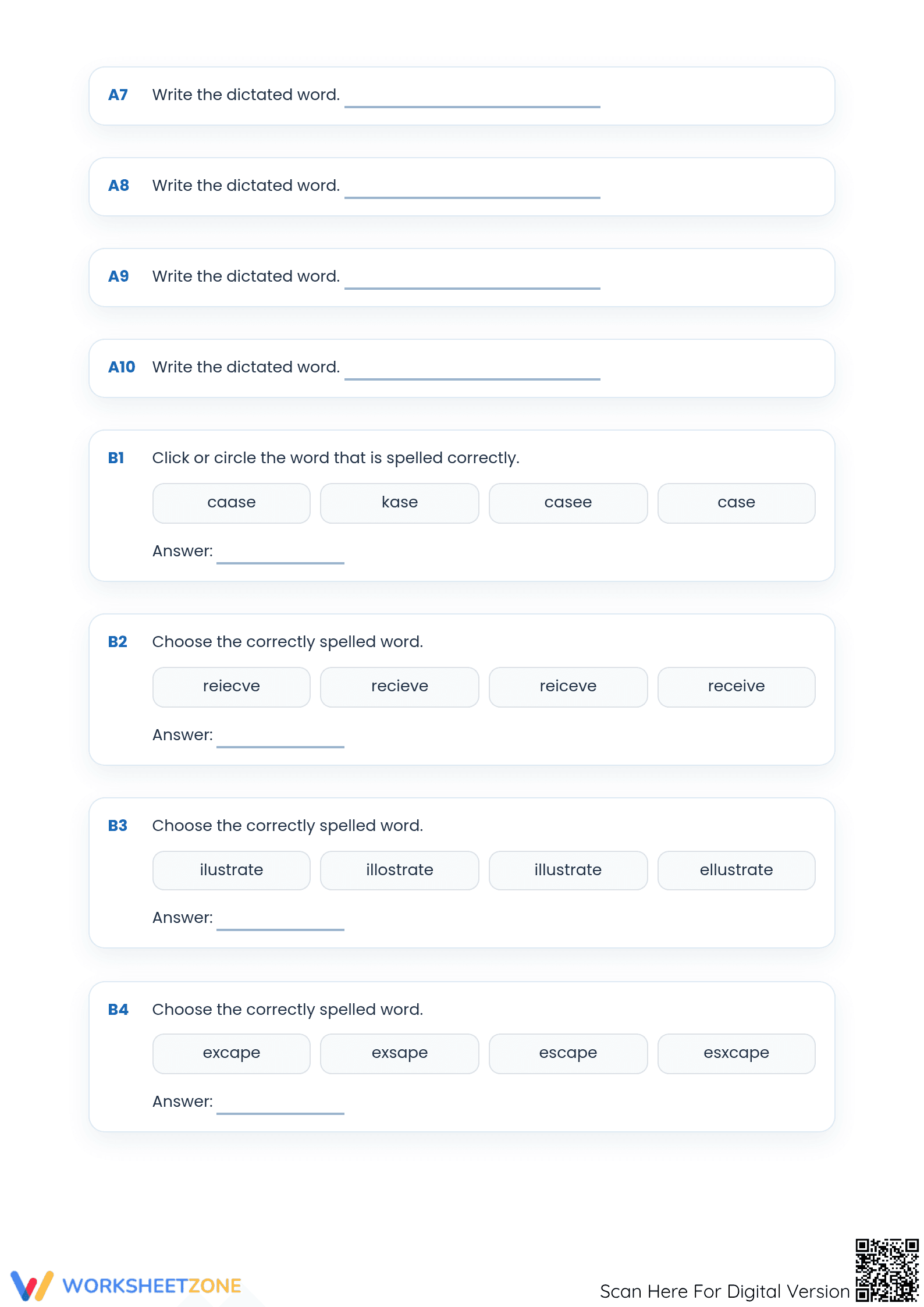
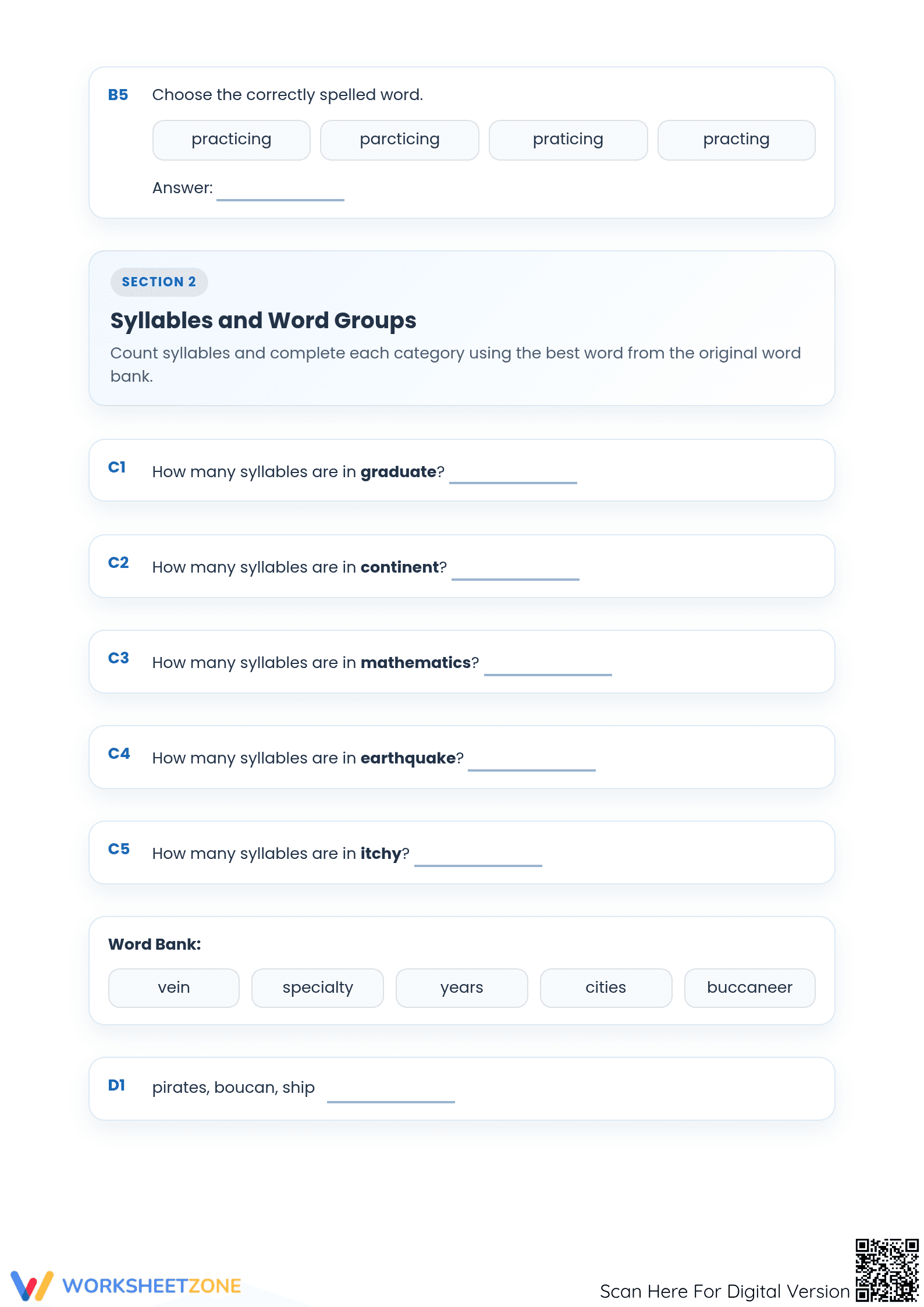
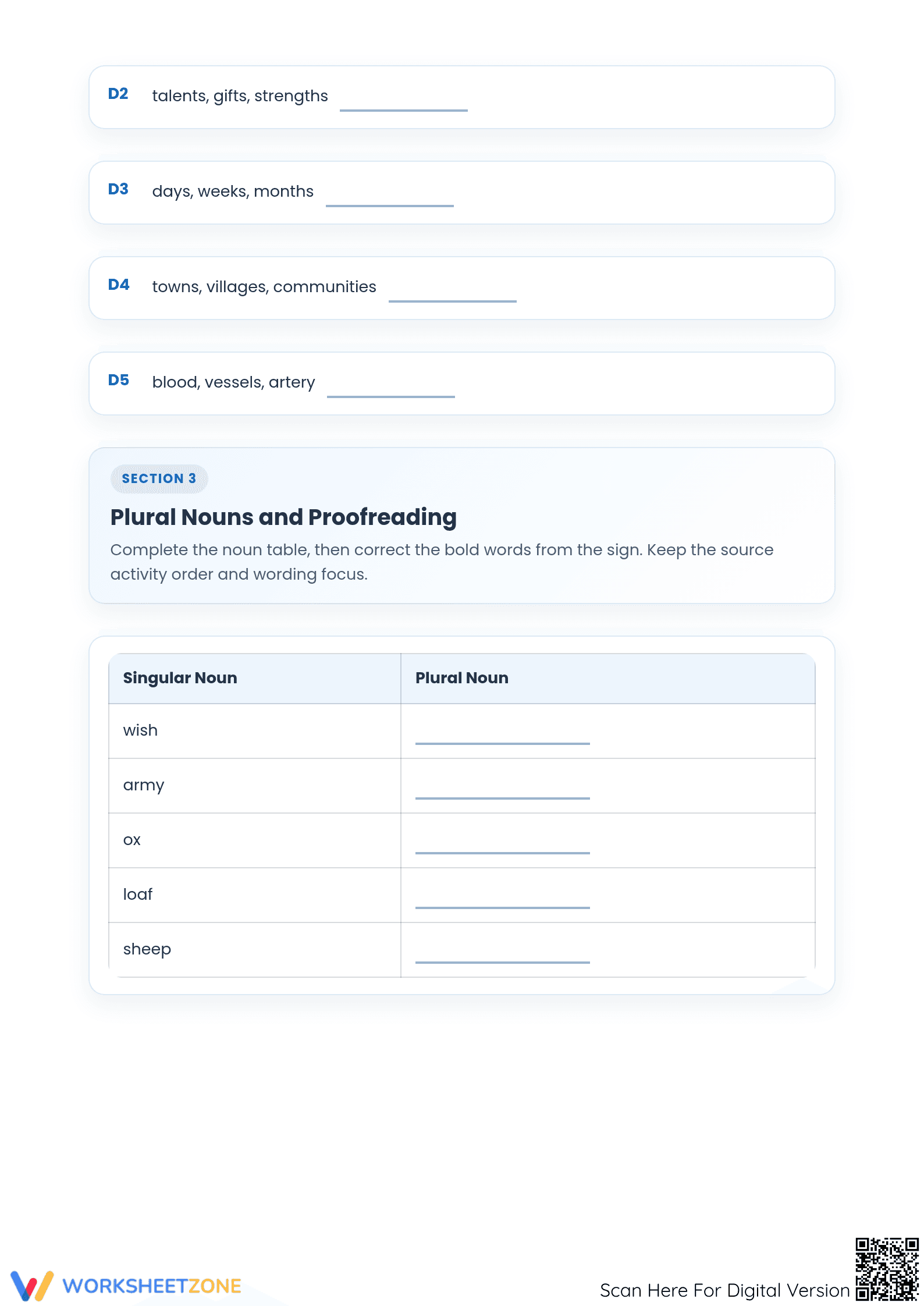
This comprehensive Grade 5 spelling assessment provides a rigorous evaluation of foundational language skills. Students demonstrate mastery through dictation, identifying correct spellings, analyzing syllable structures, and applying pluralization rules. By integrating spelling within contextual editing tasks, the worksheet ensures learners can accurately apply orthographic patterns in real-world writing scenarios while meeting core curriculum requirements.
At a Glance
- Grade: 5 · Subject: English Language Arts
- Standard:
CCSS.ELA-LITERACY.L.5.2.E— Spell grade-appropriate words correctly, consulting references as needed to ensure accuracy- Skill Focus: Multi-dimensional Spelling Mastery
- Format: 2 pages · 35 problems · Answer key included · PDF
- Best For: Summative end-of-term assessment or progress monitoring
- Time: 40–50 minutes
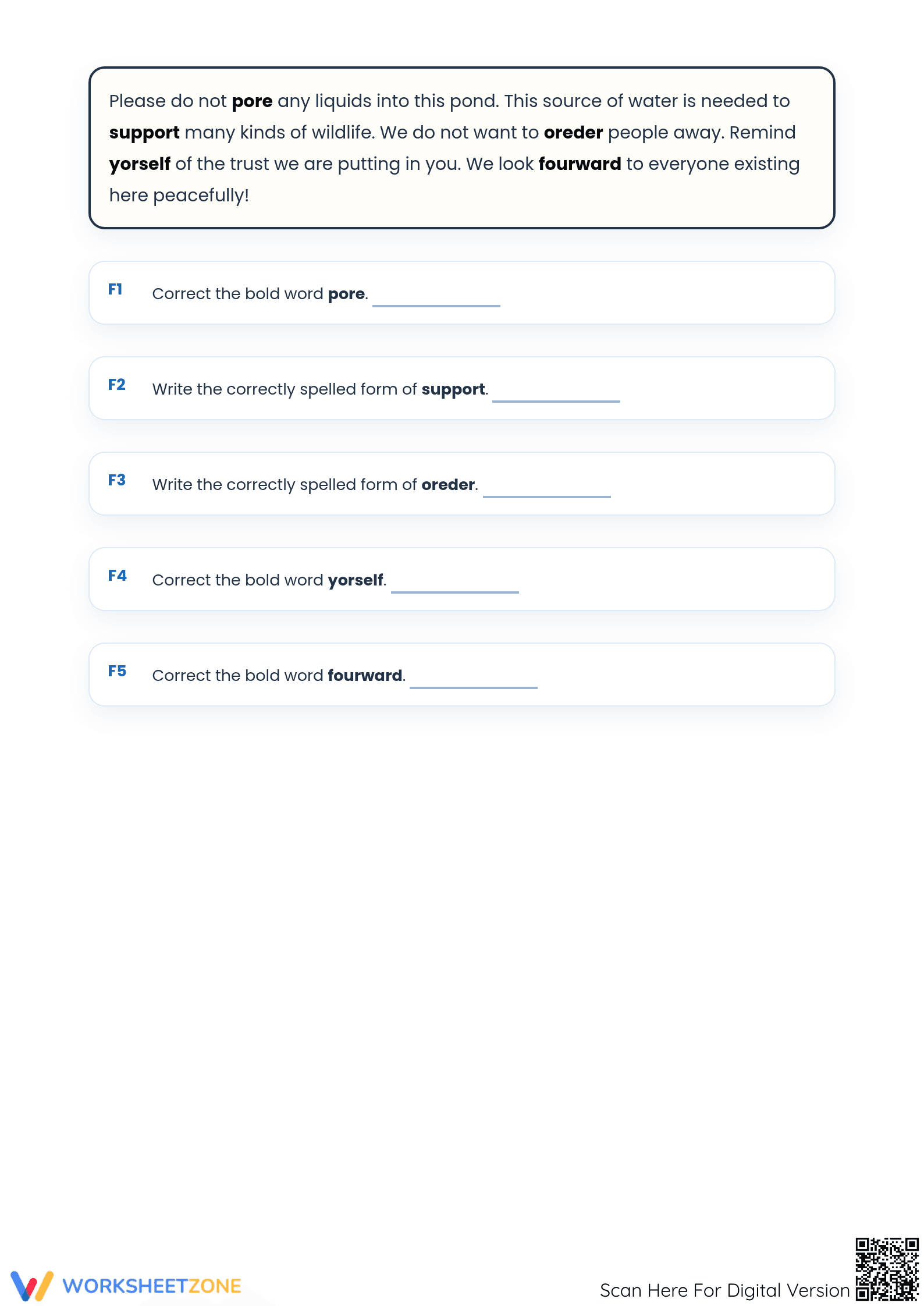
The exam is structured into six distinct sections (A-F) across two printable pages. It begins with a 10-word teacher-led dictation exercise, followed by multiple-choice spelling identification and a syllable counting task. The second page introduces word grouping by category, a plural noun transformation table, and a sophisticated paragraph editing task where students must identify and correct five intentional spelling errors within a cohesive text.
Each section of this assessment is designed to provide clear evidence of student progress toward specific language benchmarks. The variety of task types—from isolated recall in dictation to application in contextual editing—allows educators to map performance across different cognitive levels. Scores from the 35 items can be easily translated into percentage-based grades or used to populate IEP progress notes and district-level mastery trackers.
Primary alignment is to `CCSS.ELA-LITERACY.L.5.2.E`, which requires students to spell grade-appropriate words correctly. Supporting standards include `CCSS.ELA-LITERACY.L.5.2`, focusing on the command of the conventions of standard English capitalization, punctuation, and spelling. Both standard codes can be copied directly into lesson plans, IEP goals, or district curriculum mapping tools to ensure instructional continuity.
Use this worksheet as a formal summative exam at the end of a spelling unit or as a mid-year benchmark to identify specific orthographic gaps. During administration, observe Section F (contextual editing) to see if students recognize errors they might typically overlook in their own drafting. Completion typically takes 45 minutes, making it ideal for a standard instructional block.
This resource is tailored for Grade 5 students but serves as an excellent challenge for Grade 4 or a necessary review for Grade 6 learners. It is particularly effective for students requiring structured assessments with clear section breaks. Pair this exam with a grade-level spelling list or a proofreading anchor chart to support students during the instructional phase before testing.
Effective spelling instruction transitions from rote memorization to the strategic application of phonetic and morphological rules. Research by Fisher & Frey (2014) highlights the importance of assessment diversity, suggesting that evaluating spelling through both isolated tasks and contextual editing provides a more accurate picture of a student's linguistic competence. This assessment aligns with the CCSS.ELA-LITERACY.L.5.2.E mandate for grade-appropriate accuracy, ensuring that students are prepared for the increased writing demands of middle school. By including syllable analysis and pluralization, the worksheet reinforces the phonological awareness necessary for decoding complex vocabulary. The inclusion of a proofreading section mirrors the "real-world" demand for self-correction, a critical skill identified in the NAEP writing framework as essential for academic success. Teachers can utilize the resulting data to differentiate future instruction, focusing on specific patterns like irregular plurals or multi-syllabic word construction. This data-driven approach supports long-term literacy retention and writing fluency.


