


























1 / 6
0
Views
0
Downloads


0.0
0
Save
0 Likes
Share
Solve Problems Using Specific Heat Capacity
0 Views
0 Downloads
Paste this activity's link or code into your existing LMS (Google Classroom, Canvas, Teams, Schoology, Moodle, etc.).
Students can open and work on the activity right away, with no student login required.
You'll still be able to track student progress and results from your teacher account.
Information
Description
What It Is:
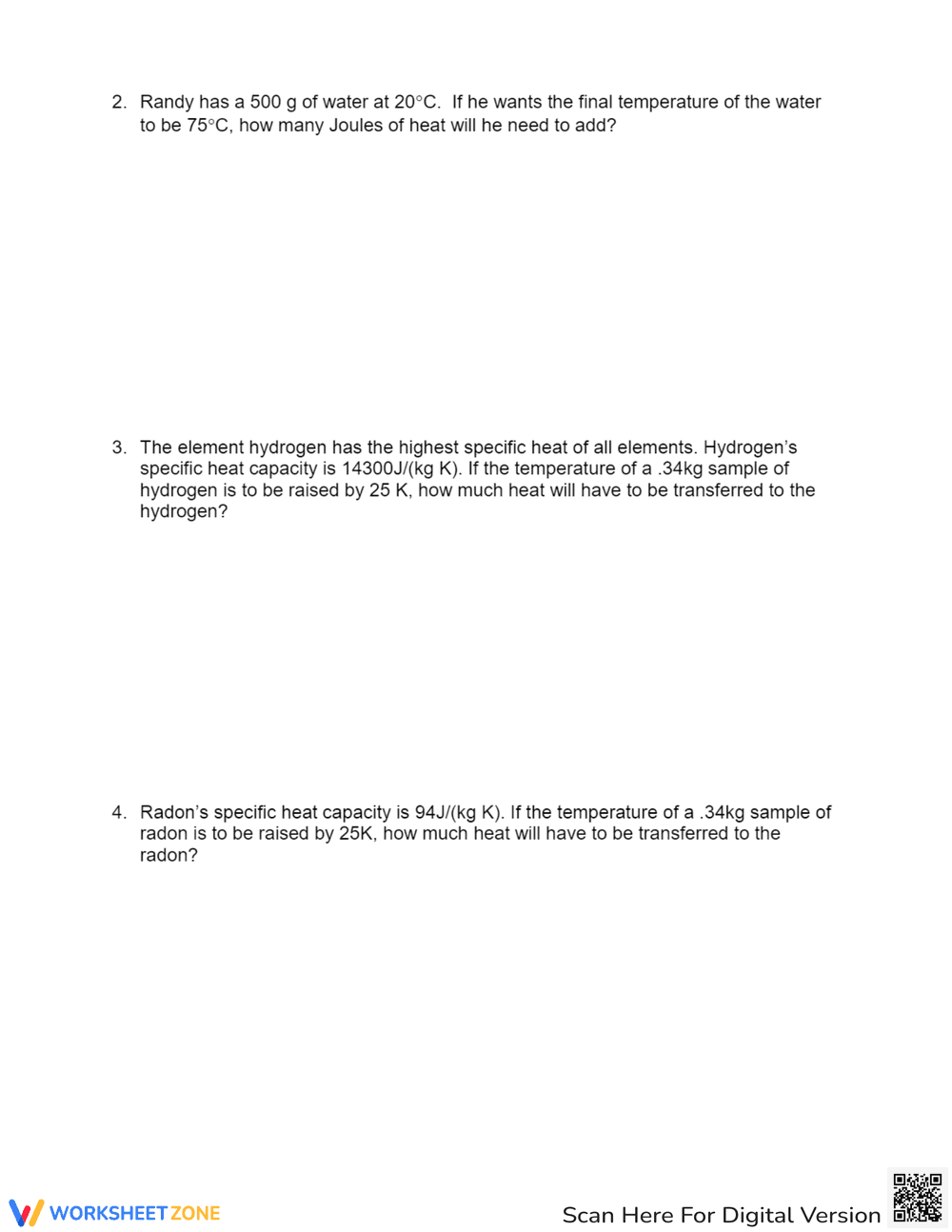
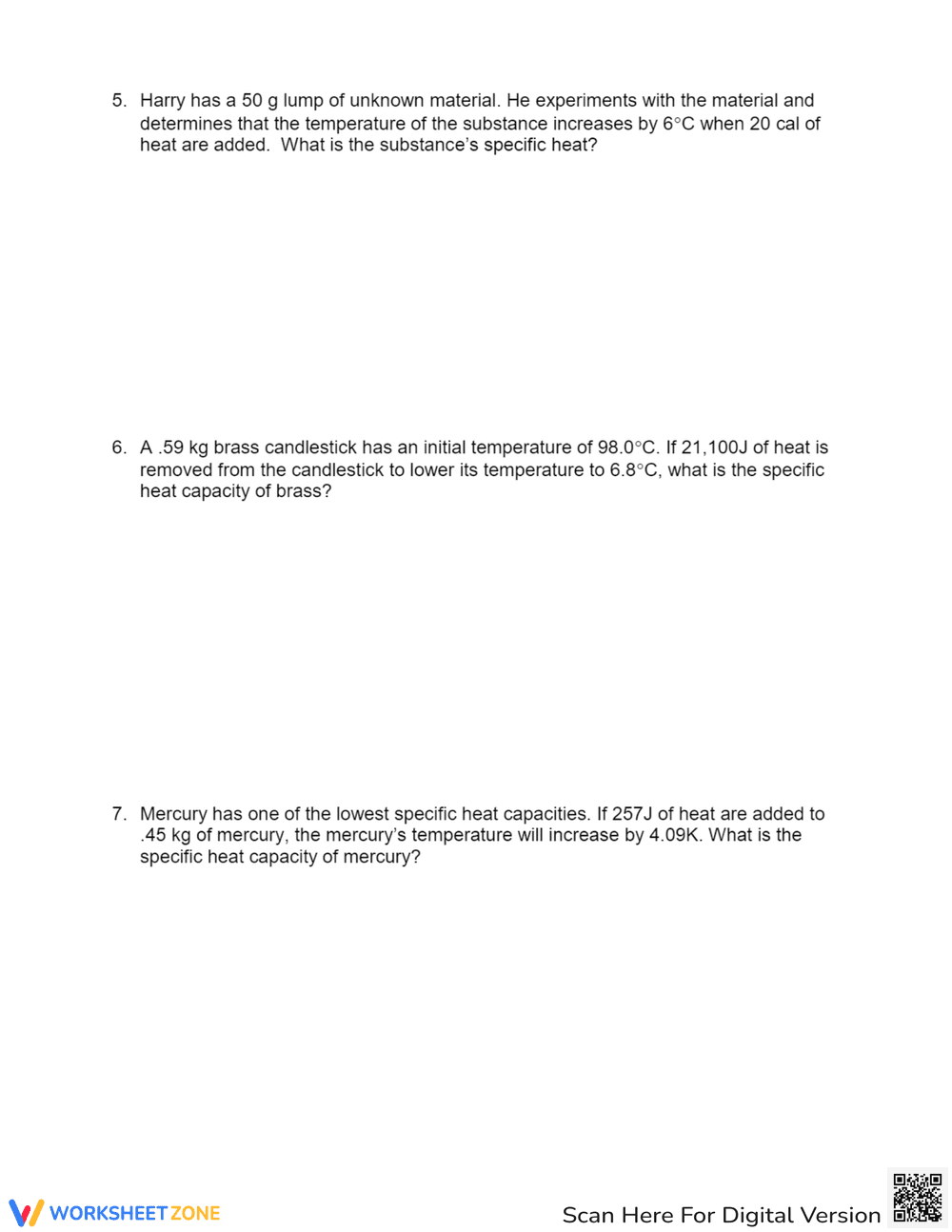
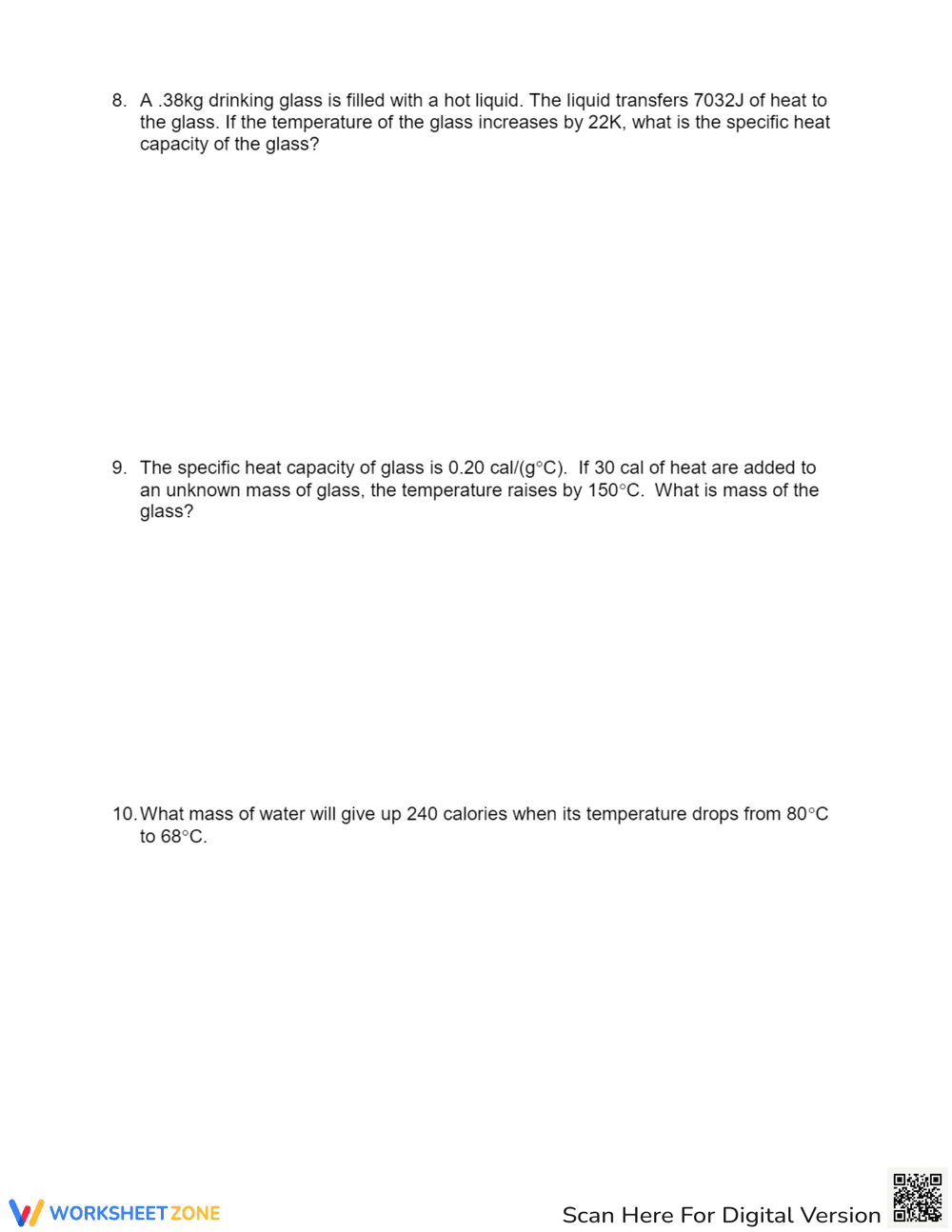
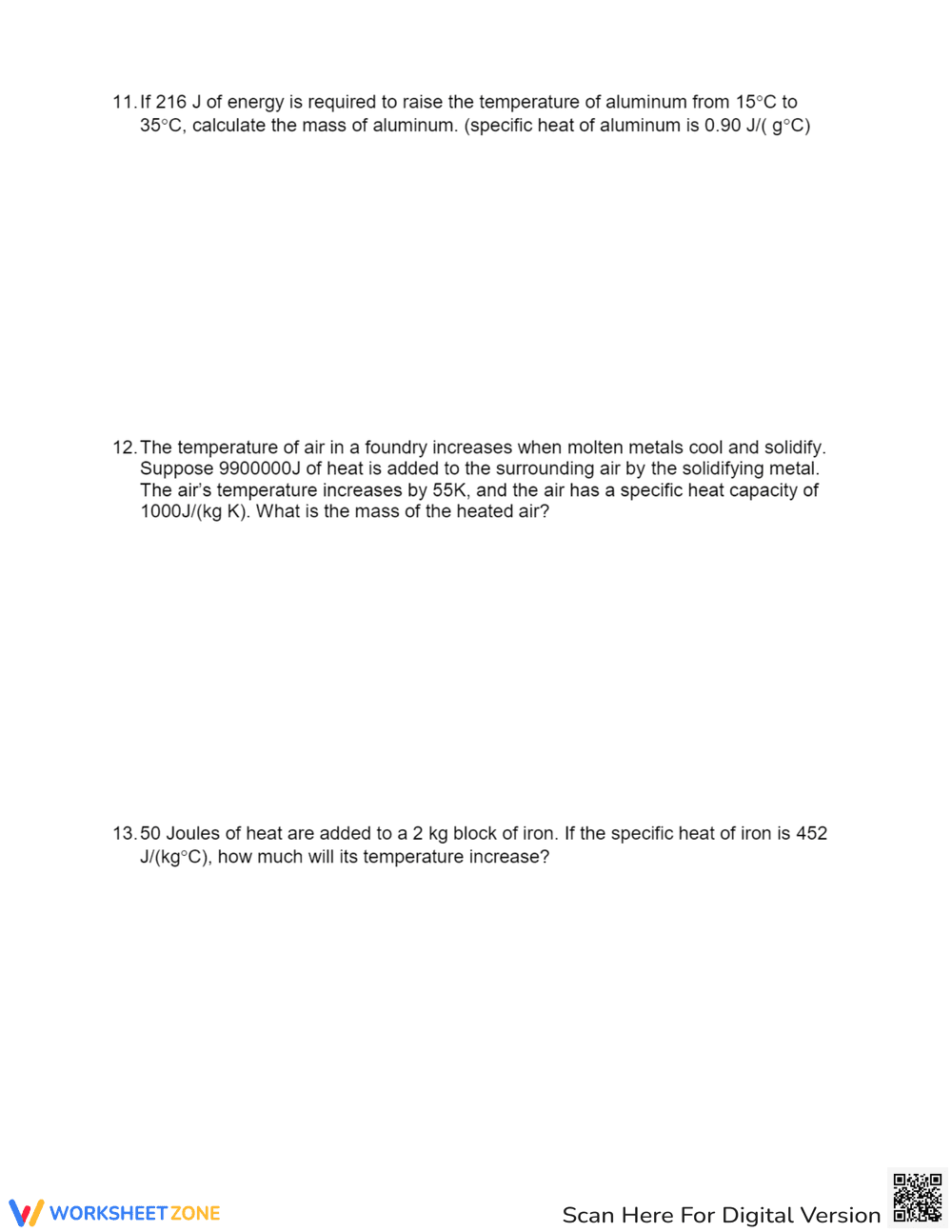
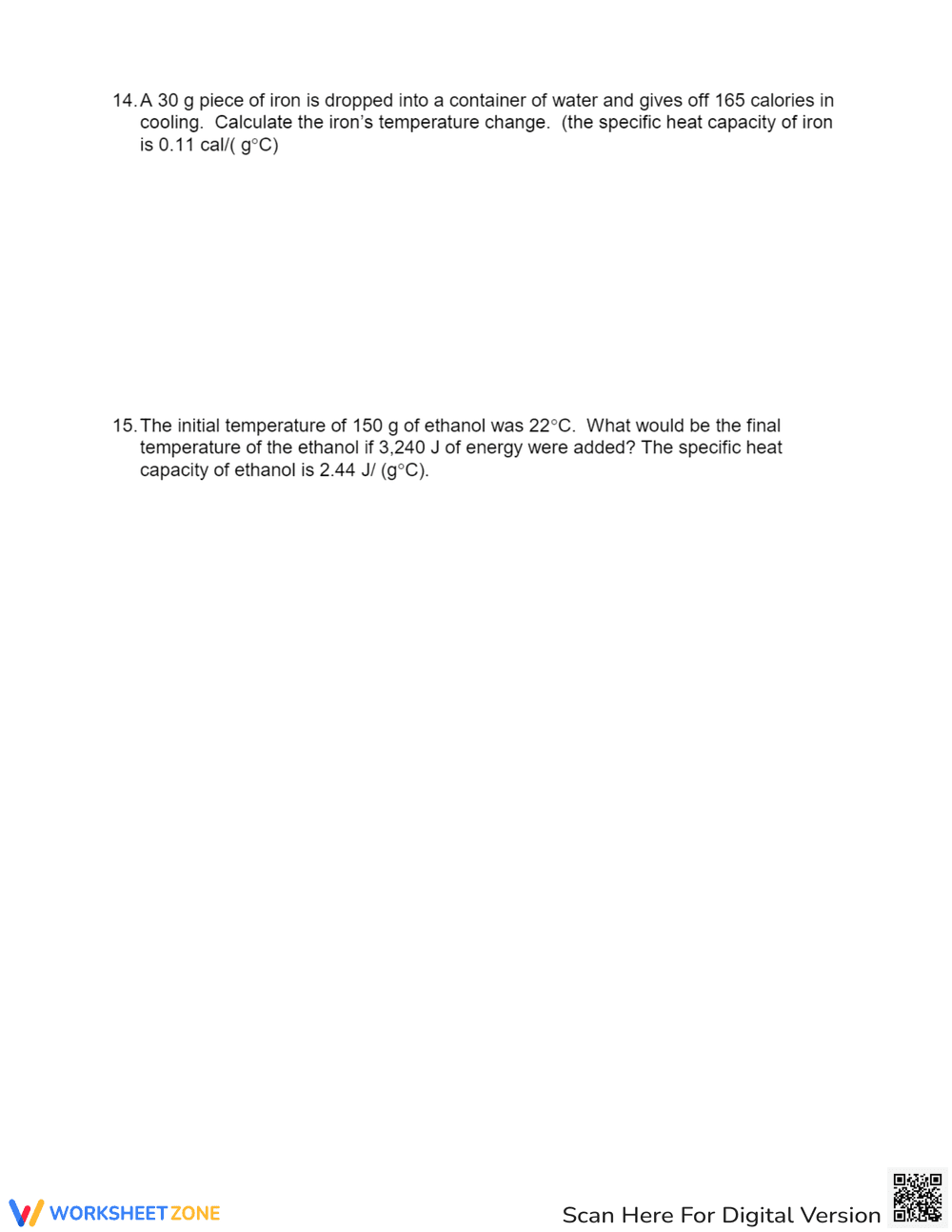
This is a physics worksheet focusing on specific heat capacity problems. It presents the formula Q=mcΔT, where Q represents heat, m is mass, c is specific heat, and ΔT is the change in temperature. The worksheet includes key ideas related to heat transfer, units of measurement (Joules, calories, K, °C, °F), and problem-solving strategies. It also provides the specific heat capacity of water in different units and includes a sample problem: 'How many calories of heat will need to be added to a 200g sample of water to raise its temperature 30°C?'.
Grade Level Suitability:
This worksheet is suitable for high school physics students, typically grades 9-12. The concepts of specific heat capacity, heat transfer, and unit conversions are typically introduced in these grades. The problem-solving requires algebraic manipulation and an understanding of physical quantities.
Why Use It:
This worksheet helps students understand and apply the concept of specific heat capacity. It reinforces the relationship between heat, mass, specific heat, and temperature change. It also emphasizes the importance of using consistent units and showing work in problem-solving. The worksheet provides a foundational understanding of thermodynamics.
How to Use It:
Students should first review the formula and key ideas presented on the worksheet. They should then attempt to solve the sample problem, showing all work and ensuring that units are consistent. Teachers can use this worksheet as a practice activity, homework assignment, or assessment tool.
Target Users:
The target users are high school physics students learning about specific heat capacity and heat transfer. It is also useful for physics teachers looking for practice problems and assessments.
This is a physics worksheet focusing on specific heat capacity problems. It presents the formula Q=mcΔT, where Q represents heat, m is mass, c is specific heat, and ΔT is the change in temperature. The worksheet includes key ideas related to heat transfer, units of measurement (Joules, calories, K, °C, °F), and problem-solving strategies. It also provides the specific heat capacity of water in different units and includes a sample problem: 'How many calories of heat will need to be added to a 200g sample of water to raise its temperature 30°C?'.
Grade Level Suitability:
This worksheet is suitable for high school physics students, typically grades 9-12. The concepts of specific heat capacity, heat transfer, and unit conversions are typically introduced in these grades. The problem-solving requires algebraic manipulation and an understanding of physical quantities.
Why Use It:
This worksheet helps students understand and apply the concept of specific heat capacity. It reinforces the relationship between heat, mass, specific heat, and temperature change. It also emphasizes the importance of using consistent units and showing work in problem-solving. The worksheet provides a foundational understanding of thermodynamics.
How to Use It:
Students should first review the formula and key ideas presented on the worksheet. They should then attempt to solve the sample problem, showing all work and ensuring that units are consistent. Teachers can use this worksheet as a practice activity, homework assignment, or assessment tool.
Target Users:
The target users are high school physics students learning about specific heat capacity and heat transfer. It is also useful for physics teachers looking for practice problems and assessments.


