


























Views
Downloads
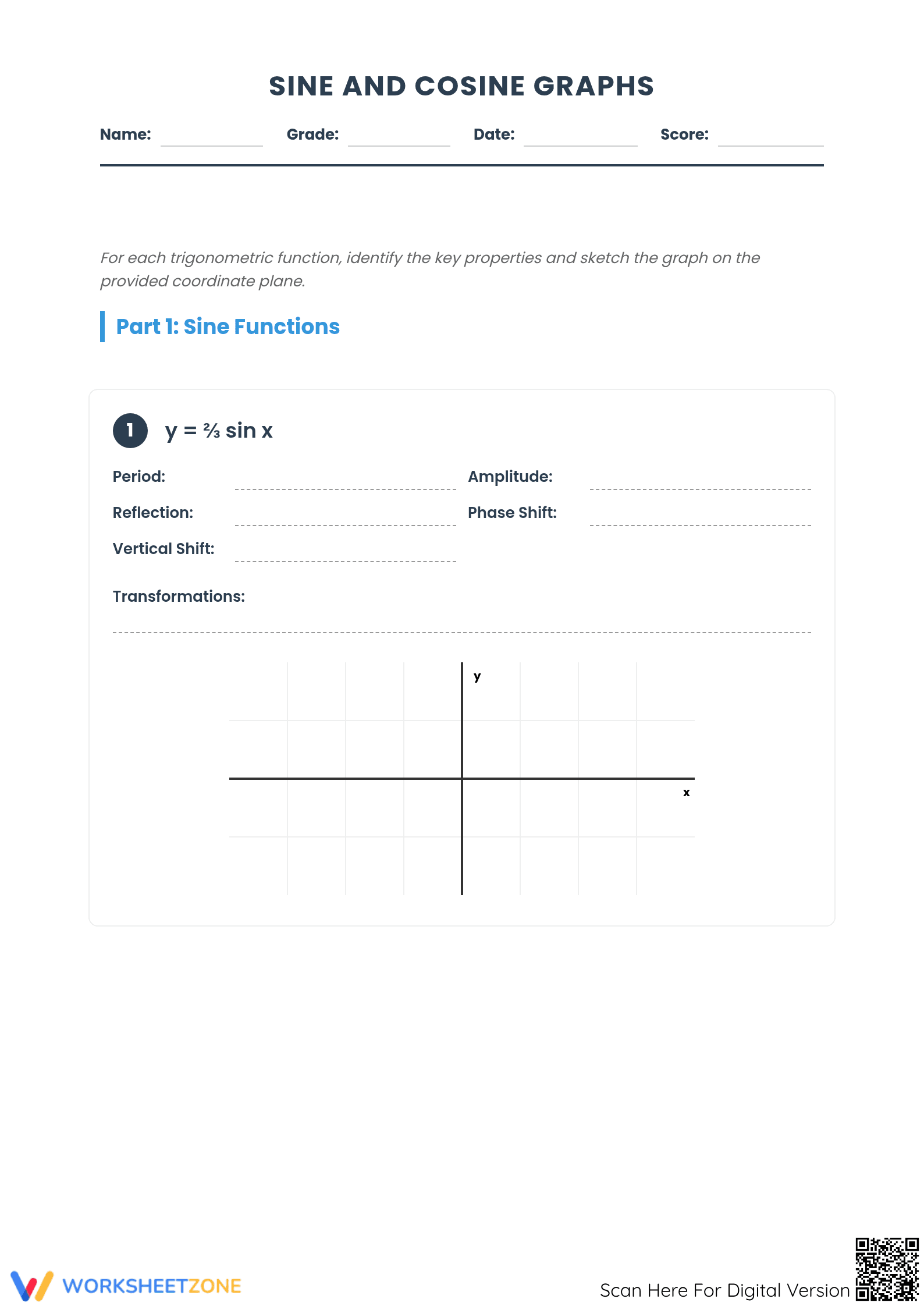
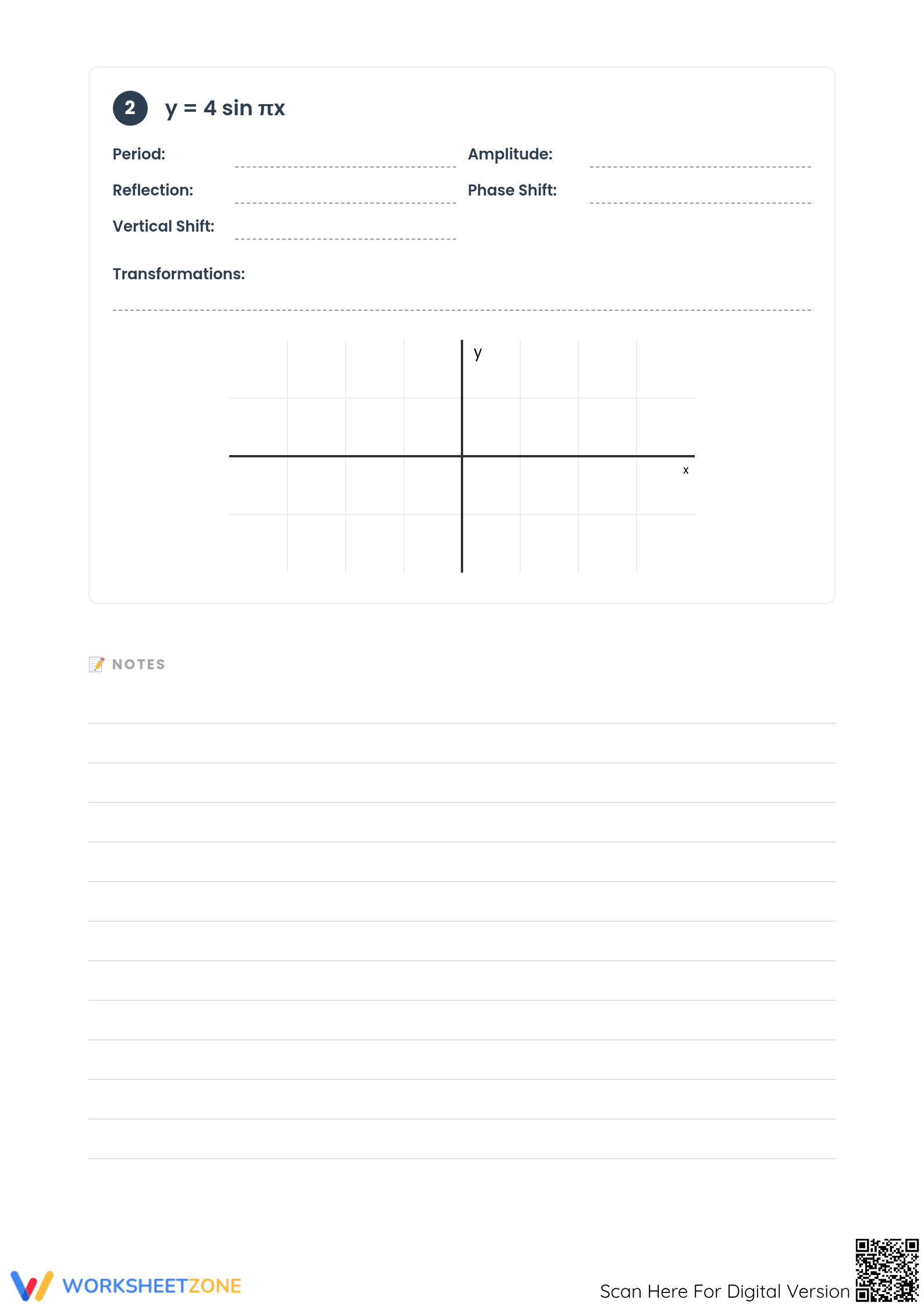
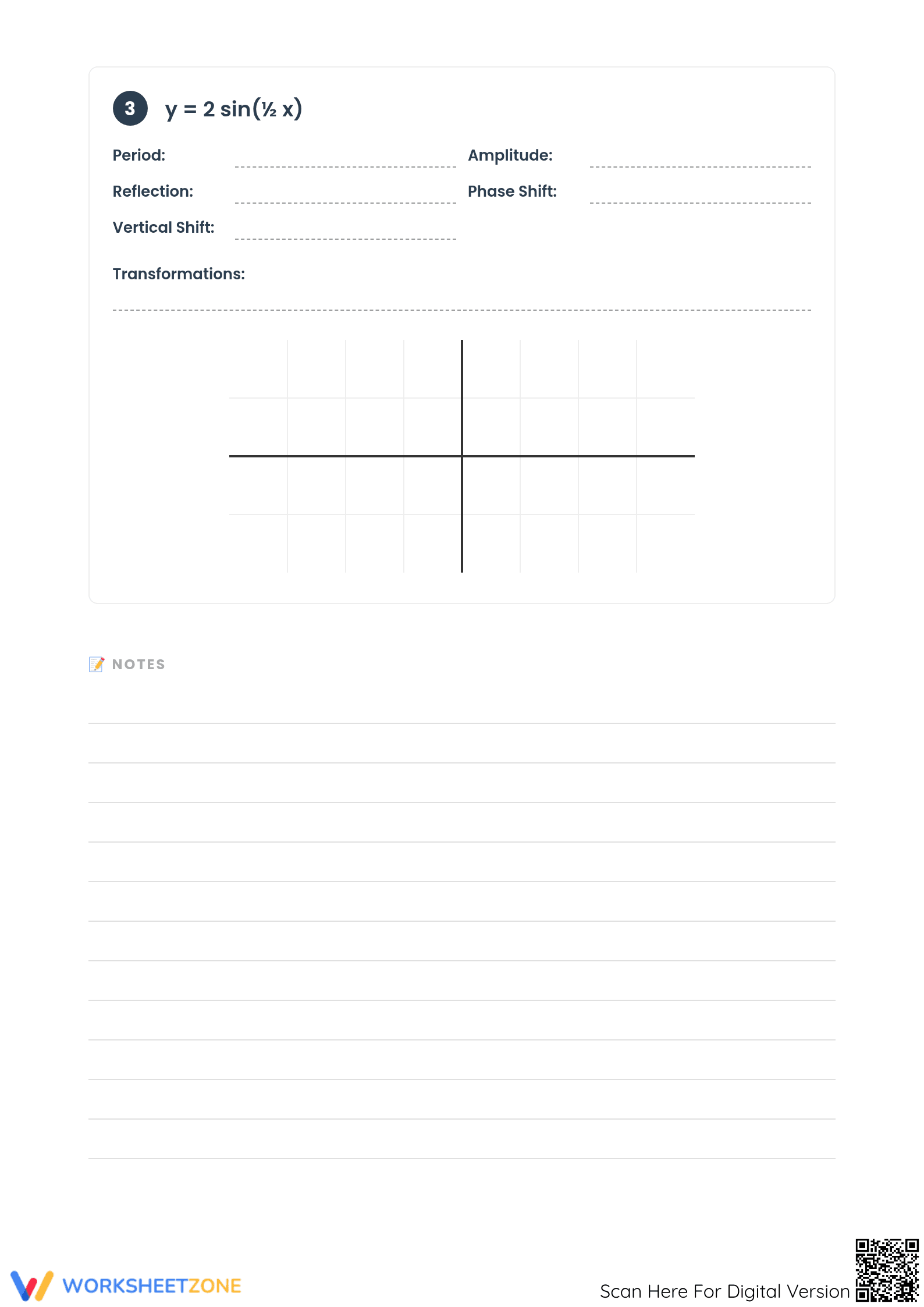
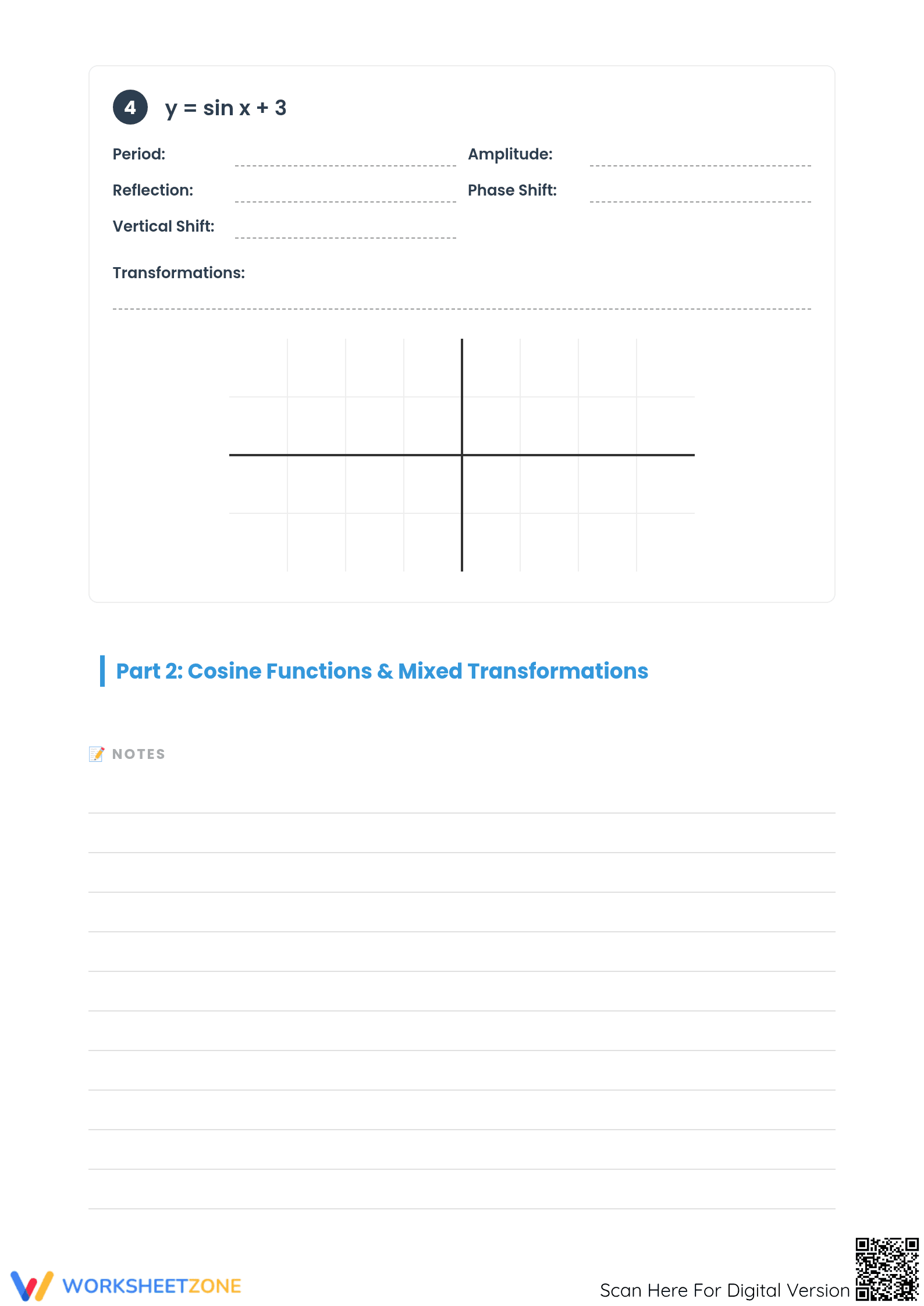

Graphing Sine and Cosine Worksheet | Grade 11 Math Printable
Paste this activity's link or code into your existing LMS (Google Classroom, Canvas, Teams, Schoology, Moodle, etc.).
Students can open and work on the activity right away, with no student login required.
You'll still be able to track student progress and results from your teacher account.
High school math students often need focused practice to master trigonometric transformations. This comprehensive worksheet provides structured space for students to identify key properties and accurately graph sine and cosine functions, building essential skills for advanced algebra and pre-calculus.
At a Glance
- Grade: 11 · Subject: Math
- Standard:
HSF.IF.C.7.E— Graph trigonometric functions showing period, midline, and amplitude- Skill Focus: Graphing sine and cosine transformations
- Format: 5 pages · 5 problems · Answer key included · PDF
- Best For: Independent practice and review
- Time: 30–45 minutes
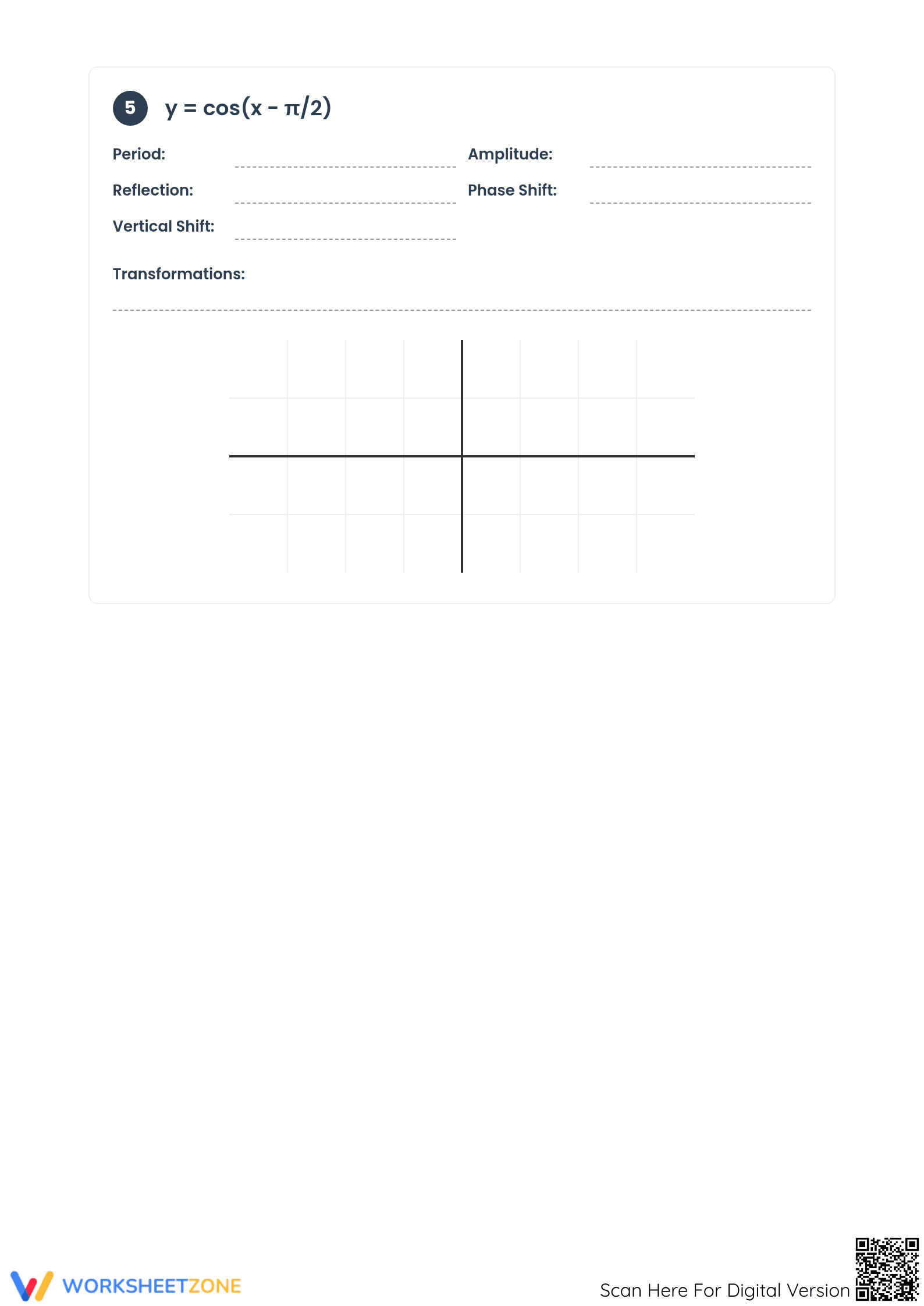
This resource features five detailed graphing tasks spread across five pages, giving students ample room to work. Each problem requires learners to identify the period, amplitude, reflection, phase shift, and vertical shift before sketching the function on the provided coordinate plane. A dedicated notes section is included on several pages to help students track their transformation steps. A complete answer key is also provided for quick grading.
- Guided practice: The first problem starts with a straightforward sine function featuring a simple amplitude change, allowing students to establish a baseline understanding of the coordinate plane.
- Supported practice: Subsequent problems introduce period changes and vertical shifts, challenging students to carefully calculate their new critical points before graphing.
- Independent practice: The final tasks combine multiple transformations, including phase shifts and reflections, requiring comprehensive mastery of trigonometric graphing rules.
This gradual-release approach ensures students build confidence as they move from basic to complex transformations.
Aligned to HSF.IF.C.7.E, this worksheet requires students to graph trigonometric functions, showing period, midline, and amplitude. Both standard codes can be copied directly into lesson plans, IEP goals, or district curriculum mapping tools.
This worksheet is highly effective as an independent practice assignment following direct instruction on trigonometric transformations. Teachers can also use individual pages as warm-up exercises or exit tickets over a five-day unit. For formative assessment, observe whether students correctly identify the phase shift and period before attempting to plot their initial points on the graph. Expected completion time is 30 to 45 minutes for the entire packet.
Designed for 11th and 12th-grade pre-calculus students, this resource is ideal for learners who benefit from highly structured workspaces. The clear breakdown of properties provides built-in scaffolding for students who struggle with multi-step graphing. It pairs perfectly with an anchor chart detailing trigonometric equations.
Mastering the graphing of trigonometric functions requires explicit, focused practice in translating complex algebraic equations into accurate visual representations. By aligning directly with standard HSF.IF.C.7.E to graph trigonometric functions showing period, midline, and amplitude, this resource supports critical mathematical visualization skills necessary for advanced STEM coursework. According to EdReports 2024, high-quality instructional materials that provide dedicated, structured space for students to map out mathematical transformations step-by-step significantly improve the long-term retention of complex algebraic concepts. This highly structured approach effectively reduces cognitive overload, allowing high school students to focus their mental energy on understanding the specific graphical effects of amplitude, period, and phase shifts on the parent function. Providing this level of targeted, standards-aligned practice ensures that learners build the robust foundational knowledge required to succeed in pre-calculus and beyond.


