


























Views
Downloads
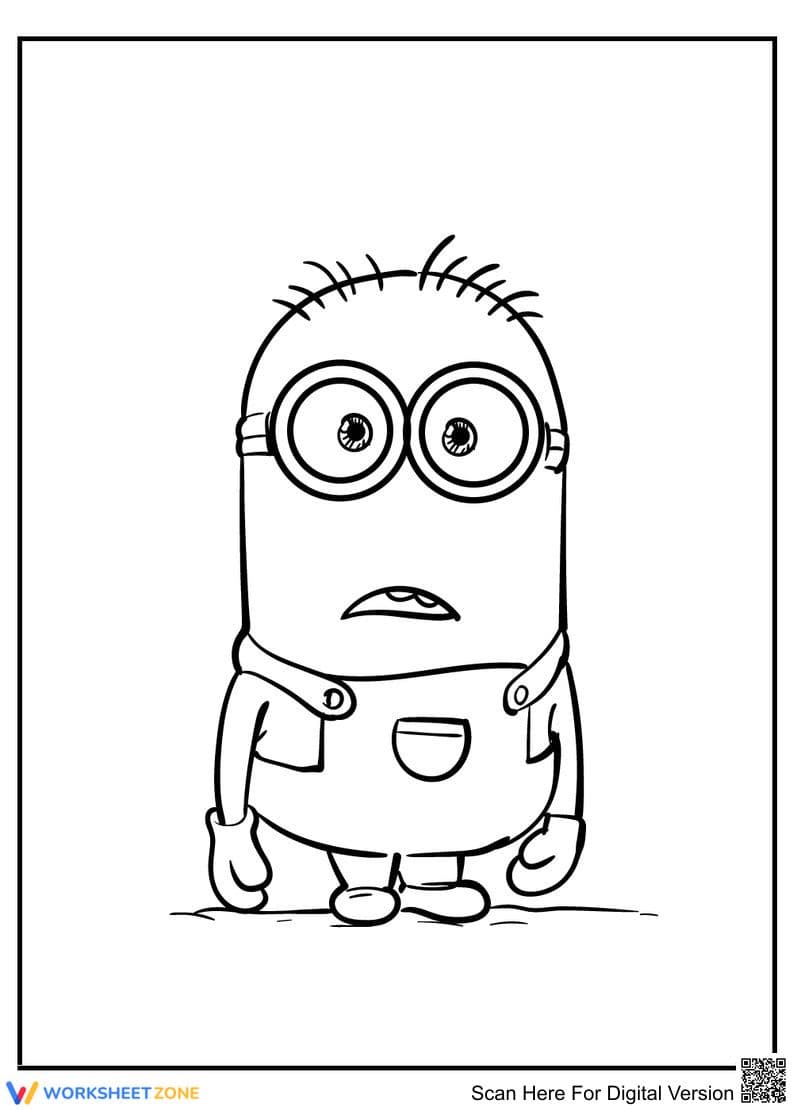

Printable Shocked Minion Coloring Page | Grade K
Paste this activity's link or code into your existing LMS (Google Classroom, Canvas, Teams, Schoology, Moodle, etc.).
Students can open and work on the activity right away, with no student login required.
You'll still be able to track student progress and results from your teacher account.
This printable shocked Minion coloring page provides a fun, engaging way for young learners to develop essential fine motor skills. Students practice grip control and color application while expressing their creativity. This simple, single-page activity serves as an excellent warm-up or transition task for early childhood classrooms.
At a Glance
- Grade: K · Subject: Art
- Standard:
CCSS.ELA-LITERACY.SL.K.5— Add drawings to provide additional detail- Skill Focus: Fine motor control
- Format: 1 page · 1 task · No answer key · PDF
- Best For: Morning work or transitions
- Time: 10–15 minutes
What's Inside
This download features a single line drawing of a popular cartoon character with a surprised expression. The page is intentionally kept simple with bold, clear outlines to support young children who are just learning to color within the lines. There are no complex instructions or additional materials required, making it a straightforward addition to any daily routine.
Zero-Prep Workflow
This resource offers a highly efficient zero-prep workflow.
- Print (1 minute): Simply download the PDF and print the required number of copies. The black-and-white design is highly ink-efficient.
- Distribute (1 minute): Hand out the pages along with crayons, markers, or colored pencils. No extensive teacher modeling is necessary.
- Review (0 minutes): As a creative exercise, there is no formal grading required, allowing teachers to focus on observing grip and motor control.
Total teacher preparation time is under two minutes, making this an ideal emergency activity for a substitute teacher plan.
Standards Alignment
This activity aligns with primary standard CCSS.ELA-LITERACY.SL.K.5: Add drawings or other visual displays to descriptions as desired to provide additional detail. While primarily an art and fine motor task, coloring helps build the hand strength and coordination necessary for early writing and visual communication. Both standard codes can be copied directly into lesson plans, IEP goals, or district curriculum mapping tools.
How to Use It
Teachers can utilize this coloring page in multiple ways throughout the school day. It works exceptionally well as a quiet morning work activity while students are arriving and settling into the classroom. Alternatively, it serves as a calming transition task after a high-energy recess period. While students color, teachers can conduct formative assessments by observing pencil grip, hand-eye coordination, and focus duration. Expected completion time is ten to fifteen minutes.
Who It's For
This worksheet is designed for Kindergarten students developing foundational fine motor abilities. It is easily differentiated by offering various coloring tools; for example, students needing more support can use thick crayons, while those with advanced motor control can use fine-tipped markers. This page pairs naturally with a read-aloud session or a direct instruction lesson on expressing emotions and identifying feelings.
Integrating creative tasks like this coloring page supports the development of essential physical and cognitive skills in early childhood education. Aligned with CCSS.ELA-LITERACY.SL.K.5, this activity encourages students to add drawings to provide additional detail, a foundational step in visual communication. According to a ScienceDirect TpT Analysis, incorporating structured fine motor activities significantly improves handwriting readiness and sustained attention in young learners. By providing targeted practice in grip control and spatial awareness, educators can build the physical stamina required for later academic success. This simple yet effective resource bridges the gap between play and structured learning, ensuring that students develop necessary competencies in a low-stress, highly engaging format. Consistent practice with coloring and drawing tasks remains a cornerstone of effective early childhood pedagogy.


