


























Views
Downloads


Printable Rhymes with -ake Phonics Book | Kindergarten ELA
Paste this activity's link or code into your existing LMS (Google Classroom, Canvas, Teams, Schoology, Moodle, etc.).
Students can open and work on the activity right away, with no student login required.
You'll still be able to track student progress and results from your teacher account.
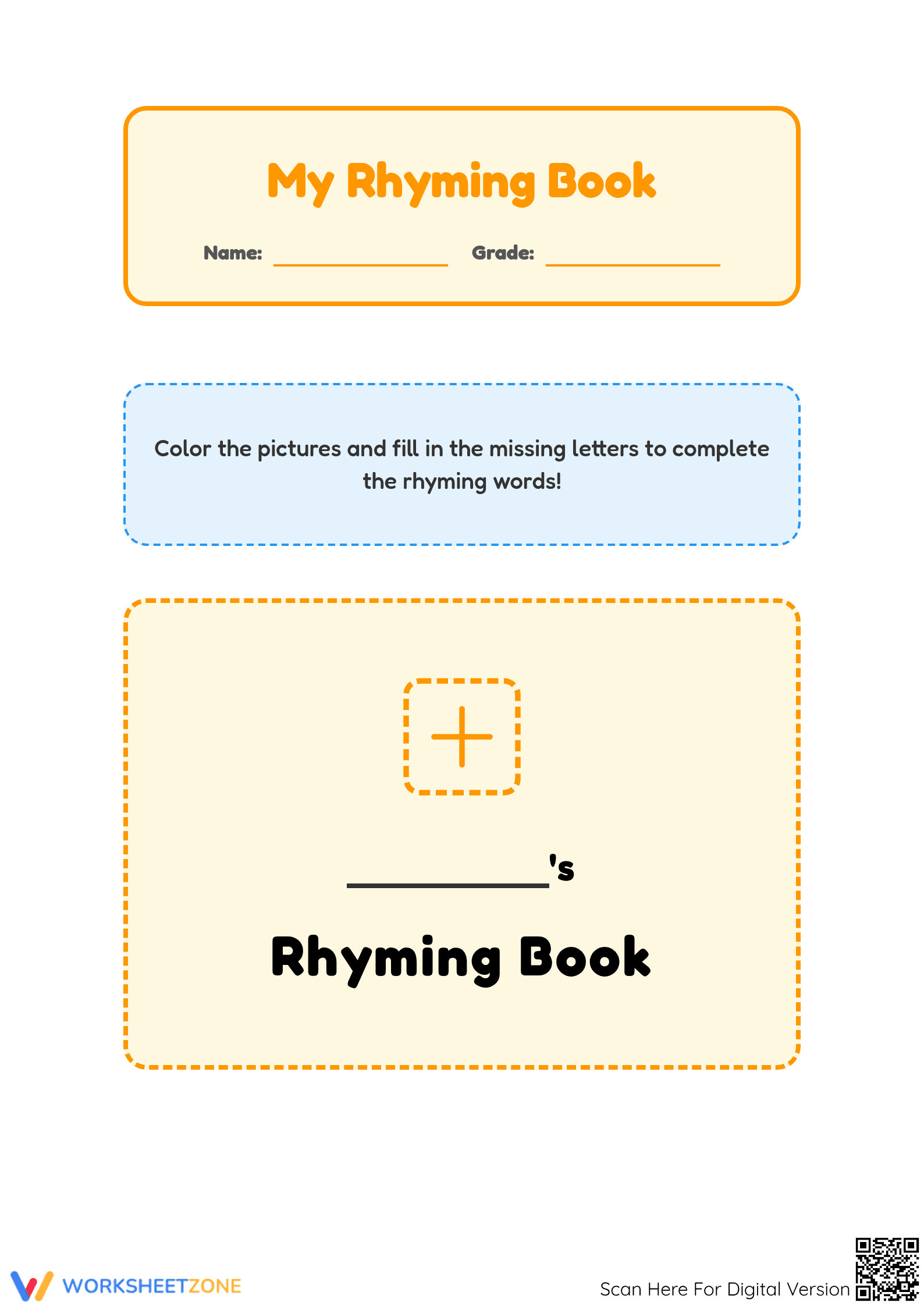
This Kindergarten phonics worksheet offers a hands-on way for students to master rhyming word families. By coloring illustrations and filling in initial consonants for the -ake, -at, and -og families, learners build foundational reading skills. The result is a personalized mini-book that reinforces letter-sound correspondence and builds early literacy confidence through a creative assembly project.
At a Glance
- Grade: Kindergarten · Subject: ELA / Phonics
- Standard:
RF.K.3.D— Distinguish between similarly spelled words by identifying the sounds of the differing letters- Skill Focus: Rhyming Word Families & Initial Sounds
- Format: 4 pages · 12 problems · Answer key included · PDF
- Best For: Literacy centers and independent phonics practice
- Time: 15–25 minutes
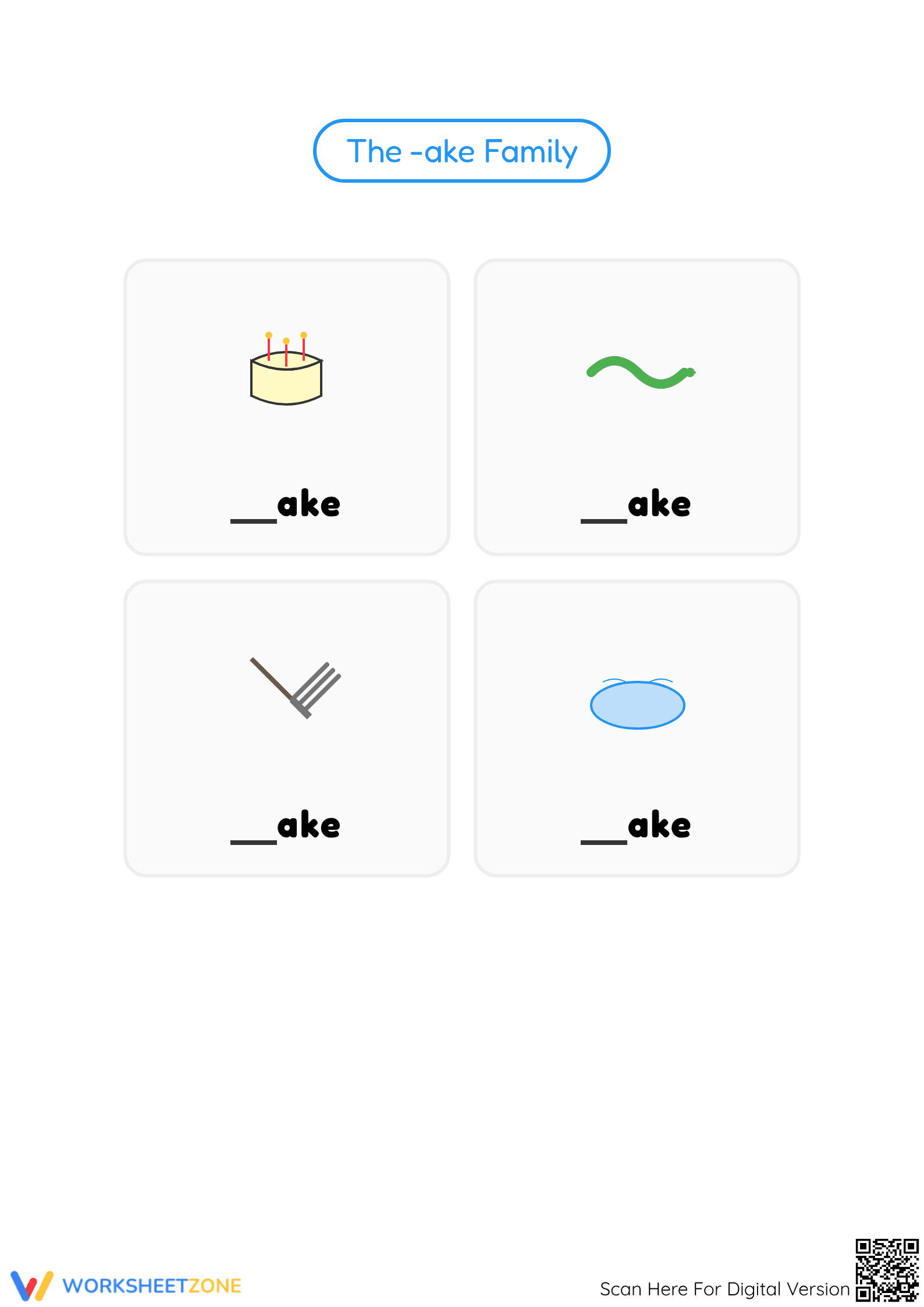
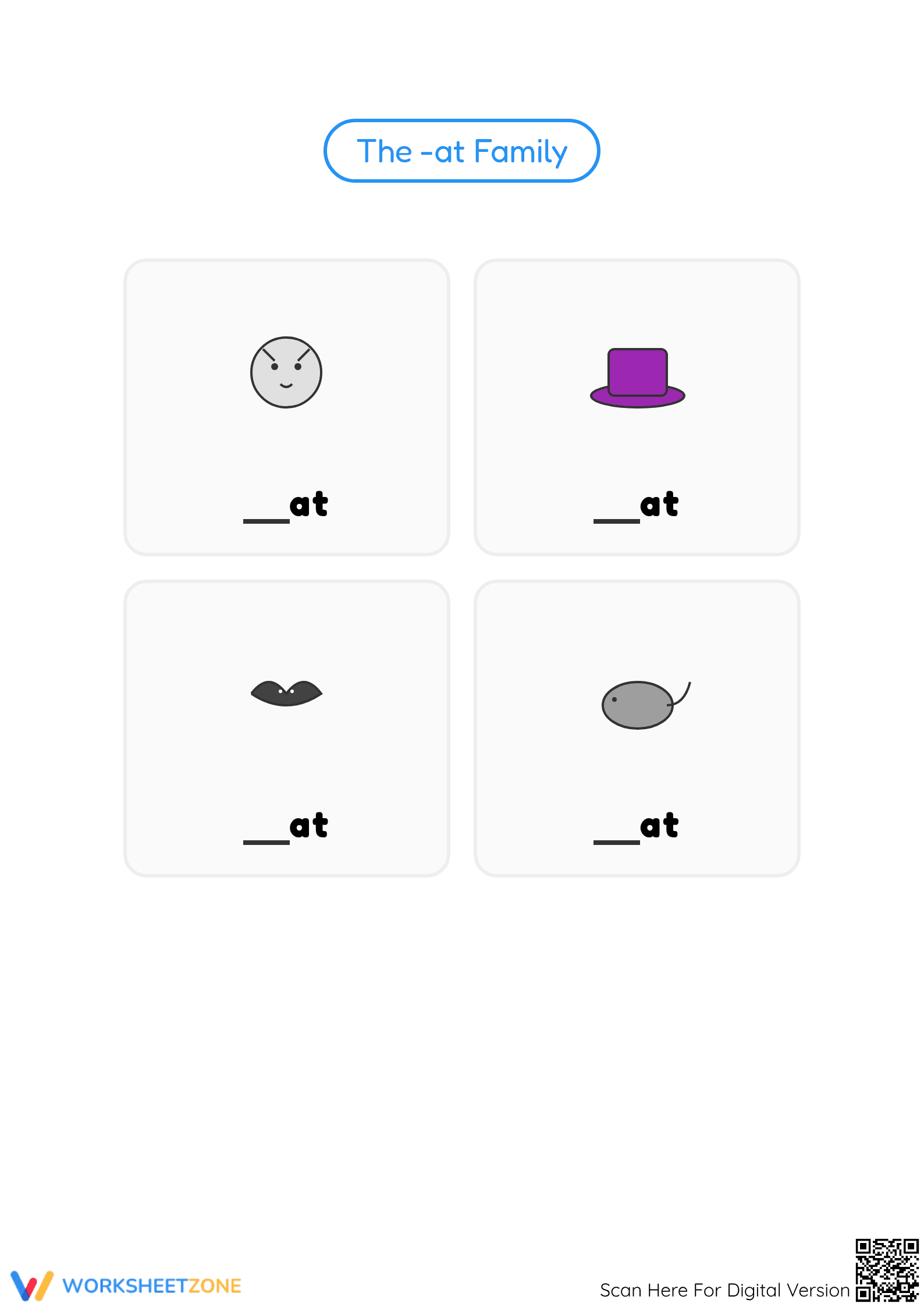
This four-page PDF includes a customizable cover page and three content pages dedicated to specific phonics families: "-ake", "-at", and "-og". Each content page features four distinct tasks where students must identify a clear illustration, say the word, and write the missing initial letter. The layout is designed for easy cutting and stapling, creating a tangible mini-book students can store in their reading folders for ongoing review.
The workflow for this activity is remarkably efficient, requiring less than two minutes of teacher preparation. Step 1: Print the four-page PDF for each student (30 seconds). Step 2: Distribute materials including scissors, staples, and crayons (30 seconds). Step 3: Review the finished books to verify phonemic accuracy (1 minute). This low-barrier entry makes it an ideal choice for emergency sub plans or transition periods between core literacy blocks.
This resource is primarily aligned with RF.K.3.D, which requires students to distinguish between similarly spelled words by identifying the sounds of the letters that differ. By focusing on CVC and CCVC word families, it also supports standard RF.K.2.A through rhyming practice. These standard codes can be copied directly into lesson plans, IEP goals, or district curriculum mapping tools to ensure instructional alignment and track student progress.
Use this book during small-group instruction to observe how students isolate initial phonemes before writing. It serves as an excellent formative assessment tool; teachers can watch for students who struggle with consonant blends versus single consonants. Alternatively, assign it as an independent center activity where students can reinforce their learning through the tactile acts of coloring, cutting, and assembling their own phonics resources.
This worksheet is designed specifically for Kindergarten students beginning to decode words within common families. It provides necessary visual scaffolds for English Language Learners and students requiring tier 2 intervention. It pairs effectively with a rhyming picture book read-aloud or a direct phonics lesson, creating a multi-sensory experience that cements the relationship between letters, sounds, and their corresponding visual representations.
According to research by Fisher & Frey (2014), the use of interactive notebooks and "word work"—like this printable rhyming book—is essential for developing the phonological loop required for long-term literacy retention. By focusing on the RF.K.3.D standard, this resource helps Kindergarteners move beyond simple letter recognition toward the more complex task of manipulating phonemes within word families. The combination of tactile cutting and coloring with the cognitive task of letter-sound mapping creates multiple neural pathways for learning. National reading assessments (NAEP) consistently show that students who master these foundational phonics skills in early primary grades are significantly more likely to achieve reading fluency by the end of third grade. This worksheet provides the structured, repetitive practice necessary to bridge the gap between phonemic awareness and independent reading. It is a scientifically grounded tool for any early childhood classroom seeking to improve literacy outcomes through engaging, standard-aligned practice.


