


























Views
Downloads

Project Reflection Template | Grade 6 Printable
Paste this activity's link or code into your existing LMS (Google Classroom, Canvas, Teams, Schoology, Moodle, etc.).
Students can open and work on the activity right away, with no student login required.
You'll still be able to track student progress and results from your teacher account.
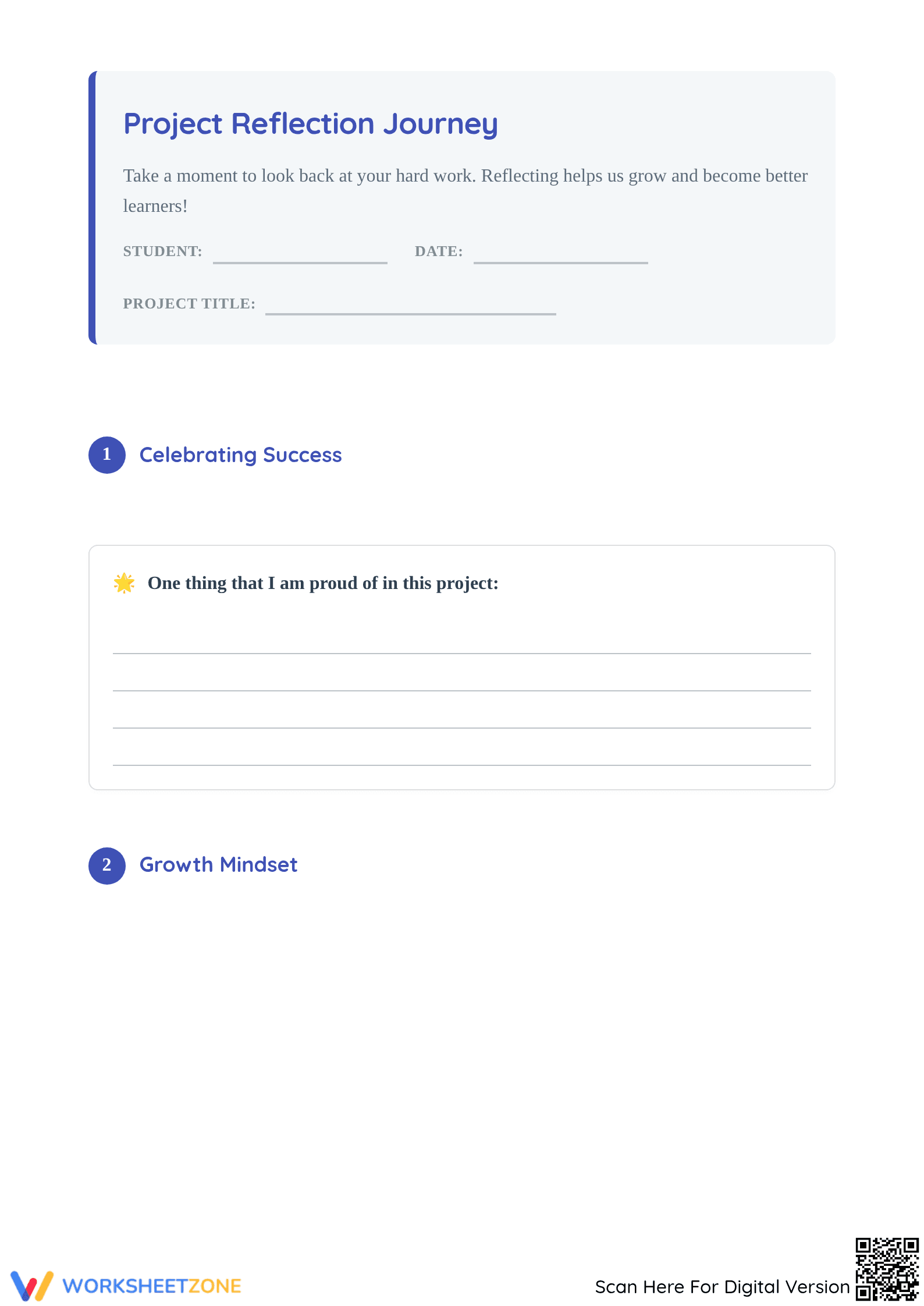
This Grade 6 project reflection template gives students a structured framework to evaluate their own learning, celebrate successes, and identify areas for growth. By guiding learners through a thoughtful self-assessment process, this resource helps students articulate the challenges they overcame and the new skills they acquired during any math or cross-curricular project.
At a Glance
- Grade: 6 · Subject: Math
- Standard:
CCSS.ELA-LITERACY.W.6.4— Produce clear writing appropriate to task and purpose- Skill Focus: Project Reflection and Self-Assessment
- Format: 3 pages · 5 problems · No answer key · PDF
- Best For: Post-project self-evaluation
- Time: 15–20 minutes
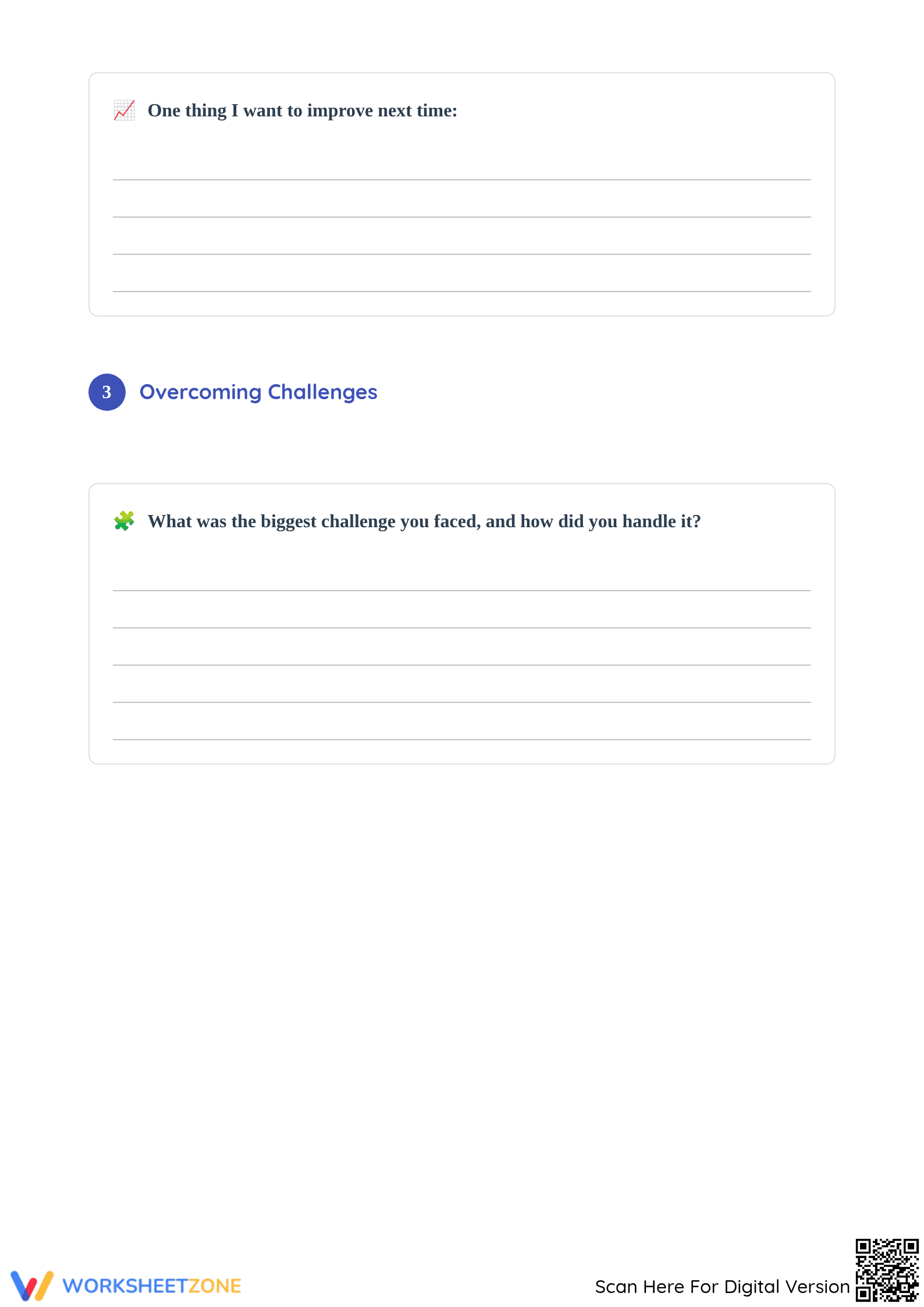
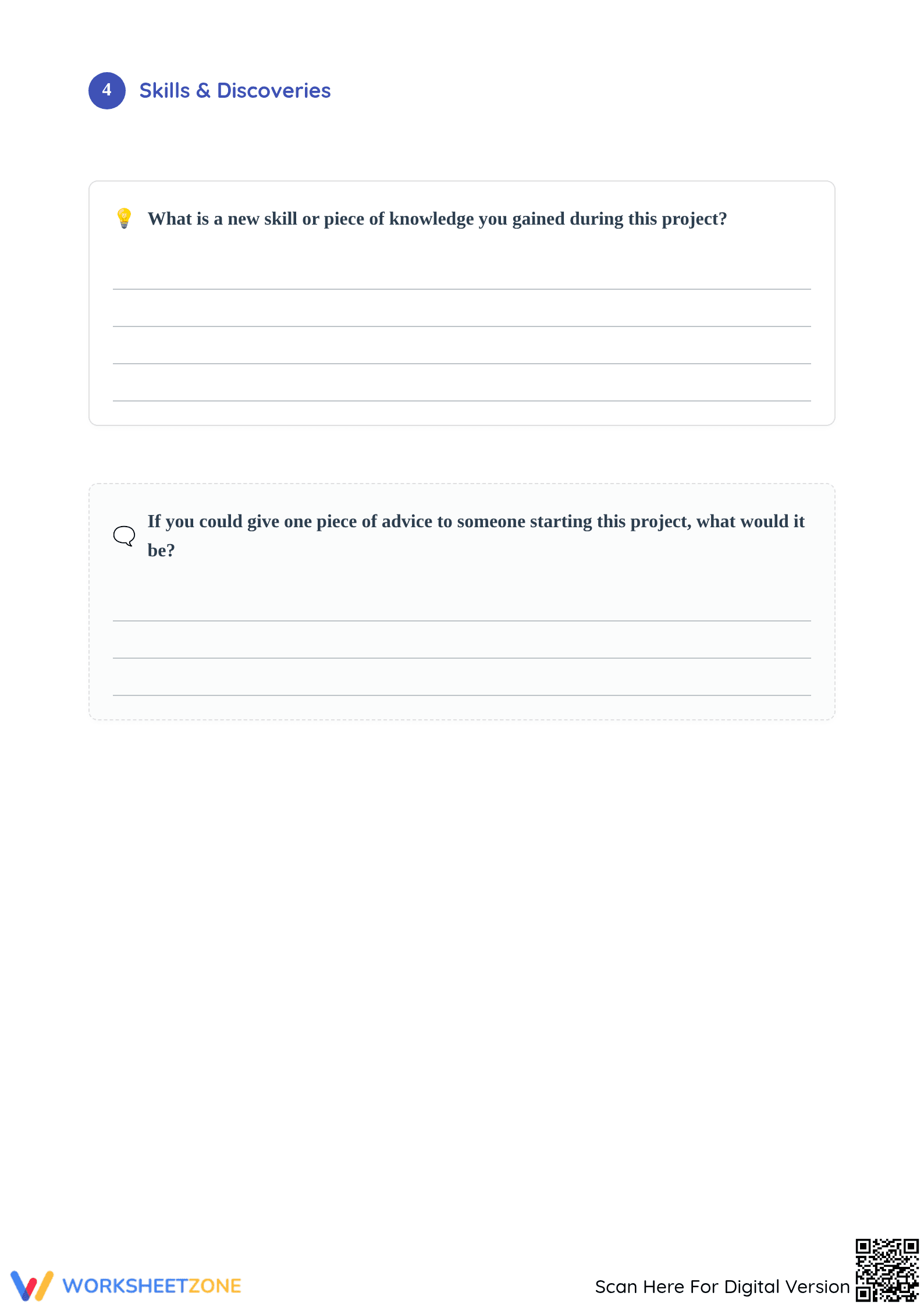
This three-page reflection packet features five open-ended writing prompts divided into clear thematic sections: Celebrating Success, Growth Mindset, Overcoming Challenges, and Skills & Discoveries. The spacious, lined response areas provide ample room for middle schoolers to write detailed reflections. Because the questions are universally applicable, this template can be attached to the end of any geometry, statistics, or general math project without requiring any modifications.
- Print (1 minute): Simply print the three-page PDF packet for each student as they near the completion of their project.
- Distribute (1 minute): Hand out the reflection sheets during the final project submission phase or as a standalone wrap-up activity.
- Review (0 minutes): No teacher preparation or answer key is needed, as all responses are based on the student's personal experience and perspective.
This zero-prep resource requires under two minutes of teacher setup, making it an ideal, self-explanatory activity for project wrap-up days or even as a meaningful task for a substitute teacher to facilitate.
Aligned to primary standard CCSS.ELA-LITERACY.W.6.4: Produce clear and coherent writing in which the development, organization, and style are appropriate to task, purpose, and audience. This template encourages students to practice discipline-specific writing by articulating their mathematical thinking and problem-solving processes. Both standard codes can be copied directly into lesson plans, IEP goals, or district curriculum mapping tools.
Post-Project Wrap-Up: Assign this reflection immediately after students submit a major math project or portfolio. It serves as an excellent cool-down activity that shifts the focus from calculation to metacognition.
Formative Assessment Tool: While reviewing the completed reflections, teachers can observe which specific mathematical concepts or collaborative steps students found most challenging. This insight is invaluable for adjusting future project instructions or providing targeted support. Students typically complete this reflection in 15 to 20 minutes.
This resource is designed for Grade 6 students completing independent or group projects. The open-ended nature of the prompts naturally differentiates for all learners, allowing students to respond at their own writing and comprehension levels. It pairs perfectly with any major unit assessment, performance task, or end-of-term math portfolio.
Integrating structured self-assessment into the middle school classroom significantly enhances student metacognition, academic independence, and overall ownership of the learning process. By aligning with CCSS.ELA-LITERACY.W.6.4 to produce clear writing appropriate to task and purpose, this template ensures students actively process their educational experiences rather than simply moving on to the next unit. According to Fisher & Frey (2014), providing dedicated, structured time for students to reflect on their specific problem-solving strategies and personal challenges directly correlates with improved academic resilience and deeper conceptual understanding across all subject areas. This reflection framework transforms a standard project submission into a comprehensive learning cycle. It encourages students to recognize their own tangible growth, articulate the specific obstacles they navigated, and set highly actionable goals for future assignments, ultimately fostering a robust growth mindset essential for long-term academic success.


