


























1 / 2
0
Views
0
Downloads

0.0
0
Save
0 Likes
Share
Explore Prime Numbers Worksheet for Math Students
0 Views
0 Downloads
Paste this activity's link or code into your existing LMS (Google Classroom, Canvas, Teams, Schoology, Moodle, etc.).
Students can open and work on the activity right away, with no student login required.
You'll still be able to track student progress and results from your teacher account.
Information
Description
What It Is:
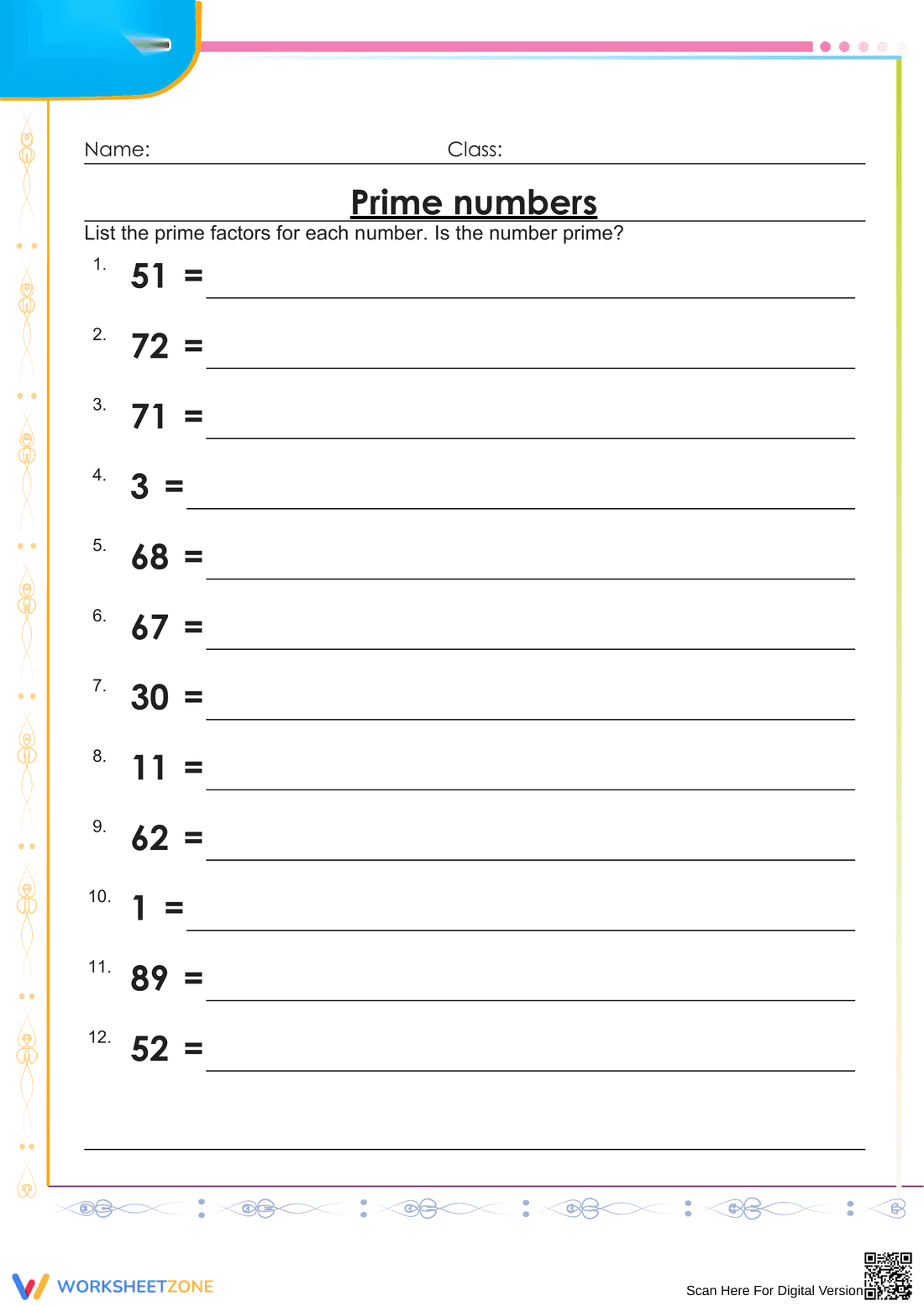
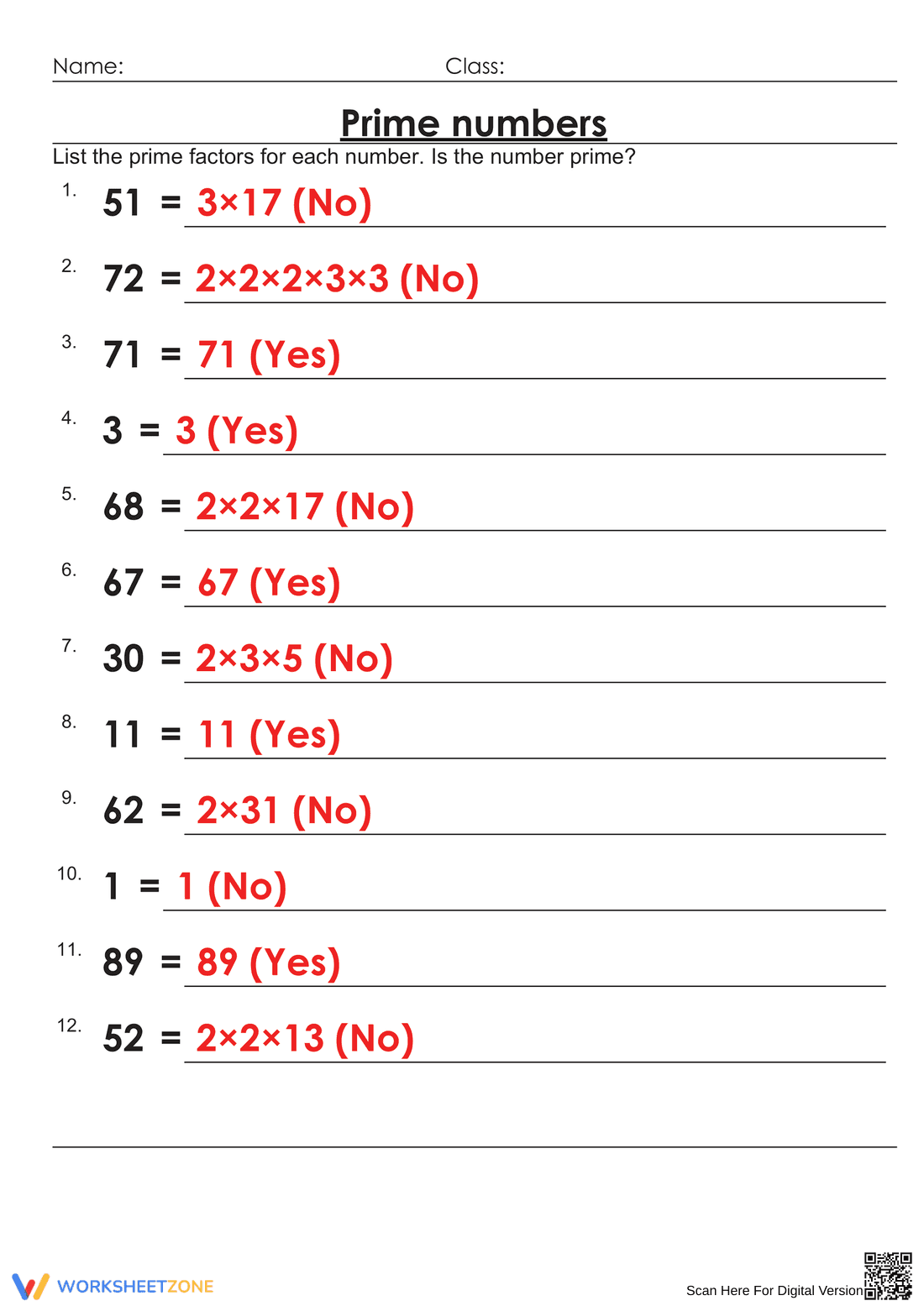
This is a math worksheet focused on prime numbers. Students are asked to list the prime factors for a given set of numbers, ranging from 1 to 89, and determine if each number is prime. The worksheet provides space for the student to write their answers next to each number.
Grade Level Suitability:
This worksheet is suitable for grades 4-6. It requires an understanding of prime numbers, factors, and the ability to perform division or use multiplication tables to find factors.
Why Use It:
This worksheet reinforces the concepts of prime numbers and prime factorization. It helps students practice identifying prime factors and differentiating between prime and composite numbers. It also encourages number sense and problem-solving skills.
How to Use It:
Students should first find all the prime factors for each given number. Then, based on whether the number has only two factors (1 and itself), they should determine if the number is prime or not. Students can use trial division or factor trees to find the prime factors.
Target Users:
This worksheet is beneficial for students learning about prime numbers and factorization, as well as for teachers looking for practice materials to reinforce these concepts in the classroom or as homework.
This is a math worksheet focused on prime numbers. Students are asked to list the prime factors for a given set of numbers, ranging from 1 to 89, and determine if each number is prime. The worksheet provides space for the student to write their answers next to each number.
Grade Level Suitability:
This worksheet is suitable for grades 4-6. It requires an understanding of prime numbers, factors, and the ability to perform division or use multiplication tables to find factors.
Why Use It:
This worksheet reinforces the concepts of prime numbers and prime factorization. It helps students practice identifying prime factors and differentiating between prime and composite numbers. It also encourages number sense and problem-solving skills.
How to Use It:
Students should first find all the prime factors for each given number. Then, based on whether the number has only two factors (1 and itself), they should determine if the number is prime or not. Students can use trial division or factor trees to find the prime factors.
Target Users:
This worksheet is beneficial for students learning about prime numbers and factorization, as well as for teachers looking for practice materials to reinforce these concepts in the classroom or as homework.


