




























Views
Downloads
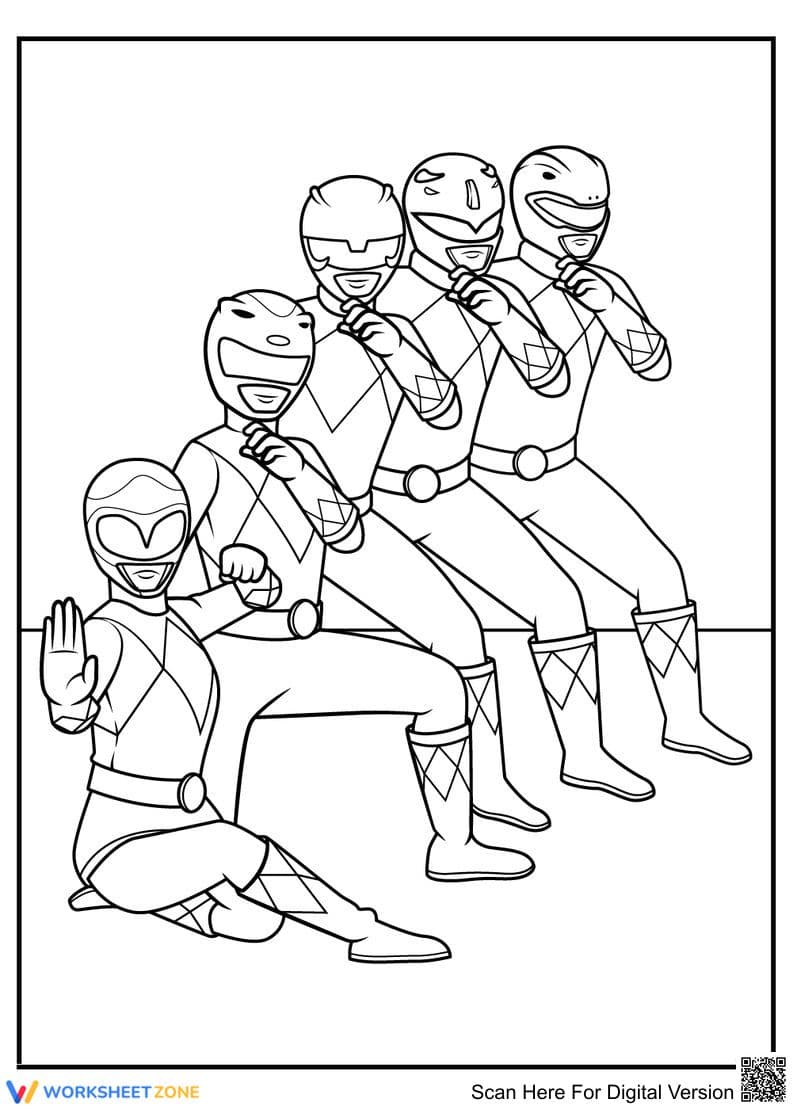

Printable Power Rangers Coloring Page | Grade K

Paste this activity's link or code into your existing LMS (Google Classroom, Canvas, Teams, Schoology, Moodle, etc.).
Students can open and work on the activity right away, with no student login required.
You'll still be able to track student progress and results from your teacher account.
This printable Power Rangers coloring page provides young students with an engaging way to develop fine motor control and creative expression. By coloring the five action figures, learners practice grip strength and hand-eye coordination, laying the physical foundation for early handwriting success.
At a Glance
- Grade: K · Subject: English
- Standard:
CCSS.ELA-LITERACY.W.K.3— Use drawing to narrate an event- Skill Focus: Fine motor skills and creativity
- Format: 1 page · 1 task · No answer key · PDF
- Best For: Morning work or early finishers
- Time: 15–20 minutes
Inside this single-page PDF, educators will find a high-quality, black-and-white line drawing featuring five popular superhero characters in dynamic poses. The bold outlines are specifically designed to help early learners practice staying within the lines, while the varied character details offer opportunities to experiment with different color combinations. There is no answer key required, allowing for complete creative freedom.
This resource is designed for immediate classroom implementation with absolutely zero teacher preparation required.
- Print (1 minute): Simply download the PDF and print the desired number of copies. The high-contrast lines ensure clean copies every time.
- Distribute (1 minute): Hand out the pages along with crayons, markers, or colored pencils.
- Review (0 minutes): No formal grading is necessary. Teachers can simply praise the creative effort and display the finished artwork.
This makes it an ideal, stress-free addition to any emergency sub plan or transition period.
This activity aligns with CCSS.ELA-LITERACY.W.K.3, which encourages students to use a combination of drawing, dictating, and writing to narrate a single event or story. While primarily a fine motor task, educators can extend the activity by asking students to dictate a story about the characters they just colored. Both standard codes can be copied directly into lesson plans, IEP goals, or district curriculum mapping tools.
This coloring page serves as an excellent morning work activity to help students settle into the classroom routine while practicing pencil grip. Alternatively, it functions perfectly as an independent center for early finishers during literacy blocks. As a formative assessment tip, teachers can observe students' pincer grasp and pressure control while they color, noting any learners who might need additional occupational therapy support or grip modifications. Expect students to spend between 15 and 20 minutes completing the page.
This resource is primarily designed for Kindergarten students developing foundational fine motor skills. It is highly accessible for English Language Learners and students receiving special education services, as the visual nature of the task removes language barriers. To maximize the instructional value, pair this coloring page with a read-aloud story about teamwork or superheroes, allowing students to connect their artwork to broader thematic concepts.
Integrating targeted fine motor activities like this coloring page is essential for early childhood development. Aligned with CCSS.ELA-LITERACY.W.K.3, this task requires students to use drawing to narrate an event, bridging the gap between physical coordination and early literacy. According to Fisher & Frey (2014), providing structured opportunities for creative expression significantly enhances student engagement and cognitive processing in primary classrooms. When young learners practice coloring within defined boundaries, they are actively building the hand strength and visual-motor integration necessary for future writing tasks. This simple yet effective exercise supports both physical development and narrative skills, ensuring that students build the stamina required for more complex academic demands. By incorporating high-interest subjects, educators can maintain focus while delivering critical developmental practice.


