


























Views
Downloads

Essential Grade 5 Plant Growth & Photosynthesis Worksheet
Paste this activity's link or code into your existing LMS (Google Classroom, Canvas, Teams, Schoology, Moodle, etc.).
Students can open and work on the activity right away, with no student login required.
You'll still be able to track student progress and results from your teacher account.
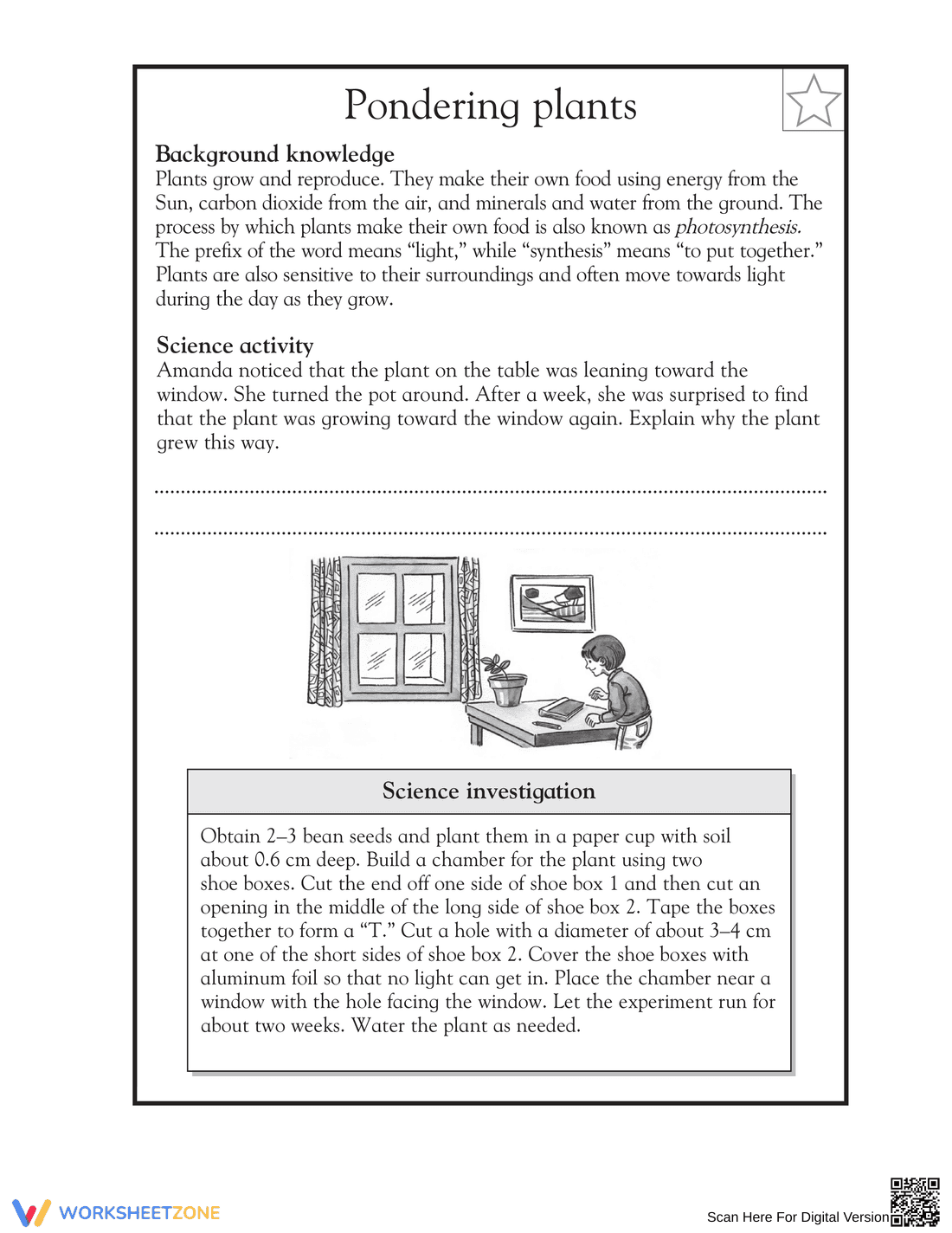
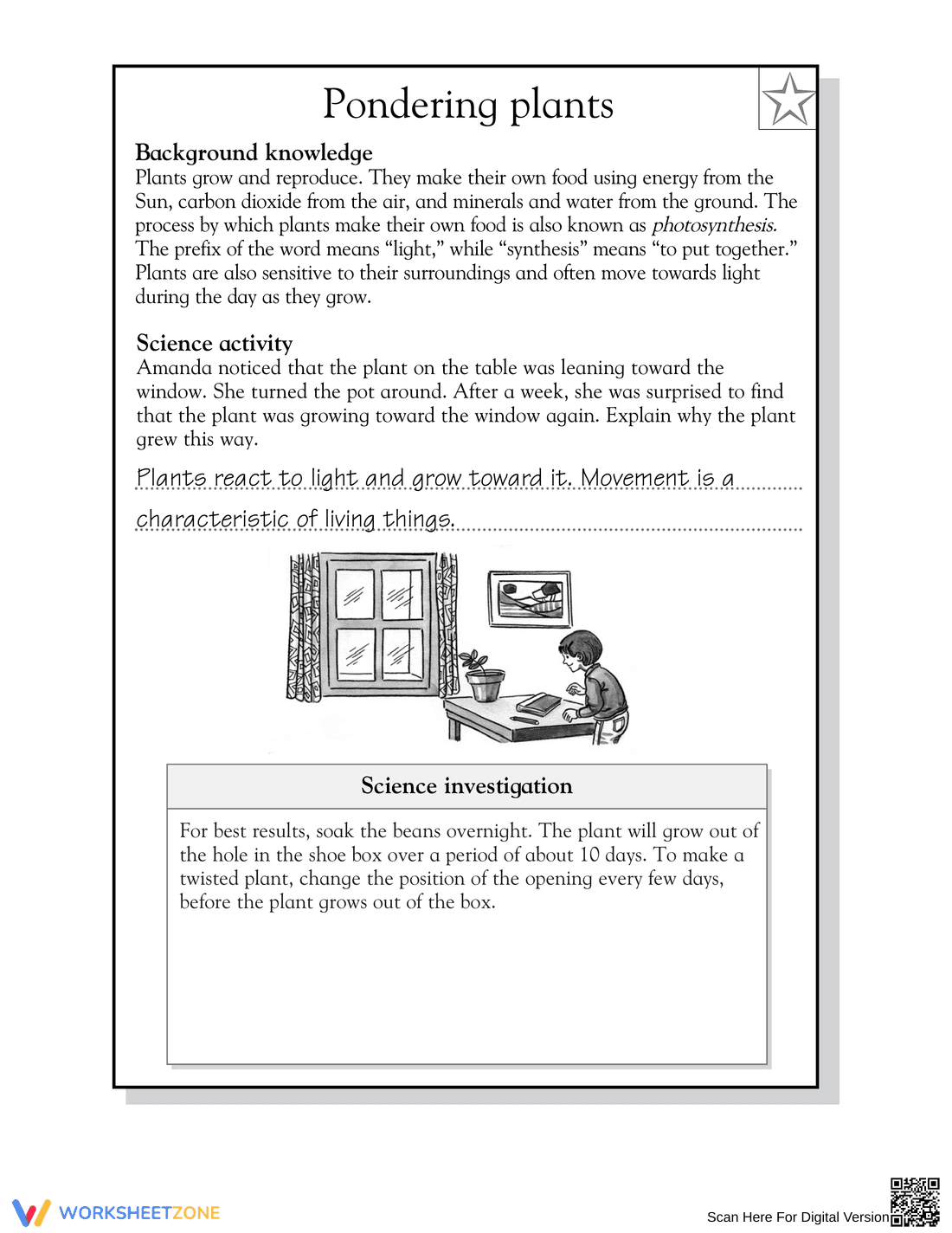
Grade 5 students explore the mechanics of plant growth and photosynthesis through a blend of theoretical background and practical application. This worksheet guides learners to understand how plants convert light into energy, explaining the scientific reasoning behind plant movement toward light sources. Students develop critical observation skills and inquiry-based thinking.
At a Glance
- Grade: 5 · Subject: Living Things
- Standard:
5-LS1-1— Support an argument that plants get materials for growth chiefly from air and water- Skill Focus: Photosynthesis and Phototropism
- Format: 2 pages · 2 investigations · Answer key included · PDF
- Best For: Independent science centers and lab prep
- Time: 30–45 minutes
The "Pondering Plants" resource features two comprehensive pages designed for student engagement. The first page provides essential background knowledge on photosynthesis, including the etymology of the term and the role of carbon dioxide, minerals, and water. A specific "Science activity" prompts students to explain plant movement behavior. The second page details a "Science investigation" using bean seeds and shoe boxes to create a controlled light chamber.
This activity is designed for immediate classroom integration with zero teacher setup. Teachers can print the two-page PDF in under 1 minute, distribute the materials for the response activity in seconds, and facilitate the multi-day investigation setup in less than 5 minutes. The self-explanatory background text makes this an ideal resource for substitute plans or independent enrichment without prior direct instruction.
This resource is aligned to `5-LS1-1`, requiring students to support arguments regarding plant growth needs. By investigating how plants respond to light and utilize environmental inputs, students build a foundation for understanding energy flow in organisms. This standard code can be copied directly into lesson plans, IEP goals, or district curriculum mapping tools.
Use this worksheet during the "Explore" phase of a 5E lesson on living things. It serves as a perfect bridge between reading about photosynthesis and performing a hands-on experiment. A formative-assessment tip: observe students' explanations of why the plant moves; if they mention "seeking food," redirect them to the concept of converting light energy. Completion takes approximately 40 minutes plus long-term observation.
Designed for Grade 5 elementary classrooms, this worksheet supports diverse learners through clear, bolded vocabulary and visual aids. It pairs naturally with a reading passage on plant cells or an anchor chart demonstrating the photosynthesis equation (CO2 + H2O + Light -> Glucose + O2). The structured layout ensures that students stay focused on the scientific method during the investigation phase.
Research from EdReports 2024 emphasizes that high-quality science materials must integrate three-dimensional learning, combining disciplinary core ideas with scientific practices like investigation. This worksheet fulfills the 5-LS1-1 requirement by asking students to analyze phototropism—the movement of plants toward light—as a survival mechanism. By grounding the complex biological process of photosynthesis in a tangible, observable experiment with bean seeds, the resource ensures that Grade 5 students move beyond rote memorization toward conceptual mastery. The inclusion of etymological breakdowns supports academic language acquisition, a key factor in scientific literacy. According to the NAEP framework, these types of structured investigations are essential for developing the inquiry-based skills needed for middle school science readiness and beyond. This resource provides the necessary scaffolding to bridge the gap between abstract biological concepts and concrete physical evidence.


