




























1 / 2
0
Views
0
Downloads

0.0
0
Save
0 Likes
Share
Plant Cell Anatomy: Interactive Activity Worksheet
0 Views
0 Downloads

Paste this activity's link or code into your existing LMS (Google Classroom, Canvas, Teams, Schoology, Moodle, etc.).
Students can open and work on the activity right away, with no student login required.
You'll still be able to track student progress and results from your teacher account.
Information
Description
What It Is:
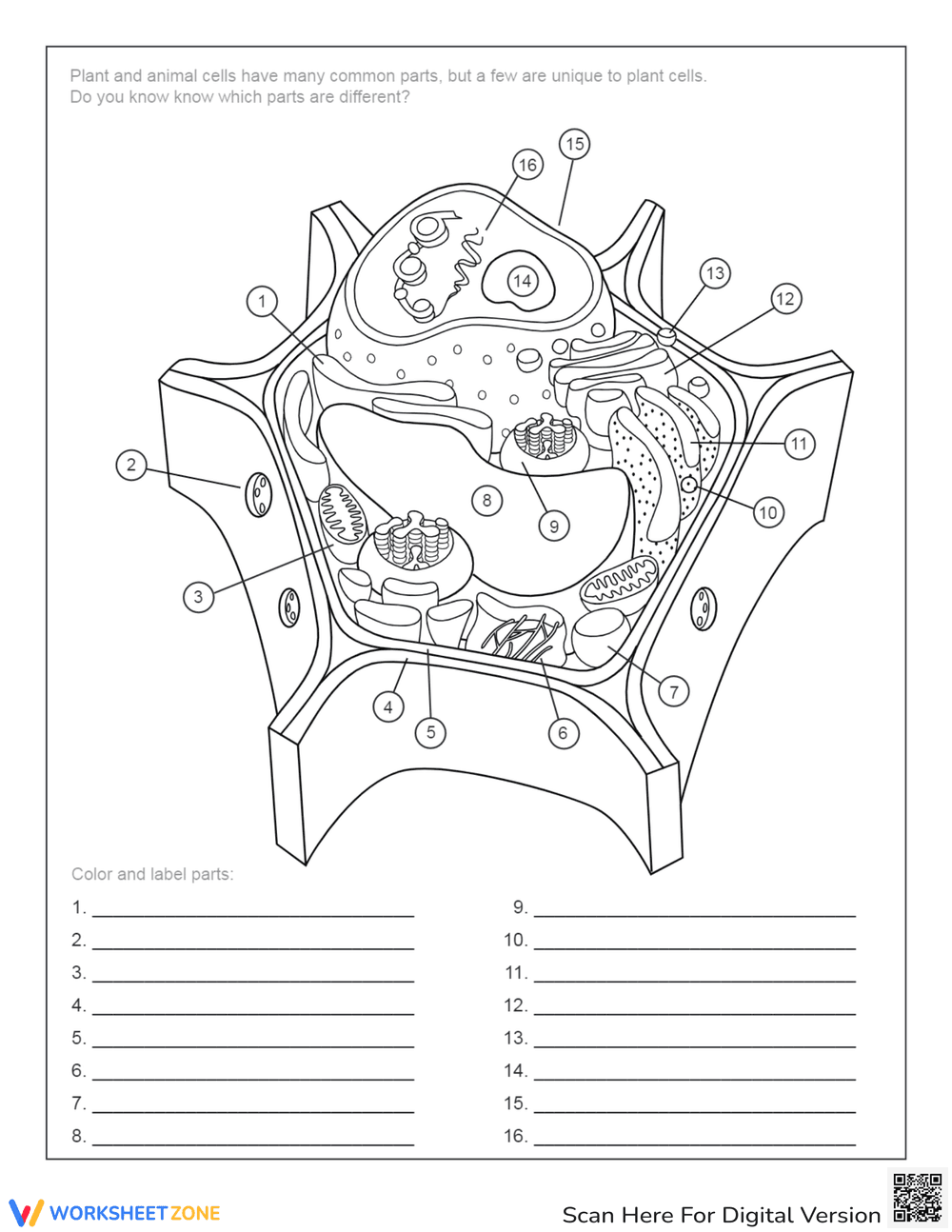
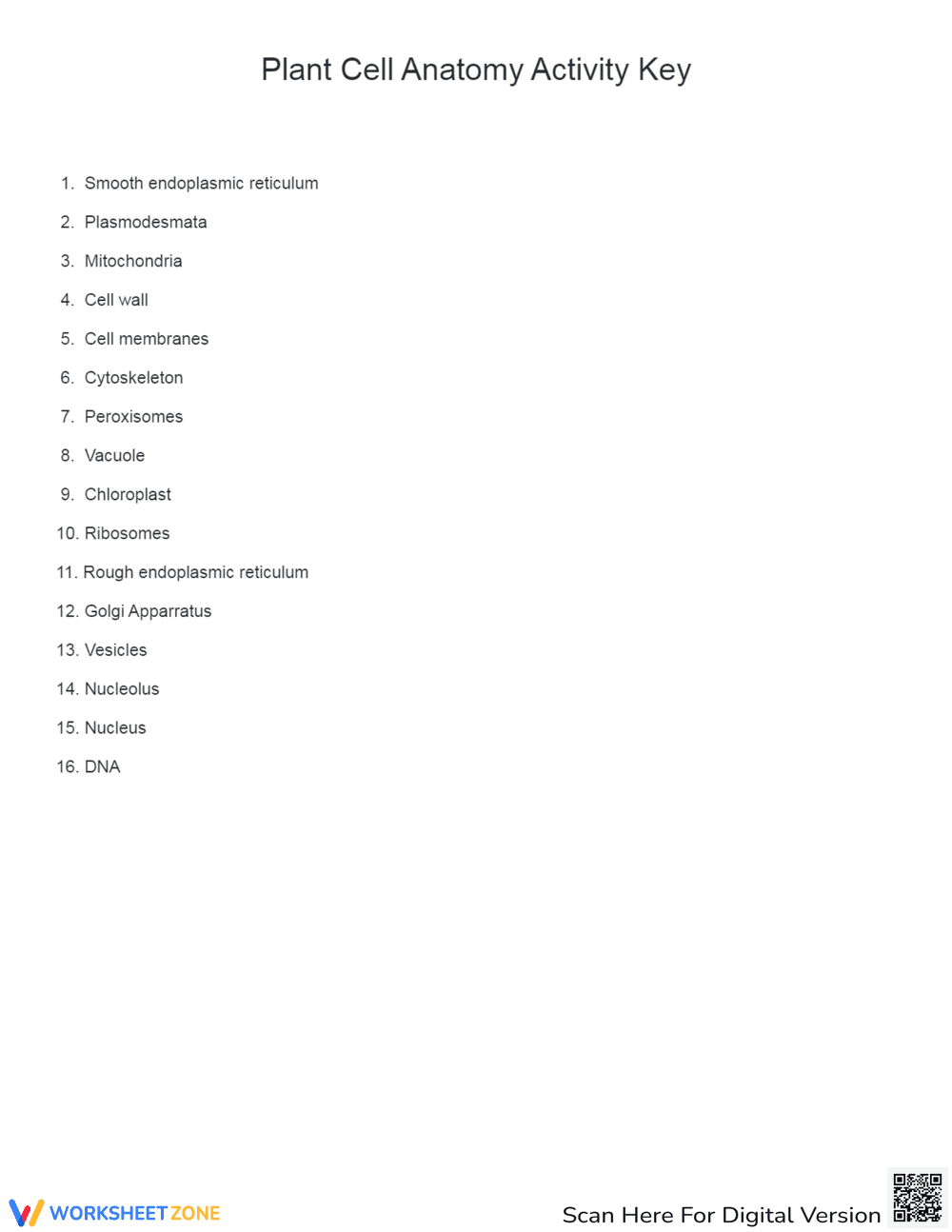
This is a science worksheet featuring a diagram of a plant cell. Students are asked to color and label 16 different parts of the cell, which are indicated by numbered labels on the diagram. The worksheet aims to help students learn about the unique structures found in plant cells compared to animal cells.
Grade Level Suitability:
This worksheet is suitable for grades 6-9. The complexity of cell structures and the task of labeling them make it appropriate for middle school and early high school students who are learning about cell biology.
Why Use It:
This worksheet provides a visual and interactive way for students to learn about the different parts of a plant cell. Coloring the diagram can enhance engagement and memory retention, while labeling the parts reinforces understanding of their names and locations. It also helps students differentiate between plant and animal cells.
How to Use It:
First, provide students with colored pencils or crayons. Instruct them to color the different parts of the plant cell diagram. Then, using a textbook or other resources, have them identify each numbered part and write its name on the corresponding line below the diagram.
Target Users:
The target users are middle school and high school students studying biology or life science. It's also useful for teachers looking for engaging activities to reinforce cell structure concepts.
This is a science worksheet featuring a diagram of a plant cell. Students are asked to color and label 16 different parts of the cell, which are indicated by numbered labels on the diagram. The worksheet aims to help students learn about the unique structures found in plant cells compared to animal cells.
Grade Level Suitability:
This worksheet is suitable for grades 6-9. The complexity of cell structures and the task of labeling them make it appropriate for middle school and early high school students who are learning about cell biology.
Why Use It:
This worksheet provides a visual and interactive way for students to learn about the different parts of a plant cell. Coloring the diagram can enhance engagement and memory retention, while labeling the parts reinforces understanding of their names and locations. It also helps students differentiate between plant and animal cells.
How to Use It:
First, provide students with colored pencils or crayons. Instruct them to color the different parts of the plant cell diagram. Then, using a textbook or other resources, have them identify each numbered part and write its name on the corresponding line below the diagram.
Target Users:
The target users are middle school and high school students studying biology or life science. It's also useful for teachers looking for engaging activities to reinforce cell structure concepts.


