


























In this lesson, students revisit the concept of whole number place values and learn about decimal place values. These activities focus on helping students grasp the relationship between adjacent place values and various methods for representing base-ten numbers. Students will:
- determine the place value name and numerical value of any digit in a whole or decimal place (to the thousandths place).
- draw representations of place value with items like base-ten blocks.
- demonstrate an understanding that any digit in a number represents \(1 \over 10\) of the value it would represent if moved one place to the left.
- read multidigit numbers, including decimals to the thousandth.
- write multidigit whole and decimal numbers (to the thousandths) in three formats: base-ten numeral, word, and expanded.
- How are relationships represented mathematically?
- How can mathematics help us communicate more effectively?
- How may patterns be used to describe mathematical relationships?
- How can mathematics help to quantify, compare, depict, and model numbers?
- What does it mean to analyze and estimate numerical quantities?
- What makes a tool and/or strategy suitable for a certain task?
- When is it appropriate to estimate versus calculate?
- Decimal Place Value: A place value to the right of the decimal point in a number. The base for a decimal place value is less than 1. Each place value after the decimal point is \(1 \over 10\) of the place value to its left.
- Expanded Form: A method for representing a base-ten number as the sum of its parts, each represented by its base value multiplied by a power of ten.
- Hundredths Place: The place value two places to the right of the decimal point in a base-ten number. The digit located in this place represents a fractional part out of one hundred.
- Tenths Place: The place value on the right of the decimal point in a base-ten number. The digit in this place represents a fractional part out of ten.
- Thousandths Place: The place value three places to the right of the decimal point in a base-ten number. The digit in this place represents a fractional part out of one thousand.
- 2 sets of large paper labels of place value names from ones to hundred-thousands, and tenths to thousandths (one set used in lesson, the other in a station)
- teacher set of base-ten blocks or use virtual set on the interactive whiteboard
- student sets of base-ten blocks or use paper base-ten blocks, either cut apart ahead or plan time for students to do it (M-5-5-1_Paper Base-Ten Models)
- student copies of place value mats to arrange base-ten blocks (these can be purchased) or use version provided (M-5-5-1_Whole Place Value Mat and M-5-5-1_Decimal Place Value Mat)
- individual student whiteboards with markers or poster paper and markers
- student copies of the Partner Place-Value Project sheet (M-5-5-1_Partner Place Value Project and KEY)
- student copies of the Lesson 1 Exit Ticket (M-5-5-1_Lesson 1 Exit Ticket and KEY)
- student copies of Vocabulary Journal pages (M-5-5-1_Vocabulary Journal)
- student copies of Expansion: The Metric Connection (M-5-5-1_Expansion and KEY)
- The Think-Pair-Share activity might help to introduce the concept of place value. Observation during this activity will provide a basis for assessing the present level of student knowledge.
- The discussion in Quick Response activities 1 and 2 will help determine whether additional explanation or practice is required.
- The Partner Place Value Project can be used to assess the level of comprehension in the class.
- Use the Lesson 1 Exit Ticket to check if students have mastered the material and are ready to move on to the next lesson.
W: Students will understand place value in multidigit numbers. Through practice and discussion, students will obtain an understanding of how digit position influences the value of a number.
H: Initially, students arrange place value labels on a multidigit number. A think-pair-share event allows students to explore their decision-making process with a partner. This practice will hook students' interest, making them aware of the relevance of place value in large numbers.
E: Students will use base-ten models to compare the size of each digit's value and gain a deeper understanding of place value. The quick answer activity is another technique to engage students in learning and ensure that they understand the concepts properly. Students practice writing multidigit numerals in extended form to demonstrate their mastery of place value.
R: Use the quick answer and partner place value assignment to help students review all place value concepts.
E: Identify areas of difficulties during quick response activities. Reteach or redirect as needed. Observation during the partner place-value project should be used to assess students' knowledge.
T: This lesson can be adjusted to match the needs of the students. Additional lesson ideas and adjustments can be available in the Extension section for students who would benefit from more learning opportunities or who have achieved mastery and want to go above and beyond the regular requirements.
O: The lesson teaches students about the significance of place value in multidigit numbers and explores decimal place values. Students learn how to translate numbers between extended and standard form. The lesson is organized so that it begins with easier, whole-number-digit numbers and progresses to more challenging numbers, such as those with digits at multiple decimal places.
This lesson follows a discovery structure, with students first reviewing place value ideas for whole numbers and then applying them to decimal numbers. Visual representations of place value were utilized to help students understand the ratio of 10 to \(1 \over 10\) between place values. Students practice identifying place value names and the numerical value of digits in any place value with partners before presenting their findings to the class. Students are also required to expand their knowledge of written numbers by writing multidigit whole numbers and decimal numerals in a variety of ways. Several remediation and extension activities are provided to assist students better understand these concepts. Lessons 2 and 3 will build on the concepts provided in this lesson by using similar exercises and strategies for identifying more patterns with ten, as well as comparing and rounding decimals.
Before students arrive, write a six-digit number on the board, using six different digits from 1 to 9. Also, cut out large paper labels with the first six whole number place values written on them (ones, tens, hundreds, thousands, ten-thousands, and hundred-thousands). If you're using an interactive whiteboard, make a separate rectangle for each label so it can be easily moved around on the screen. Do not display the labels immediately. Allow students to come up with their own ideas throughout the Think-Pair-Share activity.
For example: 261,594.
Think–Pair–Share Activity
"Take out half a page of paper. Each of you should write this number in the center of your paper." Ask half of the class to write the names of each digit's place values beneath the digits. Ask the other half of the class to record the value of each digit above the digit. Allow students around 3 minutes to work alone. "Now turn to your partner and share your results." Allow students 1-2 minutes each to share.
Next, select six students at random from the first group to share one of their place value names. Give each of these students a paper place value label (or allow them to move a label on the interactive whiteboard) to place beneath the digit representing their assigned place value on the board. Students should sit down after placing their labels. If people who worked on the place value side of the room believe a label was placed incorrectly, let them to explain. If they are right, allow them to change the position of the label.
"Does everyone agree that the labels are put correctly? Are all of the digits marked with the proper place value?" Once the group agrees that all six labels are correctly put, go over the names with the entire class.
Choose six students from the group that worked on digit values and have them record the value of one digit above the number on the board. Allow other students to make ideas about any digits that are incorrectly labeled.
"Now we will look at the place values using base-ten blocks." If base-ten blocks are available, show or explain how large each place value is by presenting them (or explaining how many of each figure would represent a number like 1,000 or 10,000). Emphasize the fact that adjacent place values have a ratio of 10, or \(1 \over 10\).
Possible discussion: "Good job! You accurately labeled all of our number places and values. Now let's look at how these place values compare to one another. I'm holding a unit block. How much does it represent?" (1)
"The single blocks represent the ones place in our number. How many would we use to represent the one place in our number?" (4) "What would happen if I had more than nine ones?" (They would not fit in the one area. You might connect ten ones blocks together to increase the tens place by one.) "Yes, I replace 10 ones with a long, as shown above. Each long has a value of ten."
"What if I had more than ten longs (10s)?" (They wouldn't fit in the tens slot, so we'd link ten longs to make 100. This would increase the hundreds position by one.) "Ten groups of ten (10 longs) make a flat with a value of 100. If ten flats (100s) were packed into a large cube, how many ones would be present? Remember, each of the 10 flats contains 100 unit blocks." (1,000)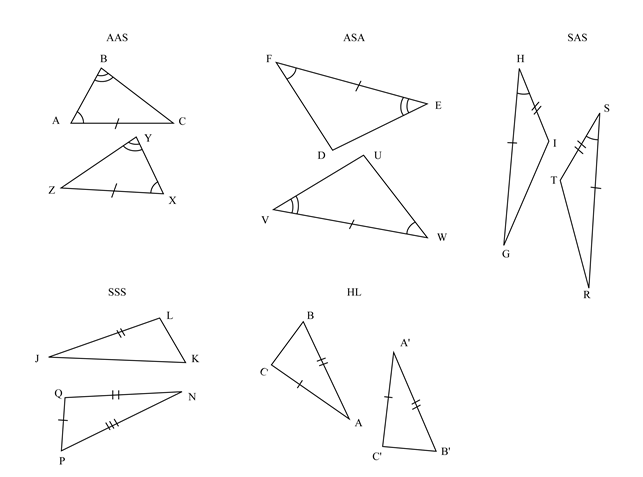
"Our number, like many other numbers, are larger than 1,000. What do you suppose the base-ten blocks representing these numbers will look like?"
Discuss what 10 blocks of 1,000 would look like and represent (a large long with a value of 10,000), as well as what a flat and cube built of these larger blocks would represent (100,000 and 1,000,000 respectively).
"Notice how the values are always regrouped after we reach 10. This is because we are working with a base-ten number system. Each digit has a value that reflects its position in the number. Place values help us understand the size and magnitude of the digits.
"In our lesson today we will build on these ideas to learn about the place values of decimal numbers, and investigate a variety of methods for representing whole numbers and decimals."
If base-ten blocks and work mats are available, give students time to study and understand the entire number place value relationships before moving on. Check the Resources folder for paper versions that can be used instead of real blocks and work mats (M-5-5-1_Paper Base-Ten Models and M-5-5-1_Whole Place Value Mat). Another approach is to show an interactive base-ten block activity on a computer or an interactive whiteboard. Look through the resource list for possible links.
"There are numerous options for displaying our numerical values. So far today, we've been writing our numbers in base-ten numerals, which is what we generally use in number displays and calculations. Word form and expanded form are two further forms of representation. You may have some previous experience with these formats for whole numbers. We'll practice with whole numbers today, then extend to decimals later in the lesson."
Continue using the work that is on the board.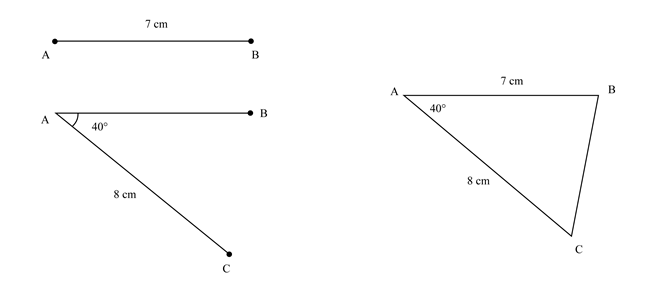
"We can utilize the labels we've already set up to represent 261,594 in both word and expanded form. To get started in word form, utilize the place values (digits below). Consider how you read this number aloud. This is how you'll express it in words. For example, we have three digits (2, 6, and 1) at a position that includes the word thousand. These will be reported as 261,000, followed by hundreds, tens, and ones. Try to write this number completely in words."
After a minute or two, check the students' work. Post your answer on the board. Discuss any aspects that students struggled with.
Answer: Two hundred sixty-one thousand, five hundred ninety-four.
Make sure students do not separate place values using the word and.
"Now we'll write the same number in expanded form. The digit values we wrote over 261,594 are the main pieces we need. We will represent this form as the sum of all digit values. So our number will look like this:
261,594 = 200,000 + 60,000 + 1,000 + 500 + 90 + 4.”
(You could want students to say each value aloud as you type it down.)
"We can also take a step further and rewrite each number in our sum as the product of the digit and the place value. For example, 200,000 might be written as 2 × 100,000, and 500 as 5 × 100. Do you have any questions? Take a minute to complete the expanded form for 261,594."
Call on one or more students to share their responses.
261,594 = 200,000 + 60,000 + 1,000 + 500 + 90 + 4
= (2 × 100,000) + (6 × 10,000) + (1 × 1,000) + (5 × 100) + (9 × 10) + (4 × 1)
Provide numerous more numbers for students to practice writing in words and expanded form until they can show they are able to use these forms independently.
"Let's continue by thinking about another number." Write 2,233 on the board.
"What is the value of the 3?" Some students may say three, while others may say 30 and some may want to know which three you're asking about. Spend time discussing the significance of the place value in determining which response is accurate. "The digit in the tens place indicates 30, and the digit in the ones place represents exactly 3. How do these values compare?" Allow students to share their thinking.
"Because 30 ÷ 10 = 3, or 30 × \(1 \over 10\) = 3, the 3 in the ones place equals \(1 \over 10\) the value of the 3 in the tens place. How do the digits in the hundreds and thousands places compare?" Call on a few students to share their ideas.
"Yes, the digit in the thousands place signifies 2,000, but the digit in the hundreds represents 200. Since 2,000 ÷ 10 = 200, or 2,000 × \(1 \over 10\) = 200, the 2 in the hundreds place equals \(1 \over 10\) of the 2 in the thousands place. What is similar between these two examples?" Allow students to describe the similarities they find. If no student brings up the \(1 \over 10\) relationship, do it yourself. As a digit moves to the right, each place has a value that is \(1 \over 10\) the size of the previous place, therefore the value of the digit is \(1 \over 10\) that of the digit one place to the left. Similarly, as a digit move to the left, its place value increases 10 times. Consider the difference between 45 and 57: in 45 the 5 represents 5, but in 57 the 5 is 5 x 10 or 50.
"Do you think a digit is always \(1 \over 10\) the value of the same digit placed one space to its left?" Many will say yes, while others may say no or remain unsure.
"Make up another example on your paper to show whether you are correct." Walk around the room, assisting struggling students and correcting misconceptions. After students have demonstrated this relationship again, emphasize that under the base-ten number system, the value of a digit in a specific place is always \(1 \over 10\) the value of the same digit one place to the left.
"Do you think the \(1 \over 10\) relationship also applies to decimal numbers? We'll discover out when we continue our class.
"After reviewing and practicing understanding place values with whole numbers, we will apply the concepts to decimal numbers. Remember that decimals are also part of the base-ten number system, but each decimal place value represents a different size part of a whole that is less than one whole unit. Let's take a look."
"What do you notice about our number now?" (It contains a decimal point and 5 digits following it.)
"Raise your hand if you know the name of the first place after the decimal point." Call on students until you receive the answer "tenths." Note that this is spelled like "ten" but ends with "ths." This informs anyone reading this number that it is a smaller fractional part of a whole positioned on the right side of the decimal point, rather than the tens place on the left of the decimal point.
"Take a minute to discuss with the person next to you how you think the seven in this place would compare to having a seven in the ones place."
Walk around and listen to the student discussions. Ask one or more pairs of students to share their thoughts. Emphasize and expand on the correct answers. Use guiding questions to help students who provide incomplete or incorrect responses. Make sure students understand that the tenths place is \(1 \over 10\) the size of the one place when the same digit is used. Also, the name tenths implies that we have a ratio or fractional part of ten. As a result, 0.7 symbolizes a part that is less than one, which is seven-tenths (\(7 \over 10\)). Remind students that when they move farther to the right, each place remains \(1 \over 10\) the size of the previous place value (which is to its left). Ask students to add a decimal point and new digits to the number on their paper. They should label the place value names below and the numerical values above each digit.
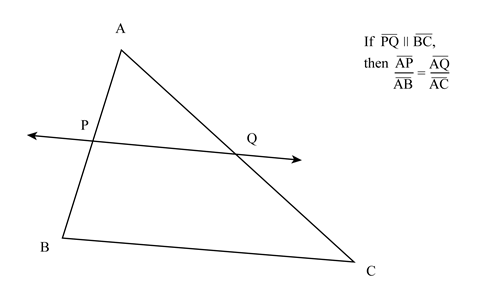
If you have base-ten blocks and work mats on hand, give students time to study and review the decimal number place value relationships before going on. Paper versions can be used instead of real blocks and work mats (M-5-5-1_Paper Base-Ten Models and M-5-5-1_Decimal Place Value Mat).
Quick Response Activity Part 1
Use individual whiteboards or paper with markers to have students respond to place value names, numerical values, and the \(1 \over 10\) relationship for a few additional numbers, such as:
"What is the value of the 7 in the number 345.67? In what place value is the digit 6?" (The value of the 7 is 7 hundredths. The digit 6 is in the tenths place.)
"In the number 4.88, how do the 8s' values compare? Which 8 represents a larger amount? How much larger is it?" (The first 8 is 10 times more than the second 8. The first 8 is 10 times larger than the second 8.)
"In the number 17.79, how do the 7s compare?" Which reflects a smaller amount? How much smaller? What is the name of the place value of the digit 9? What fraction of a whole is this?" (The first 7 is ten times greater than the second 7. The second 7 is 10 times smaller. The digit 9 appears in the hundredth place; this is \(9 \over 100\) of the whole.)
Ask one question at a time. Have each student write his/her response large enough for you to see from anywhere in the classroom. When it seems that most students have an answer, ask them to quickly hold up their answer for you to see. Use these responses to determine what needs further explanation and which students may require additional support.
Once students can correctly answer the Quick Response Part 1 questions, they can go on to writing decimal numbers in various ways. Extend the same concepts used for writing whole numbers.
Use the following or similar examples to demonstrate writing decimals in words:
12.9 (twelve and nine-tenths)
34.09 (thirty-four and nine-hundredths)
3.486 (three and four hundred eighty-six thousandths)
4.73509 (four and seventy-three thousand five hundred nine hundred-thousandths)
"To write decimal numbers in words, we will first write the whole number, which is to the left of the decimal, as we practiced before. To include the decimal part of the number, we use the term and to indicate the decimal point. The decimal point separates a fraction of a whole (decimal number) from the whole. The decimal number will be expressed in the same way as a whole number, but it will conclude with the decimal place value name of the last digit. For example, for 12.9, what is the whole value?" (12)
"This will be written as twelve followed by and."
Ask students if they can find out how to write the decimal part of this number.
Answer: 12.9 = twelve and nine-tenths because 9 is in the tenth place.
"We may also represent this number in extended form by displaying the sum of its parts. This number would start with 10 + 2, but we'd also include the decimal number. If the decimal portion of the number has more than one digit, we add the value of each digit separately, exactly as we would for whole numbers. For this example, our expanded form would start with 10 + 2 + 0.9. This can be further broken down as (1 × 10) + (2 × 1) + (9 × 0.1). Because 0.1 means one-tenth, nine-tenths is represented as the product of 9 and 0.1. This is equivalent to saying 9 x \(1 \over 10\), which equals \(9 \over 10\), or 0.9."
Work through another example or two from the list above (more if necessary), and have student pairs or groups complete another while you monitor. Check for comprehension by repeating the Quick Response Activity Part 2 with whiteboards or paper that students can use to quickly show their responses.
Quick Response Activity Part 2
"Write the number 35.678 in both written and expanded form." (thirty-five and six hundred seventy-eight thousandths; (3 × 10) + (5 × 1) + (6 × 0.1) + (7 × 0.01) + (8 × 0.001))
"Write the number 272.09 in both written and expanded form." (two hundred seventy-two and nine hundredths; (2 × 100) + (7 × 10) + (2 × 1) + (0 × 0.1) + (9 × 0.01))
"Write the number 4.065 in both written and expanded form." (four and sixty-five thousandths; (4 × 1) + (0 × 0.1) + (6 × 0.01) + (5 × 0.001))
"In the number 716.784, what part is smaller than one? How would you express this part as a fraction? Could you write the entire number as a mixed fractions?" (The.784 part is smaller than 1. As a fraction, this part is \(784 \over 1,000\). As a mixed fraction, the whole number is \(716 {784 \over 1,000} \).)
Partner Place-Value Project
For this task, group students into pairs. Distribute the Partner Place-Value Project sheet (M-5-5-1_Partner Place Value Project and KEY). Allow students to work for around 20 minutes. Allow more time for students to share. While students are working, select a portion of each pair's project to show to the class. Choose a variety that will represent the different aspects of the lesson and help summarize it. Students should complete the entire activity on the sheet, then create a poster or other display to present the portion you choose for them with the class.
While students are working on the Partner Place Value Project, walk around the room and observe the work and interactions. Make suggestions or ask guiding questions to help students who are struggling or have a misconception about one or more concepts. Pay close attention to any students you identified as need assistance during the Quick Response tasks. Encourage students to make appropriate revisions during work time or after their presentation if a misperception is discovered.
Exit Ticket
At the end of the class, each student or pair of students should fill out the exit ticket (M-5-5-1_Lesson 1 Exit Ticket and KEY). These can be collected from students as they leave class and used to assess concept mastery.
Extension:
Routine: Discuss how important it is to comprehend and use the appropriate vocabulary words while communicating mathematical ideas. During this lesson, students should record the following terms in their vocabulary journals: base-ten blocks, base-ten number, expanded form, hundredths, place value, tenths, thousandths, and word form. Keep a supply of Vocabulary Journal pages (M-5-5-1_Vocabulary Journal) on hand so that students can add pages as needed. Bring up practical examples of place value use throughout the school year in math and other content areas such as science class or shopping at home. Ask students to bring in examples of large and/or decimal numbers they've seen in magazines or newspapers. Encourage them to describe the meaning of the number and its place values in that particular context.
Small Group: Place Value Stations
Use these or similar stations with students who are unable to understand whole number or decimal place values, as well as number forms. Students can work alone or in pairs as they progress through the stations.
Work Station 1: Arrange the extra set of place value name cards at this station in random order. Create four (or more) multidigit numbers on a sheet of chart paper. Post instructions for students to set place value labels for each digit above the digits. When the labeling is finished, ask students to raise their hands so you can check their label placement. If the labels are properly placed, the student(s) should read the numbers aloud and identify the values of each digit.
Use the number such as:
92,488 (Ninety-two thousand, four hundred eighty-eight;
9 ten thousands, 2 thousands, 4 hundreds, 8 tens, 8 ones)
7,243,689 (Seven million, two hundred forty-three thousand, six hundred eighty-nine;
7 millions, 2 hundred thousands, 4 ten thousands, 3 thousands, 6 hundreds, 8 tens, 9 ones)
58.97 (Fifty-eight and ninety-seven hundredths;
5 tens, 8 ones, 9 tenths, 7 hundredths)
364.592 (Three hundred sixty-four and five hundred ninety-two thousandths;
3 hundreds, 6 tens, 4 ones, 5 tenths, 9 hundredths, 2 thousandths)
Work Station 2: Using base-ten blocks (or paper models), create four (or more) different groups of blocks in zip-top baggies or small containers. These blocks can represent whole or decimal numbers. Post instructions for students to sort the pieces using place value mats (whole number, decimal, or both) to determine and write the value of each number. Students should be directed to check their answers with you or an answer envelope placed at the station. At least two of the numbers should have place values greater than 10, requiring students to recombine them. If students need more practice with basic place value ideas, use less regrouping.
Use numbers such as:
3 thousands, 5 hundreds, 14 tens, and 11 ones (4,911)
9 thousands, 16 hundreds, 8 tens, and 17 ones (10,697)
12 ones, 7 tenths, 5 hundredths, 11 thousandths (12.7511)
6 ones, 6 tenths, 14 hundredths, and 14 thousandths (6.754)
Provide place value mats, paper or chart paper, and pencils or markers.
Work Station 3: Post directions for students to write the numbers provided in both written and expanded form. Place a list of four numbers (or more) at the station.
Direct students to raise their hands when finished so that you can check their work, or have an answer envelope ready at the station.
Use numbers such as:
37,291 (Thirty-seven thousand, two hundred ninety-one;
(3 × 10,000) + (7 × 1,000) + (2 × 100) + (9 × 10) + (1 × 1))
206,354 (Two hundred six thousand, three hundred fifty-four;
(2 × 100,000) + (6 × 1,000) + (3 × 100) + (5 × 10) + (4 × 1))
91.82 (Ninety one and eighty-two hundredths;
(9 × 10) + (1 × 1) + (8 × 0.1) + (2 × 0.01))
304.709 (Three hundred four and seven hundred nine thousandths;
(3 × 100) + (4 × 1) + (7 × 0.1) + (9 × 0.001))
Provide paper or chart paper and markers or pencils.
Technology Connection: Whole Number Place Value Practice
Use this activity with students who are struggling with the concept of whole number place values. Students can work alone or in pairs on the computer using any of the following web resources:
1. Manny’s Rumba (computer required)
http://www.learningbox.com/Base10/BaseTen.html
Students are asked to build specified whole number values (up to three digits) by sliding the correct number of base-ten block pieces into a framed area. They will add ones, tens, and hundreds to get three-digit numbers.
2. Math Cats Place Value Party (computer required)
http://www.mathcats.com/explore/age/placevalueparty.html
This is an interactive activity in which students can convert numerals to other place values (represented by candles and layers of a birthday cake) in order to find or reinforce the 1/10 relationship between adjacent place values.
Expansion: The Metric Connection to Base-Ten
This activity (M-5-5-1_Expansion and KEY) is designed for students who have shown proficiency in writing numbers in different forms, naming place values and meanings, and comprehending the connections between place value. Students with a strong understanding of the relationship of powers of ten when shifting multiple place values will be challenged by this metric conversion conversions. This task can be completed independently if the directions are displayed, or as a guided activity with your support.


Understanding Place Values and Number Forms: Module M-5-5-1

This is an educational worksheet focusing on place values and forms of numbers. It covers whole and decimal place values to the thousandths place. The worksheet includes objectives such as determining place value, drawing representations with base-ten blocks, understanding the relationship between adjacent place values, reading multidigit numbers, and writing numbers in numeral, word, and expanded forms. It also includes lesson core questions related to mathematical relationships and estimation versus calculation, along with a vocabulary section defining terms like decimal place value, expanded form, hundredths place, and tenths place.
Grade Level Suitability:
This worksheet is suitable for grades 4-6. The concepts of place value to the thousandths, representing numbers in different forms, and understanding the relationship between place values are typically taught within this grade range. The vocabulary and core questions also align with the critical thinking skills developed in these grades.
Why Use It:
This worksheet helps students solidify their understanding of place value and different forms of numbers. It encourages critical thinking through core questions and provides a vocabulary section to enhance understanding of key terms. The activities promote a deeper understanding of the base-ten number system and its application to both whole and decimal numbers.
How to Use It:
Teachers can use this worksheet as an introduction or review of place value concepts. Students can work through the objectives individually or in groups. The core questions can be used for class discussions. The vocabulary section can be used as a reference during activities.
Target Users:
This worksheet is designed for elementary and middle school students learning about place value and number forms. It is also suitable for teachers looking for supplemental materials to reinforce these concepts. Homeschooling parents can also use this worksheet to teach or review place value concepts.


