


























Views
Downloads

Essential Ordered Pairs Worksheet | Grade 5 Math Practice
Paste this activity's link or code into your existing LMS (Google Classroom, Canvas, Teams, Schoology, Moodle, etc.).
Students can open and work on the activity right away, with no student login required.
You'll still be able to track student progress and results from your teacher account.
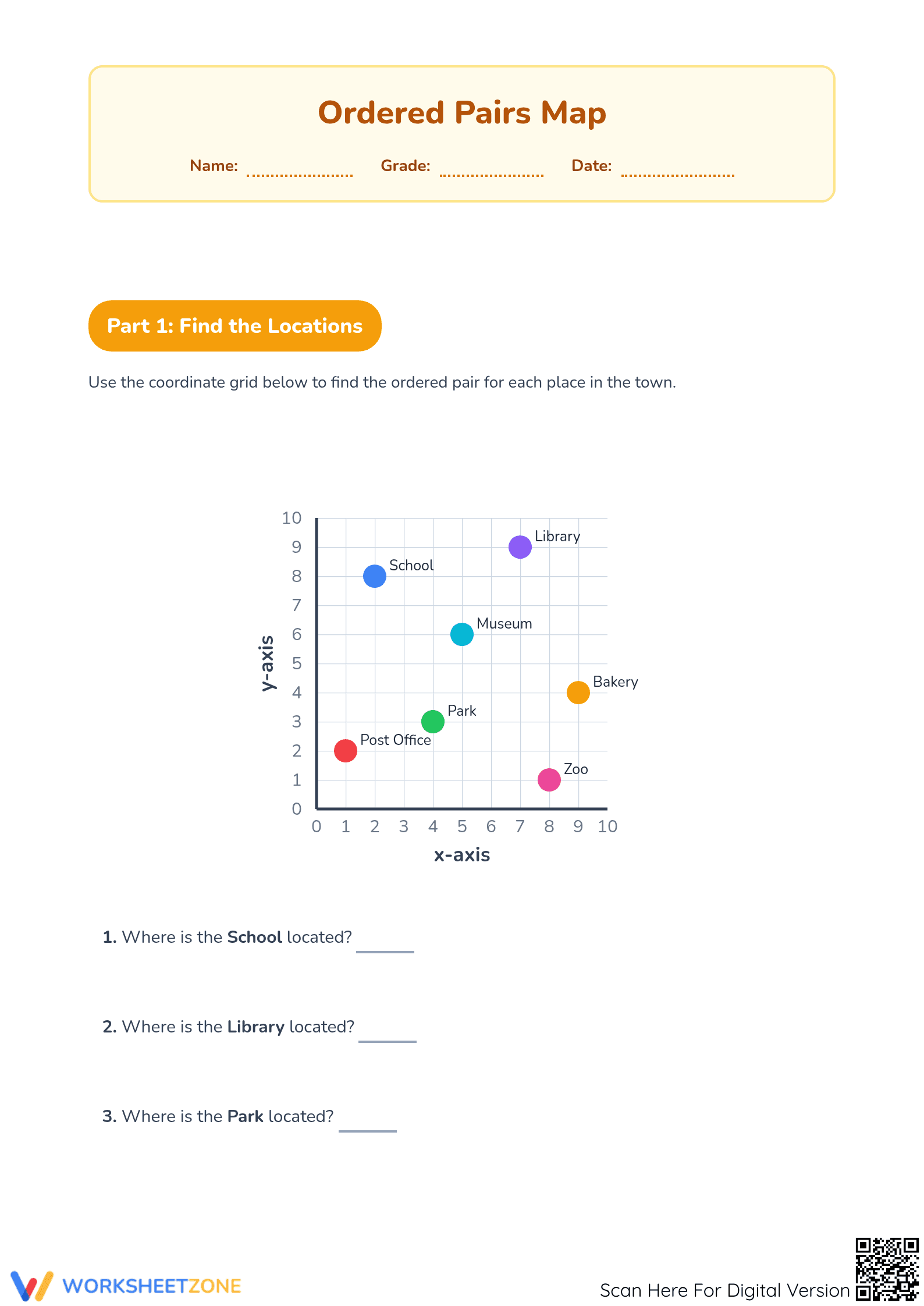
This Grade 5 Math worksheet provides comprehensive practice for mastering ordered pairs and coordinate plane navigation in the first quadrant. Students will develop a strong spatial foundation by identifying locations of specific points and plotting new coordinates based on given (x, y) values. This structured practice ensures students can accurately use horizontal and vertical axes to define positions in a plane, a critical building block for future graphing and data analysis.
At a Glance
- Grade: 5 · Subject: Math
- Standard:
CCSS.MATH.CONTENT.5.G.A.1— Graph points on the coordinate plane to solve real-world and mathematical problems- Skill Focus: First Quadrant Ordered Pairs
- Format: 5 pages · 48 problems · Answer key included · PDF
- Best For: Independent practice and coordinate plane mastery
- Time: 25–35 minutes
What's Inside: This 5-page PDF contains 48 distinct tasks organized into identifying existing points and plotting new ones. The worksheet features clear, labeled 10x10 grids with a distinct x-axis and y-axis. The included full answer key provides visual verification for every plotted point, making it easy for students to self-correct and for teachers to perform quick accuracy checks during grading.
Skill Progression
- Guided Practice: The first page introduces the grid with 10 problems focused on identifying the coordinates of pre-placed points, providing strong visual cues for x and y movements.
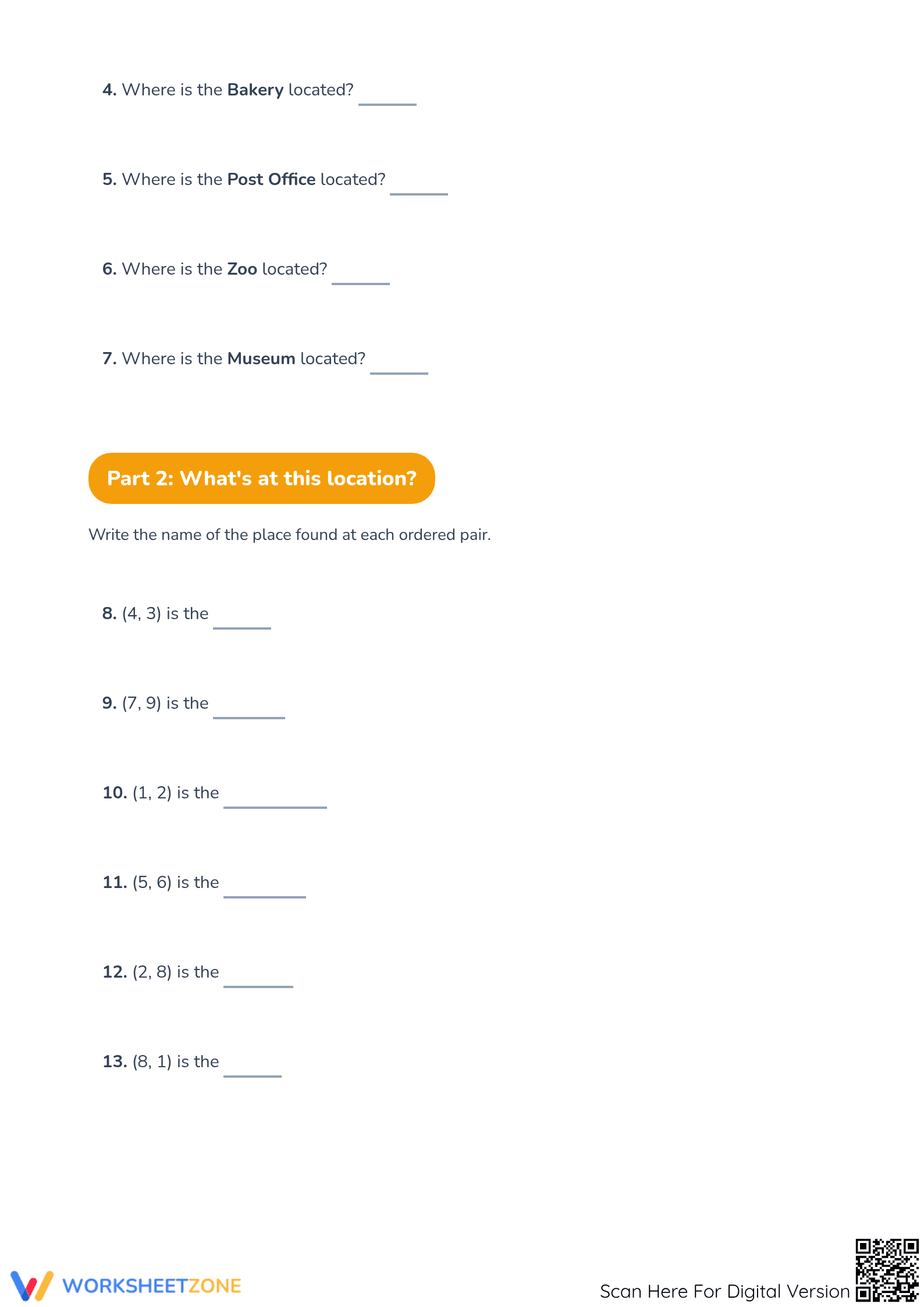
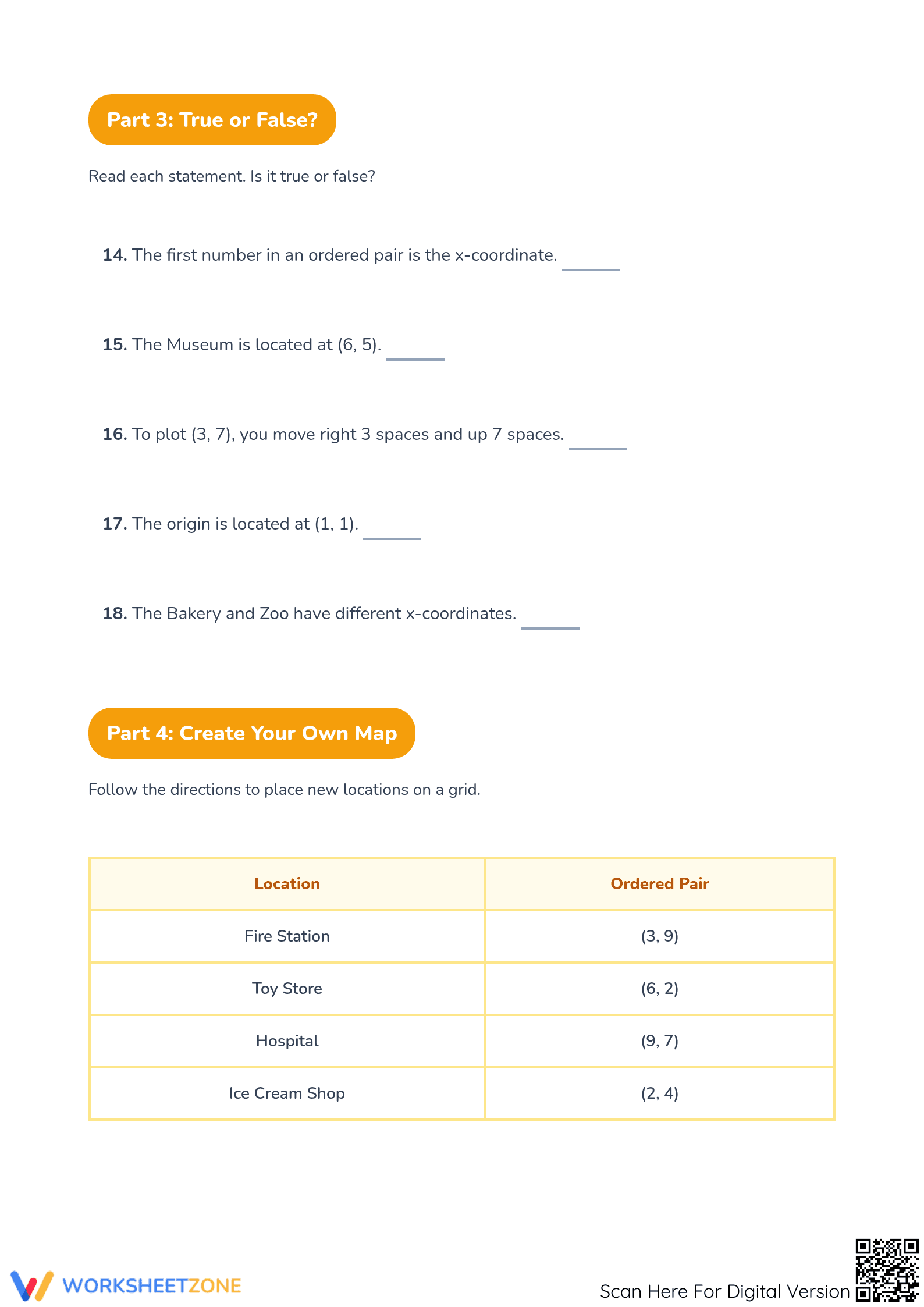
- Supported Practice: Pages two and three feature 20 problems where students must find specific symbols or objects on the grid, reinforcing the relationship between physical location and numerical pairs.
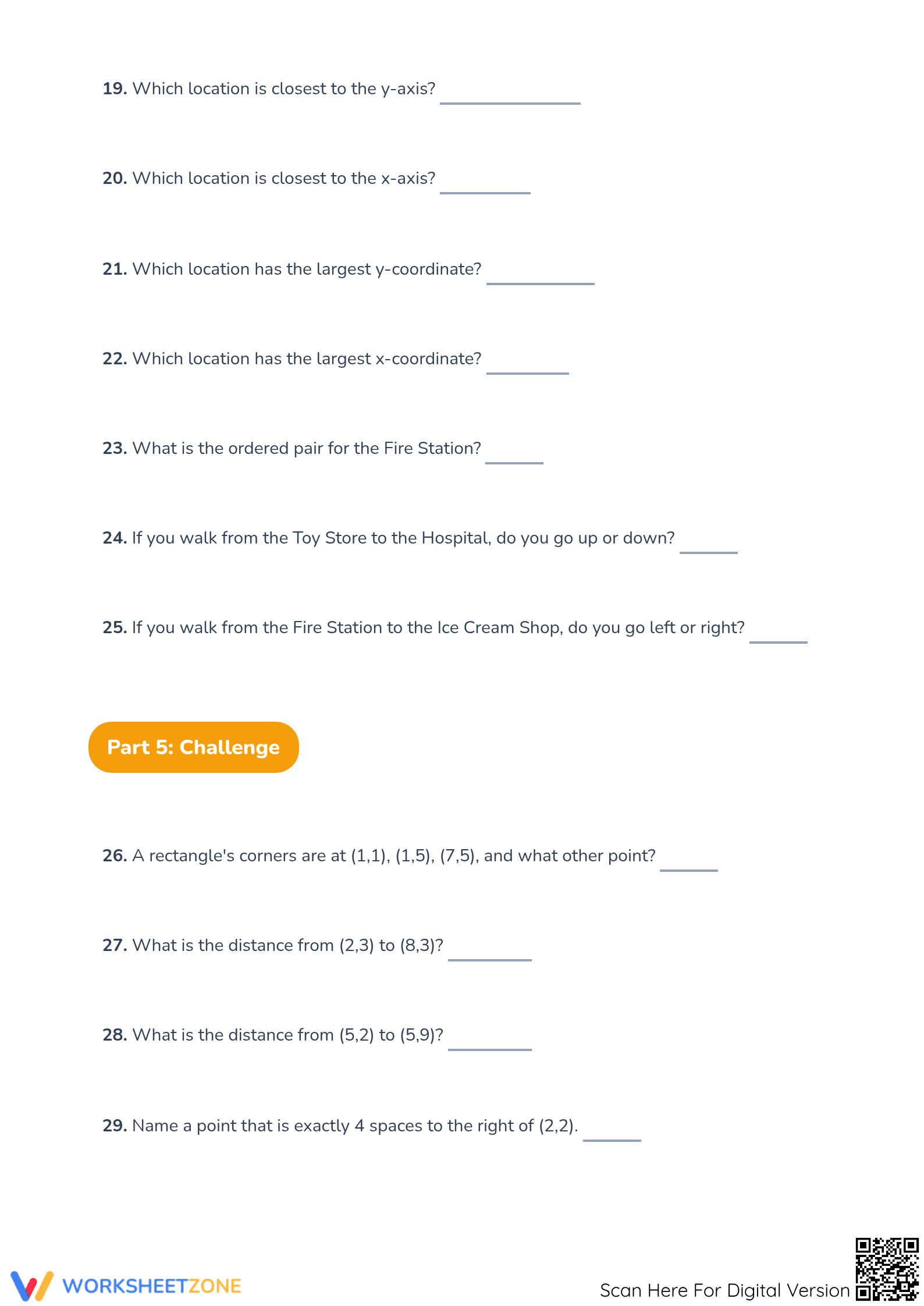
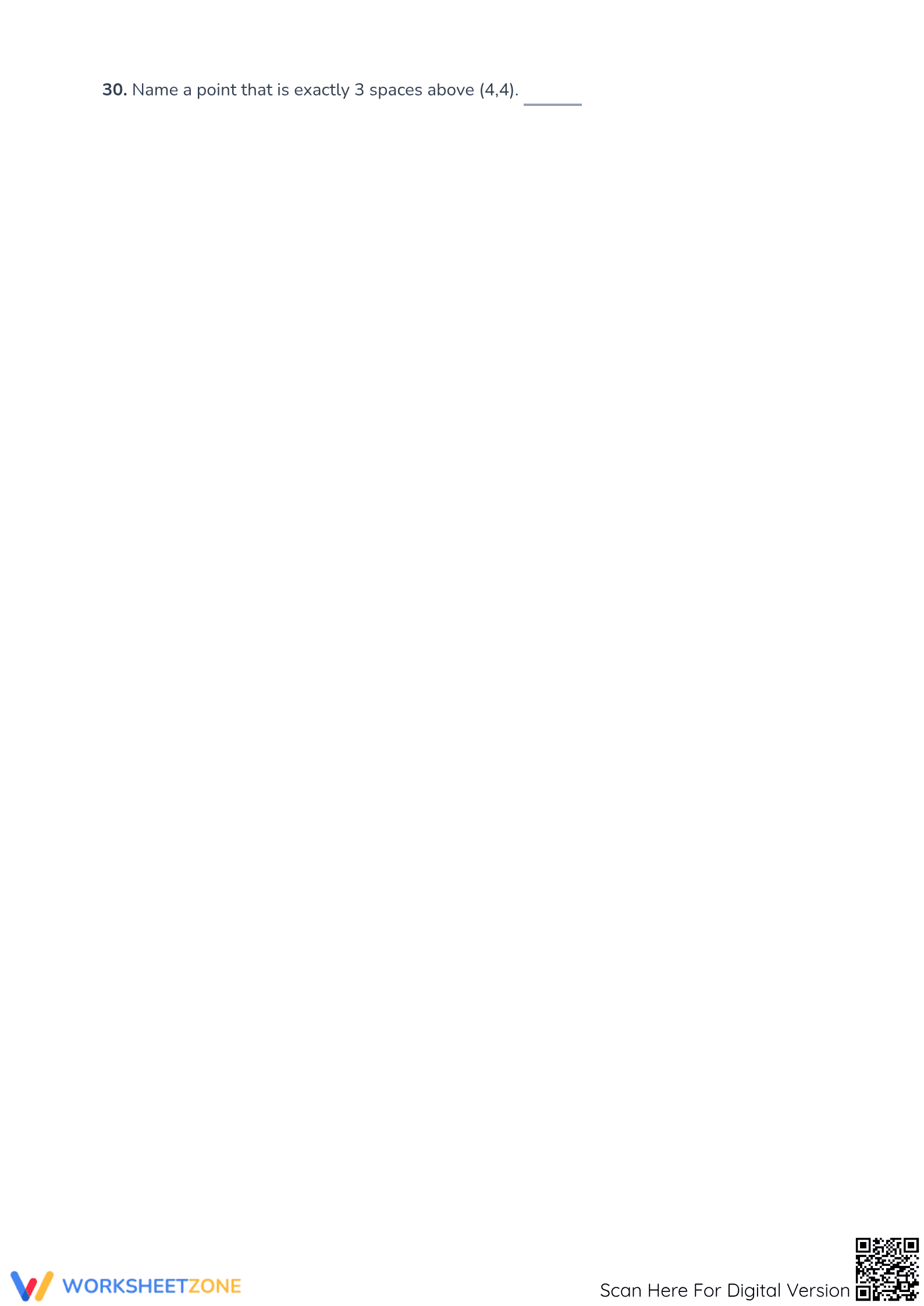
- Independent Practice: The final pages present 18 problems requiring students to plot points from scratch based on coordinates, shifting the cognitive load to independent construction of spatial data.
This sequence follows a gradual-release model, moving from passive identification to active plotting to ensure deep conceptual understanding.
Standards Alignment
Aligned to `CCSS.MATH.CONTENT.5.G.A.1`: Use a pair of perpendicular number lines, called axes, to define a coordinate system, with the intersection of the lines (the origin) arranged to coincide with the 0 on each line and a given point in the plane located by using an ordered pair of numbers, called its coordinates. This standard code can be copied directly into lesson plans, IEP goals, or district curriculum mapping tools.
How to Use It
This resource is best utilized during the "You Do" phase of a lesson on graphing. After demonstrating how to crawl along the x-axis before climbing the y-axis, assign these pages for independent desk work. For a formative assessment tip, observe if students are reversing the x and y values; if so, have them highlight the x-axis in one color and the y-axis in another to reinforce the correct order. Expected completion time is 30 minutes.
Who It's For
This worksheet is designed for fifth-grade students beginning their journey into geometry and algebra. It is highly effective for Tier 2 intervention groups needing extra repetitions or as a focused sub plan. Pair this with a coordinate plane anchor chart or a short introductory video on the Cartesian system for maximum instructional impact.
This worksheet builds mathematical proficiency for CCSS.MATH.CONTENT.5.G.A.1, translating numerical pairs into concrete spatial locations. Research shows repeated engagement with 10x10 grids improves a student's ability to visualize functional relationships. This resource provides 48 opportunities for coordinate mapping, aligning with NAEP recommendations for geometric literacy. By isolating the first quadrant, it prevents cognitive overload, allowing Grade 5 learners to focus on the mechanics of ordered pairs and the origin (0,0) before negative integers. This ensures foundational fluency for more complex graphing problems.


