


























1 / 2
0
Views
0
Downloads


0.0
0
Save
0 Likes
Share
Nuclear Power: Energy from the Atom Worksheet
0 Views
0 Downloads
Paste this activity's link or code into your existing LMS (Google Classroom, Canvas, Teams, Schoology, Moodle, etc.).
Students can open and work on the activity right away, with no student login required.
You'll still be able to track student progress and results from your teacher account.
Information
Description
What It Is:
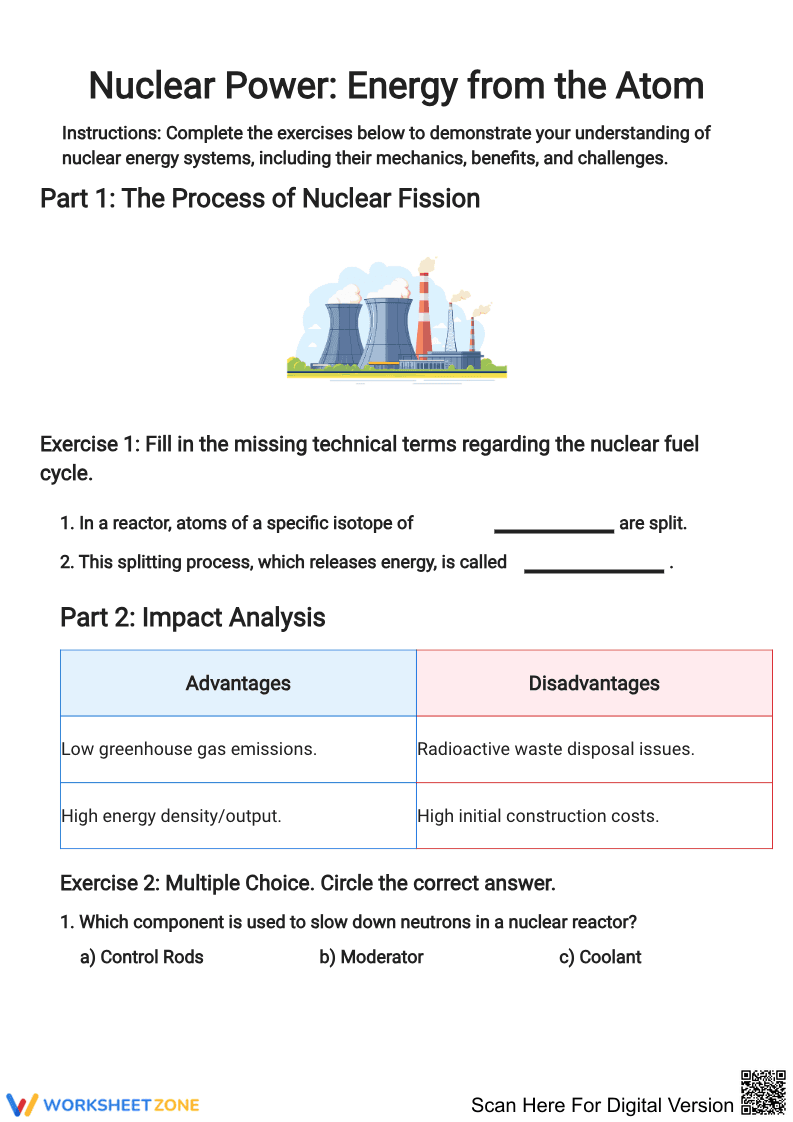
This worksheet examines how nuclear power plants generate energy through nuclear fission. It includes fill-in-the-blank questions about the fuel cycle, an advantages vs. disadvantages analysis, and a multiple-choice question on reactor components.
Why Use It:
It helps students understand the mechanics of nuclear fission, evaluate the environmental and economic impacts of nuclear power, and identify key reactor components like moderators and control rods.
How to Use It:
• Complete the technical terms related to uranium and fission.
• Analyze the benefits and challenges of nuclear energy.
• Identify the reactor component that slows down neutrons.
• Discuss how nuclear energy compares to fossil fuels.
Grade Suitability:
Best suited for Grades 9–12.
• High school physics units on nuclear energy.
• Environmental science lessons on energy resources.
Target Users:
Physics teachers, environmental science educators, high school students, tutors, and exam-prep learners studying nuclear energy systems.
This worksheet examines how nuclear power plants generate energy through nuclear fission. It includes fill-in-the-blank questions about the fuel cycle, an advantages vs. disadvantages analysis, and a multiple-choice question on reactor components.
Why Use It:
It helps students understand the mechanics of nuclear fission, evaluate the environmental and economic impacts of nuclear power, and identify key reactor components like moderators and control rods.
How to Use It:
• Complete the technical terms related to uranium and fission.
• Analyze the benefits and challenges of nuclear energy.
• Identify the reactor component that slows down neutrons.
• Discuss how nuclear energy compares to fossil fuels.
Grade Suitability:
Best suited for Grades 9–12.
• High school physics units on nuclear energy.
• Environmental science lessons on energy resources.
Target Users:
Physics teachers, environmental science educators, high school students, tutors, and exam-prep learners studying nuclear energy systems.


