


























1 / 5
0
Views
0
Downloads

0.0
0
Save
0 Likes
Interactive Mouse Party Activity Worksheet
0 Views
0 Downloads
Paste this activity's link or code into your existing LMS (Google Classroom, Canvas, Teams, Schoology, Moodle, etc.).
Students can open and work on the activity right away, with no student login required.
You'll still be able to track student progress and results from your teacher account.
Information
Description
What It Is:
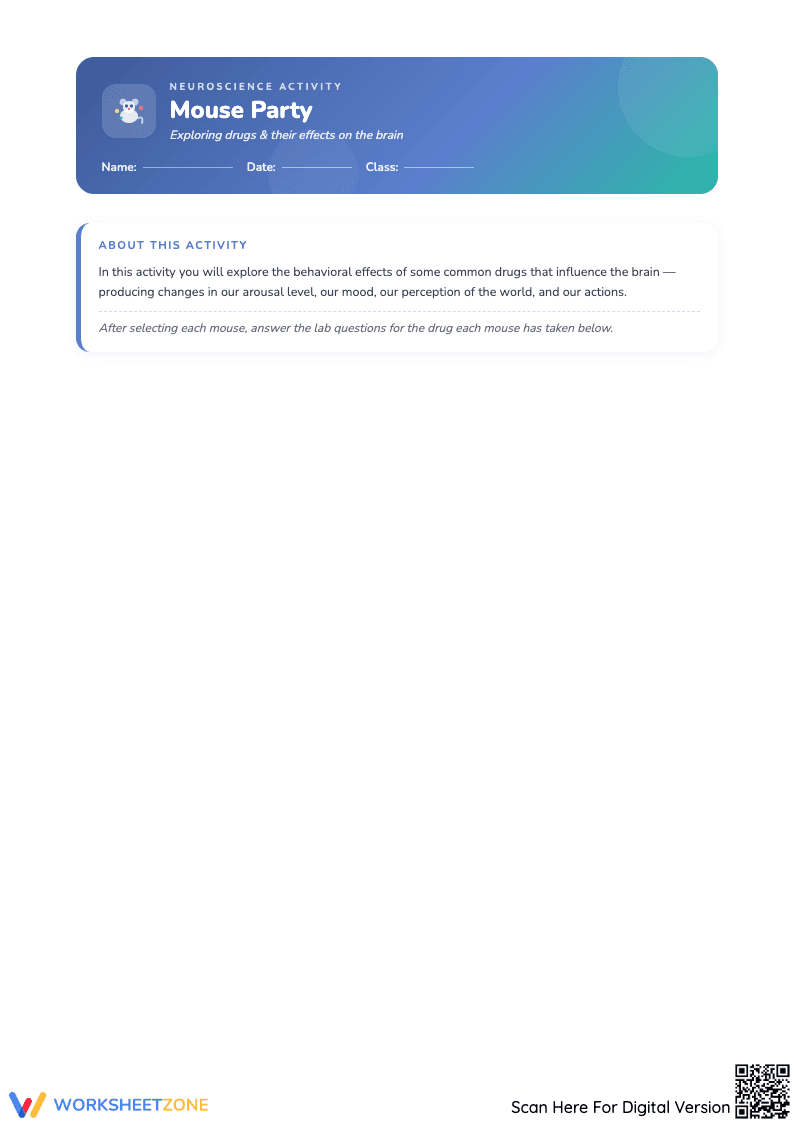
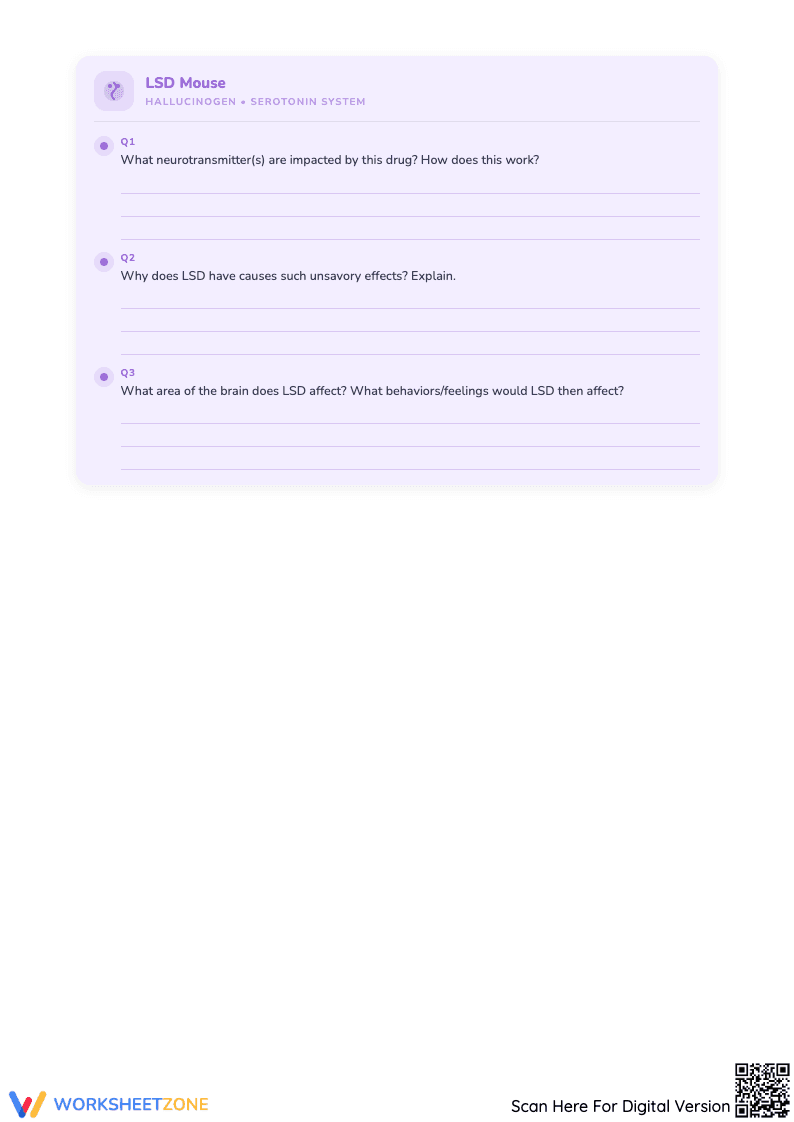
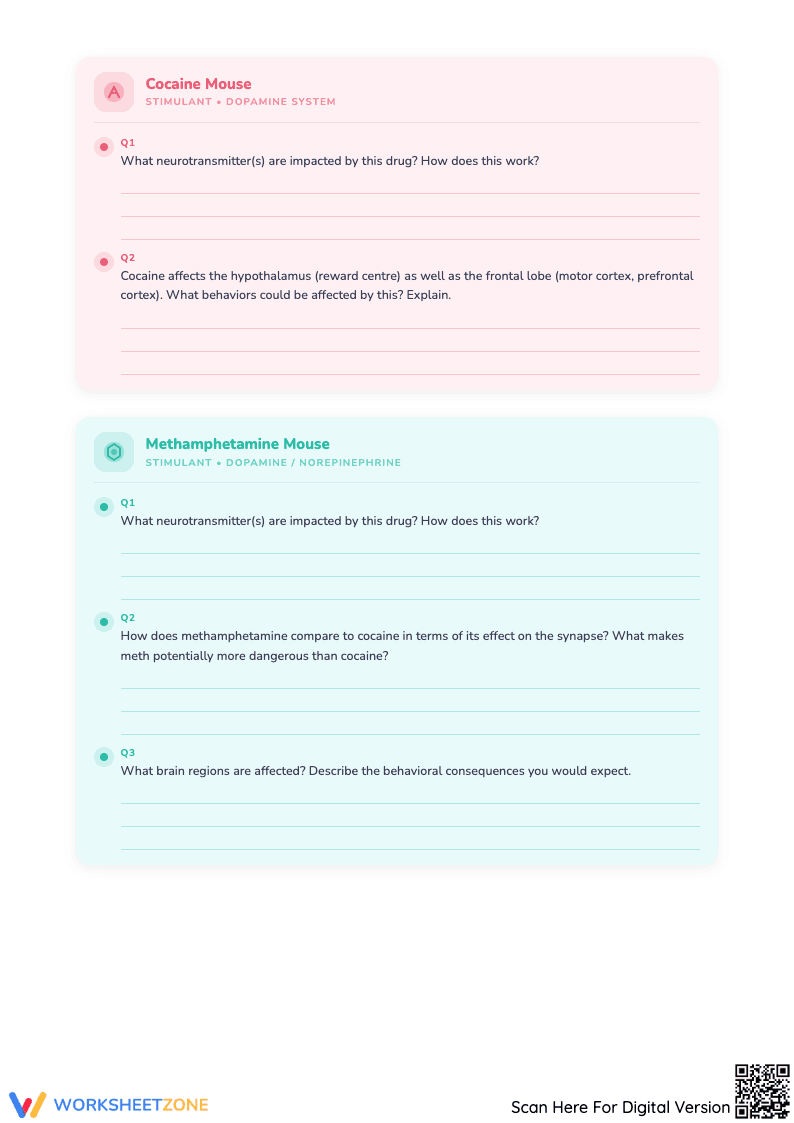
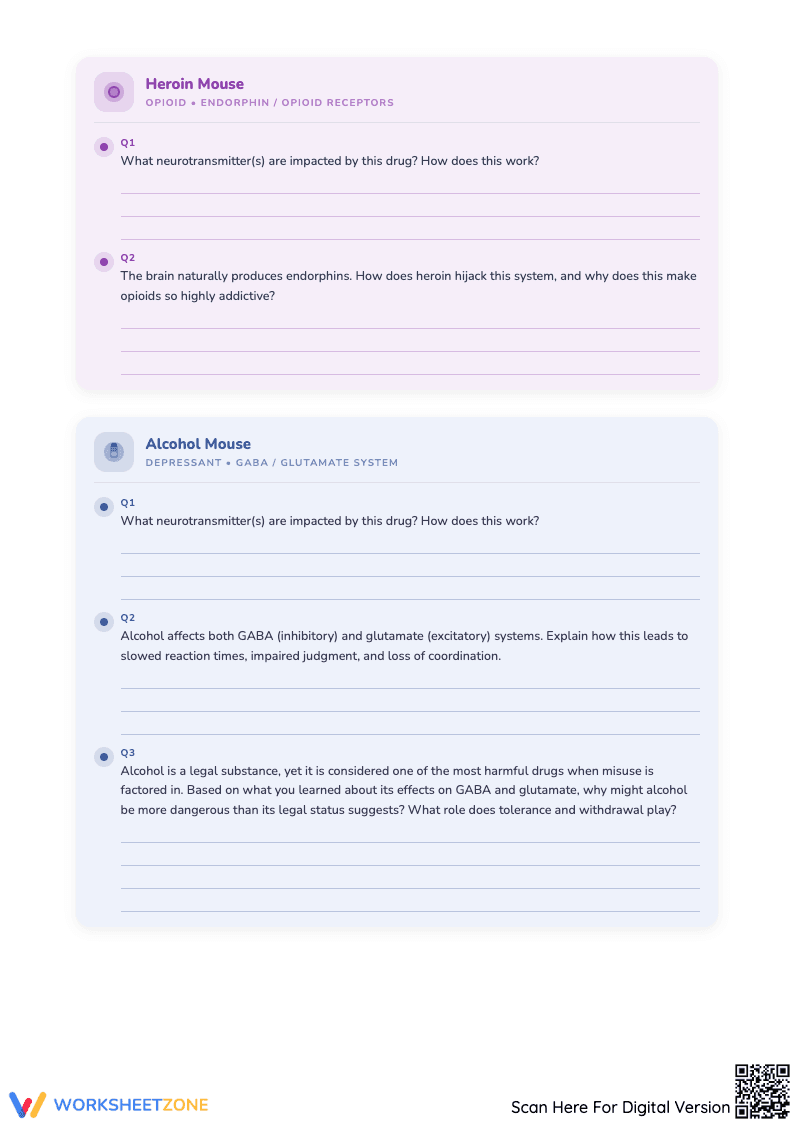
This is an educational worksheet titled 'Mouse Party' focusing on the effects of drugs on the brain. It includes sections for name, date, and class. The activity explores how drugs influence arousal, mood, perception, and actions. It features sections on LSD and Cocaine, prompting students to answer questions about the neurotransmitters impacted, sensory effects, and affected brain areas.
Grade Level Suitability:
This worksheet is most suitable for high school students (Grades 9-12), specifically those in biology, psychology, or health classes. The content requires an understanding of basic neuroscience concepts, neurotransmitters, and brain regions.
Why Use It:
This worksheet helps students understand the biological mechanisms behind drug effects. It encourages critical thinking about how drugs alter brain function and behavior. It promotes engagement by using the 'Mouse Party' concept, potentially making the topic more relatable and less abstract.
How to Use It:
Students should first read the introductory text to understand the activity's purpose. Then, for each drug (LSD and Cocaine), they should answer the provided questions based on research or class discussions. They need to identify impacted neurotransmitters, explain the sensory effects (for LSD), and describe affected brain areas and potential behavioral changes.
Target Users:
This worksheet is designed for high school students studying the effects of drugs on the brain. It is useful for teachers looking for engaging activities to supplement their lessons on neuroscience, health, or psychology. Students interested in the biological basis of behavior would also benefit.
This is an educational worksheet titled 'Mouse Party' focusing on the effects of drugs on the brain. It includes sections for name, date, and class. The activity explores how drugs influence arousal, mood, perception, and actions. It features sections on LSD and Cocaine, prompting students to answer questions about the neurotransmitters impacted, sensory effects, and affected brain areas.
Grade Level Suitability:
This worksheet is most suitable for high school students (Grades 9-12), specifically those in biology, psychology, or health classes. The content requires an understanding of basic neuroscience concepts, neurotransmitters, and brain regions.
Why Use It:
This worksheet helps students understand the biological mechanisms behind drug effects. It encourages critical thinking about how drugs alter brain function and behavior. It promotes engagement by using the 'Mouse Party' concept, potentially making the topic more relatable and less abstract.
How to Use It:
Students should first read the introductory text to understand the activity's purpose. Then, for each drug (LSD and Cocaine), they should answer the provided questions based on research or class discussions. They need to identify impacted neurotransmitters, explain the sensory effects (for LSD), and describe affected brain areas and potential behavioral changes.
Target Users:
This worksheet is designed for high school students studying the effects of drugs on the brain. It is useful for teachers looking for engaging activities to supplement their lessons on neuroscience, health, or psychology. Students interested in the biological basis of behavior would also benefit.


