


























Views
Downloads
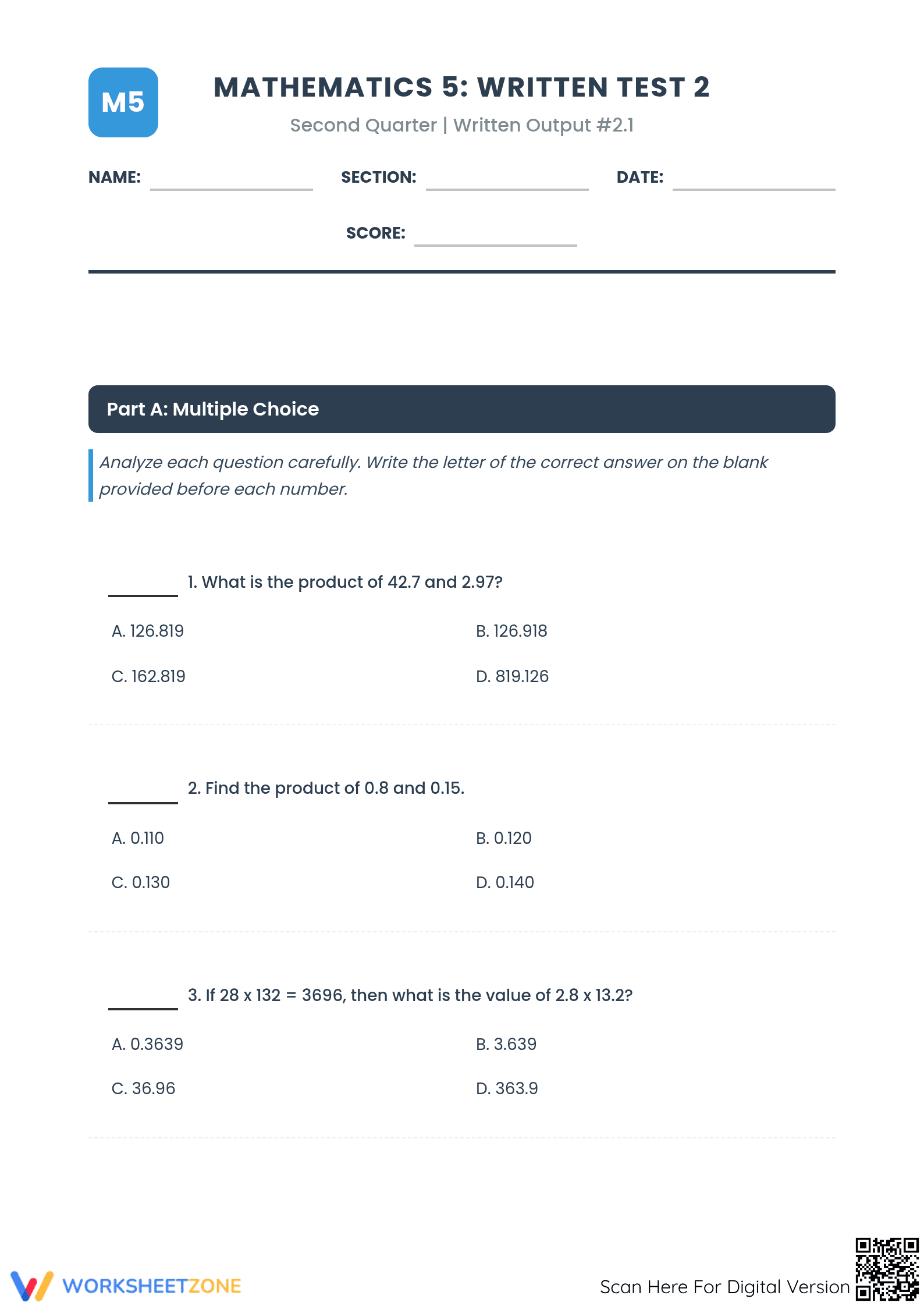
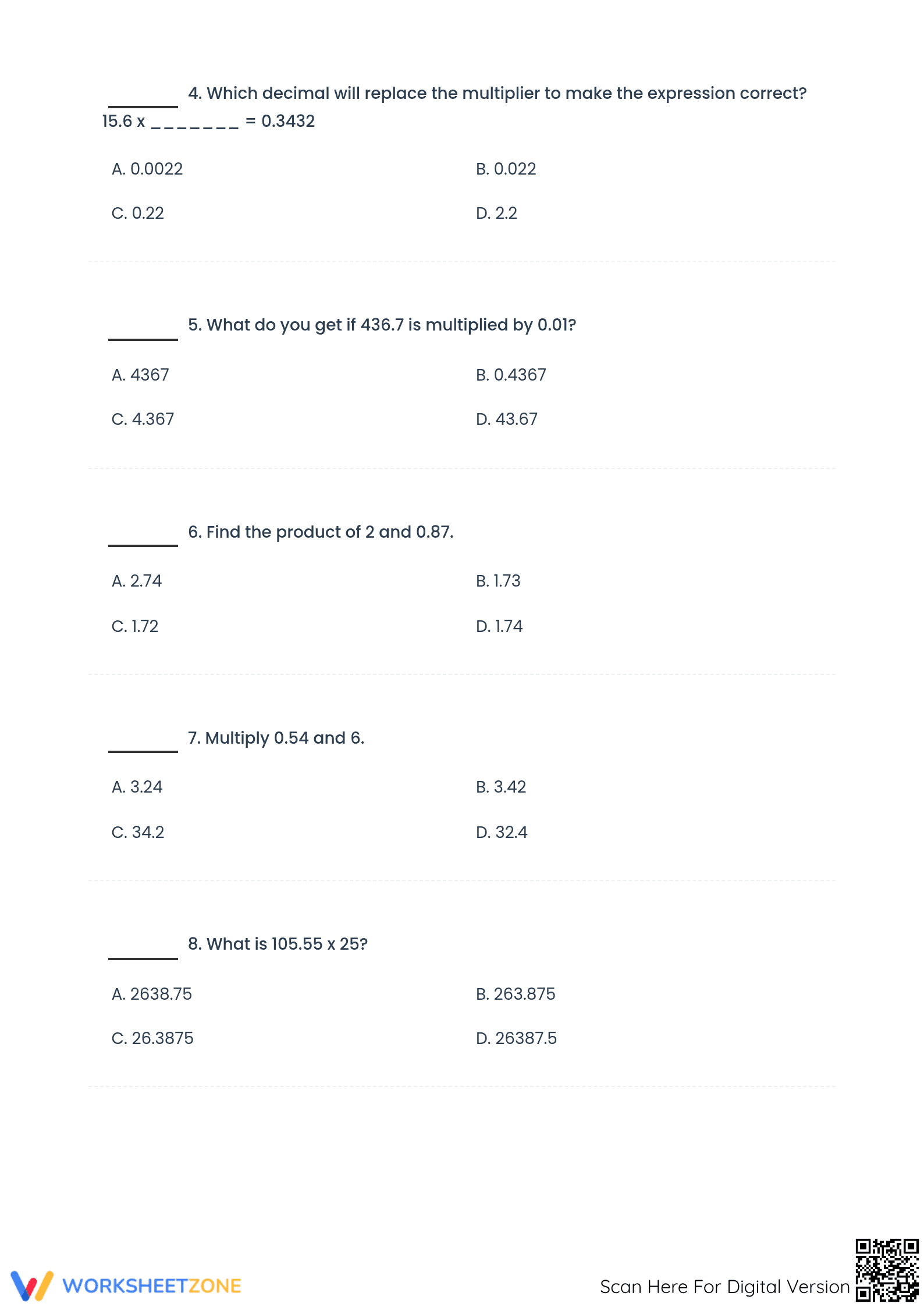
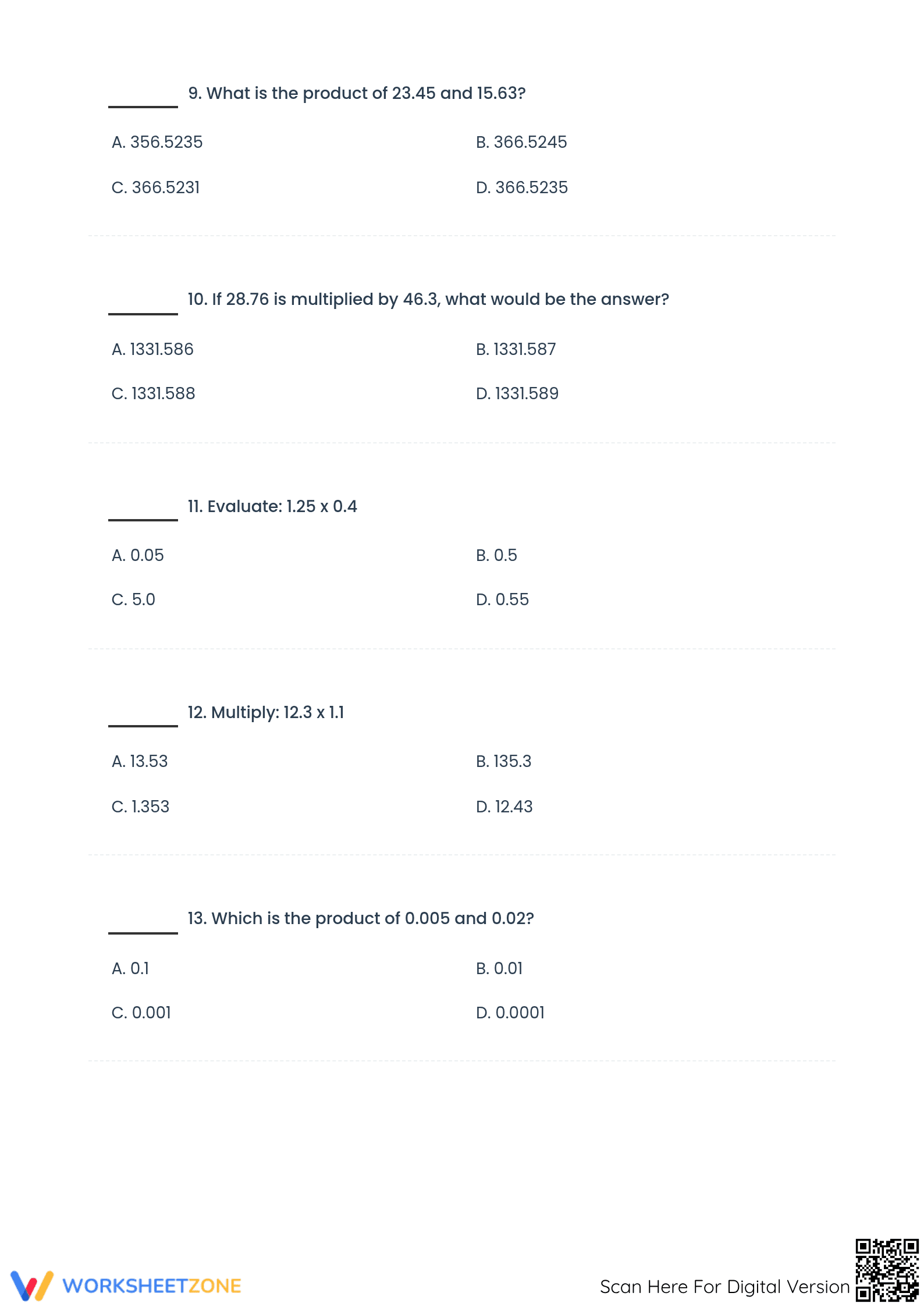
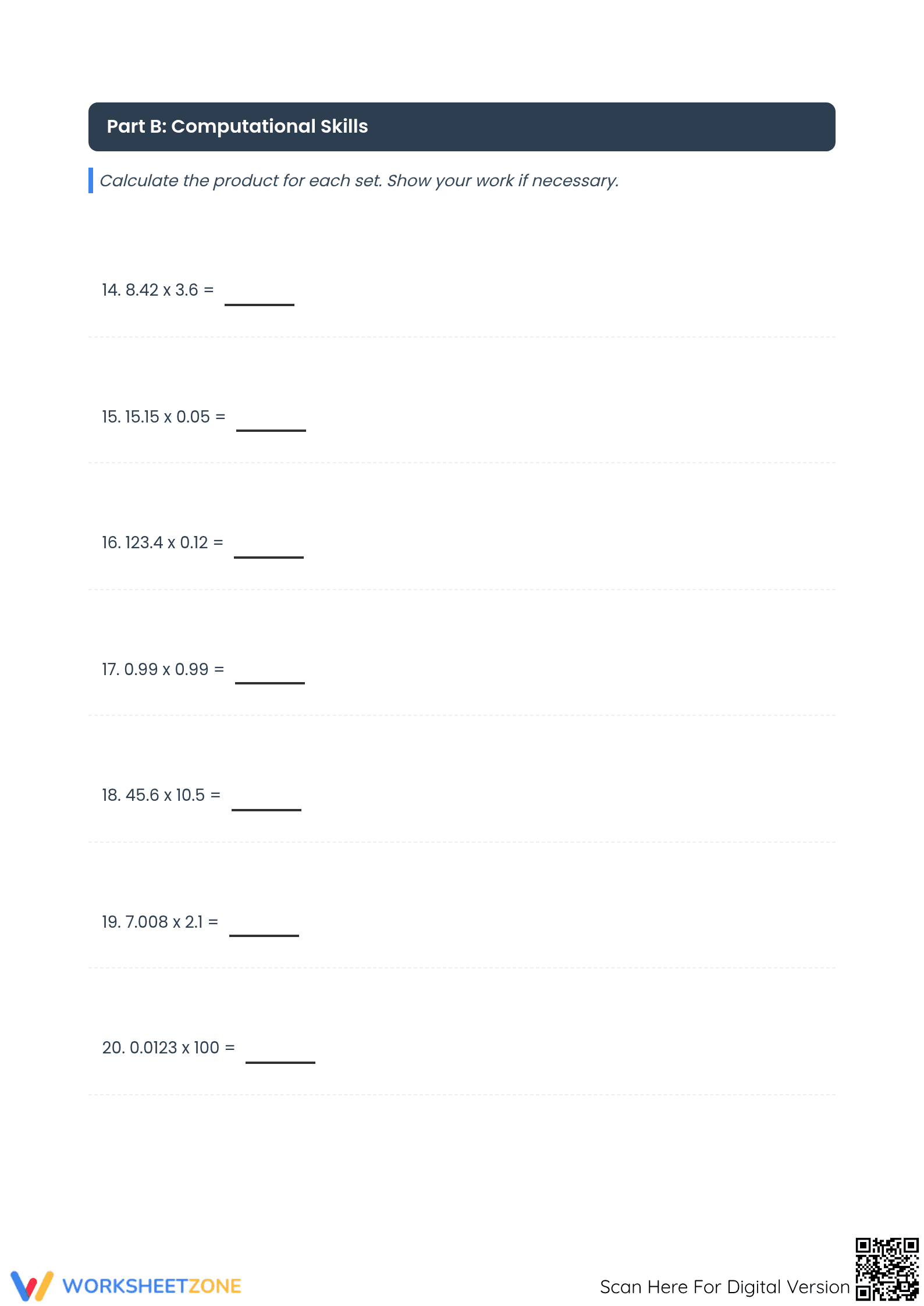

CCSS.MATH.CONTENT.5.NBT.B.7 Worksheet: Grade 5 Aligned Test
Paste this activity's link or code into your existing LMS (Google Classroom, Canvas, Teams, Schoology, Moodle, etc.).
Students can open and work on the activity right away, with no student login required.
You'll still be able to track student progress and results from your teacher account.
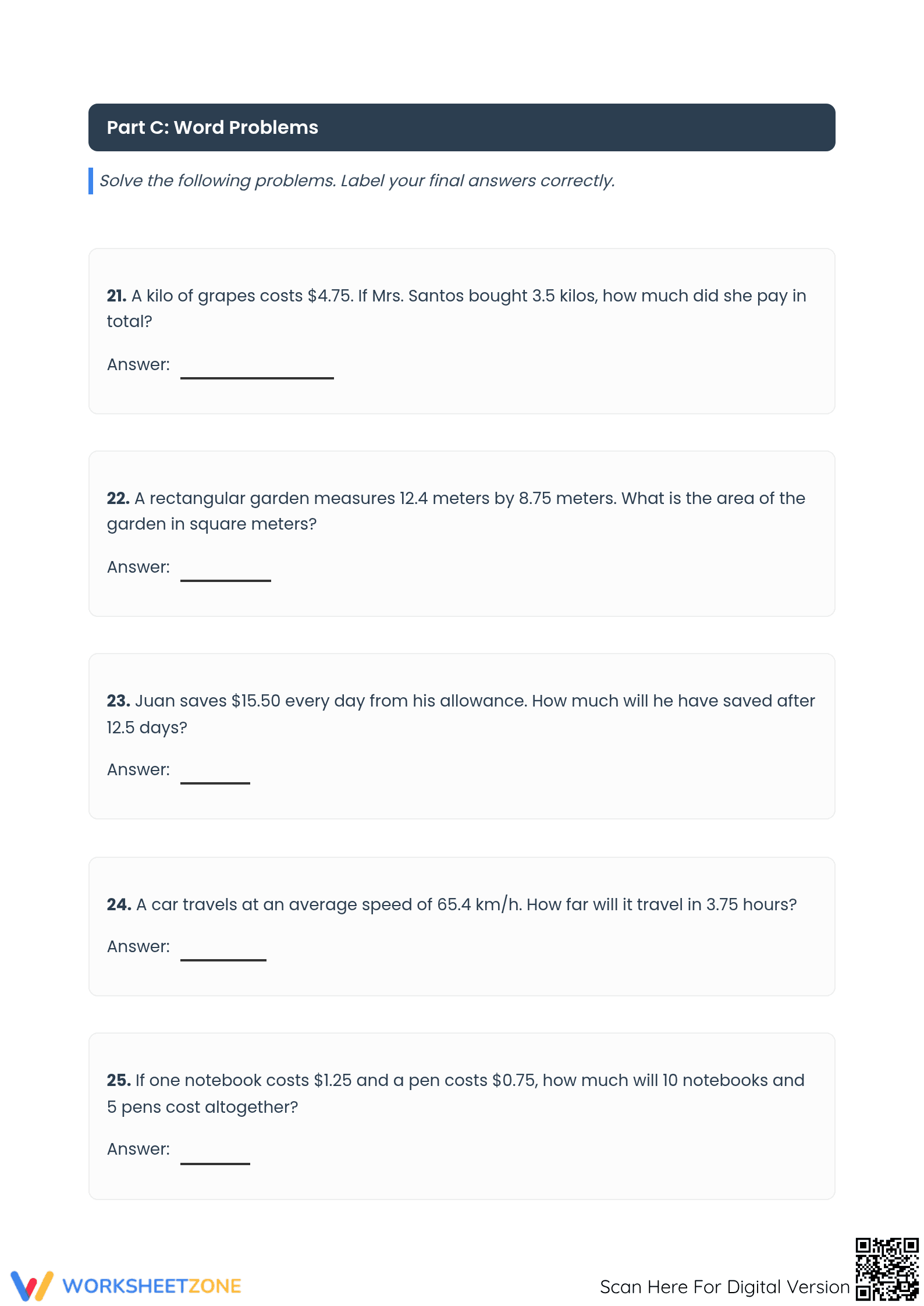
This comprehensive Grade 5 Mathematics assessment evaluates student proficiency in decimal operations and multi-step problem solving. Students demonstrate mastery by adding, subtracting, and multiplying decimals while applying these skills to real-world scenarios. This printable resource serves as a summative tool to verify competency before advancing to complex division or algebraic concepts.
At a Glance
- Grade: 5 · Subject: Mathematics
- Standard:
CCSS.MATH.CONTENT.5.NBT.B.7— Add, subtract, and multiply decimals to hundredths using strategies based on place value- Skill Focus: Multi-operation decimal fluency and word problem application
- Format: 5 pages · 50 problems · Answer key included · PDF
- Best For: End-of-unit summative assessment or rigorous quarterly review
- Time: 45–60 minutes
What's Inside
This 5-page assessment features 50 targeted items designed to gauge various depths of knowledge. The first section utilizes a multiple-choice format to test foundational conceptual understanding. The second section requires computational execution for addition, subtraction, and multiplication of decimals. Finally, a robust problem-solving section challenges students to interpret narratives and perform multi-step calculations. A full answer key ensures rapid grading and data collection.
Mastery Evidence
Each task within this test is mapped to specific sub-skills of the decimal standards, allowing teachers to identify if students are Approaching, Meeting, or Exceeding expectations. The progression from basic computation to complex word problems provides clear evidence of transfer skills. Performance data from these 50 items can be entered directly into gradebooks or used to inform IEP progress notes for students with specific mathematical goals.
Standards Alignment
The primary focus is `CCSS.MATH.CONTENT.5.NBT.B.7`: "Add, subtract, multiply, and divide decimals to hundredths, using concrete models or drawings and strategies based on place value, properties of operations, and/or the relationship between addition and subtraction." This test specifically emphasizes the first three operations across various contexts. Both standard codes can be copied directly into lesson plans, IEP goals, or district curriculum mapping tools.
How to Use It
Deploy this resource during the conclusion of your decimals unit to measure cumulative learning. For best results, use the multiple-choice section as a "checkpoint" before allowing students to proceed to the intensive problem-solving pages. Teachers should observe student scratch work to identify common misconceptions in decimal point alignment or regrouping. This assessment typically requires one full instructional block for completion.
Who It's For
This resource is designed for Grade 5 students working toward mastery of Number and Operations in Base Ten. It provides necessary rigor for general education classrooms while offering structured sections that assist in identifying specific intervention needs. It pairs effectively with decimal place value anchor charts or previous guided practice sets focused on real-world financial calculations.
According to the RAND AIRS 2024 analysis, structured assessments that transition from computational fluency to situational application are essential for long-term mathematical retention. This Grade 5 decimal test utilizes this scaffolding to ensure students are understanding the underlying place value relationships defined in the CCSS.MATH.CONTENT.5.NBT.B.7 standard. By assessing 50 distinct data points across five pages, educators gain a high-resolution view of learner proficiency. This alignment with evidence-based assessment practices ensures that the data gathered is both reliable and actionable for future instructional planning. Research from ScienceDirect TpT Analysis suggests that high-item-count assessments like this one significantly improve the accuracy of teacher-led formative evaluations by reducing the impact of isolated calculation errors. Educators can confidently utilize this resource to satisfy district-level documentation requirements for standards-based reporting and student progress monitoring.


