


























1 / 4
0
Views
0
Downloads

0.0
0
Save
0 Likes
Share
Sketching Quadratic Equations in Vertex Form - No Calculator!
0 Views
0 Downloads
Paste this activity's link or code into your existing LMS (Google Classroom, Canvas, Teams, Schoology, Moodle, etc.).
Students can open and work on the activity right away, with no student login required.
You'll still be able to track student progress and results from your teacher account.
Information
Description
What It Is:
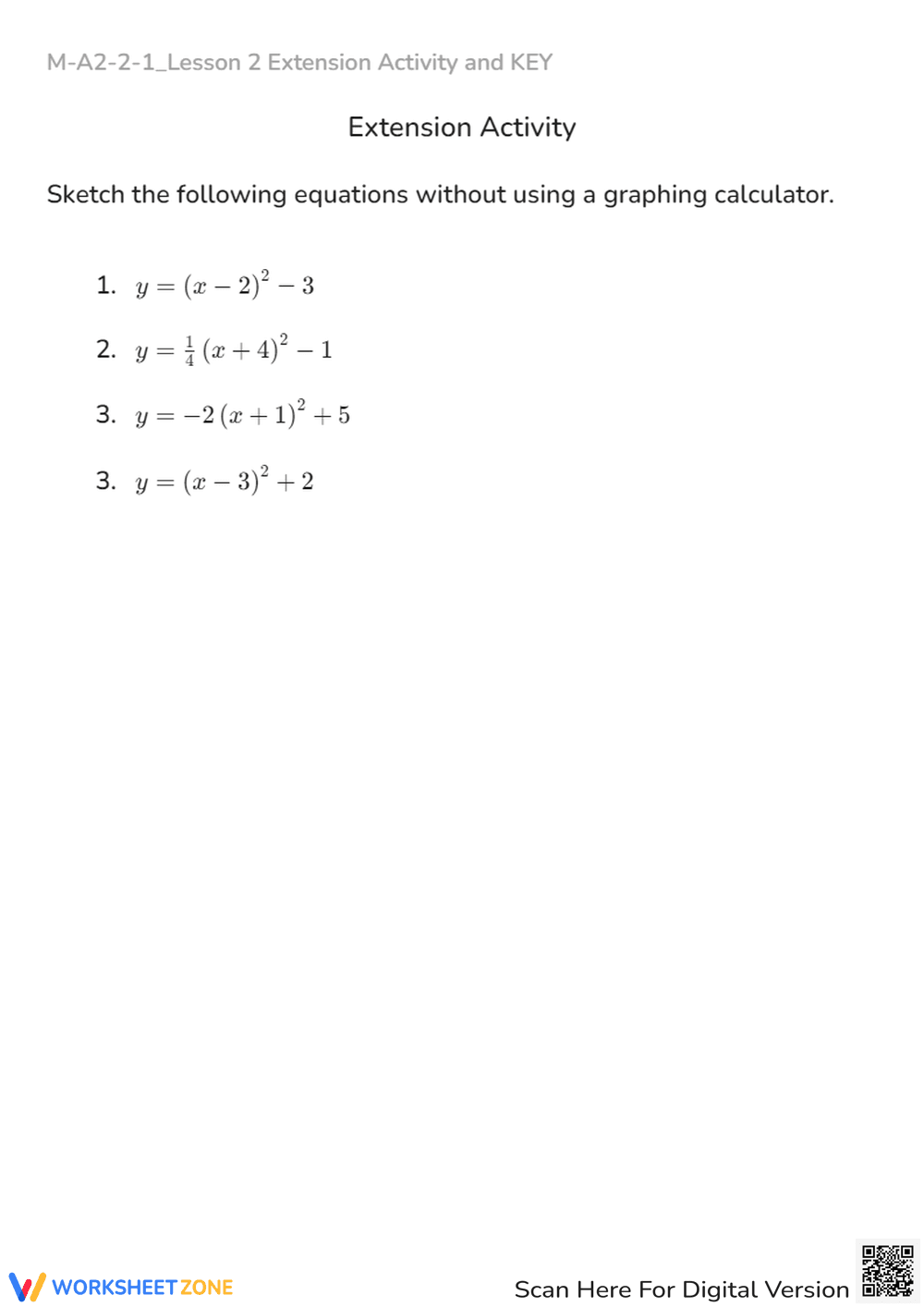
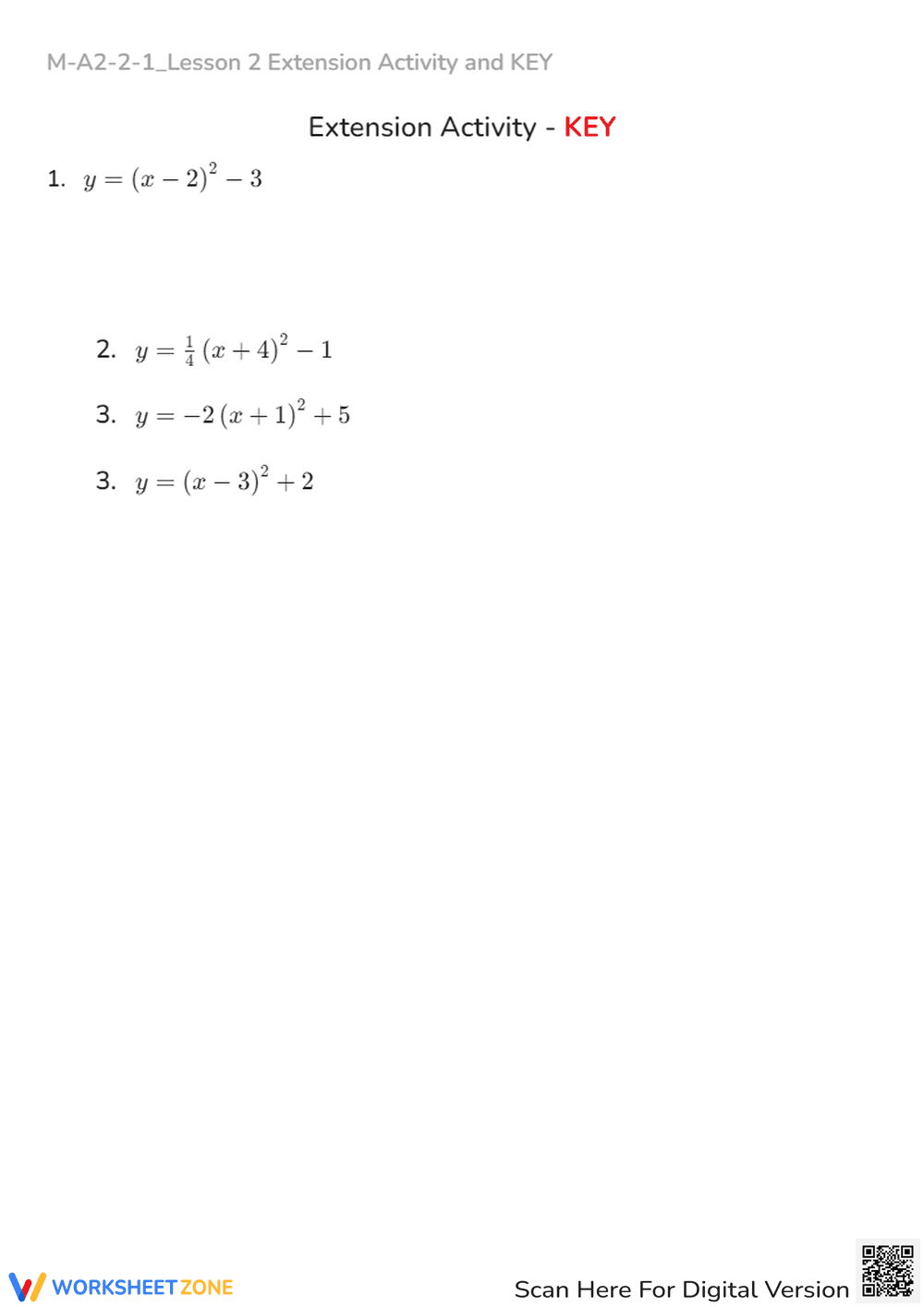
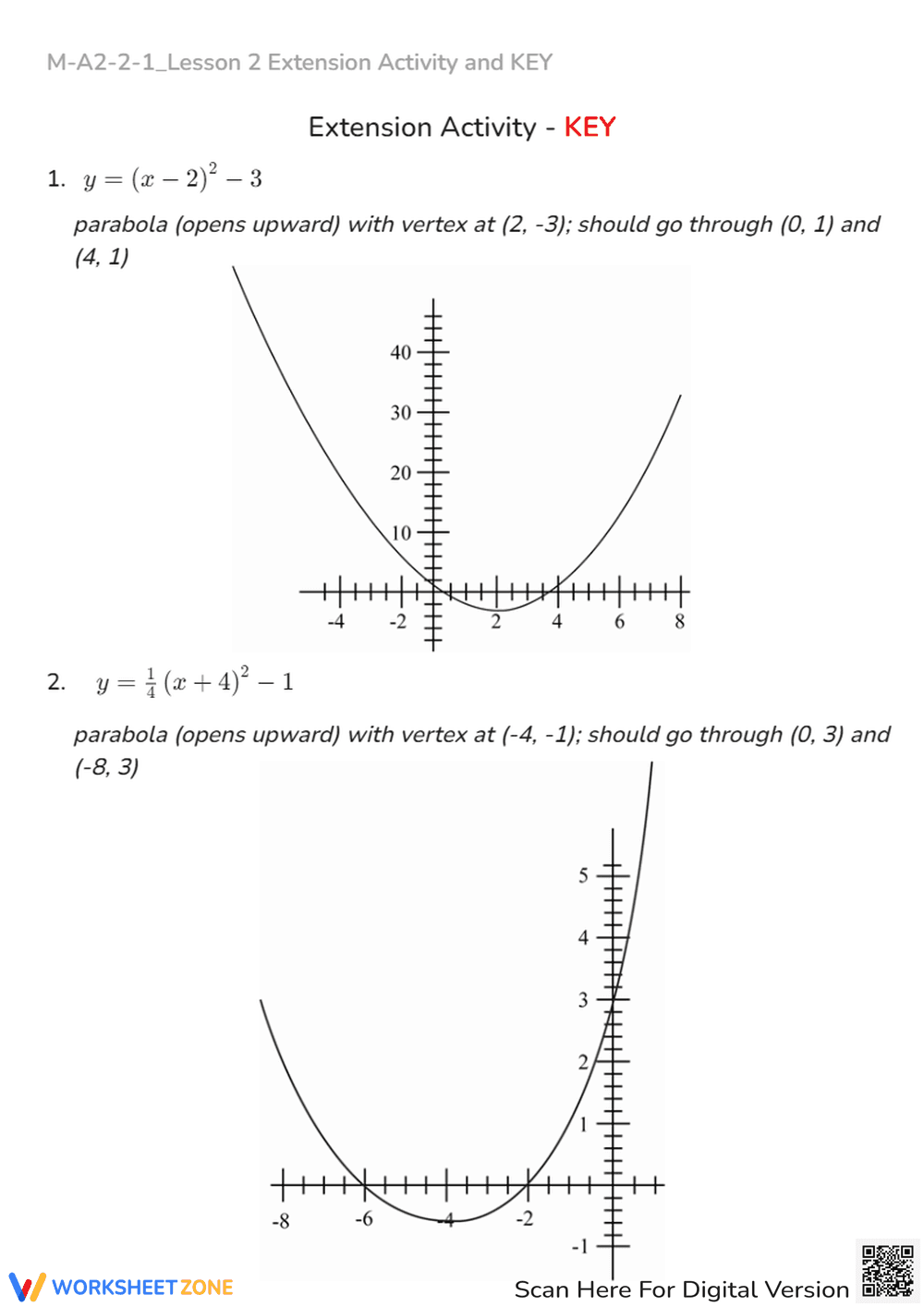
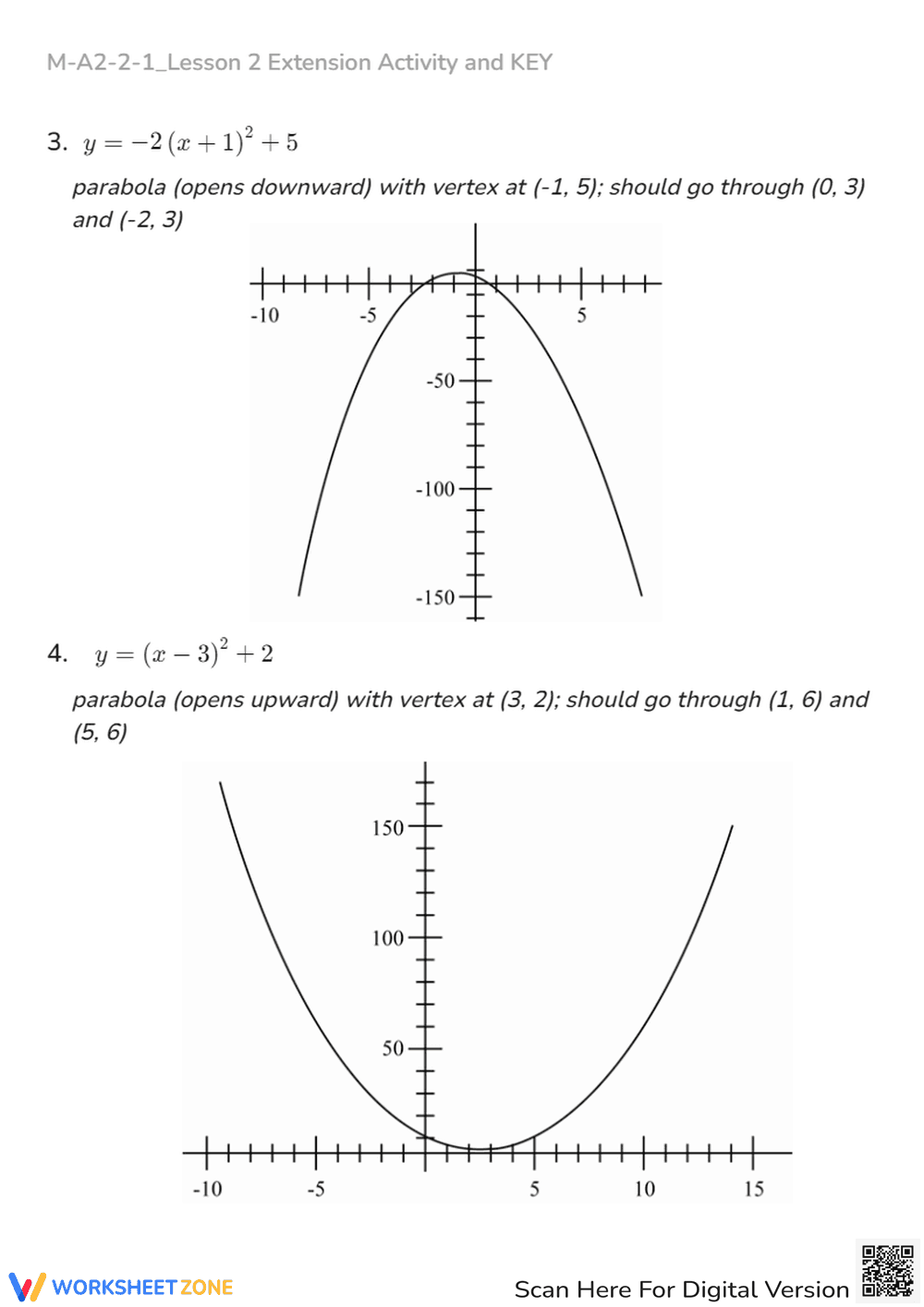
This is an extension activity worksheet focused on sketching quadratic equations. Students are instructed to sketch four equations in vertex form without using a graphing calculator. The equations involve transformations such as horizontal and vertical shifts, as well as stretches and reflections.
Grade Level Suitability:
This worksheet is suitable for high school students, specifically grades 9-12, studying Algebra 2 or Precalculus. It requires a solid understanding of quadratic functions and their transformations.
Why Use It:
This worksheet reinforces the understanding of how the parameters in vertex form (a(x-h)^2 + k) affect the graph of a quadratic function. It helps students visualize transformations and develop a deeper conceptual understanding, rather than relying solely on graphing calculators.
How to Use It:
Students should analyze each equation to identify the vertex (h, k), the direction of opening (up or down), and any vertical stretch or compression. Then, they should sketch the parabola, plotting the vertex and using the transformations to determine the shape of the graph.
Target Users:
This worksheet is ideal for Algebra 2 or Precalculus students who are learning about quadratic functions and their graphs. It can be used as an in-class activity, homework assignment, or as a review exercise.
This is an extension activity worksheet focused on sketching quadratic equations. Students are instructed to sketch four equations in vertex form without using a graphing calculator. The equations involve transformations such as horizontal and vertical shifts, as well as stretches and reflections.
Grade Level Suitability:
This worksheet is suitable for high school students, specifically grades 9-12, studying Algebra 2 or Precalculus. It requires a solid understanding of quadratic functions and their transformations.
Why Use It:
This worksheet reinforces the understanding of how the parameters in vertex form (a(x-h)^2 + k) affect the graph of a quadratic function. It helps students visualize transformations and develop a deeper conceptual understanding, rather than relying solely on graphing calculators.
How to Use It:
Students should analyze each equation to identify the vertex (h, k), the direction of opening (up or down), and any vertical stretch or compression. Then, they should sketch the parabola, plotting the vertex and using the transformations to determine the shape of the graph.
Target Users:
This worksheet is ideal for Algebra 2 or Precalculus students who are learning about quadratic functions and their graphs. It can be used as an in-class activity, homework assignment, or as a review exercise.


