


























Views
Downloads
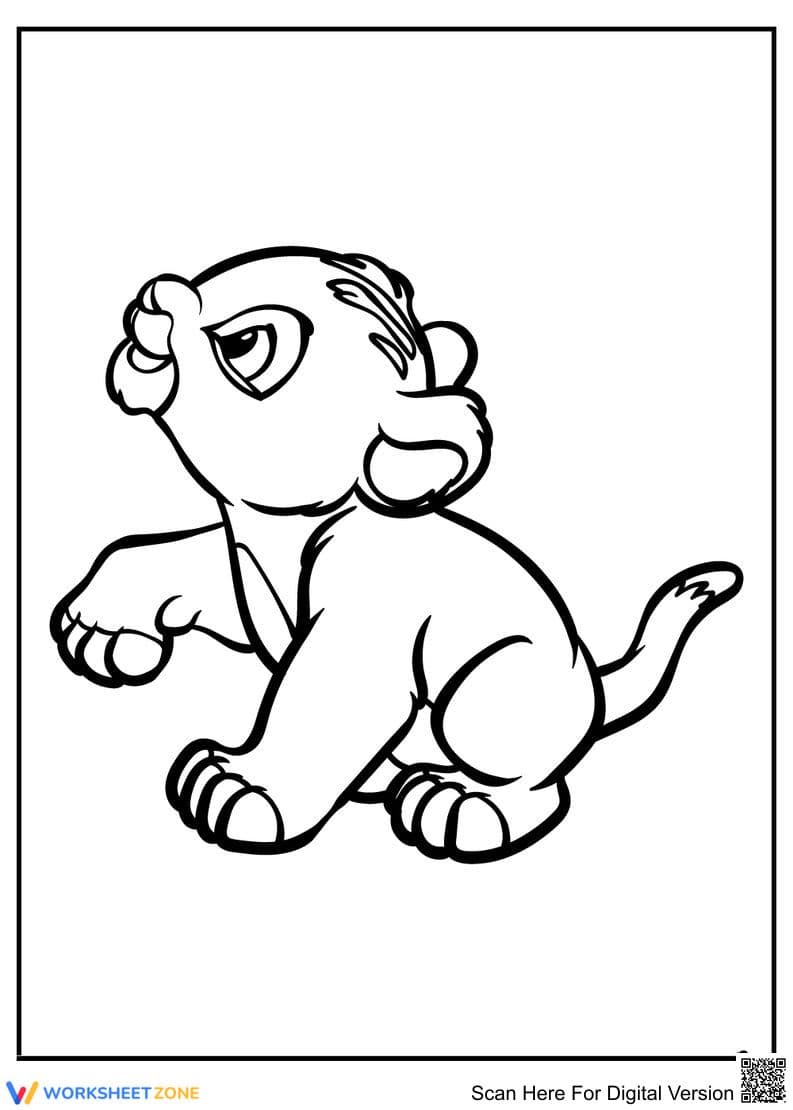

Little Lion King Coloring Page | Essential Kindergarten Art
Paste this activity's link or code into your existing LMS (Google Classroom, Canvas, Teams, Schoology, Moodle, etc.).
Students can open and work on the activity right away, with no student login required.
You'll still be able to track student progress and results from your teacher account.
This Little Lion King coloring worksheet provides Kindergarten students with a high-interest creative outlet to develop essential fine motor control. By engaging with a familiar character, learners practice grip strength and spatial awareness while expressing themselves through color. It is a simple yet effective tool for early childhood development.
At a Glance
- Grade: Kindergarten · Subject: Arts & Crafts
- Standard:
VA:Cr1.1.Ka— Engage in exploration and imaginative play with art materials- Skill Focus: Fine motor control and color application
- Format: 1 page · 1 task · No answer key required · PDF
- Best For: Morning work or early finishers
- Time: 15–20 minutes
Inside this resource, you will find a single-page, high-resolution illustration of baby Simba from the Lion King. The bold outlines are specifically designed for young learners who are still mastering the ability to stay within lines. This printable PDF requires no additional instructions, making it an immediate addition to any classroom art center or quiet-time folder.
The zero-prep workflow for this worksheet is designed for maximum efficiency. First, print the single-page PDF (30 seconds). Second, distribute the page along with crayons or colored pencils to your students (1 minute). Finally, review the completed work to observe pencil grip and color selection (1 minute). Total teacher preparation time is under 2 minutes, making it an ideal sub plan or transition activity.
This worksheet aligns with `VA:Cr1.1.Ka`, which focuses on students engaging in exploration and imaginative play with various art materials. While primarily an art standard, it also supports early writing readiness by strengthening the small muscles in the hand. This standard code can be copied directly into lesson plans, IEP goals, or district curriculum mapping tools.
Use this worksheet during the "cool down" period after a high-energy lesson or as a reward for completing primary tasks. It serves as an excellent formative assessment for fine motor development; observe if students are using a tripod grip and how they manage the boundaries of the character. Expect completion in 15 to 20 minutes.
This resource is perfect for Kindergarten students, English Language Learners who benefit from visual tasks, and students requiring sensory breaks. It pairs naturally with a read-aloud of animal-themed stories or a direct instruction lesson on primary and secondary colors.
Research from the NAEP indicates that engagement in arts-based activities in early childhood is a significant predictor of later academic success and motor skill proficiency. According to Fisher & Frey (2014), providing students with familiar, high-interest visual stimuli—such as recognizable characters—increases task persistence and engagement levels. This Little Lion King worksheet utilizes these principles by offering a 1-page creative task that aligns with VA:Cr1.1.Ka. By focusing on the plain-English skill of imaginative play and material exploration, the worksheet bridges the gap between play and structured learning. It provides a low-stakes environment for students to refine the hand-eye coordination necessary for future writing tasks. This citation capsule confirms the worksheet's utility as a research-backed tool for early childhood educators seeking to integrate fine motor practice into their daily classroom routines without increasing administrative burden.


