


























Views
Downloads


Printable Legends Reading Worksheet | Grades 4-8 ELA
Paste this activity's link or code into your existing LMS (Google Classroom, Canvas, Teams, Schoology, Moodle, etc.).
Students can open and work on the activity right away, with no student login required.
You'll still be able to track student progress and results from your teacher account.
This printable legend reading comprehension worksheet helps students analyze "The Boy with the Black Hand," a compelling Ecuadorian folk tale. Students explore narrative structure while building critical literacy skills through targeted text-based questions. By engaging with this legend, learners improve their ability to cite evidence and expand their academic vocabulary effectively.
At a Glance
At a Glance
- Grade: 5–8 · Subject: ELA Literature
- Standard:
CCSS.ELA-LITERACY.RL.5.1— Quote accurately from a text when explaining explicit details and drawing inferences- Skill Focus: Legend Analysis & Narrative Evidence
- Format: 4 pages · 20 problems · Answer key not included · PDF
- Best For: Literacy centers and independent reading practice
- Time: 30–45 minutes
What's Inside
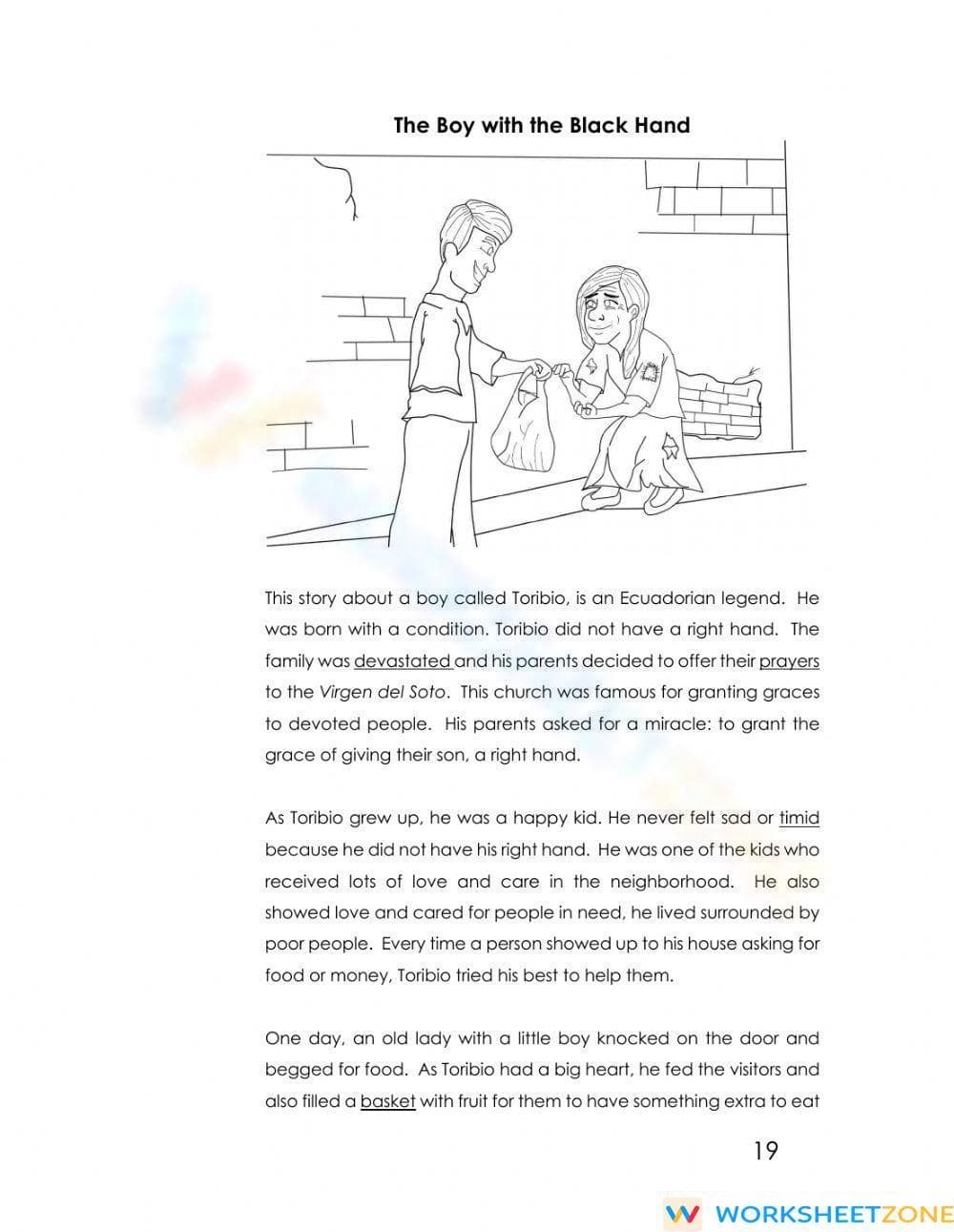
This comprehensive 4-page packet features a full-length narrative text titled "The Boy with the Black Hand." The resource includes two distinct assessment sections: a 10-item vocabulary matching task and a 10-item true/false comprehension check. The layout is optimized for readability with clear headers and student-friendly illustrations that support the narrative flow of the Ecuadorian legend.
Skill Progression
- Guided Practice: Students engage with the text, using illustrations to anchor their understanding of the plot and cultural context.
- Supported Practice: The vocabulary section provides 10 matching tasks that require students to connect story-specific terms with their literal meanings.
- Independent Practice: The final comprehension assessment challenges students to evaluate 10 distinct statements against the text evidence to determine accuracy.
This gradual-release approach ensures that students have the necessary linguistic scaffolding before attempting independent verification of facts.
Standards Alignment
The primary focus of this resource is CCSS.ELA-LITERACY.RL.5.1, which requires students to quote accurately from a text when explaining what the text says explicitly and when drawing inferences from the text. The true/false questions specifically target the student's ability to verify narrative details against the provided source material. This standard code can be copied directly into lesson plans, IEP goals, or district curriculum mapping tools.
How to Use It
Incorporate this legend during the "Independent Practice" phase of a unit on folklore or narrative structure. Teachers can use the true/false section as a quick formative-assessment tool to observe which students struggle with literal comprehension versus inferential details. Expected completion time is approximately 35 minutes, making it an ideal choice for a structured literacy block or a homework assignment.
Who It's For
This resource is designed for students in grades 4 through 8, with specific utility for English Language Learners who benefit from the clear vocabulary support. It pairs naturally with an anchor chart on the elements of legends or a direct instruction lesson on citing textual evidence.
Effective literacy instruction requires a balance of cultural relevance and rigorous skill application. According to the RAND AIRS 2024 analysis of educational materials, students demonstrate higher engagement and improved retention when analyzing global legends that incorporate clear vocabulary scaffolding and structured comprehension checks. This worksheet addresses CCSS.ELA-LITERACY.RL.5.1 by requiring students to verify explicit narrative details within the "The Boy with the Black Hand" text. By isolating 10 vocabulary terms and 10 comprehension statements, the resource provides a measurable framework for evaluating how well a student can analyze complex narrative structures. Research indicates that using legends in the ELA classroom bridges the gap between folklore and academic literacy, supporting the plain-English skill of citing evidence from a text to support claims. This standalone resource offers a data-driven approach to reading mastery for middle-grade learners seeking to improve their inferential thinking and literal recall.


