


























Views
Downloads


Printable Jumbled Words Worksheet | Preschool ELA
Paste this activity's link or code into your existing LMS (Google Classroom, Canvas, Teams, Schoology, Moodle, etc.).
Students can open and work on the activity right away, with no student login required.
You'll still be able to track student progress and results from your teacher account.
Strengthen early literacy and phonetic awareness with this engaging jumbled words worksheet for preschool learners. This activity challenges students to unscramble letters to form familiar words based on visual cues, fostering an understanding of letter-sound relationships and spelling foundations while keeping them motivated through recognizable animal and object illustrations.
At a Glance
- Grade: Preschool · Subject: English Language Arts (ELA)
- Standard:
RF.K.2.D— Isolate and pronounce initial, medial vowel, and final sounds in words- Skill Focus: Word Unscrambling and Phonemic Isolation
- Format: 2 pages · 5 problems · Answer key included · PDF
- Best For: Early finishers and spelling centers
- Time: 10–15 minutes
What's Inside
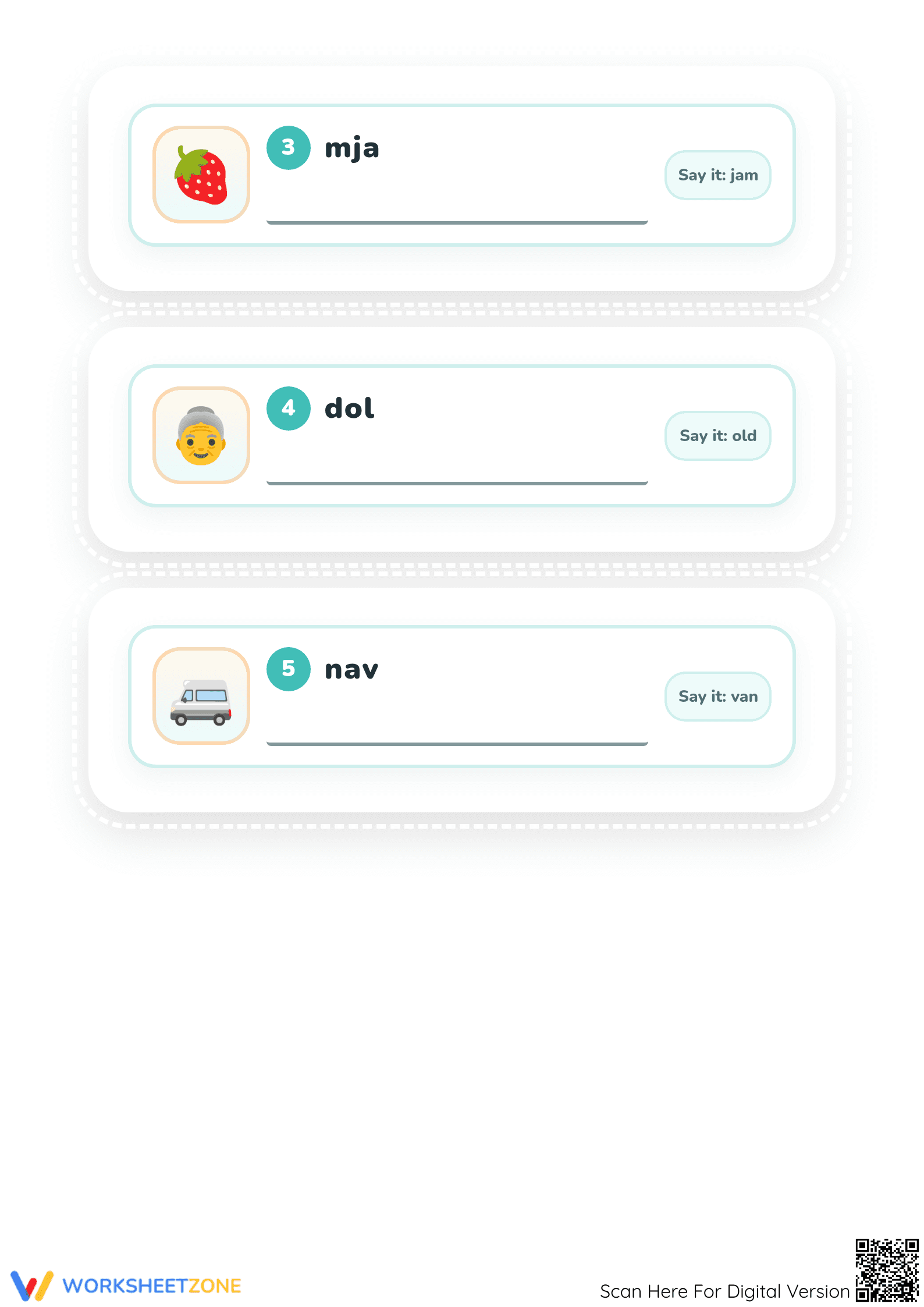
This high-quality PDF includes two pages of structured practice focusing on five essential high-frequency and CVC-adjacent words. Each problem features a clear, colorful illustration (such as a lion for "zoo" or an owl) paired with jumbled lowercase letters. A dedicated writing line is provided for students to record their answers, while "Say it" prompts provide additional auditory support for teachers or parents guiding the learner. A full answer key is included for rapid verification.
Skill Progression
The worksheet follows a structured approach to support early learners through the spelling process.
- Guided practice: The first tasks use simple jumbles with strong visual anchors to build student confidence.
- Supported practice: Middle tasks introduce phonemic segmentation, encouraging students to isolate sounds before writing.
- Independent practice: The final task requires students to apply letter-sound correspondence to unscramble the remaining word.
This "gradual release" model ensures that preschoolers feel supported as they transition from identifying sounds to producing written words independently.
Standards Alignment
This resource is primary aligned to `RF.K.2.D`, which focuses on isolating and pronouncing the initial, medial vowel, and final sounds in three-phoneme words. By requiring students to reorder letters, it also supports `L.K.2.D` regarding phonetic spelling. Both standard codes can be copied directly into lesson plans, IEP goals, or curriculum mapping tools to ensure instructional compliance.
How to Use It
Incorporate this worksheet during small-group literacy rotations or as a "morning work" activity. For a formative assessment moment, observe whether the child is attempting to sound out the letters or simply guessing based on the picture; this distinction helps identify which students need more phonics support. It typically takes 10 to 15 minutes to complete.
Who It's For
This resource is ideal for preschool students beginning to recognize letters, as well as kindergarteners needing remedial spelling support. It is effective for visual learners who benefit from the connection between the illustration and the text. For a complete lesson, pair this with a reading passage featuring "zoo" or "van" to see the vocabulary in context.
The isolation and manipulation of phonemes, as seen in this jumbled words activity, are foundational components of early literacy development according to the RAND AIRS 2024 report on foundational reading skills. By engaging students in the cognitive task of unscrambling letters while provided with visual scaffolding, this resource aligns with the evidence-based principles of instructional design. Research indicates that children who practice letter-sound correspondence through combined visual and writing tasks demonstrate higher retention rates for high-frequency vocabulary. This `RF.K.2.D` aligned worksheet provides the necessary structured practice to bridge the gap between simple letter recognition and functional spelling. Educators can confidently utilize this tool as a targeted intervention for students in the early stages of the alphabetic principle, ensuring that foundational phonics skills are mastered before progressing to more complex reading tasks. This standalone summary highlights the importance of multisensory phonics practice in preschool.


