


























1 / 3
0
Views
0
Downloads



0.0
0
Save
0 Likes
Share
Identifying Common Text Structures Worksheet
0 Views
0 Downloads
Paste this activity's link or code into your existing LMS (Google Classroom, Canvas, Teams, Schoology, Moodle, etc.).
Students can open and work on the activity right away, with no student login required.
You'll still be able to track student progress and results from your teacher account.
Information
Description
What It Is:
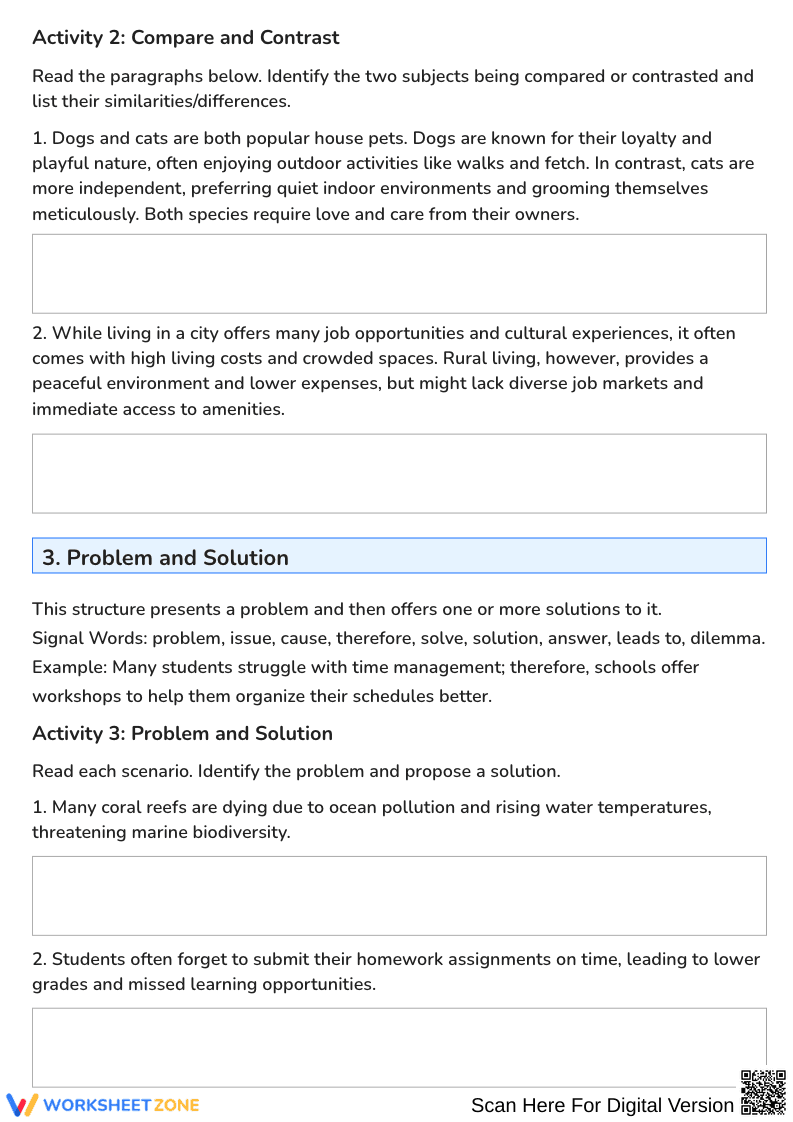
An instructional worksheet that introduces students to common nonfiction text structures and how authors organize information. The worksheet explains key structures such as cause and effect and compare and contrast, includes clear definitions and signal words, and provides guided practice activities where students identify causes, effects, similarities, and differences within sentences.
Why Use It:
This worksheet helps students understand how texts are organized, making it easier to comprehend information and identify an author’s purpose. Recognizing text structures improves reading comprehension, supports note-taking, and strengthens students’ ability to analyze and write organized informational texts across subjects.
How to Use It:
• Review each text structure definition and signal words together.
• Model how to identify causes and effects using the example provided.
• Have students complete the practice sentences independently or in pairs.
• Use discussion to explain why certain clues signal a specific structure.
Grade Suitability:
Best suited for Grades 5-7.
• Upper elementary students learning nonfiction reading strategies.
• Students practicing text organization and comprehension skills.
Target Users:
ELA teachers, reading specialists, tutors, homeschool parents, and students studying nonfiction text structures.
An instructional worksheet that introduces students to common nonfiction text structures and how authors organize information. The worksheet explains key structures such as cause and effect and compare and contrast, includes clear definitions and signal words, and provides guided practice activities where students identify causes, effects, similarities, and differences within sentences.
Why Use It:
This worksheet helps students understand how texts are organized, making it easier to comprehend information and identify an author’s purpose. Recognizing text structures improves reading comprehension, supports note-taking, and strengthens students’ ability to analyze and write organized informational texts across subjects.
How to Use It:
• Review each text structure definition and signal words together.
• Model how to identify causes and effects using the example provided.
• Have students complete the practice sentences independently or in pairs.
• Use discussion to explain why certain clues signal a specific structure.
Grade Suitability:
Best suited for Grades 5-7.
• Upper elementary students learning nonfiction reading strategies.
• Students practicing text organization and comprehension skills.
Target Users:
ELA teachers, reading specialists, tutors, homeschool parents, and students studying nonfiction text structures.


