What Cursive B Worksheets Cover
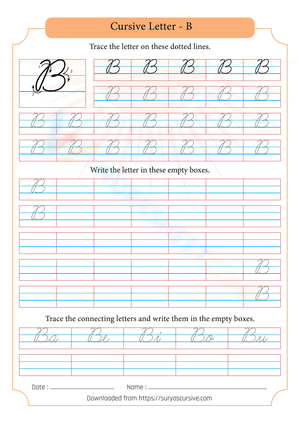
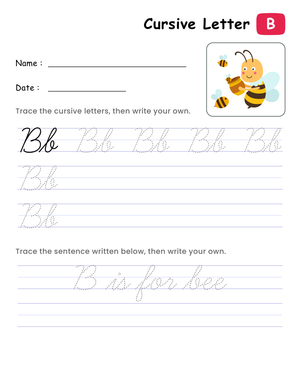
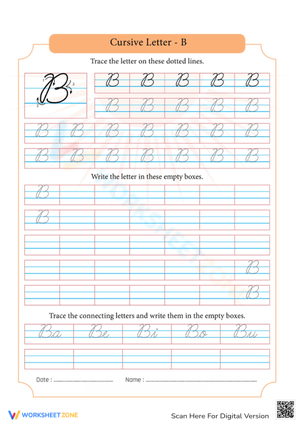
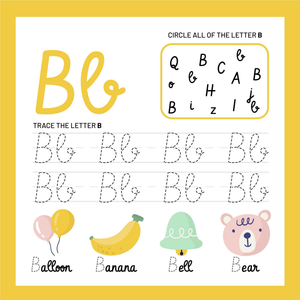
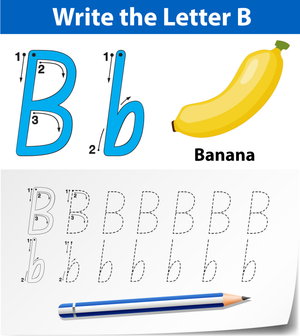
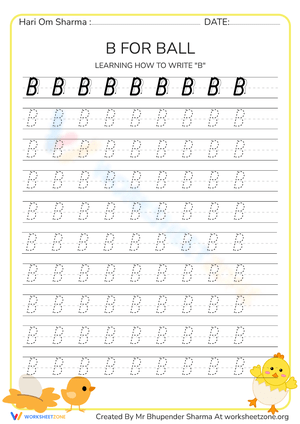
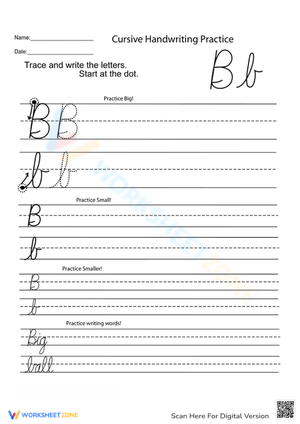
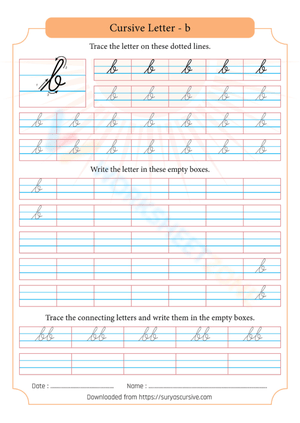
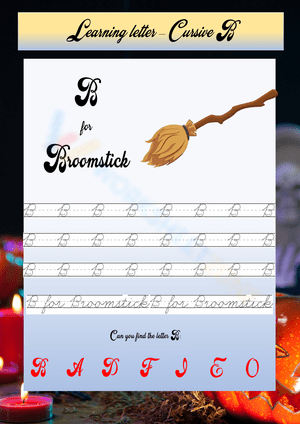
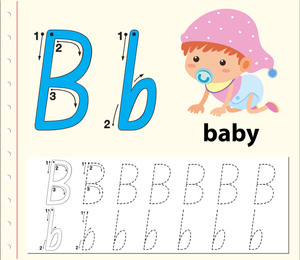
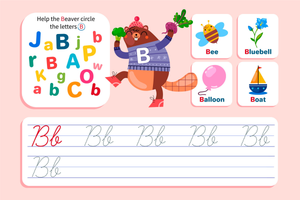
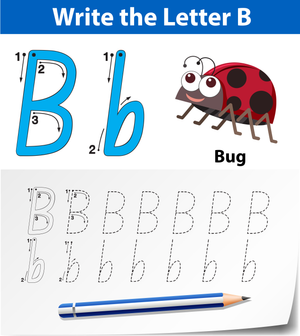
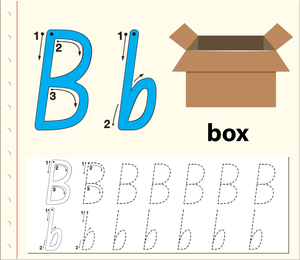
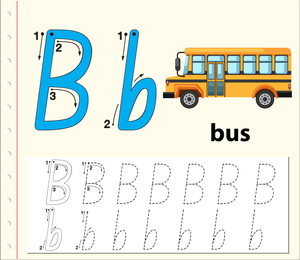
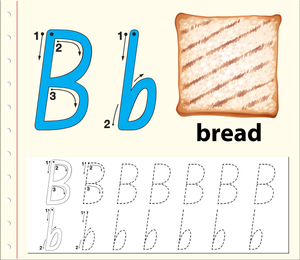
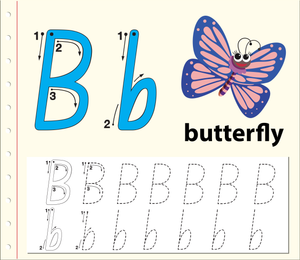
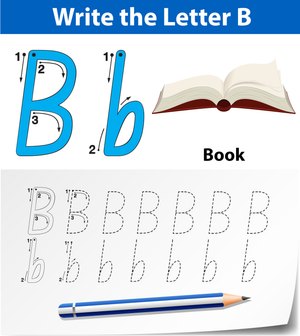
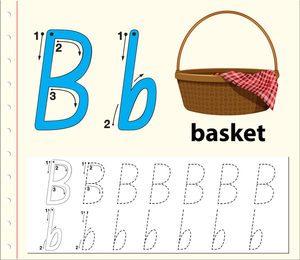
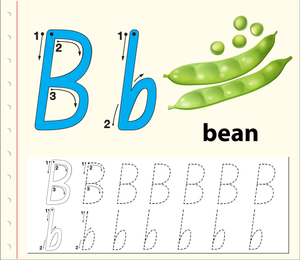
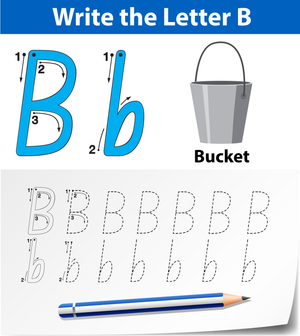
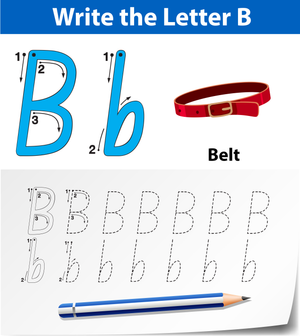
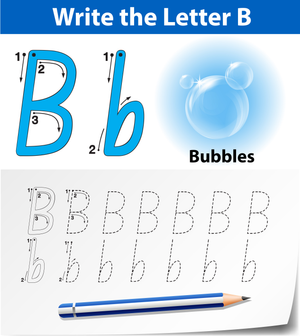
Cursive B worksheets give your students guided, repeatable practice on one of the trickier capital letters in the cursive alphabet. Most sheets pair a large model of the uppercase B with a lowercase b, add arrows that show stroke direction, provide dotted tracing rows, and leave blank lines for independent formation. For grades 2-4, that structure lets you move a class from tracing to copying to writing the letter from memory in a single lesson or across a short handwriting unit.
Because the capital B has a large top loop, a smaller bottom loop, and a starting stroke that trips up many writers, a dedicated worksheet keeps students focused on that one shape instead of rushing through the whole alphabet. You can use the same page for whole-class instruction, a small-group station, or a two-minute handwriting warm-up at the start of a block.
How to Form the Uppercase Cursive B
Model the uppercase B slowly before students pick up a pencil. Start at the baseline and stroke straight up to the top line. From the top, curve back down to form a large top loop, then continue into a smaller bottom loop that rests on the baseline. Finish with a short exit stroke that flicks to the right. Saying the strokes out loud, something like 'up, big loop, small loop, out,' gives students a verbal anchor they can repeat while they write.
In traditional cursive style, the capital B usually does not connect to the letter that follows it. Students lift the pen after the exit stroke and begin the next letter separately, which is different from most lowercase cursive joins. Point this out early so students don't force an awkward connection in names like 'Ben' or 'Bella.'
Forming the Lowercase Cursive b
The lowercase b starts with an upstroke from the baseline to the top line, travels back down the same path, and finishes with a small loop near the top before an exit stroke carries into the next letter. Unlike the capital, the lowercase b connects smoothly to whatever comes next, so practicing it inside short words builds fluency faster than isolated repetition.
Worksheets that show the letter by itself and then inside a word give you both the clean shape and the real connection on one page. Ask students to write a few short b words after the tracing rows so they feel how the letter links forward instead of stopping after each attempt.
Fixing the Most Common Cursive B Mistake
The error you will see most often is the downstroke dropping below the baseline. When that happens, the capital B starts to resemble a cursive F, and students lose the clean two-loop shape. A worksheet with a bold baseline and repeated tracing rows gives you an easy fix: have students trace slowly and stop the pencil exactly on the baseline each time.
Handwriting research reported by the NEA points to something worth sharing with families. Forming letters by hand activates neural pathways tied to reading, writing, and memory storage in ways that typing does not. That is one reason targeted formation practice on a single letter like B pays off beyond neat penmanship, because the motor act of drawing the loops reinforces the letter recognition that supports early reading.
Where Cursive B Fits in State Standards
Cursive is no longer a fading skill. More than half of US states now require or encourage cursive instruction as of 2026, and several set specific grade-level targets that make letters like B part of the expected curriculum.
According to EdWeek's 2023 reporting, more than half of US states now require or encourage cursive instruction, with states like Florida mandating legible cursive by grade 4. Lawmakers point to stagnant reading and writing scores and students' inability to read historical founding documents as key reasons for the revival.
States including Alabama, which sets an end-of-grade-3 target, Georgia in grades 3-5, and Tennessee in grades 2-4 build cursive into their standards, so a cursive B worksheet maps directly onto what many of your students are accountable for. If your state has a mandate, keep a few completed samples as evidence of instruction.
Classroom Implementation
Introduce the capital B as a teacher demonstration first, then release students to tracing, copying, and independent writing. A simple sequence works well: model on the board while narrating strokes, have students air-write the letter, then hand out the worksheet for tracing rows before they attempt the blank lines.
For small-group intervention, pull the four or five students who consistently drop the downstroke and give them extra tracing repetitions with a highlighted baseline. For early finishers, differentiate by asking them to write short B words like 'Bob,' 'baby,' or 'bubble' so they practice the capital-to-lowercase transition and the lowercase connections in context. Most students need several days of short, spaced practice rather than one long session to lock in the formation.
Frequently Asked Questions
1. How should teachers introduce the cursive capital B before assigning worksheets?
Model it first. Demonstrate the letter on the board while narrating each stroke, then have students air-write it before they touch the page. A quick teacher demo plus air-writing gives students the movement pattern, so the worksheet reinforces a shape they have already attempted rather than introducing it cold.
2. What grade level is appropriate for teaching cursive letter B?
Most cursive instruction happens in grades 2-4, and several state mandates target that window, with Tennessee expecting cursive in grades 2-4 and Georgia in grades 3-5. Second and third grade are the most common entry points, once students have solid print formation and enough fine motor control.
3. How can teachers fix students who drop the B's downstroke below the baseline?
Use a worksheet with a bold baseline and have students trace slowly, stopping the pencil exactly on the line each time. Pulling these students into a short small-group session with extra tracing repetitions usually corrects the F-like shape within a few practice days.
4. How many repetitions do students need to master cursive B?
There is no fixed number, but short, spaced practice works better than one long session. Five to ten careful letters a day across several days typically produces more durable formation than a single full worksheet completed in one sitting.
5. Should capital B connect to the next letter in cursive words?
No. In traditional cursive, the capital B does not connect to the following letter. Students finish the exit stroke, lift the pen, and start the next letter separately, unlike the lowercase b, which connects smoothly into the rest of the word.