


























1 / 2
0
Views
0
Downloads

0.0
0
Save
0 Likes
Explore Halloween Cat Idioms
0 Views
0 Downloads
Paste this activity's link or code into your existing LMS (Google Classroom, Canvas, Teams, Schoology, Moodle, etc.).
Students can open and work on the activity right away, with no student login required.
You'll still be able to track student progress and results from your teacher account.
Information
Description
What It Is:
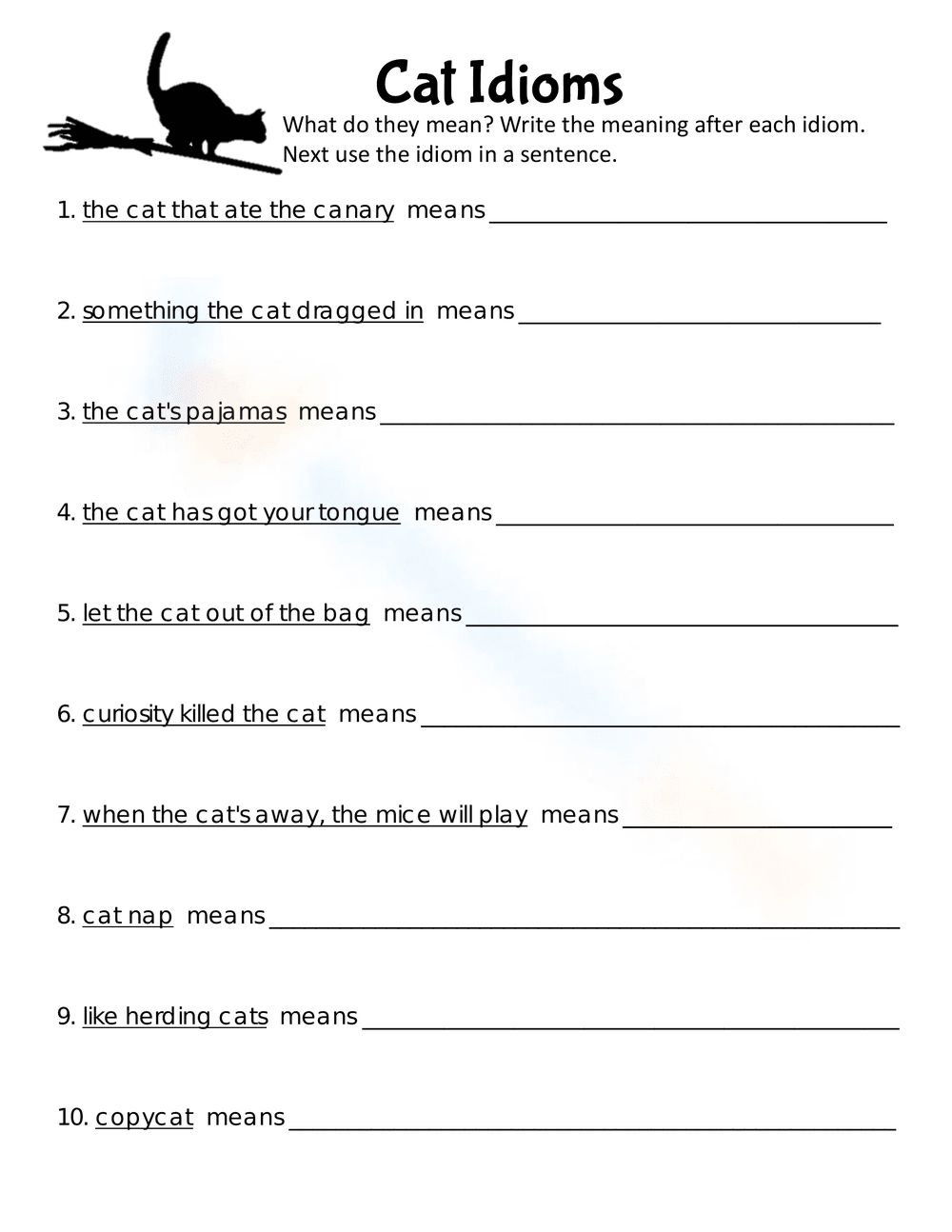
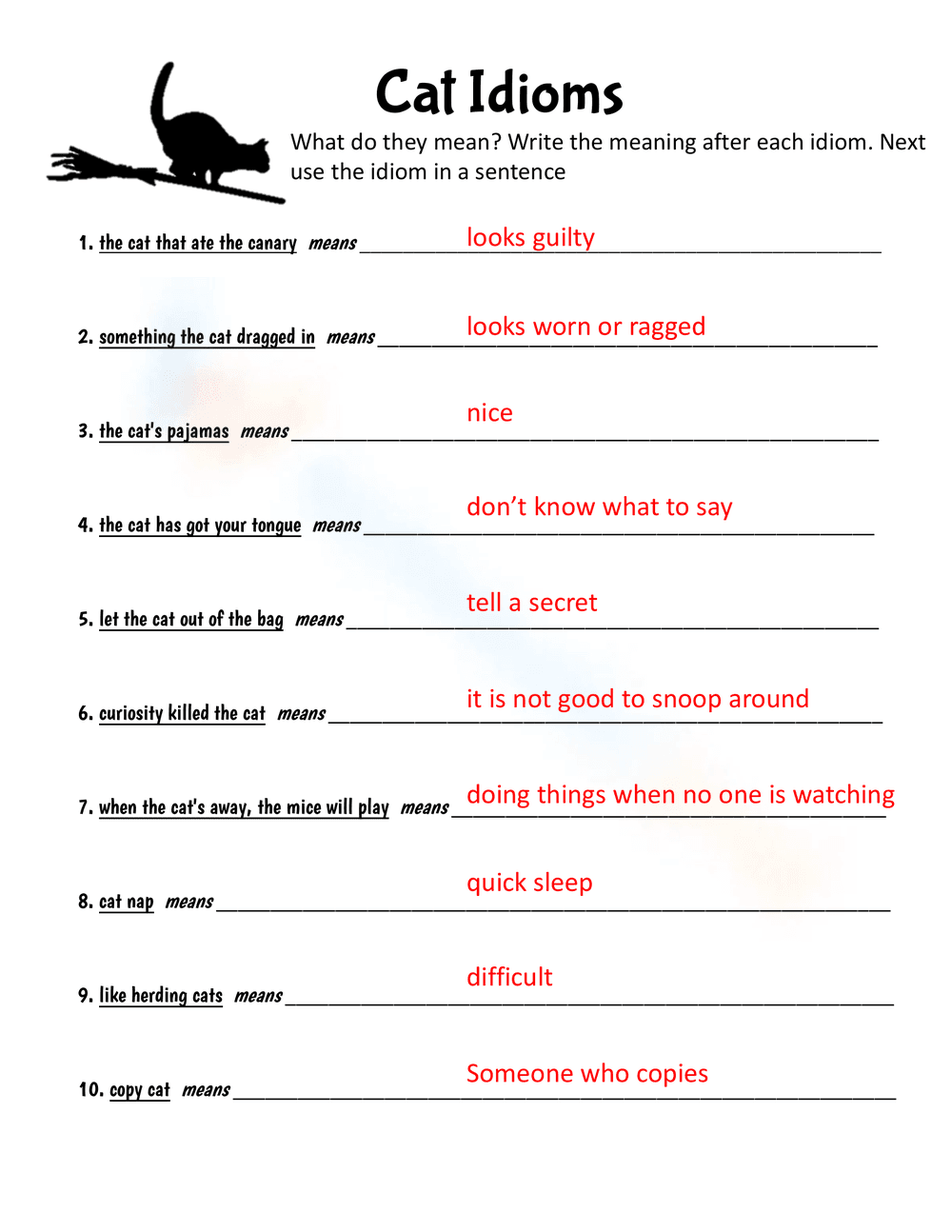
This is an educational worksheet focusing on 'Cat Idioms.' The worksheet presents ten common idioms that include the word 'cat,' such as 'the cat that ate the canary,' 'something the cat dragged in,' and 'curiosity killed the cat.' Students are asked to write the meaning of each idiom and then use the idiom in a sentence.
Grade Level Suitability:
This worksheet is suitable for grades 4-7. It requires reading comprehension to understand the idioms, vocabulary skills to define them, and writing skills to use them correctly in sentences. The complexity of the idioms makes it more appropriate for upper elementary and middle school students.
Why Use It:
This worksheet helps students improve their understanding and use of idioms, which are an important part of figurative language. It enhances vocabulary, reading comprehension, and writing skills. It also introduces students to the cultural significance of common expressions.
How to Use It:
First, read each idiom carefully. Then, research or brainstorm the meaning of each idiom. Write the meaning of the idiom on the line provided. Finally, write a sentence that correctly uses the idiom in context.
Target Users:
This worksheet is ideal for teachers looking for engaging activities to teach idioms, homeschool parents reinforcing language arts concepts, and students who need extra practice with figurative language. It's also useful for ESL students learning common English expressions.
This is an educational worksheet focusing on 'Cat Idioms.' The worksheet presents ten common idioms that include the word 'cat,' such as 'the cat that ate the canary,' 'something the cat dragged in,' and 'curiosity killed the cat.' Students are asked to write the meaning of each idiom and then use the idiom in a sentence.
Grade Level Suitability:
This worksheet is suitable for grades 4-7. It requires reading comprehension to understand the idioms, vocabulary skills to define them, and writing skills to use them correctly in sentences. The complexity of the idioms makes it more appropriate for upper elementary and middle school students.
Why Use It:
This worksheet helps students improve their understanding and use of idioms, which are an important part of figurative language. It enhances vocabulary, reading comprehension, and writing skills. It also introduces students to the cultural significance of common expressions.
How to Use It:
First, read each idiom carefully. Then, research or brainstorm the meaning of each idiom. Write the meaning of the idiom on the line provided. Finally, write a sentence that correctly uses the idiom in context.
Target Users:
This worksheet is ideal for teachers looking for engaging activities to teach idioms, homeschool parents reinforcing language arts concepts, and students who need extra practice with figurative language. It's also useful for ESL students learning common English expressions.


