


























Views
Downloads
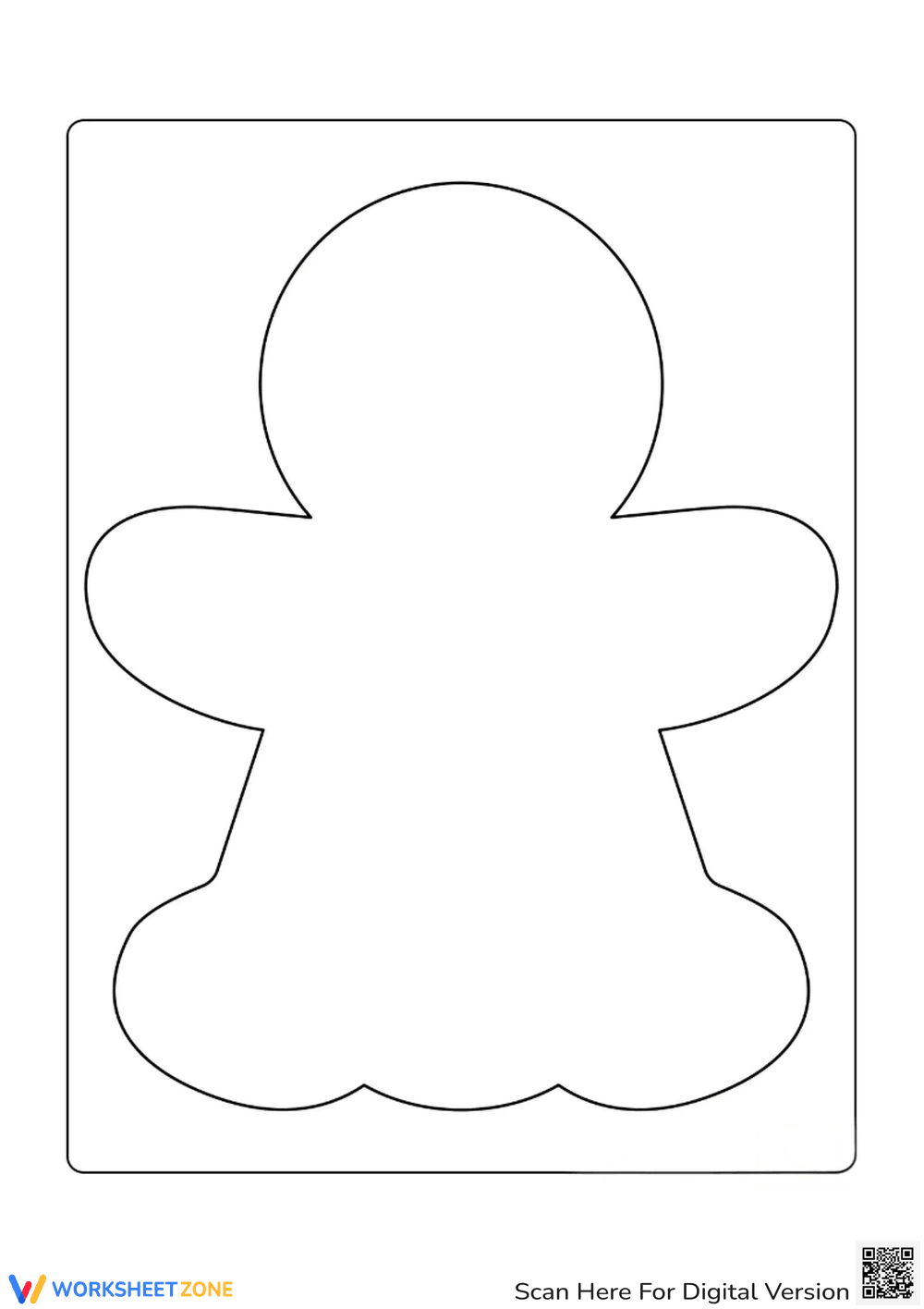

Gingerbread Silhouette Printable Worksheet | Grade K
Paste this activity's link or code into your existing LMS (Google Classroom, Canvas, Teams, Schoology, Moodle, etc.).
Students can open and work on the activity right away, with no student login required.
You'll still be able to track student progress and results from your teacher account.
This Gingerbread Silhouette coloring page provides a versatile foundation for early learners to develop fine motor control and creative expression. By decorating the blank outline, students practice hand-eye coordination while engaging with holiday themes. It serves as an excellent open-ended canvas for Preschool and Kindergarten students to explore textures, colors, and patterns during seasonal lessons.
At a Glance
- Grade: Kindergarten · Subject: Fine Art
- Standard:
CCSS.ELA-LITERACY.SL.K.5— Add drawings or visual displays to descriptions to provide additional detail- Skill Focus: Fine Motor Control
- Format: 1 page · 1 creative task · No answer key needed · PDF
- Best For: Holiday centers, morning work, and art stations
- Time: 15–20 minutes
What's Inside
Inside this resource, you will find a single-page, high-resolution PDF featuring a bold gingerbread man silhouette. The minimalist design is intentional, removing distractions to allow students to focus on their own artistic choices. There are no complex instructions or word banks, making it accessible for non-readers and English Language Learners who need a visual-first activity.
Zero-Prep Workflow
The zero-prep workflow for this worksheet is designed for maximum efficiency. First, print the single-page PDF (30 seconds). Second, distribute the sheets along with crayons, markers, or craft materials like buttons and glitter (1 minute). Third, review the students' unique designs as a formative check for grip strength and spatial awareness (ongoing). Total teacher preparation time is under 2 minutes. This makes it an ideal choice for emergency sub plans or transition periods.
Standards Alignment
This activity aligns with `CCSS.ELA-LITERACY.SL.K.5`, which encourages students to use visual displays to enhance their communication. While primarily an art activity, it supports the language strand by providing a concrete subject for descriptive speaking or writing exercises. This standard code can be copied directly into lesson plans, IEP goals, or district curriculum mapping tools.
How to Use It
Use this worksheet during a literature unit to help students visualize characters from holiday stories. It works best as a post-reading activity where students decorate the silhouette based on specific story details. Formatively, observe how students handle coloring tools; those struggling to stay within the thick borders may need additional finger-strengthening exercises. Completion typically takes 15 to 20 minutes.
Who It's For
This resource is ideal for Preschool and Kindergarten students, particularly those working on pre-writing skills. It is highly effective for students with occupational therapy goals or those in inclusive classrooms needing low-stakes creative outlets. Pair this with a holiday-themed read-aloud or an anchor chart describing different textures and colors.
According to the RAND AIRS 2024 report on early childhood development, open-ended creative tasks like this CCSS.ELA-LITERACY.SL.K.5 aligned silhouette are vital for developing the intrinsic motivation necessary for later academic persistence. By focusing on a single, clear task, students build the hand-eye coordination required for letter formation without the pressure of formal writing. Research from Fisher & Frey (2014) suggests that integrating visual arts into the English Language Arts curriculum helps young learners bridge the gap between abstract concepts and concrete representation. This 1-page worksheet provides a structured yet flexible environment for this development. Educators can use this resource to document progress in fine motor mastery, a key indicator of school readiness. The simplicity of the gingerbread outline ensures that the focus remains on the student's individual skill application rather than complex instructional processing, making it a reliable tool for diverse classroom settings.


