


























This lesson introduces students to the concepts of fractions and decimals, as well as their relationships. The students will:
- use visual models to depict fractions and terminating decimals.
- use tenths and hundredths grids as well as parallel number lines to calculate fraction and decimal equivalents.
- understand the relationships between fractions and decimals.
- How can mathematics help to quantify, compare, depict, and model numbers?
- How are relationships represented mathematically?
- What does it mean to analyze and estimate numerical quantities?
- What makes a tool and/or strategy suitable for a certain task?
- Decimal: A number written using base ten place value, includes a decimal point.
- Decimal Fraction: A numerical fraction with 10 or 100 as its denominator, written to show the fractional place values after a decimal point.
- Denominator: In a fraction, the number or quantity below the fraction bar. Tells the number of equal parts into which a whole is divided.
- Fraction: Notation used to represent part of a whole or part of a group by telling the number of equal parts in the whole (denominator), and the number of those parts being described (numerator).
- Mixed Number: The sum of a whole number and a fraction.
- Numerator: In a fraction, the number or quantity above the fraction bar. Tells the number of parts of a whole being described.
- Unit Fraction: A fraction with a numerator of 1.
- Tenths and Hundredths Grids (M-4-3-2_Tenths and Hundredths Grids)
- Parallel Number Line worksheet (M-4-3-1_Parallel Number Line Sheet)
- Fraction Decimal Shading Worksheet (M-4-3-2_Fraction Decimal Shading Worksheet and KEY)
- Fraction Decimal Number Line Worksheet (M-4-3-2_Fraction Decimal Number Line Worksheet and KEY)
- Observe students during classroom activities and discussions.
- Use the comparisons made throughout the Small Group Extension assignment to evaluate student progress and remediate concepts as needed.
Scaffolding, Active Engagement, and Modeling
W: Students go over the concept of modeling a fraction with a tenths and hundredths grid.
H: Students utilize tenths and hundredths grids to represent fractions.
E: Students investigate how fractions and decimals can be compared on the number line.
R: Students reflect on what they learned in the fraction/decimal/number line lesson and discuss the relationships they discovered between fractions and decimals.
E: The teacher assesses students' understanding through discussions and questions, as well as completing worksheets.
T: The lesson can be adapted to the student's needs. For a simpler exercise, students can match equivalent fractions and decimals. Students can take the concept of comparing fractions a step further by using decimals greater than one.
O: Students use a variety of grids and number lines to compare fractions and decimals.
"Just as we've used models to represent fractions, you can also use them to represent decimals. Where have you seen or used decimals?" (Example responses: money, measurement, miles, time, sports statistics.) "Fractions and decimals are similar in that they both show parts of a whole."
Show the following grids and explain how they're shaded. Ask students to describe what they believe each grid represents. 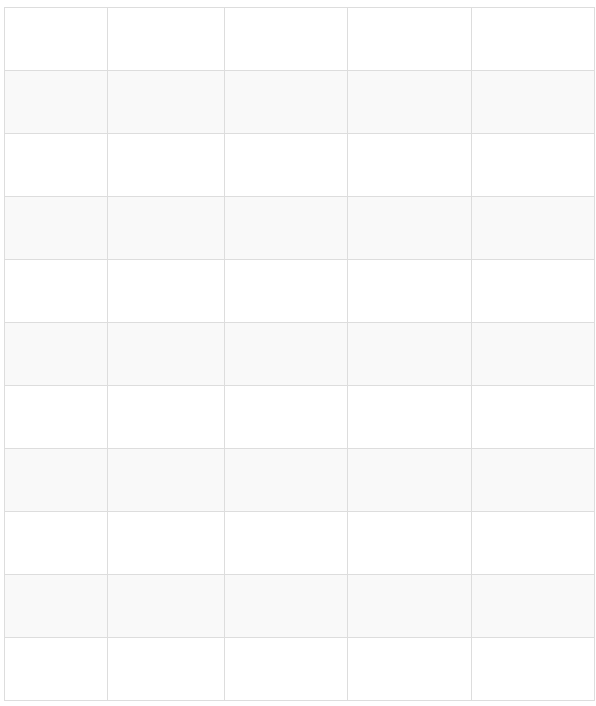
Use the tenths grid (M-4-3-2_Tenths and Hundredths Grids). "What would we color to show seven-tenths?" (7 of 10 squares)
Use the hundredths grid (M-4-3-2_Tenths and Hundredths Grids). "What color would we choose to represent seven hundredths? What do you observe about the two grids?" (The same amount of the grid is shaded.)
Show students how to label the colored amount as both a fraction and a decimal using the following steps:
Step 1: Find the total number of unit squares in your grid. Are you using the basis of 10 or the base of 100? This is your denominator.
Step 2: Count the number of shaded squares. Write this number as a fraction of the total number of unit squares.
Step 3: Express your fraction as a decimal. Consider how the fraction can be expressed in words. For example, \(7 \over 10\) literally translates to "seven-tenths." The number 0.7 also indicates "seven-tenths," because the digit 7 is in the tenth place. Therefore, \(7 \over 10\) equals 0.7.
Step 4: Find an equivalent fraction. For example, 0.7 is equal to 0.70. The first is pronounced as "seven-tenths" or \(7 \over 10\). The latter is denoted as "seventy-hundredths," or \(70 \over 100\). This signifies that \(7 \over 10\) = \(70 \over 100\).
Stress that:
1. The fractions from Step 4 are all equivalent values.
2. The decimal representation of a fraction should be presented with an emphasis on the language used to accurately interpret a decimal. For example, 0.7 is read as "zero and seven-tenths," rather than "zero point seven."
3. The (reduced) fraction name and decimal name are the same. (For example, 0.7 and \(7 \over 10\) are both called "seven-tenths.")
Students can practice more by completing the Fraction Decimal Shading worksheet (M-4-3-2_Fraction Decimal Shading Worksheet and KEY). Students do the following:
To represent the grid's fraction, shade specific squares.
Count the number of shaded squares.
Write a fraction of the shaded squares out of 100.
Write the fraction as a decimal. (Remind students to create a decimal point with a zero on the left.)
"A decimal that refers to the same part of a whole as a fraction is its decimal equivalent. To convert a fraction to a decimal, find an equivalent fraction with a denominator of 10 or 100. Consider the following three approaches to modeling the fraction one-half." Draw the models on the board. 
"Which decimals are used to describe the shaded part of the grid?" (0.5 and 0.50) "How are the two decimals the same?" (The ones and tenths digits are the same in both numbers.) "How do the shaded models show that the expressions are all equal?" (They all shade the same amount of the whole.) "Another way to show equivalent fraction and decimal amounts is with a number line." 
Students can practice more by completing the Fraction Decimal Number Line Worksheet (M-4-3-2_Fraction Decimal Number Line Worksheet and KEY). After students have completed the worksheet, bring them back together and ask them to describe how they determined equivalent fractions and decimals. Ask the question, "What did you learn about the relationships between fractions and decimals?" Ask if the following statements are true or false:
\(3 \over 5\) = 0.60 “True or False? Explain.” (True. \(3 \over 5\) = \(30 \over 50\) = \(60 \over 100\); \(60 \over 100\) means “sixty-hundredths,” which can also be written as 0.60.)
\(1 \over 5\) = 0.2 “True or False? Explain.” (True. \(1 \over 5\) = \(10 \over 50\) = \(20 \over 100\); \(20 \over 100\) means “twenty-hundredths,” which can also be written as 0.20; 0.20 is the same as 0.2.)
\(8 \over 10\) = 0.80 “True or False? Explain.” (True. \(8 \over 10\) = \(80 \over 100\); \(80 \over 100\) means “eighty-hundredths,” which can also be written as 0.80.)
Calculators are useful for determining fractional and decimal relationships. Students may investigate this by themselves, or you may direct them to divide the numerator by the denominator to obtain the decimal. Remind students that "Fraction bars are symbols that mean division." It is important to note that fractions on a calculator do not include zeros to the right of the last digit following the decimal. For example, 0.50 will be denoted as 0.5.
Extension:
Routine: Write five fractions and five equivalent decimals on the board in a random order. Ask students to match any fractions and decimal equivalents. Allow students to use grid paper as needed. Begin by utilizing fractions with denominators of 10 and 100, as shown in the lesson. Continue to additional decimal and fraction counterparts, such as 0.75 and \(3 \over 4\).
Small Groups: Divide the class into pairs. Have one student in each pair write a decimal and his or her partner write an equivalent fraction. For example, if Gretchen chooses the decimal 0.7, her partner should write \(7 \over 10\). Ask students to take turns naming the decimal and writing the equal fraction. Allow students to investigate whether several answers are possible and explain why or why not. Encourage students to investigate alternative equivalencies when they have mastered tenths and hundredths, such as 0.25 and \(1 \over 4\) or 0.75 and \(3 \over 4\). Allow students to keep the comparisons they documented to demonstrate what they've learnt.
Expansion: Give students fractions greater than one and have them calculate the decimal equivalent, or vice versa. For example \(1 {3 \over 10} \) would be 1.3.

Fraction and Decimal Equivalents (M-4-3-2)
This lesson introduces students to the concepts of fractions and decimals, as well as their relationships. The students will:
- use visual models to depict fractions and terminating decimals.
- use tenths and hundredths grids as well as parallel number lines to calculate fraction and decimal equivalents.
- understand the relationships between fractions and decimals.


