


























Views
Downloads

Printable Elf on the Shelf Coloring Page | Grade K
Paste this activity's link or code into your existing LMS (Google Classroom, Canvas, Teams, Schoology, Moodle, etc.).
Students can open and work on the activity right away, with no student login required.
You'll still be able to track student progress and results from your teacher account.
This printable Elf on the Shelf coloring page provides young students with an engaging creative outlet while developing essential fine motor skills. By coloring this festive character, early learners practice hand-eye coordination and grip control, setting a strong foundation for future handwriting success in the classroom.
At a Glance
- Grade: Kindergarten · Subject: Arts & Crafts
- Standard:
CCSS.ELA-LITERACY.W.K.3— Use drawing to narrate an event- Skill Focus: Fine motor control
- Format: 1 page · 1 problem · No answer key · PDF
- Best For: Morning work or early finishers
- Time: 15–20 minutes
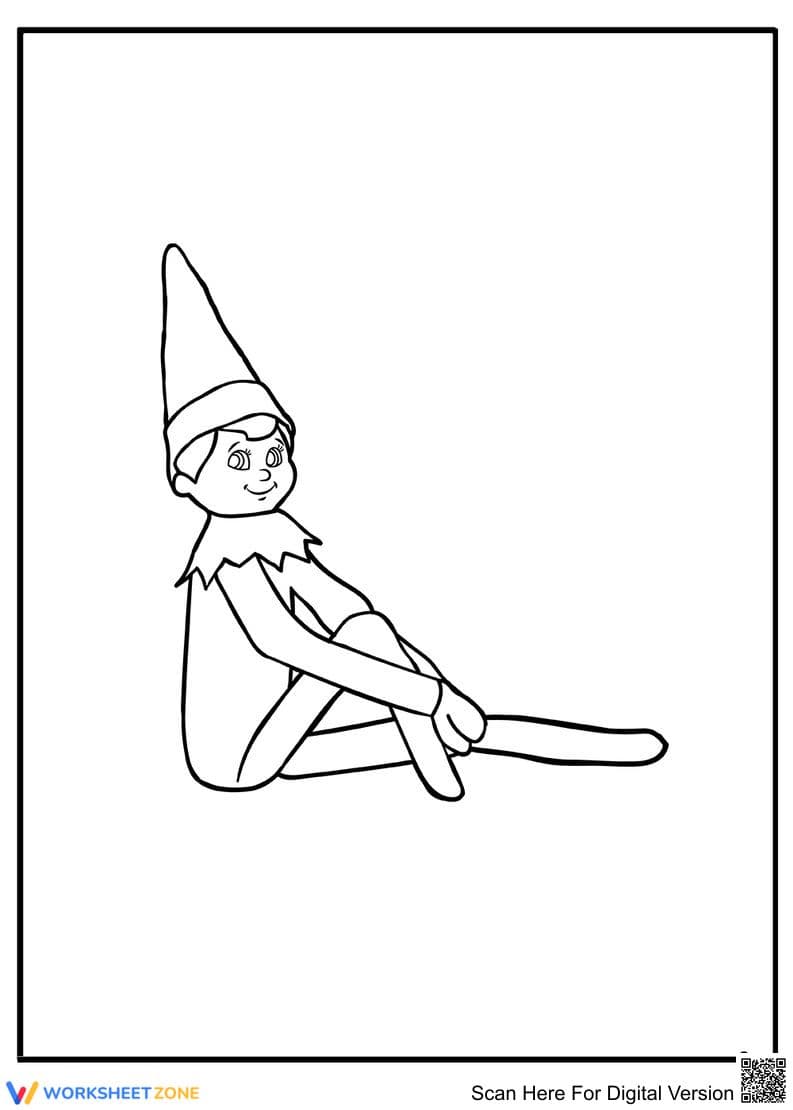
Inside this single-page download, educators will find a clear, bold line drawing of a classic holiday elf sitting on the floor. The worksheet features a single, large-scale illustration designed specifically for small hands to color easily. There are no complex instructions or distracting background elements, allowing children to focus entirely on their color selection and staying within the lines. An answer key is not required for this open-ended creative task.
This resource is designed for immediate classroom implementation with a streamlined zero-prep workflow. First, print the PDF file (under 1 minute). Next, distribute the pages along with crayons or markers to your students (1 minute). Finally, review their completed artwork or have them dictate a short story about the elf (3 minutes). The total teacher preparation time is under two minutes, making this an excellent, stress-free option for emergency sub plans or unexpected schedule changes during the busy holiday season.
This activity aligns with CCSS.ELA-LITERACY.W.K.3, which encourages students to use a combination of drawing, dictating, and writing to narrate a single event or story. While primarily a fine motor task, teachers can easily extend the activity by asking students to verbally describe what the elf is doing. Both standard codes can be copied directly into lesson plans, IEP goals, or district curriculum mapping tools.
This coloring page serves as an excellent morning work activity to help students settle into their daily routine during the month of December. Alternatively, it functions perfectly as an independent center station while the teacher conducts small group reading instruction. As a formative assessment tip, observe students' pencil grip and pressure as they color; this provides valuable insight into their fine motor development and readiness for more advanced writing tasks. Expect students to spend 15 to 20 minutes completing their artwork.
This resource is primarily designed for Kindergarten and preschool students who are actively developing their fine motor control and spatial awareness. It naturally accommodates diverse learners, as students can engage with the material at their own developmental level using various mediums like crayons, colored pencils, or even watercolors. Pair this coloring page with a holiday read-aloud or a classroom discussion about winter traditions to create a cohesive seasonal lesson.
Integrating creative tasks supports broader educational goals in early childhood development. According to a recent ScienceDirect TpT Analysis, incorporating visual arts and fine motor activities directly correlates with improved handwriting proficiency in young learners. When students engage with materials aligned to CCSS.ELA-LITERACY.W.K.3, they practice using drawing to narrate an event, bridging the gap between visual expression and early literacy skills. Activities requiring sustained attention to visual details help build the stamina necessary for formal writing instruction. By providing structured creative outlets, educators foster physical dexterity and imaginative thinking, ensuring students build foundational skills for long-term academic success.


