


























Students will look into instances that include division by whole numbers as repeated subtraction and division by fractions as repeated subtraction. Students will:
- begin with writing the expressions needed to answer division problems that involve grouping and sharing.
- extend the concept of measurement division (knowing the size of a group and finding the number of groups) to fractional-sized groups.
- use unit strips or area models to visually express their reasoning and computations.
- translate the model into symbolic expressions that are division statements with fractions.
- generalize the patterns that result from evaluating expressions (for example, dividing a whole number by a fraction result in an amount larger than the whole number since the result is counting the number of groups).
- How are relationships represented mathematically?
- How can mathematics help us communicate more effectively?
- How can mathematics help to quantify, compare, depict, and model numbers?
- What does it mean to analyze and estimate numerical quantities?
- What makes a tool and/or strategy suitable for a certain task?
- Equivalent Fractions: Two or more fractions that represent the same amount.
- Factor: A whole number that divides evenly into another whole number.
- Fraction: A number expressible in the form a/b where a is a whole number and b is a positive whole number.
- Numerical Expressions: Any combination of numbers and symbols that represent a mathematical relationship.
- Unit Fraction: A fraction with a numerator of one.
- graham crackers or linking cubes
- copies of Four Square - Division by a Fraction (M-5-2-2_Four Square - Division by a Fraction and KEY)
- copies of Four Square - Division by a Whole Number (M-5-2-2_Four Square - Division by a Whole Number and KEY)
- copies of Admit Ticket (M-5-2-2_Admit Ticket and KEY)
- copies of Recipe Conversion (M-5-2-2_Recipe Conversion and KEY)
- At the start of the class, use the Admit Ticket to assess the students' understanding of fraction division.
- Observe students during the station rotation activity to assess their progress.
Scaffolding, Active Engagement, Modeling, Explicit Instruction, and Formative Assessment
W: The lesson focuses on division utilizing fractions, whole numbers, and story problems such as recipe conversion.
H: To motivate students to master fraction division, provide a trail-mix recipe that requires cutting in half. The Admit Ticket can be used to pre-test a student's understanding of fraction division.
E: To help students visualize fraction division, use the graham cracker and peanut butter cup problems (may be linking cubes can also be used to explain).
R: Rotate workstations to help students practice dividing whole numbers by fractions, dividing fractions by whole numbers, and converting recipes.
E: Include a teacher-help workstation in the rotation to identify students who require additional instruction. After assisting these students, spend some time monitoring and analyzing the remaining students at the workstations.
T: Admit Tickets can be used to assess whether the lesson should be more complex or easier, according on the student's abilities and present understanding of fraction division.
O: The lesson aims to teach division of fractions in a progressive way. Once students have demonstrated understanding of dividing a fraction by a whole number or a whole number by a fraction, the next stage of learning would be to divide a fraction by a fraction.
Say, "Today, we'll look at fractional division. Sometimes we need to divide a fraction by a whole number, a whole number by a fraction, or a fraction by a fraction. If you have half a pie and wish to divide it equally among three friends, how much of the original pie will each person receive? If you have 15 feet of ribbon and need to produce sashes that are \(3 {1 \over 2} \) feet long, how many can you make? Looking at these examples, it's clear that knowing how to divide fractions can help you calculate the correct amount."
"We found a recipe to make trail mix."
\(1 {1 \over 2} \) cups peanuts
\(2 \over 3\) cup chocolate chips
\(1 \over 2\) cup raisins
\(1 \over 4\) cup coconut
\(1 \over 4\) cup sunflower seeds
"We understand the recipe will make too much trail mix, so we'd like to prepare only half of it. How would we go about figuring out how much of each ingredient we need? Remember, we want this trail mix recipe. We don't want it to taste different, so we can't just divide one component by two without dividing the other ingredients by two as well."
Allow students time to interact with one another. Share responses. Look for similarities in thought. Guide the discussion toward the realization that we would need to divide each of the elements by two.
"Today's lesson will help us to understand how to divide in situations that involve fractions."
Use graham crackers scored into fourths. If actual graham crackers are not available, model using linking cubes in sets of four. Ask three students to take a full graham cracker (or a set of connecting cubes). Have these three students carefully break the graham crackers (or connecting cubes) into four equal pieces. Ask them to come up with a division equation or expression to reflect this concept, and then explain what it represents. Save the equation for students to see. (3 ÷ \(1 \over 4\); there were three wholes, and students divided each whole into four equal pieces, or fourths.)
Review the terms dividend, divisor, and quotient. The dividend is the total amount, the divisor is the number we're dividing by, and the quotient is the result. Ask students, "What will the quotient be?" (12)
"What do you notice about the quotient compared to the original number of pieces?" (The sum has increased. When you divide a whole number by a fraction, the number increases. Usually, when dividing, the quotient is a smaller amount.)
Create another example using a picture. "Let's imagine there are five packages of peanut butter cups (dividend). We know that each package contains two peanut butter cups.
"If we separate the peanut butter packages, how many peanut butter cups will we have total? In other words, how many halves can fit into five?" (10)
"What is a division number sentence?" How do you know?" (5 ÷ \(1 \over 2\) =___, to determine how many groups of \(1 \over 2\) make into 5.)
"Are you starting to see a relationship between the quotient and the dividend/divisor?" (The quotient becomes larger. It appears that multiplying the full number (dividend) by the denominator in the divisor gives the quotient.)
"Another way to look at this is to ask, 'How many ----- fit in ____?' If you have a problem 3 ÷ \(1 \over 2\) = ___, you might ask the question: 'How many \(1 \over 2\) s fit into 3?' Another way to put this is 'How many one-half pieces did you get?'" Ask students how they can solve this problem using a manipulative, a visual, or repeated subtraction. If you utilize manipulatives such as fraction circles, you can take three wholes and half pieces on top of them. After modeling, ask students, "Now count the number of halves. How many halves are there?" (6 halves).
When drawing a picture, make three holes. Then, divide each whole in half and count the number of halves: six halves.
Remind students that repeated subtraction is a form of division (12 – 3 = 9; 9 – 3 = 6; 6 – 3 = 3, 3 – 3 = 0; 12 ÷ 3 = 4), similar to how repeated addition is a form of multiplication (3 + 3 + 3 + 3 = 12; 3 × 4 = 12). Using this method, you can discover 3 ÷ \(1 \over 2\) by doing 3 – \(1 \over 2\) = \(2 {1 \over 2} \); \(2 {1 \over 2} \) - \(1 \over 2\) = 2; 2 – \(1 \over 2\) = \(1 {1 \over 2} \); \(1 {1 \over 2} \) - \(1 \over 2\) = 1, 1 – \(1 \over 2\) = \(1 \over 2\) ; \(1 \over 2\) - \(1 \over 2\) = 0. Make sure to explain to students that \(1 \over 2\) was subtracted 6 times, so the answer to the division problem using the repeated subtraction approach is 6. Do additional problems as needed.
"What do you think will happen if we start with a fraction and divide by a whole number?" Allow students to engage in dialogue and discussion with each other. Share your predictions and reasoning. (Possible answers: Because we were practicing similar problems, the quotient will be larger than both the divisor and the dividend. The quotient will be smaller since dividing a small number by a larger number gets an even smaller number.)
"Let's see if any of our predictions were accurate. If we have \(3 \over 5\) ÷ 3, what is the quotient? We might look at it by asking ourselves, 'How can we divide \(3 \over 5\) into 3 equal groups?' Any ideas?" (I know the denominator indicates what size piece I have: fifths. I know I have three of these items. So, each group can receive one of these pieces. The quotient would be \(1 \over 5\).)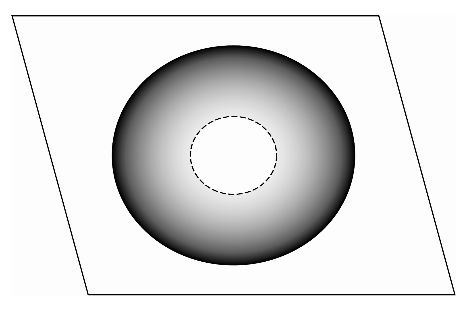
Repeat these problems until students recognize a pattern: \(4 \over 6\) ÷ 2 = \(2 \over 6\), reduced to \(1 \over 3\). Try another: \(10 \over 15\) ÷ 5 = \(2 \over 15\).
"Is anyone starting to see a pattern?" (The denominator remains constant since it indicates what size piece we are referring to. We split the numerator into the whole number we are dividing by.)
"Can anyone come up with an equation that would fit this pattern?" Allow students time to communicate with each other. Ask students to share their equations and write them down on chart paper or a whiteboard. Once the equations have been recorded, discuss them in class to see if they follow the pattern. Clarify any misconceptions.
"Now what happens if we cannot break up the numerator into equal groups as in the equation: \(1 \over 2\) ÷ 2?" Encourage students to share their ideas. (Possible answers include: You will need to break apart the leftover pieces. You might need to use equivalent fractions. The denominator will not be the same.)
"Let's see if any of our suggestions can assist us address the following problem:
\(1 \over 2\) ÷ 2 = ? I have a half. If I draw a whole and divide it in half, how do I divide the half in two equal parts?"
"I know from the drawing that \(2 \over 4\) is equivalent to \(1 \over 2\). Now I can divide \(2 \over 4\) into two groups, like we did before. Each group would then receive \(1 \over 4\). So \(1 \over 2\) ÷ 2 = \(1 \over 4\)."
"If we look at the answer, we can see that the quotient is less than the dividend. Is that what we originally thought?"
Station Rotation
Set up four stations for further practice. Divide students into four groups and assign them to work at each station for about seven to ten minutes. Any student who requires assistance can go to Station 4, receive it, and then return to the station rotation when ready.
Station 1: Four Square - Division by Fraction (M-5-2-2_Four Square - Division by a Fraction and KEY). Give students an answer key to check their answers.
Station 2: Four Square - Divide by Whole Number (M-5-2-2_Four Square - Division by a Whole Number and KEY). Give students an answer key to check their answers.
Station 3: Recipe Conversion (M-5-2-2_Recipe Conversion and KEY). Divide each item in the prior lesson's recipe by 4. Rewrite the recipe with the adjusted ingredient amounts.
Station 4: At this station, students will meet with you to discuss any difficulties they are having and to seek answers to any questions they may have. This is where you may discuss the recipe conversion or share your answers. You can also informally test student comprehension by asking them the following questions:
"What are the three parts of a division equation?" (dividend, divisor, quotient)
"When you divide a whole number by a fraction, what happens to the quotient?" (becomes larger than the dividend)
"When you divide a fraction by a whole number, what happens to the quotient?" (becomes smaller than the dividend)
"When might you have to divide fractions in the real world?" (baking, measuring, sharing items)
Use the data from task rotation to evaluate student understanding. Examine the responses to the four squares that required written explanations and highlight any areas that may need to be reviewed. Allowing students to examine their work throughout station rotations provides them with the immediate feedback they need to monitor their own comprehension. Teacher observation and student engagement at Station 4 will promote comprehension.
Extension:
Routine: Emphasize the right use of vocabulary in lessons and classroom discussions. Allow students to collaborate with partners or small groups on various activities. Use an Admit Ticket, as described below, or review other exercises to reinforce mathematical ideas and assess understanding.
An Admit Ticket (M-5-2-2_Admit Ticket and KEY) is a strategy for reinforcing or assessing previously taught skills. As students enter the classroom, present them an Admit Ticket (task card/note card). Students may be assigned one of the word problems written by students on the four-square station rotation sheets. Direct them to solve the problem quickly and discuss their accuracy and logic with a classmate. This gives you another opportunity to identify which students demonstrate mastery and which may require extra practice.
Small Group: Small-group instruction, based on formative assessments, can help strengthen understanding. Construction paper shapes can be used to represent items like candy bars or pizza. After being presented with a situation, students can be asked to "break up" the group into equal parts. For example, suppose you have three pizzas and want to divide each one into sixths. How many pieces will there be in total? Students can cut or fold the whole to show the division process.
Expansion: Ask students who can quickly divide fractions by whole numbers to find a recipe of their choice and halve or quarter the ingredients.
Students can also experiment with the division method "invert and multiply." Remind students that dividing something by a whole number results in equal parts. This is equivalent to taking the fractional part, which involves multiplication. Look at the problem from earlier in the class, \(1 \over 2\) ÷ 2 = ___. Using the invert-and-multiply algorithm, the issue becomes \(1 \over 2\) × \(1 \over 2\) = \(1 \over 4\). Remind students that dividing by 2 is equivalent to multiplying by \(1 \over 2\).
Another example: \(3 \over 5\) ÷ 3 = ___. Using the invert-and-multiply algorithm, the problem becomes \(3 \over 5\) × \(1 \over 3\) = \(3 \over 15\), which equals \(1 \over 5\). Dividing a number into 3 parts is equivalent to taking \(1 \over 3\) and multiplying by \(1 \over 3\). After reviewing examples, ask students to apply their knowledge to equations like ÷= ___. Encourage students to try additional instances and explain in words why the invert-and-multiply strategy works for dividing fractions.

Dividing with Fractions (M-5-2-2)
Students will look into instances that include division by whole numbers as repeated subtraction and division by fractions as repeated subtraction. Students will:
- begin with writing the expressions needed to answer division problems that involve grouping and sharing.
- extend the concept of measurement division (knowing the size of a group and finding the number of groups) to fractional-sized groups.
- use unit strips or area models to visually express their reasoning and computations.
- translate the model into symbolic expressions that are division statements with fractions.
- generalize the patterns that result from evaluating expressions (for example, dividing a whole number by a fraction result in an amount larger than the whole number since the result is counting the number of groups).


