




























0
Views
0
Downloads

Save
0 Likes
Share
Practicing Direct Speech in Writing
0 Views
0 Downloads

Paste this activity's link or code into your existing LMS (Google Classroom, Canvas, Teams, Schoology, Moodle, etc.).
Students can open and work on the activity right away, with no student login required.
You'll still be able to track student progress and results from your teacher account.
Information
Description
What It Is:
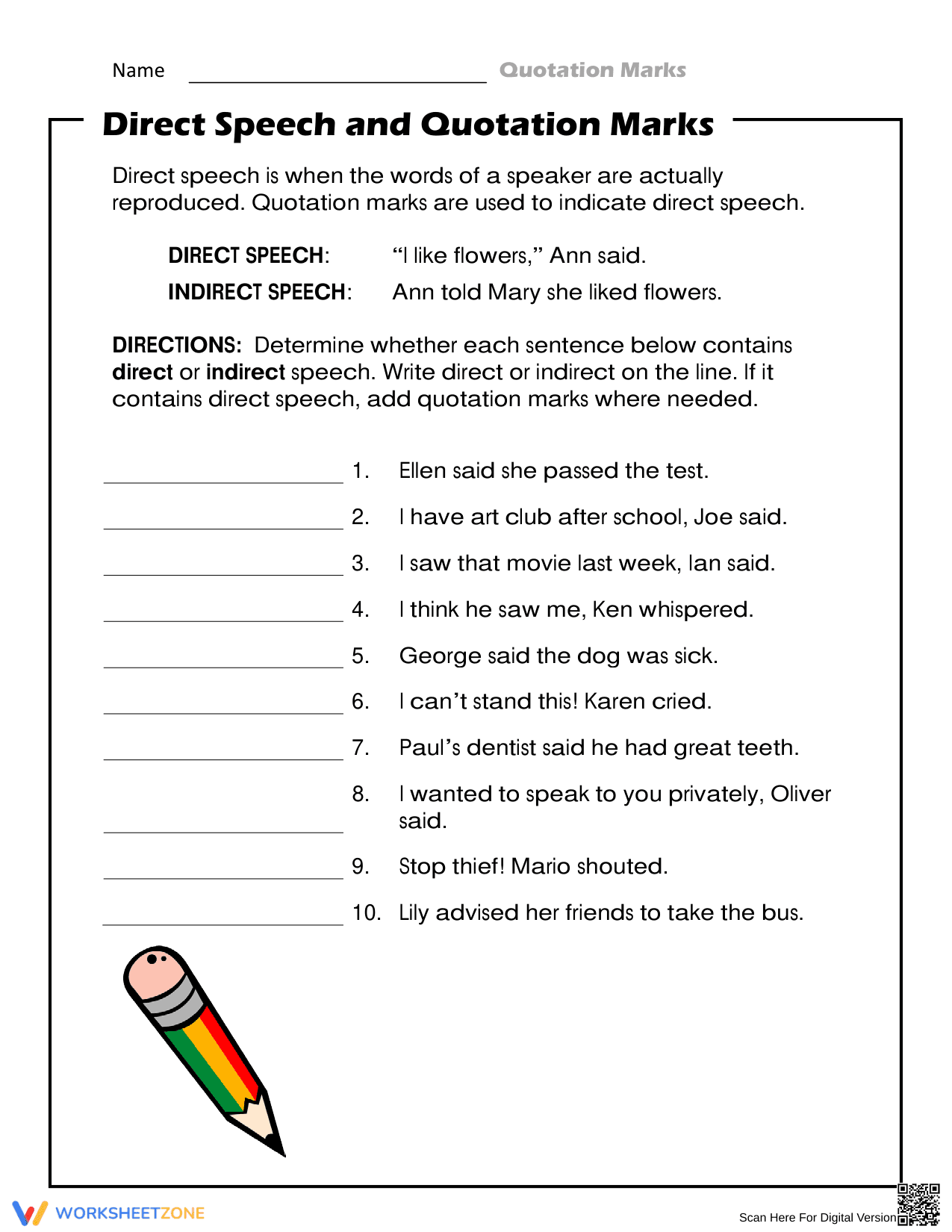
This is an educational worksheet focused on direct and indirect speech, and the proper use of quotation marks. The worksheet provides an explanation of direct and indirect speech with examples. Students are then instructed to determine if each of ten sentences contains direct or indirect speech, writing their answer on a provided line. If the sentence contains direct speech, they must also add quotation marks where necessary.
Grade Level Suitability:
This worksheet is suitable for grades 3-5. It introduces the concepts of direct and indirect speech and requires students to apply these concepts by identifying them in sentences and adding appropriate punctuation. The sentences are relatively simple, making it accessible to this age range.
Why Use It:
This worksheet helps students learn to distinguish between direct and indirect speech, improving their grammar and writing skills. It reinforces the correct use of quotation marks, a crucial punctuation skill. This practice aids in comprehension and clear communication.
How to Use It:
First, review the definitions and examples of direct and indirect speech provided at the top of the worksheet. Then, read each sentence carefully. Determine whether it is direct or indirect speech and write your answer on the line provided. If the sentence is direct speech, add quotation marks around the speaker's exact words.
Target Users:
This worksheet is designed for elementary school students in grades 3-5 who are learning about grammar, punctuation, and sentence structure. It's also helpful for students who need extra practice identifying direct and indirect speech.
This is an educational worksheet focused on direct and indirect speech, and the proper use of quotation marks. The worksheet provides an explanation of direct and indirect speech with examples. Students are then instructed to determine if each of ten sentences contains direct or indirect speech, writing their answer on a provided line. If the sentence contains direct speech, they must also add quotation marks where necessary.
Grade Level Suitability:
This worksheet is suitable for grades 3-5. It introduces the concepts of direct and indirect speech and requires students to apply these concepts by identifying them in sentences and adding appropriate punctuation. The sentences are relatively simple, making it accessible to this age range.
Why Use It:
This worksheet helps students learn to distinguish between direct and indirect speech, improving their grammar and writing skills. It reinforces the correct use of quotation marks, a crucial punctuation skill. This practice aids in comprehension and clear communication.
How to Use It:
First, review the definitions and examples of direct and indirect speech provided at the top of the worksheet. Then, read each sentence carefully. Determine whether it is direct or indirect speech and write your answer on the line provided. If the sentence is direct speech, add quotation marks around the speaker's exact words.
Target Users:
This worksheet is designed for elementary school students in grades 3-5 who are learning about grammar, punctuation, and sentence structure. It's also helpful for students who need extra practice identifying direct and indirect speech.


