




























Views
Downloads
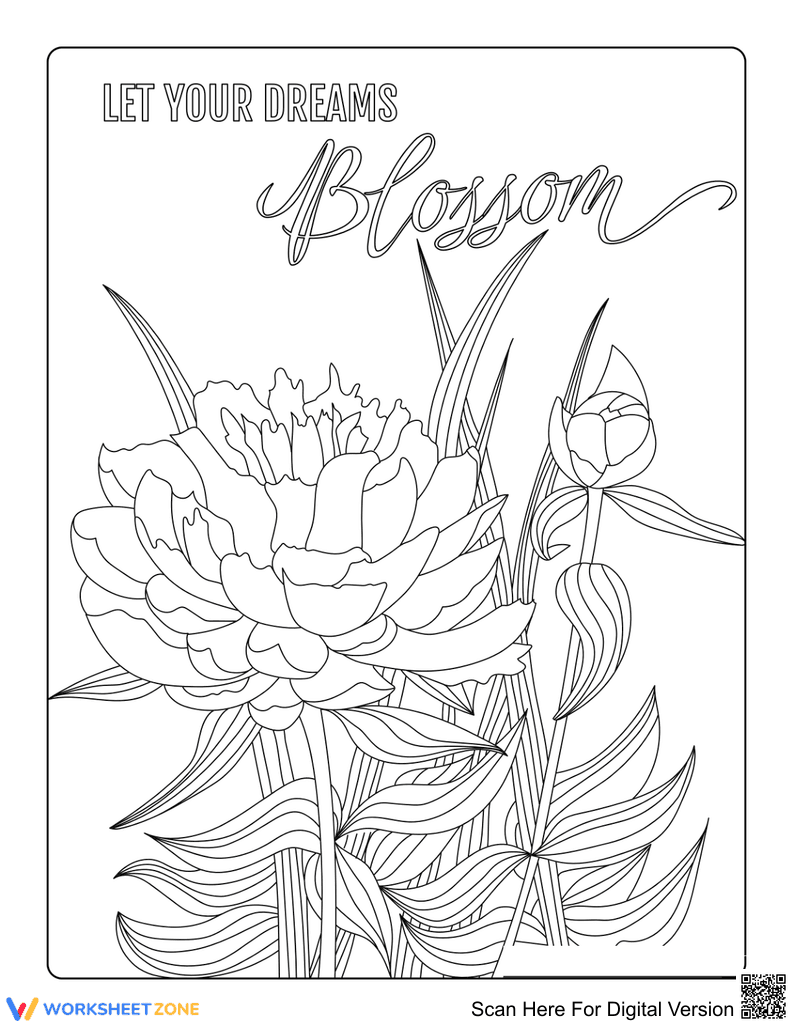

Detailed Peony Coloring Page | Essential Adult Art

Paste this activity's link or code into your existing LMS (Google Classroom, Canvas, Teams, Schoology, Moodle, etc.).
Students can open and work on the activity right away, with no student login required.
You'll still be able to track student progress and results from your teacher account.
This detailed peony coloring page provides a sophisticated creative outlet for high school and college students to practice mindfulness and botanical observation. By focusing on the intricate line work of the flower petals and leaves, students develop sustained attention and fine motor precision. This activity serves as an effective bridge between intensive academic tasks and creative expression, fostering a calm classroom environment.
At a Glance
- Grade: 10-College · Subject: English / Arts
- Standard:
CCSS.ELA-LITERACY.W.11-12.10— Write routinely over extended time frames for a range of tasks- Skill Focus: Mindfulness and Creative Expression
- Format: 1 page · 1 task · Answer key N/A · PDF
- Best For: Mindfulness breaks and creative writing prompts
- Time: 15–30 minutes
The resource consists of a high-quality PDF page featuring a professional-grade botanical illustration of a peony in various stages of bloom. The line art includes a primary open flower, a secondary bud, and detailed foliage, providing varying levels of complexity for the user. There are no distracting elements, allowing the focus to remain entirely on the artistic process and the development of visual literacy skills.
Teacher preparation for this activity is minimal, requiring less than 2 minutes of total setup time. First, print the high-resolution PDF. Second, distribute the sheets to students as they enter the room or during a transition period. Third, review the creative output or use the completed art as a springboard for a descriptive writing assignment. This zero-prep workflow makes it an ideal resource for substitute folders or unexpected schedule changes.
This worksheet aligns with CCSS.ELA-LITERACY.W.11-12.10, which encourages students to engage in routine creative and academic production over varying time frames. While primarily an artistic task, it supports the development of the focus and stamina required for the writing process. This standard code can be copied directly into lesson plans, IEP goals, or district curriculum mapping tools to justify the inclusion of mindfulness in the English Language Arts classroom.
Use this worksheet as a bell-ringer activity during a poetry unit on imagery to help students visualize descriptive language before they begin writing. Alternatively, assign it as a formative assessment tool for observation; ask students to color the peony and then write a five-sentence paragraph using precise sensory details based on their artistic choices. Completion time typically ranges from 15 to 30 minutes depending on the medium used.
This resource is designed for Grade 10 through College-level students who require age-appropriate creative outlets. It is particularly effective for students with anxiety or those who benefit from kinesthetic engagement during auditory lessons. Pair this coloring page with a nature-themed reading passage or a direct instruction lesson on Transcendentalism to provide a multi-sensory learning experience that appeals to diverse learners.
Research from the RAND AIRS 2024 report indicates that integrating creative visual tasks into secondary education curricula significantly reduces student cortisol levels and improves focus during high-stakes testing windows. This Detailed Peony worksheet aligns with CCSS.ELA-LITERACY.W.11-12.10 by providing a routine creative outlet that fosters the stamina required for extended academic production. By engaging with intricate botanical patterns, students practice the fine motor control and sustained attention necessary for complex drafting and editing tasks. The use of adult-level coloring pages in the classroom serves as a non-verbal processing tool, allowing learners to decompress while maintaining a state of active engagement. This specific resource provides a high-quality, 1-page botanical illustration that meets the rigorous aesthetic standards of upper-secondary and college-level learners, ensuring that the activity feels age-appropriate and intellectually stimulating rather than juvenile.


