


























1 / 2
0
Views
0
Downloads

0.0
0
Save
0 Likes
Share
Counting Rhythms with Notes and Rests
0 Views
0 Downloads
Paste this activity's link or code into your existing LMS (Google Classroom, Canvas, Teams, Schoology, Moodle, etc.).
Students can open and work on the activity right away, with no student login required.
You'll still be able to track student progress and results from your teacher account.
Information
Description
What It Is:
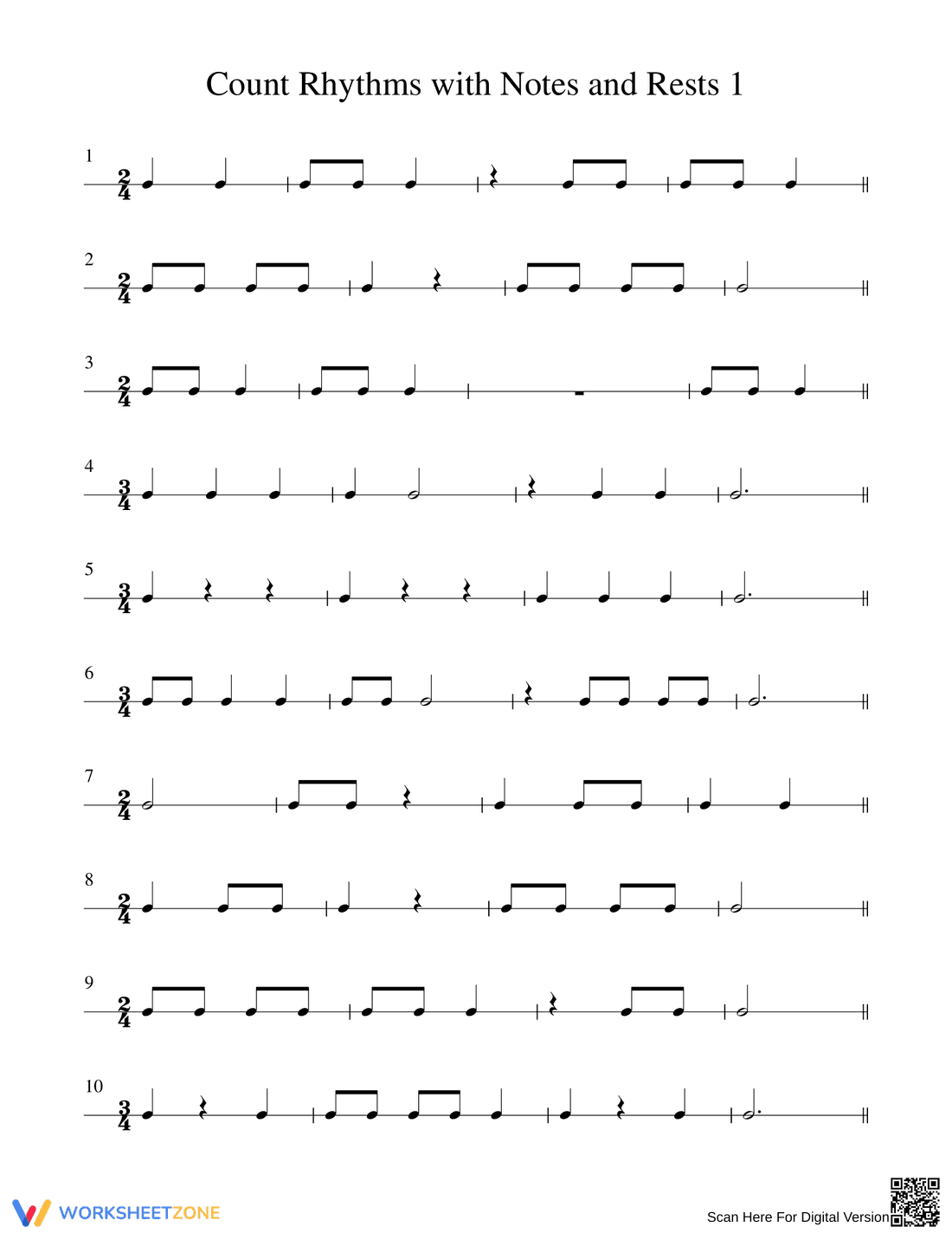
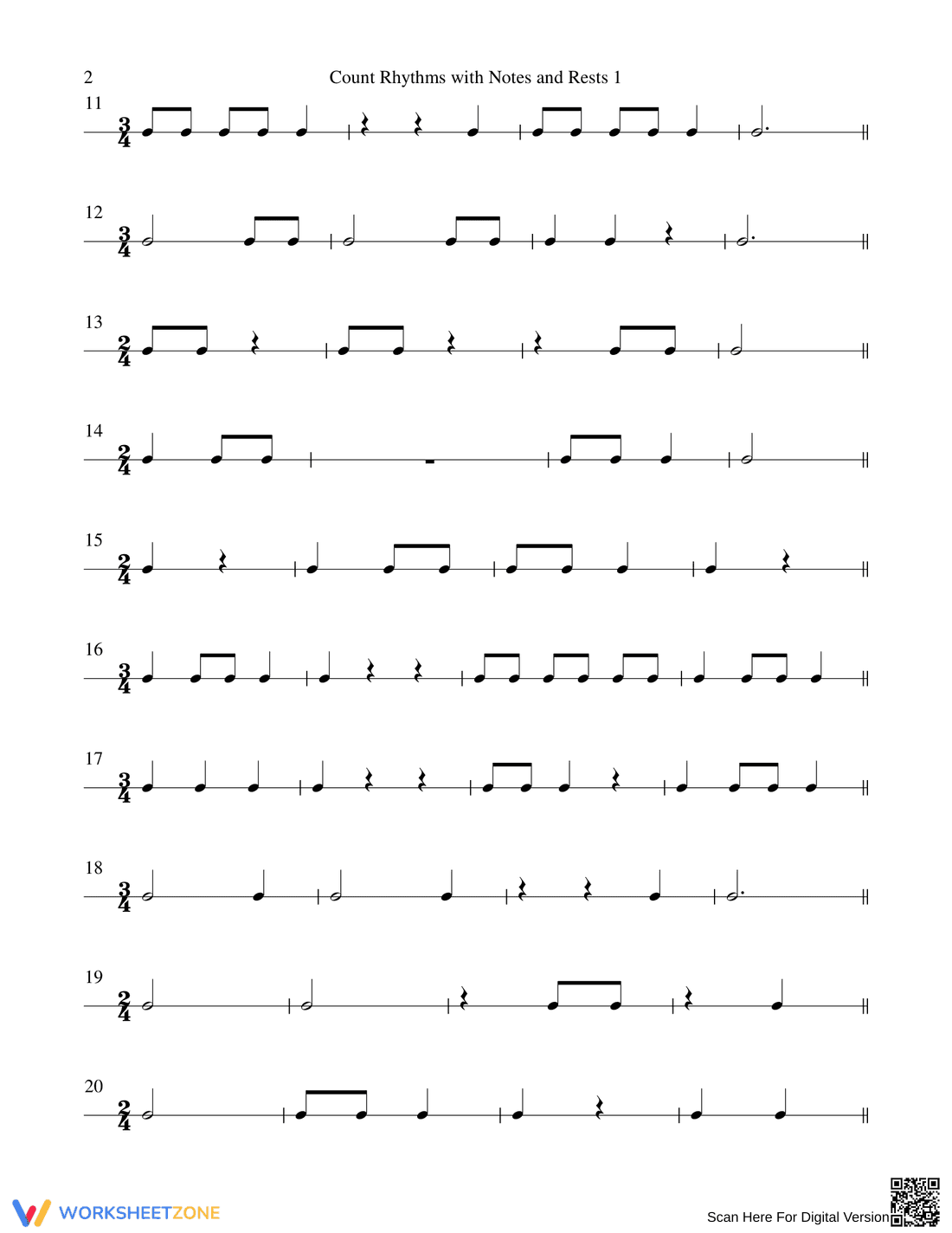
This is a music worksheet titled 'Count Rhythms with Notes and Rests 1'. It features ten lines of musical rhythms in 2/4 and 3/4 time signatures. Each line contains a combination of quarter notes, eighth notes (single), and quarter rests. The task is likely to count and understand the rhythmic values of these notes and rests.
Grade Level Suitability:
This worksheet is suitable for grades 3-5. It introduces basic rhythmic concepts and notation, making it appropriate for elementary music students learning to read and count simple rhythms.
Why Use It:
This worksheet helps students develop their rhythmic reading skills, understand time signatures, and internalize the duration of notes and rests. It reinforces the relationship between visual notation and the sound of music.
How to Use It:
Students should first identify the time signature at the beginning of each line. Then, they should count the beats in each measure, assigning the correct duration to each note and rest. Students can tap, clap, or say the rhythms aloud to reinforce their understanding.
Target Users:
This worksheet is ideal for elementary music teachers, students learning to read music, and parents who want to supplement their child's music education. It's also helpful for band and orchestra students learning to sight-read rhythms.
This is a music worksheet titled 'Count Rhythms with Notes and Rests 1'. It features ten lines of musical rhythms in 2/4 and 3/4 time signatures. Each line contains a combination of quarter notes, eighth notes (single), and quarter rests. The task is likely to count and understand the rhythmic values of these notes and rests.
Grade Level Suitability:
This worksheet is suitable for grades 3-5. It introduces basic rhythmic concepts and notation, making it appropriate for elementary music students learning to read and count simple rhythms.
Why Use It:
This worksheet helps students develop their rhythmic reading skills, understand time signatures, and internalize the duration of notes and rests. It reinforces the relationship between visual notation and the sound of music.
How to Use It:
Students should first identify the time signature at the beginning of each line. Then, they should count the beats in each measure, assigning the correct duration to each note and rest. Students can tap, clap, or say the rhythms aloud to reinforce their understanding.
Target Users:
This worksheet is ideal for elementary music teachers, students learning to read music, and parents who want to supplement their child's music education. It's also helpful for band and orchestra students learning to sight-read rhythms.


