


























Views
Downloads

Printable Coordinates Geometry Worksheet | Grade 5 Math
Paste this activity's link or code into your existing LMS (Google Classroom, Canvas, Teams, Schoology, Moodle, etc.).
Students can open and work on the activity right away, with no student login required.
You'll still be able to track student progress and results from your teacher account.
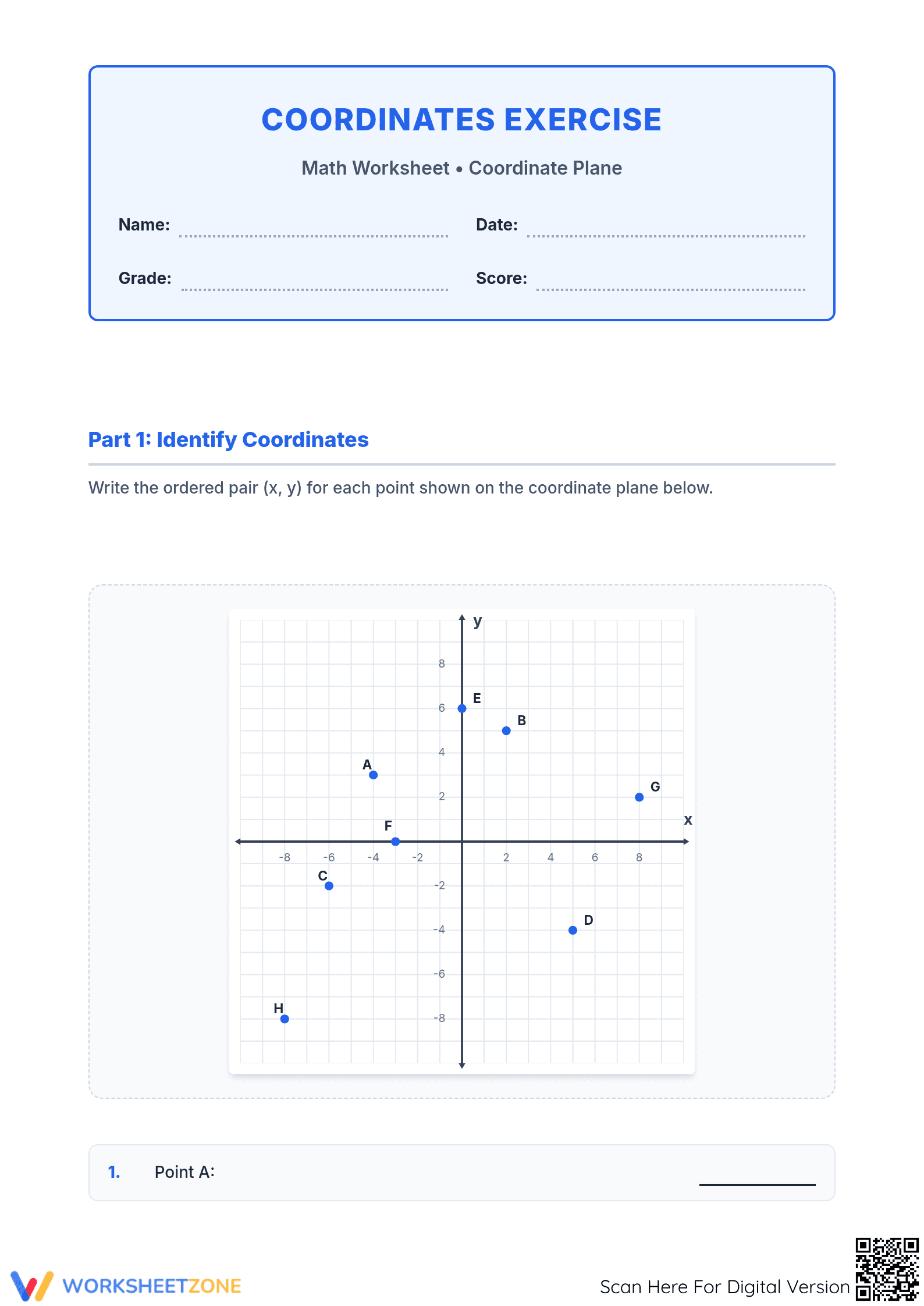
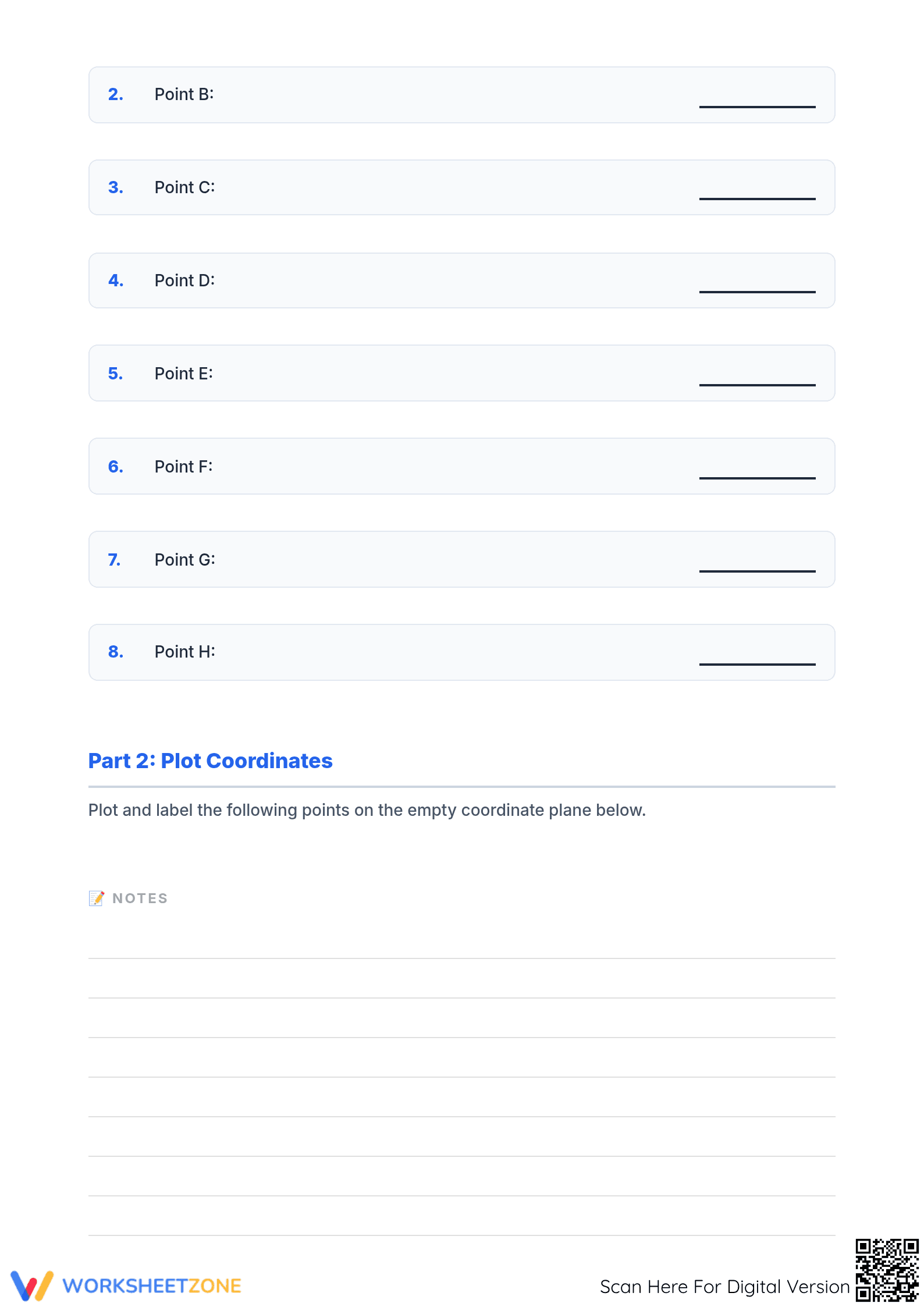
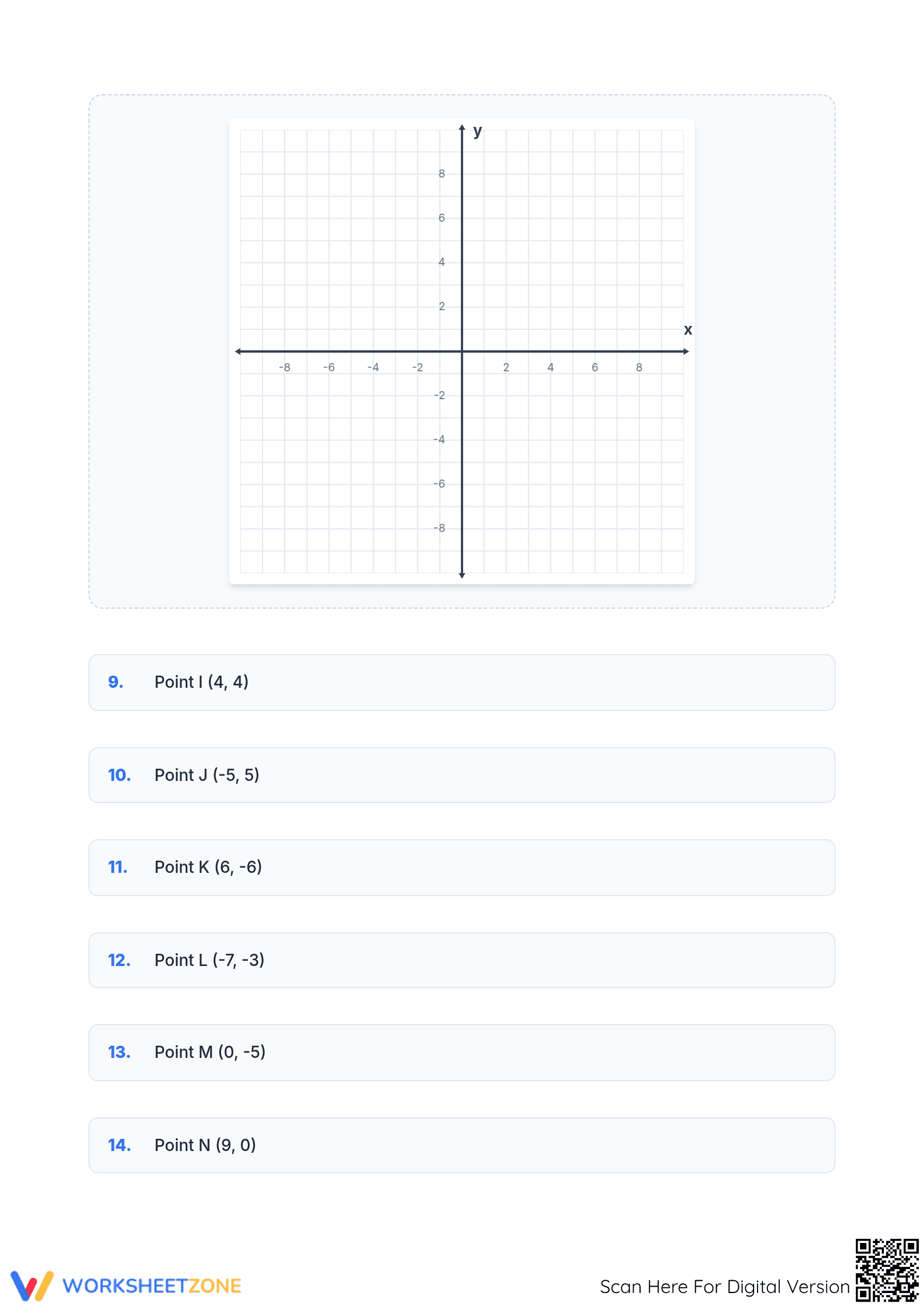
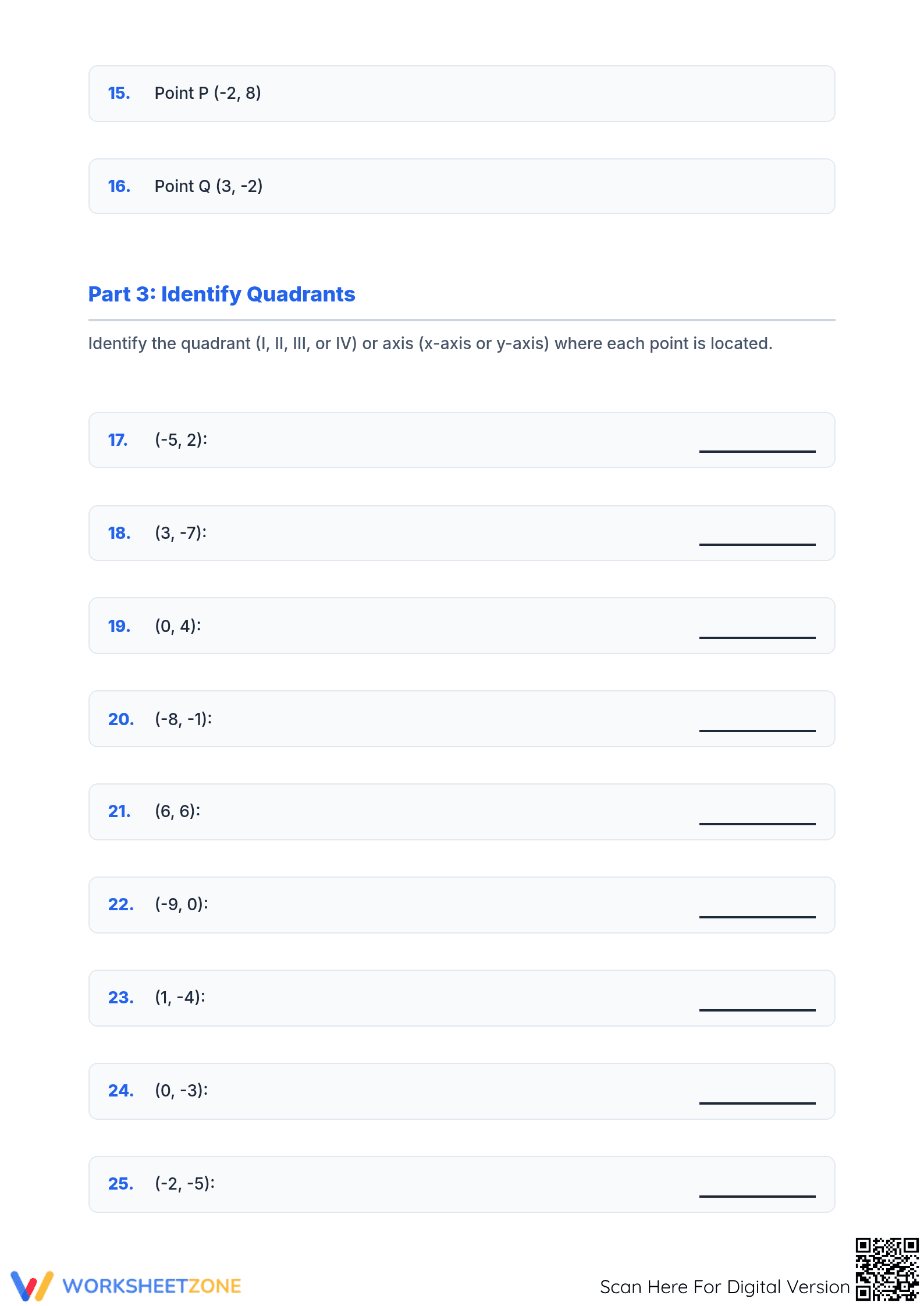
This comprehensive five-page math packet provides structured practice for students learning to navigate the first quadrant of a coordinate plane. By identifying and plotting ordered pairs, learners build the spatial reasoning necessary for higher-level geometry and data analysis. The clear grid layouts ensure student accuracy while providing immediate visual feedback during independent practice sessions.
At a Glance
- Grade: 5 · Subject: Math
- Standard:
CCSS.MATH.CONTENT.5.G.A.1— Graph points on the coordinate plane to solve real-world and mathematical problems- Skill Focus: First quadrant coordinate plotting
- Format: 5 pages · 45 problems · Answer key included · PDF
- Best For: Independent practice and formative assessment
- Time: 25–40 minutes
What's Inside
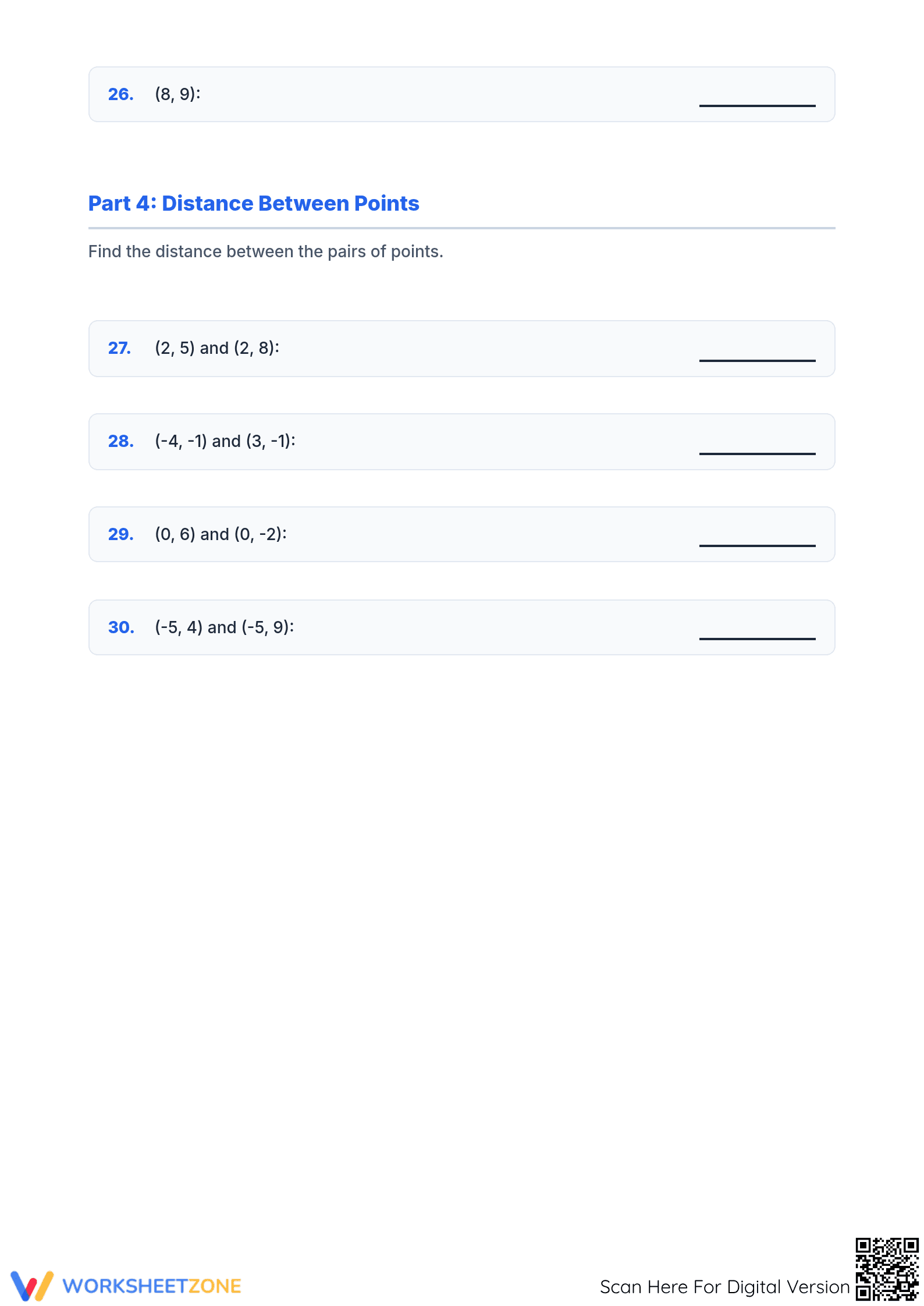
The packet contains five distinct pages focusing on coordinate mastery. Page one introduces individual points, page two transitions to identifying vertices of geometric shapes like rectangles and triangles, and subsequent pages increase in complexity with larger grids and higher task density. Each page is formatted for clarity with labeled axes, and a full five-page answer key is included to facilitate peer grading or quick teacher review.
Zero-Prep Workflow
- Print: Generate the complete five-page student packet in under sixty seconds.
- Distribute: Assign as a single comprehensive unit or individual warm-up sheets.
- Review: Use the provided answer keys for a five-minute whole-class check or station rotation.
This streamlined approach makes the resource ideal for emergency sub plans or fast-finisher stations where teacher intervention needs to be kept to a minimum.
Standards Alignment
Primary Standard: CCSS.MATH.CONTENT.5.G.A.1 — Use a pair of perpendicular number lines, called axes, to define a coordinate system, with the intersection of the lines (the origin) arranged to coincide with the 0 on each line and a given point in the plane located by using an ordered pair of numbers, called its coordinates. Both standard codes can be copied directly into lesson plans, IEP goals, or district curriculum mapping tools.
How to Use It
This resource is most effective when used as a bridge between direct instruction and independent mastery. During the instructional block, use the first page as a guided practice tool to reinforce the 'over and then up' rule for ordered pairs. Following the lesson, assign pages three through five as a quiet independent task. A quick formative assessment tip: walk the room and observe if students are reversing the x and y coordinates, as this is the most common early-stage misconception.
Who It's For
This worksheet is designed for Grade 5 students working on foundational geometry, though it serves as excellent remedial review for Grade 6 and 7 students preparing for four-quadrant systems. It pairs naturally with graph paper activities or digital plotting tools, providing the necessary pencil-to-paper repetition required for procedural fluency.
The coordinate geometry skills addressed in this resource, specifically aligned to the CCSS.MATH.CONTENT.5.G.A.1 standard, are fundamental to developing mathematical literacy in middle elementary grades. According to the RAND AIRS 2024 analysis, consistent practice with grid-based spatial identification significantly improves a student's ability to transition into algebraic functions and data visualization. This worksheet provides the requisite repetition through forty-five distinct tasks that move from naming points to plotting vertices of complex polygons. By isolating the first quadrant, the resource allows students to master the conventions of the x-axis and y-axis without the cognitive load of negative integers. This focus on procedural fluency through structured practice is cited by the NAEP as a key indicator for long-term success in STEM-related curricula. Teachers can utilize these exercises as a formative assessment tool to identify misconceptions in ordered pair sequencing, ensuring that the (x, y) convention is solidified before advancing to four-quadrant systems.


