


























0
Views
0
Downloads

0.0
0
Save
0 Likes
Understanding Conflict in Literature Worksheet
0 Views
0 Downloads
Paste this activity's link or code into your existing LMS (Google Classroom, Canvas, Teams, Schoology, Moodle, etc.).
Students can open and work on the activity right away, with no student login required.
You'll still be able to track student progress and results from your teacher account.
Information
Description
What It Is:
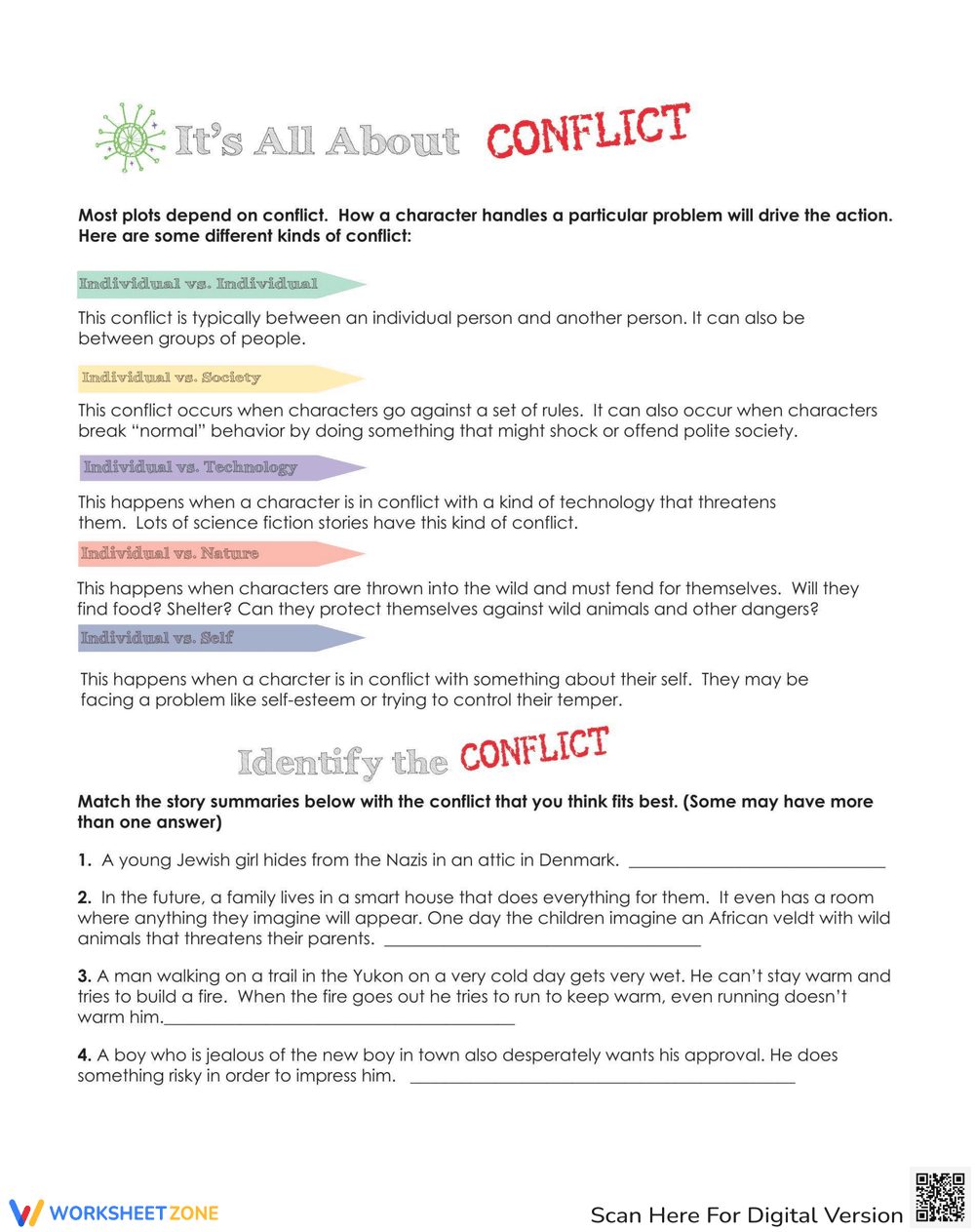
This is an educational worksheet focused on understanding different types of conflict in literature. It explains six types of conflict: Individual vs. Individual, Individual vs. Society, Individual vs. Technology, Individual vs. Nature, and Individual vs. Self. The worksheet also includes an activity where students must match story summaries with the type of conflict that best fits, with some summaries potentially having more than one answer. The summaries involve scenarios like hiding from Nazis, futuristic smart homes, surviving in the Yukon, and jealousy.
Grade Level Suitability:
This worksheet appears suitable for grades 6-9. The concepts of different types of conflict are introduced with clear explanations, and the story summaries require reading comprehension and analytical skills appropriate for middle school students. The activity of matching summaries to conflict types encourages critical thinking.
Why Use It:
This worksheet helps students learn to identify different types of conflict in stories, which is a fundamental element of plot analysis and literary understanding. By working through the examples, students improve their reading comprehension, critical thinking, and ability to analyze narratives. It also aids in developing a better understanding of character motivations and plot development.
How to Use It:
First, read through the explanations of the different types of conflict. Then, carefully read each story summary. For each summary, determine which type(s) of conflict are present and write the corresponding type(s) on the provided lines. Be aware that some summaries may have more than one applicable type of conflict.
Target Users:
This worksheet is designed for middle school students (grades 6-9) who are learning about literary elements, particularly conflict. It can be used by teachers in English Language Arts classes or by students for independent study and review. It would also be beneficial for students who need extra practice with reading comprehension and critical thinking skills.
This is an educational worksheet focused on understanding different types of conflict in literature. It explains six types of conflict: Individual vs. Individual, Individual vs. Society, Individual vs. Technology, Individual vs. Nature, and Individual vs. Self. The worksheet also includes an activity where students must match story summaries with the type of conflict that best fits, with some summaries potentially having more than one answer. The summaries involve scenarios like hiding from Nazis, futuristic smart homes, surviving in the Yukon, and jealousy.
Grade Level Suitability:
This worksheet appears suitable for grades 6-9. The concepts of different types of conflict are introduced with clear explanations, and the story summaries require reading comprehension and analytical skills appropriate for middle school students. The activity of matching summaries to conflict types encourages critical thinking.
Why Use It:
This worksheet helps students learn to identify different types of conflict in stories, which is a fundamental element of plot analysis and literary understanding. By working through the examples, students improve their reading comprehension, critical thinking, and ability to analyze narratives. It also aids in developing a better understanding of character motivations and plot development.
How to Use It:
First, read through the explanations of the different types of conflict. Then, carefully read each story summary. For each summary, determine which type(s) of conflict are present and write the corresponding type(s) on the provided lines. Be aware that some summaries may have more than one applicable type of conflict.
Target Users:
This worksheet is designed for middle school students (grades 6-9) who are learning about literary elements, particularly conflict. It can be used by teachers in English Language Arts classes or by students for independent study and review. It would also be beneficial for students who need extra practice with reading comprehension and critical thinking skills.


