


























1 / 2
0
Views
0
Downloads

0.0
0
Save
0 Likes
Share
Compute Unit Prices to Find the Better Buy
0 Views
0 Downloads
Paste this activity's link or code into your existing LMS (Google Classroom, Canvas, Teams, Schoology, Moodle, etc.).
Students can open and work on the activity right away, with no student login required.
You'll still be able to track student progress and results from your teacher account.
Information
Description
What It Is:
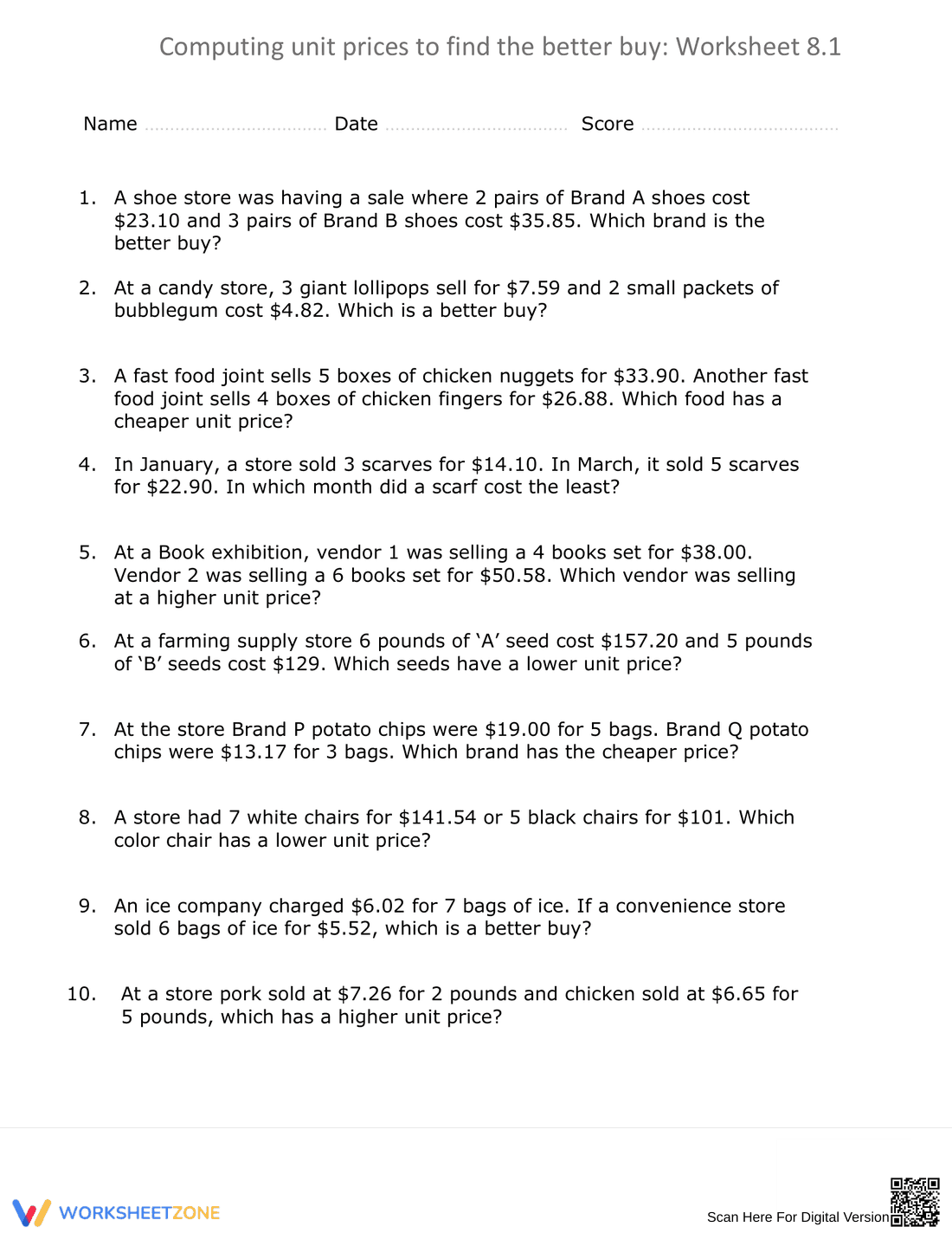
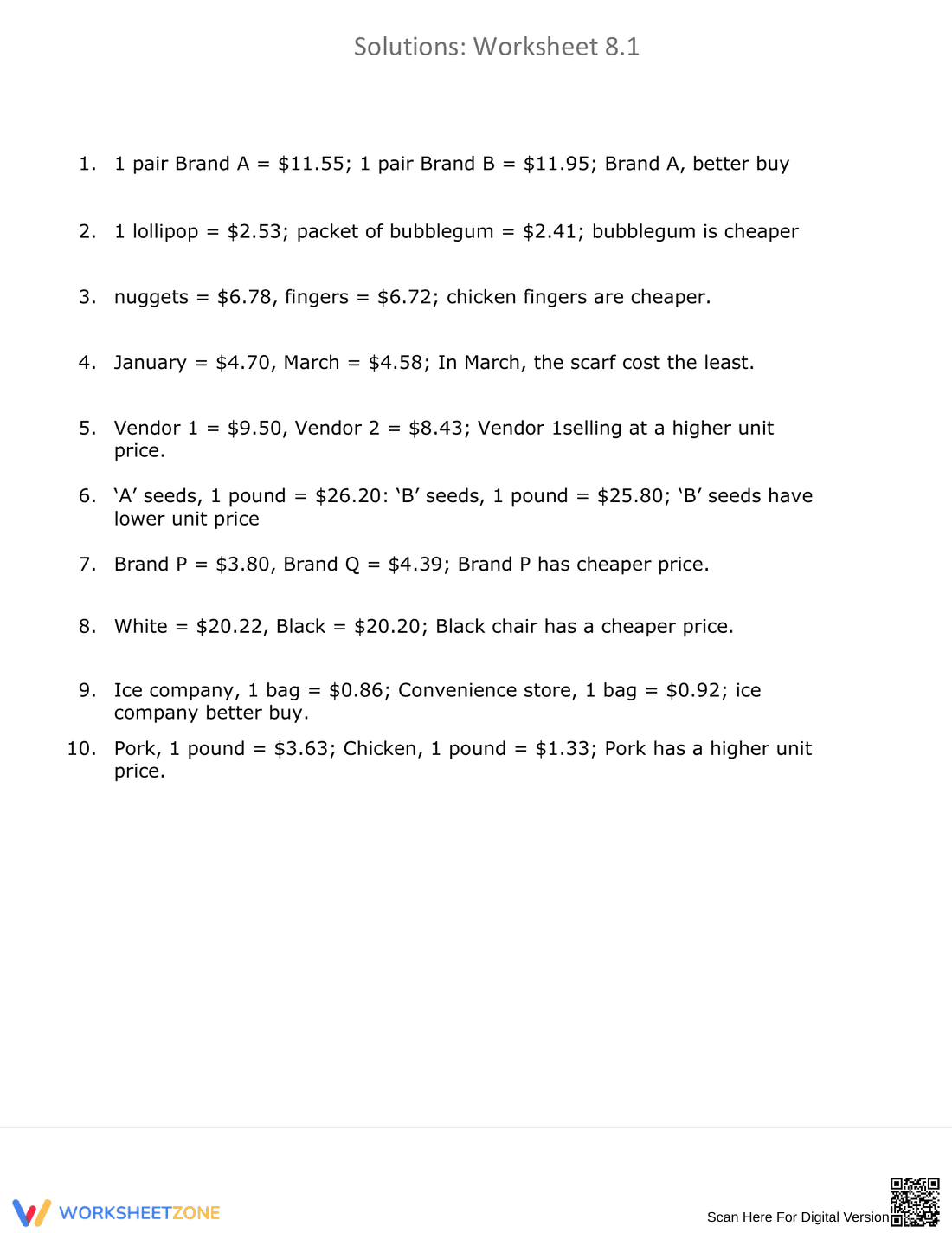
This is a worksheet titled 'Computing unit prices to find the better buy: Worksheet 8.1'. It contains 10 word problems that require students to calculate unit prices to determine which item is the better buy or has a lower unit price. The problems involve various scenarios like comparing shoe prices, candy prices, food prices, scarves prices, books prices, seeds prices, potato chips prices, chairs prices, ice prices, and pork/chicken prices. Students need to calculate the price per unit (e.g., price per pair of shoes, price per lollipop, price per box of chicken nuggets, price per scarf, etc.) and then compare the unit prices to answer the question.
Grade Level Suitability:
This worksheet is suitable for grades 5-7. It requires students to have a solid understanding of division and decimals to calculate unit prices. The word problems also require reading comprehension skills to understand the context and identify the necessary information.
Why Use It:
This worksheet helps students develop essential math skills, including division, decimals, and problem-solving. It reinforces the concept of unit price and its application in real-life scenarios, such as comparing prices while shopping. It also enhances critical thinking and decision-making skills by requiring students to analyze and compare different options.
How to Use It:
Students should read each word problem carefully and identify the relevant information. They need to divide the total price by the number of units (e.g., items, pounds, bags) to calculate the unit price. After calculating the unit prices for each option, they should compare the prices and determine which item is the better buy or has a lower unit price. Students can show their work on the worksheet.
Target Users:
This worksheet is designed for students in grades 5-7 who are learning about unit prices and need practice with related calculations and word problems. It can be used by teachers in the classroom as a supplemental activity or homework assignment. Parents can also use it at home to reinforce their child's math skills.
This is a worksheet titled 'Computing unit prices to find the better buy: Worksheet 8.1'. It contains 10 word problems that require students to calculate unit prices to determine which item is the better buy or has a lower unit price. The problems involve various scenarios like comparing shoe prices, candy prices, food prices, scarves prices, books prices, seeds prices, potato chips prices, chairs prices, ice prices, and pork/chicken prices. Students need to calculate the price per unit (e.g., price per pair of shoes, price per lollipop, price per box of chicken nuggets, price per scarf, etc.) and then compare the unit prices to answer the question.
Grade Level Suitability:
This worksheet is suitable for grades 5-7. It requires students to have a solid understanding of division and decimals to calculate unit prices. The word problems also require reading comprehension skills to understand the context and identify the necessary information.
Why Use It:
This worksheet helps students develop essential math skills, including division, decimals, and problem-solving. It reinforces the concept of unit price and its application in real-life scenarios, such as comparing prices while shopping. It also enhances critical thinking and decision-making skills by requiring students to analyze and compare different options.
How to Use It:
Students should read each word problem carefully and identify the relevant information. They need to divide the total price by the number of units (e.g., items, pounds, bags) to calculate the unit price. After calculating the unit prices for each option, they should compare the prices and determine which item is the better buy or has a lower unit price. Students can show their work on the worksheet.
Target Users:
This worksheet is designed for students in grades 5-7 who are learning about unit prices and need practice with related calculations and word problems. It can be used by teachers in the classroom as a supplemental activity or homework assignment. Parents can also use it at home to reinforce their child's math skills.


