




























Views
Downloads


Complete Lion King Biology Word Search | Grades 6–7 Science

Paste this activity's link or code into your existing LMS (Google Classroom, Canvas, Teams, Schoology, Moodle, etc.).
Students can open and work on the activity right away, with no student login required.
You'll still be able to track student progress and results from your teacher account.
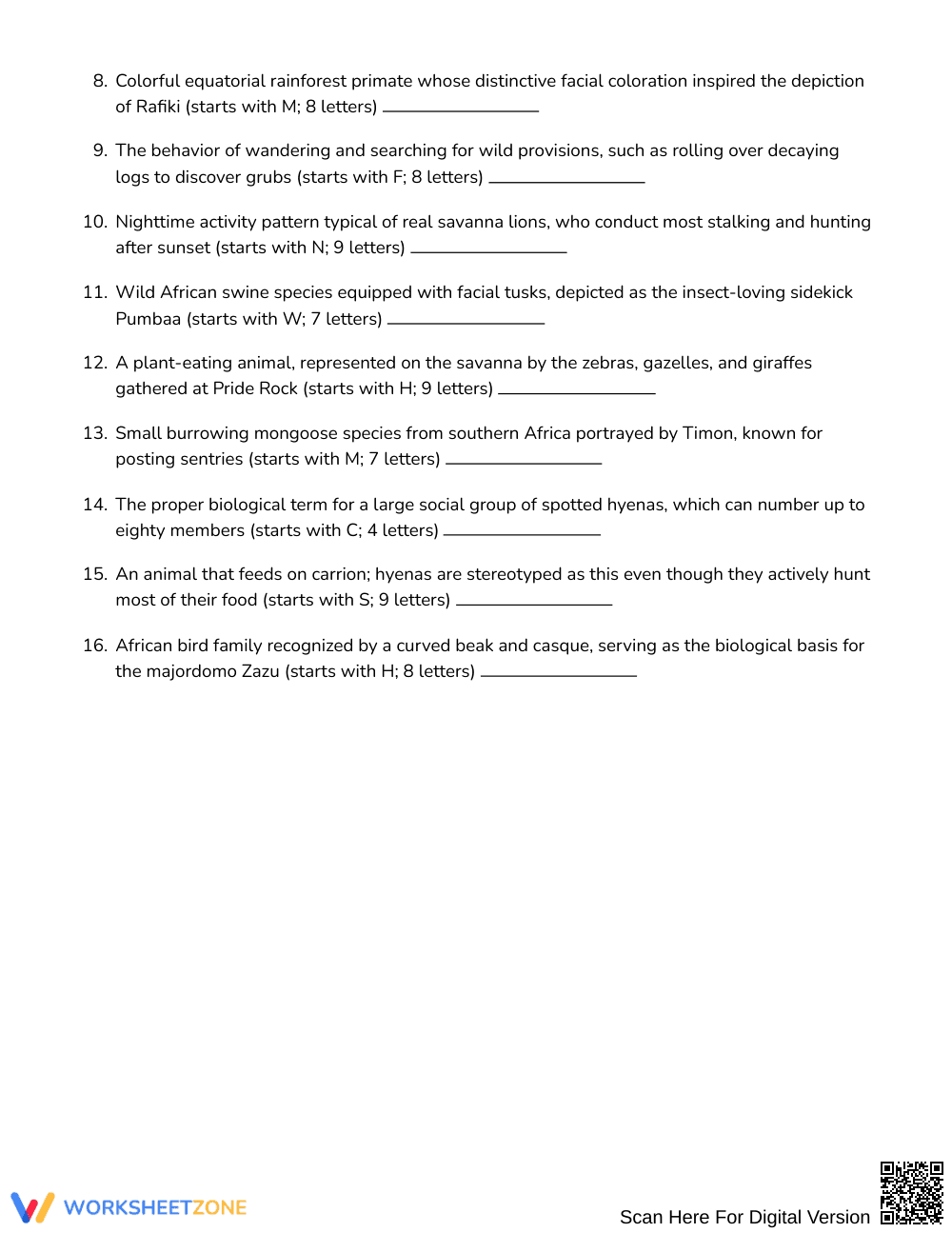
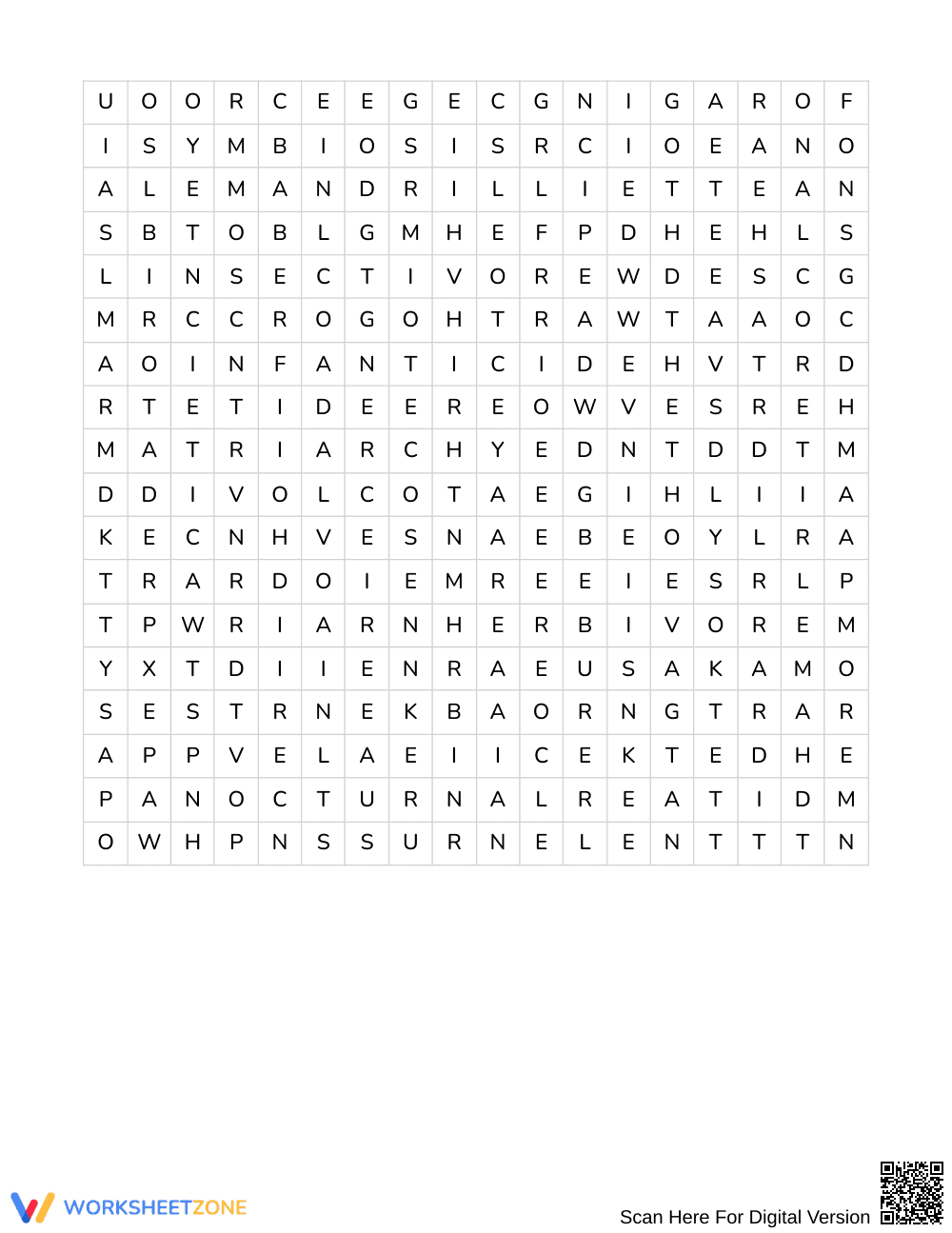
This Grades 6–7 science word search challenges students to distinguish between fictional character behaviors from popular animation and authentic animal biology. By solving clues about savanna wildlife, learners identify 16 accurate biological concepts and locate them within the puzzle grid, transforming popular media tropes into rigorous life science discussions about ecosystems, predation, and animal social structures.
At a Glance
- Grade: Grades 6–7 · Subject: Science
- Standard: Not standards-assessed — vocabulary enrichment
- Skill Focus: Distinguishing fictional character behavior from real-world African savanna animal biology
- Format: 3 student pages · 16 vocabulary words · Full answer key included · Printable PDF
- Best For: Middle school life science vocabulary review, cross-curricular study, and sub plans
- Time: 25–35 minutes
What's Inside
This 3-page printable science resource features a no-bank challenge format where students must solve 16 clues before searching for terms. Instead of copying from a list, learners deduce biological vocabulary such as matriarchy, apex predator, and symbiosis. A comprehensive 4-page answer key provides complete grid coordinate solutions for quick verification.
Puzzle Mechanics and Structure
The activity is built on an 18 x 18 letter grid containing 16 hidden vocabulary words. Words are placed in all eight compass directions: north, northeast, east, southeast, south, southwest, west, and northwest. Because no word bank is provided, students rely entirely on the 16 context clues to determine the exact biological terminology before initiating their search.
Standards Alignment
This word search is designed strictly for vocabulary enrichment and is not aligned to an assessed state or national standard. It reinforces foundational life science concepts, including ecological niches, feeding classifications, and social hierarchies, strengthening academic literacy across middle school biology units without tracking formal standard performance.
How to Use It
Deploy this activity after direct instruction on African savanna ecosystems or as a high-interest review session. Teachers can observe whether students identify ecological terms like scavenger or insectivore from definitions alone. Completion typically requires 25 to 35 minutes, making it ideal for independent desk work, partner collaboration, or reliable substitute teacher coverage.
Who It's For
This resource is designed for Grades 6–7 life science students exploring animal adaptations, food webs, and animal behavior. For students needing extra support with the no-bank format, teachers can provide textbook glossaries or permit peer pairing. Pair this puzzle with an African savanna food web diagram to reinforce dietary relationships.
This 3-page Grades 6–7 science word search engages students in evaluating fictional character behavior versus animal biology across 16 clue-based vocabulary challenges. Rather than aligning with a specific state standard code, the instructional material operates as targeted science vocabulary enrichment designed to bridge cultural media representations with empirical ecological facts. Research by Fisher & Frey (2014) emphasizes that intentional vocabulary acquisition within disciplinary contexts significantly bolsters reading comprehension and conceptual retention in middle school science classrooms. By removing the traditional word bank and embedding clues about social structures like matriarchies, foraging habits, and predator classifications, this puzzle promotes active retrieval practice. Learners decipher complex scientific terms before searching an 18 x 18 grid oriented across eight directions. The resource includes a detailed 4-page answer key, establishing an effective 25-to-35-minute review activity that strengthens life science literacy without requiring advance teacher preparation.


